
What types of equipment are essential for effective warehouse cleaning?
Effective warehouse cleaning typically requires industrial vacuum cleaners, scrubber dryers, pressure washers or steam cleaners, and suitable access platforms for high-level surfaces. The equipment should be selected for the floor type, contamination, working height and site conditions, with appropriate safety equipment and dust-control systems used throughout.
Effective warehouse cleaning depends on matching the equipment to the surface, type of contamination, working height and operating conditions. The core equipment normally includes industrial vacuum cleaners, ride-on or walk-behind sweepers, scrubber dryers, pressure washers or steam cleaners, access platforms, and suitable safety and dust-control equipment.
Industrial vacuum cleaners are essential for removing dust, packaging fibres, debris and fine particles from floors, racking areas, loading bays and around machinery. Commercial and industrial models provide stronger suction and greater capacity than domestic vacuums, making them more suitable for large areas and continuous use. Where fine or potentially hazardous dust is present, the vacuum should incorporate appropriate filtration, such as a high-efficiency filter, and be suitable for the material being collected. Wet-and-dry models can be useful where liquid spillages and dry debris may need to be handled, although they must be operated and maintained in accordance with the manufacturer’s instructions.
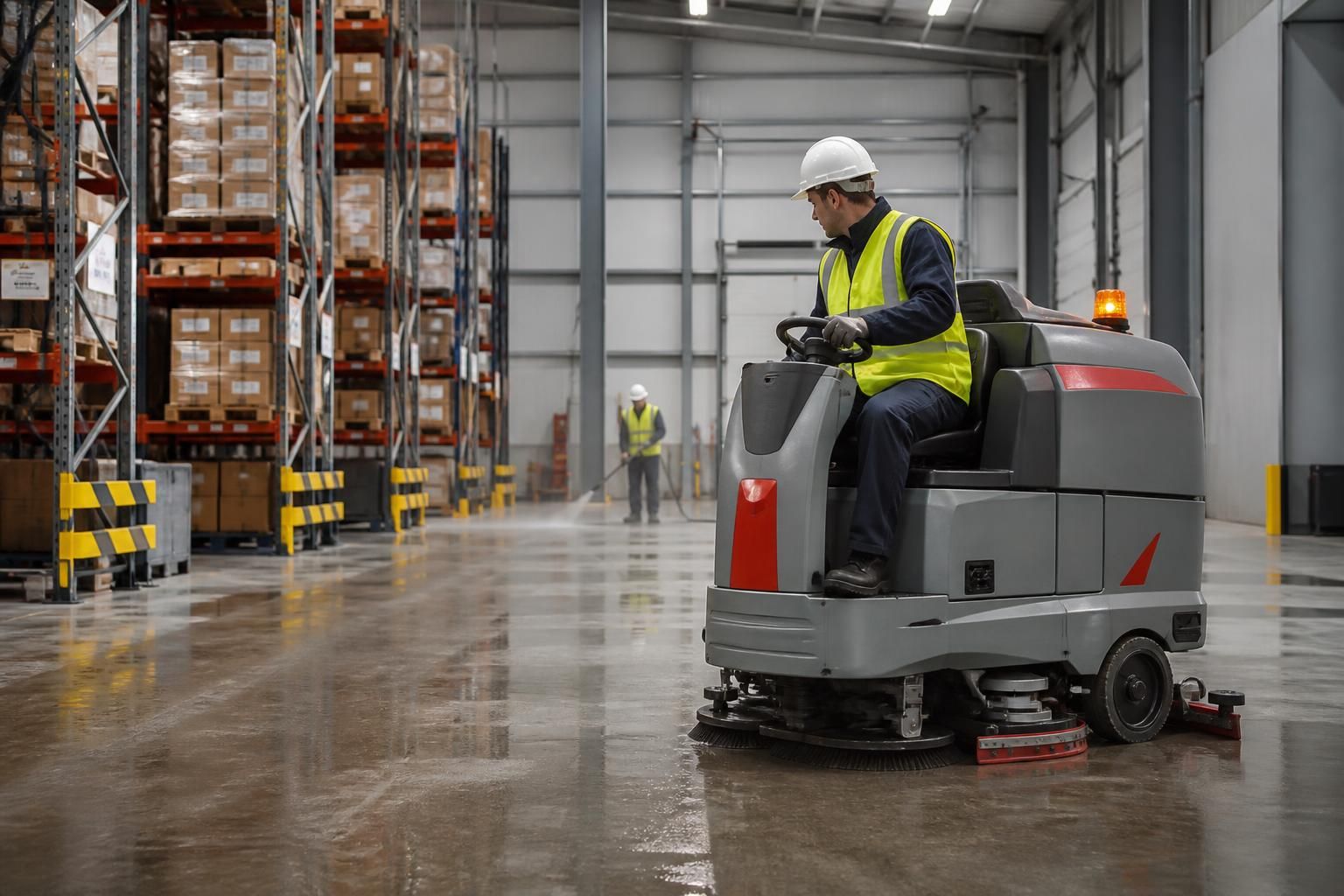
Industrial sweepers remove loose dirt, grit, pallet fragments and general debris before wet cleaning takes place. Walk-behind machines are useful around narrow aisles, corners and confined working areas, while ride-on sweepers cover larger warehouse floors more efficiently. Dust-control features, including enclosed brushes and filtered air systems, help prevent swept material from becoming airborne. Sweeping is particularly important before using a scrubber dryer, as larger debris can obstruct brushes, damage components or reduce the quality of the finished clean.
Scrubber dryers combine mechanical agitation, cleaning solution and suction to wash and dry hard floors in a single operation. They are widely used on concrete, sealed concrete, resin, safety flooring and other compatible warehouse surfaces. Walk-behind machines provide control in smaller or obstructed areas, while ride-on equipment is suitable for extensive floor plans. The brush or pad, cleaning chemical and pressure setting should be selected for the flooring and contamination. Excessive pressure or unsuitable chemicals can mark coatings, reduce slip resistance or damage joints and surface finishes.
Pressure washers are useful for heavy, ingrained contamination on robust surfaces, particularly loading bays, external warehouse areas, dock levellers, plant rooms and hard-standing. They can remove mud, oil residues, traffic film and accumulated grime more effectively than manual methods alone. Pressure must be controlled carefully indoors, around electrical installations and near vulnerable surfaces. Water recovery equipment, wet vacuums or extraction systems may also be required to prevent dirty water spreading across operational areas or entering drains without appropriate control.
Steam cleaners use high-temperature vapour to loosen grease, residues and difficult deposits while using less water than conventional pressure washing. They can be suitable for detailed cleaning around machinery, doors, racking components and other areas where excessive water would be undesirable. Steam is not appropriate for every material or electrical component, so surfaces, seals, coatings and equipment manufacturers’ requirements should be checked before use. Adequate ventilation and controlled working practices remain necessary.
Access equipment is required for high-level cleaning of roof structures, beams, lighting, ducting, racking tops, mezzanines and warehouse façades. Depending on the height and layout, this may include mobile elevated work platforms, powered access platforms, towers or other suitable systems. The equipment must be appropriate for the surface, ground conditions and reach required. Operators should be trained and authorised, and the work should be planned to control falling objects, vehicle movements, exclusion zones and emergency access.
For some high-level tasks, long-reach cleaning systems can reduce the need to work from height. Telescopic poles, specialist vacuum systems and low-pressure application equipment may allow dust and cobwebs to be removed from ground level, provided the method achieves the required standard and does not redistribute contamination. These systems are particularly useful where access platforms would obstruct warehouse operations or where the floor cannot safely support mobile equipment.
Water-fed and chemical application equipment supports the controlled application of detergents, degreasers and sanitising products. Dosing systems help prevent overuse of chemicals, while spray systems can improve coverage on suitable surfaces. Products should be selected according to the contamination and flooring, with safety data and manufacturer instructions followed. Cleaning chemicals must never be mixed unless the manufacturer specifically permits it, and residues should be removed where they could create a slip risk or affect stored goods.
Spill-response and water-recovery equipment is important in warehouses where cleaning can involve oils, process residues or substantial quantities of water. Wet vacuums, absorbent materials, squeegees, containment barriers and suitable waste containers help isolate and remove spillages. The equipment and disposal method should reflect the substance involved. Contaminated water, chemical residues and collected waste must be handled in line with site procedures and applicable environmental requirements.
Safety equipment and site controls are part of the cleaning system rather than an optional addition. Appropriate items may include protective footwear, gloves, eye protection, hearing protection, respiratory protection, high-visibility clothing and protective clothing. Warning signs, barriers and segregation equipment are needed where floors are wet, machinery is operating or cleaning takes place near vehicles and pedestrians. Battery charging areas and electrical equipment should also be managed to prevent trip, fire and contact hazards.
Equipment selection should be based on a site assessment covering:
- Floor construction, coating, drainage and slip-resistance requirements.
- The type and quantity of contamination, including dust, grease, oil, packaging debris or chemical residues.
- Aisle widths, racking layouts, doorways, loading bays and available turning space.
- Ceiling height and the need to clean beams, lights, ducting, roofs or high-level storage areas.
- Noise, water use, ventilation and access restrictions within an occupied warehouse.
- Whether the equipment can be used safely around stock, electrical installations, vehicles and warehouse machinery.
- How dirty water, recovered waste and used cleaning materials will be contained and disposed of.
Using the right equipment also requires correct preparation and maintenance. Batteries should be charged safely, filters and tanks checked, brushes inspected for wear, and hoses, cables and access equipment examined before use. Operators should follow manufacturer guidance and site-specific risk assessments, including isolation procedures where cleaning is carried out near moving or powered machinery. Poorly maintained equipment can leave residues, release dust, damage surfaces or create avoidable safety risks.
A practical warehouse cleaning programme will often use several equipment types in sequence: remove loose debris with a vacuum or sweeper, apply an appropriate cleaning solution, agitate and recover soiled water with a scrubber dryer, then complete detail work with pressure, steam or manual equipment where required. High-level cleaning and external work should be planned separately when they could introduce dust, water or falling debris into active areas. This combination provides more consistent results than relying on one machine for every task and helps maintain a safer, cleaner and more efficient warehouse environment.
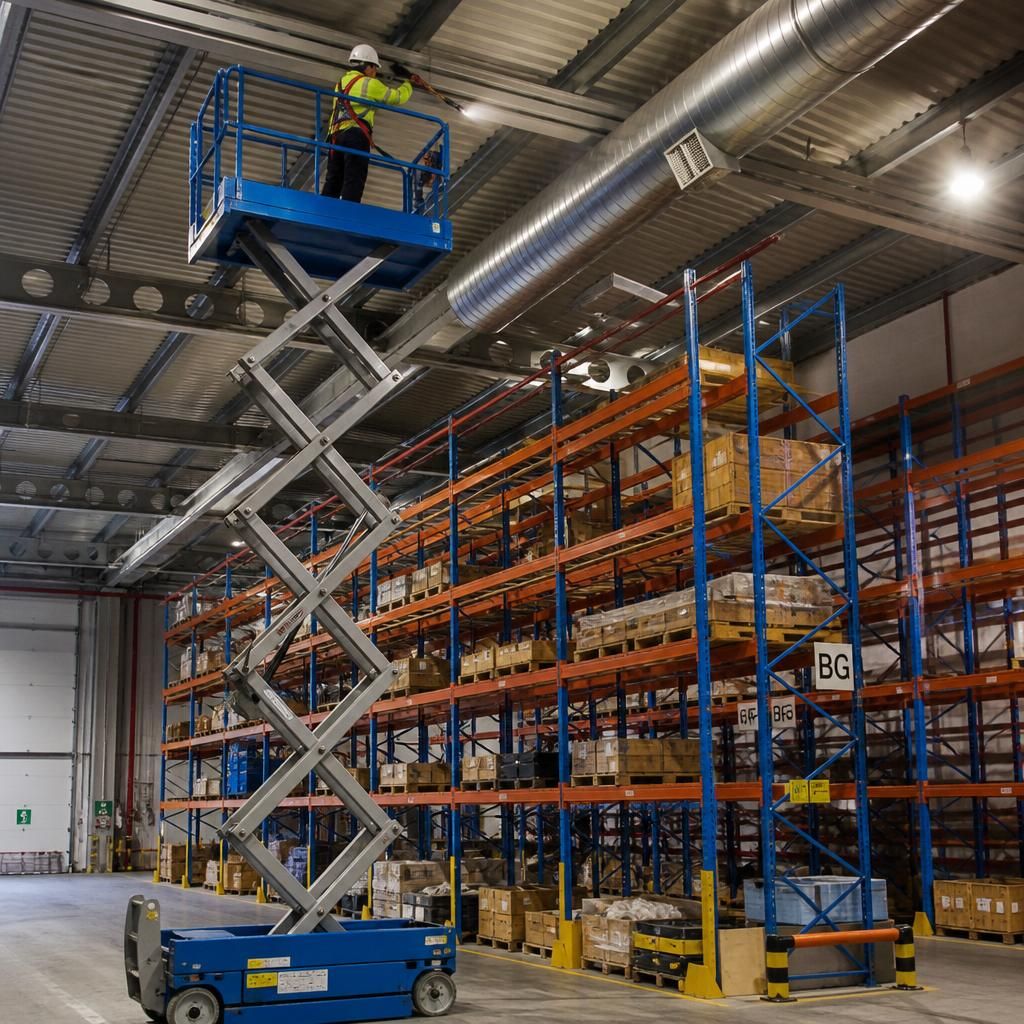
High-level warehouse cleaning requires suitable access equipment or long-reach systems to safely remove dust and debris from beams, lighting, ducting, roof structures and the tops of racking. Mobile elevated work platforms and powered access platforms can provide controlled access where the floor, working height and warehouse layout allow them, while telescopic poles and specialist vacuum systems may clean some areas from ground level.
Equipment must be selected after assessing ground conditions, aisle widths, obstructions, vehicle movements and the risk of falling objects. Operators should be trained and authorised, with exclusion zones, warning signs and suitable personal protective equipment used throughout the work. Where possible, ground-level methods can reduce disruption to warehouse operations and avoid unnecessary work at height.
Arrange a Warehouse Cleaning Equipment Assessment
Arrange a warehouse cleaning equipment assessment with Encanto Exterior Cleaning to identify the most suitable machinery, access systems and safety controls for your facility. We can recommend a practical approach based on your surfaces, contamination, layout and operational requirements.