
What specialised equipment is essential for effective warehouse cleaning?
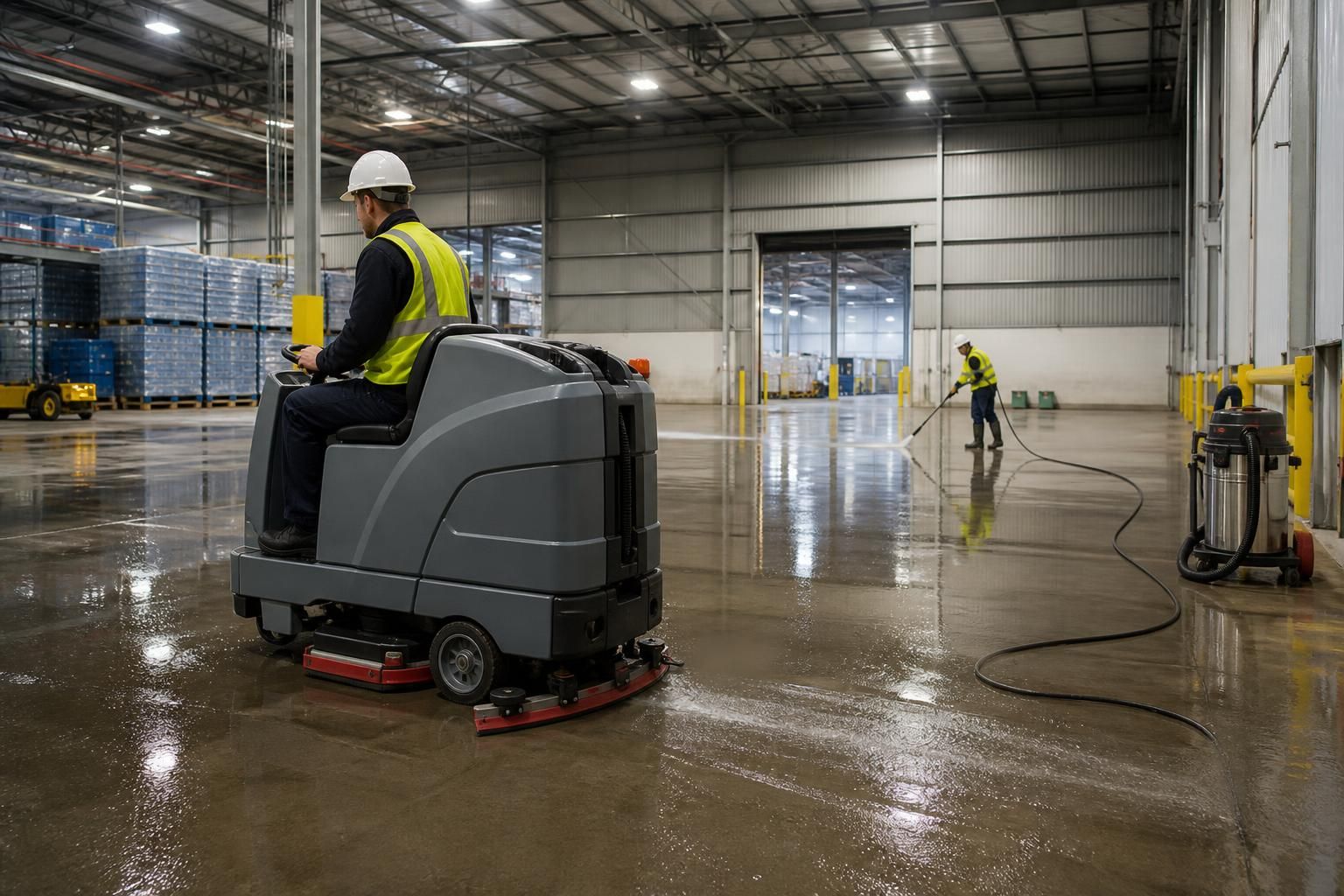
Effective warehouse cleaning typically requires industrial pressure washers, steam cleaners, floor scrubber-dryers, industrial vacuums and suitable access equipment for high-level areas. The correct combination depends on the surfaces, contamination, drainage arrangements and access requirements, with appropriate safety equipment used throughout.
Effective warehouse cleaning relies on a combination of industrial pressure washers, steam cleaners, floor scrubber-dryers, industrial vacuums and suitable access equipment. The right combination depends on the warehouse layout, floor and building materials, type of contamination, available drainage, water supply, electrical facilities and the height of areas requiring cleaning.
Industrial pressure washers are used to remove ingrained dirt, mud, oil residues and other deposits from hard, washable surfaces. They are particularly suitable for loading bays, external warehouse approaches, concrete yards, dock areas, walls and some floors. Operators must select the pressure, temperature, nozzle and cleaning solution carefully. Excessive pressure can damage painted surfaces, joints, sealants, cladding coatings or deteriorated concrete, while uncontrolled water can spread contamination or create slip hazards.
Hot-water pressure washing is often more effective than cold-water cleaning where grease, oil or heavy traffic residues are present. Surface cleaners and controlled-flow attachments can help produce a more even result across large floor areas, reducing striping and limiting overspray. Where wastewater cannot flow directly to a drain, recovery equipment may be needed to collect contaminated water for appropriate disposal.
Steam cleaners provide a low-water method for loosening grease, sanitising hard surfaces and cleaning areas where excessive water would be unsuitable. They can be useful around doors, hinges, machinery surrounds, racking components, welfare areas and other detailed sections of a warehouse. Steam is not appropriate for every material, so the operator should check whether heat or moisture could affect electrical components, adhesives, coatings, packaging or sensitive stock.
Floor scrubber-dryers are essential for maintaining large internal warehouse floors efficiently. These machines apply a controlled amount of cleaning solution, agitate the surface with brushes or pads, recover the dirty water and leave the floor substantially drier. This is valuable in operational warehouses because it reduces standing water and limits the time during which pedestrians or vehicles are exposed to a wet surface.
Different brushes and pads are available for sealed concrete, resin floors, textured surfaces and areas with heavier soiling. The machine must be suitable for the available aisle width and turning space. Compact equipment may be required in narrow aisles, while ride-on or larger walk-behind machines can improve productivity in open floor areas. Cleaning routes should be planned around forklift movements, stock locations and emergency access routes.
Industrial vacuum cleaners remove dust, loose debris, cobwebs, packaging fragments and fine residues before wet cleaning begins. Models should be selected according to the material being collected. Wet-and-dry vacuums can handle liquid spills as well as dry debris, while units with suitable filtration are preferable where fine dust must not be redistributed into the air. Specialist extraction may be necessary for hazardous or regulated substances, subject to an appropriate risk assessment and waste-handling procedure.
Access equipment is required for high-level cleaning of beams, roofs, lighting, pipework, vents, warehouse cladding and the tops of racking systems. Depending on the building and task, this may include mobile elevated work platforms, scissor lifts, access towers or telescopic cleaning systems operated from ground level. The equipment must suit the floor condition, working height, available clearance and surrounding traffic. Any work at height requires competent planning, inspection of the equipment and controls to prevent falls and dropped objects.
Telescopic poles and specialist attachments can sometimes clean elevated surfaces without placing an operative at height. These systems are useful for removing cobwebs or light deposits from ceilings, roof-level structures and high windows, although they may not provide sufficient agitation for heavy contamination. A closer-access method may be necessary where deposits are bonded to the surface or where detailed inspection is required.
Water recovery and waste-management equipment becomes important when cleaning loading bays, workshops, production-adjacent areas or floors affected by oil and chemical residues. Recovery vacuums, bunded collection systems, drain covers and suitable containers can help prevent contaminated water entering surface-water drainage. The cleaning method should account for the substance being removed and the site’s environmental controls; oils, chemicals and other controlled waste must not be discharged as ordinary wash water.
Additional equipment may include dosing systems for accurate detergent application, floor squeegees for directing water, low-pressure sprayers, rotary cleaning heads, chewing-gum removal tools and specialist attachments for corners and edges. These accessories are not substitutes for the main machines, but they improve control in areas where standard nozzles or brushes cannot clean effectively.
Safety equipment is required alongside the cleaning machinery. This can include protective footwear with suitable slip resistance, gloves, eye and hearing protection, high-visibility clothing, respiratory protection where the assessment identifies an airborne risk, and barriers or warning signs around active work areas. Electrical equipment must be appropriate for the environment, and cables, hoses and wet floors should be managed so they do not obstruct pedestrian or vehicle routes.
Before equipment is selected, the cleaning contractor should assess the surfaces, contamination, drainage, ventilation, stock protection, working height, vehicle movements and operating hours. Equipment should then be tested on a discreet area where there is a risk of marking, coating failure or water damage. This approach helps establish the correct pressure, heat, detergent, brush type and cleaning sequence without compromising the warehouse fabric or its contents.
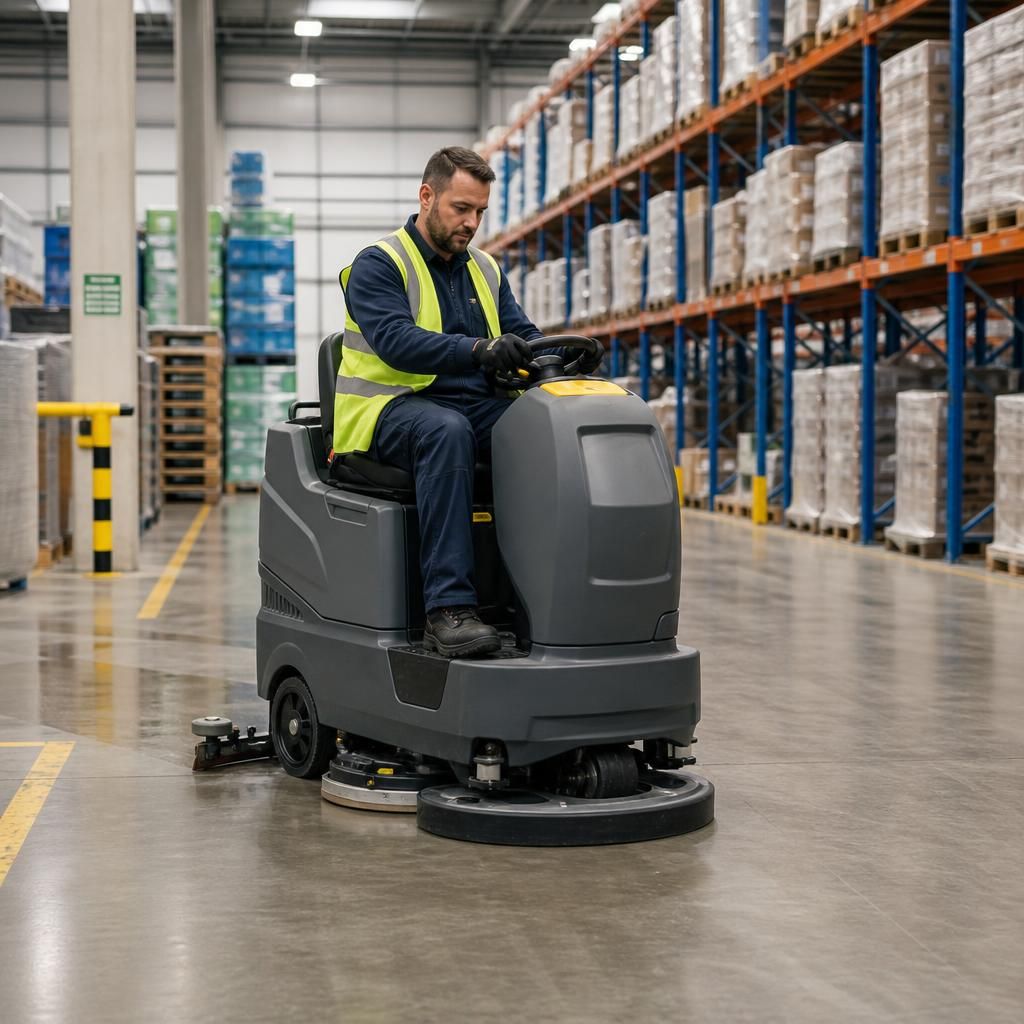
Floor scrubber-dryers are essential for maintaining large warehouse floors because they apply cleaning solution, agitate embedded dirt and recover the resulting wastewater in one controlled operation. This leaves the surface substantially drier than conventional mopping or uncontrolled washing, helping reduce slip risks and disruption to pedestrian and forklift movements.
The machine must match the warehouse layout and floor type. Compact walk-behind models suit narrow aisles and restricted turning areas, while larger machines are more productive across open floor space. Brush or pad selection should be based on whether the surface is sealed concrete, resin, textured flooring or heavily soiled, and cleaning routes should be planned around stock, vehicle traffic and emergency access.
Arrange Your Warehouse Cleaning Assessment
Arrange your warehouse cleaning assessment with Encanto Exterior Cleaning to identify the equipment, access requirements and cleaning methods suited to your site. We can assess surfaces, contamination, drainage and operational constraints before recommending a practical cleaning plan.