
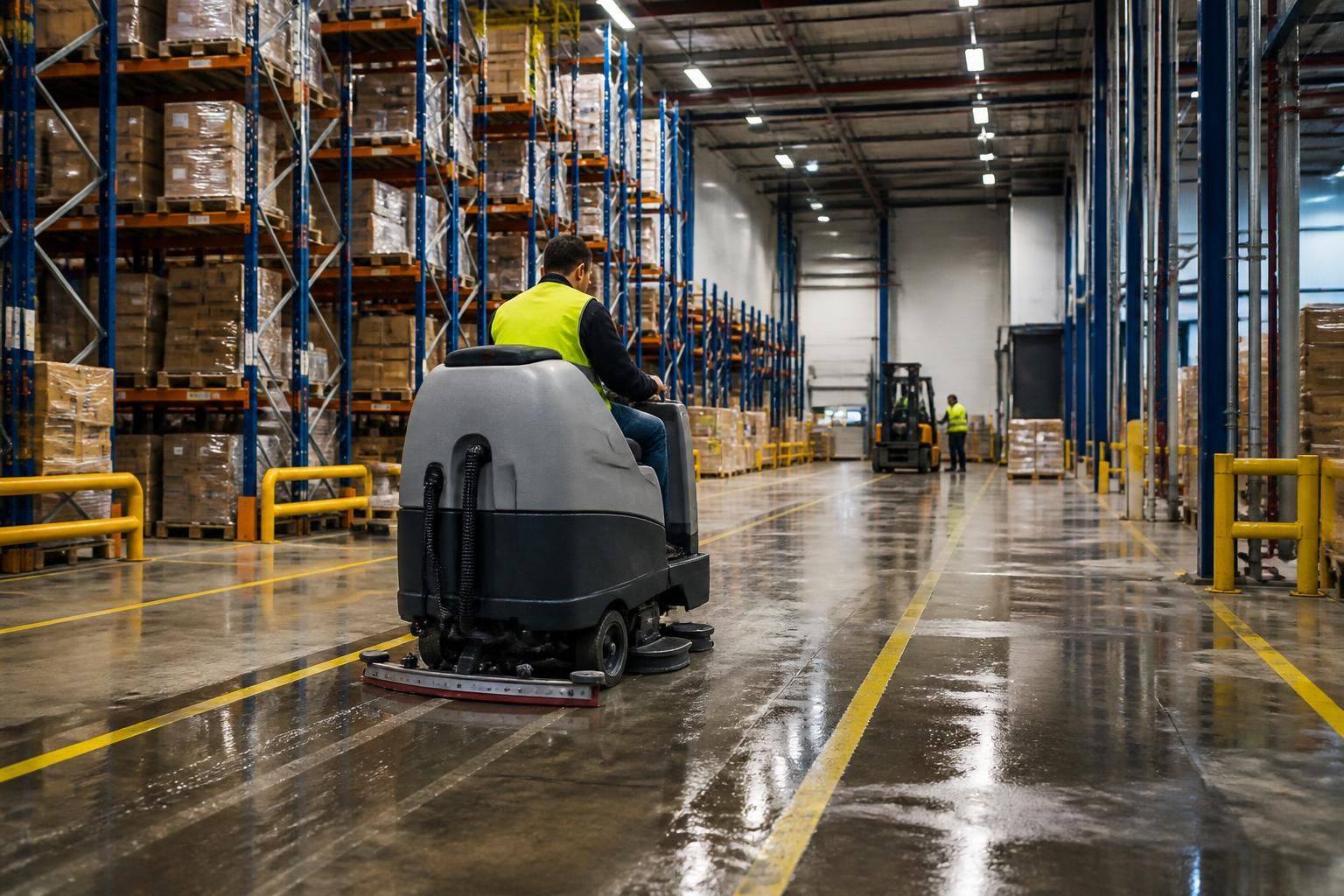
What cleaning service frequency should be implemented for optimal warehouse maintenance?
Optimal warehouse maintenance usually combines daily housekeeping with scheduled weekly, monthly and periodic deep-cleaning tasks, adjusted for traffic levels, dust, stock type, spill risk and operational requirements. High-traffic areas, loading bays, walkways and welfare facilities may need cleaning daily, while racking, roofs, façades and other less frequently soiled areas can follow a planned periodic programme.
Optimal warehouse maintenance normally requires a layered cleaning schedule: routine housekeeping every day, planned cleaning each week, more detailed tasks each month and periodic deep cleaning based on site conditions. The correct frequency depends on vehicle and pedestrian traffic, dust levels, stock type, spill risk, operating hours, food or pharmaceutical requirements, and the condition of the building and external areas.
A warehouse should not rely on occasional deep cleans to manage day-to-day contamination. A documented programme should identify what must be cleaned, how often, which method is appropriate, who is responsible and how completion is checked. Frequencies should then be reviewed after incidents, layout changes, seasonal weather, construction work or changes in throughput.
Daily cleaning and housekeeping
Daily tasks should focus on areas where contamination, obstruction or slip risks can develop quickly. These commonly include:
- Removing waste, packaging, shrink wrap, loose strapping and damaged pallets.
- Sweeping or mechanically cleaning vehicle routes, pedestrian walkways, picking areas and dispatch zones.
- Cleaning spillages promptly using a method suitable for the substance involved.
- Maintaining loading bays, goods-in areas and dock levellers, where dirt and water can be brought into the building.
- Cleaning welfare facilities, offices, canteens and staff changing areas in line with their use.
- Checking entrances and thresholds for tracked-in mud, standing water and debris.
- Keeping fire exits, emergency routes, access points and safety equipment clear of waste and stored materials.
High-traffic warehouses may require more than one housekeeping check during a shift. A spill, damaged container or build-up of loose material should be dealt with immediately rather than left until the next scheduled clean.
Weekly cleaning
Weekly work should address surfaces that do not require attention during every shift but still accumulate dust and residue. Typical tasks include cleaning around racking bases, under accessible equipment, along walls and behind doors. Floors may need a more thorough scrub with suitable mechanical equipment, particularly where routine sweeping does not remove tracked-in grime, oil residue or compacted dirt.
Weekly cleaning is also appropriate for reviewing areas that are easily missed during daily housekeeping, such as corners, stairways, handrails, dock edges, waste storage points and less frequently used access routes. Where pressure washing or wet cleaning is used, the process should be planned around drainage, electrical equipment, stock protection and drying time.
Monthly and periodic cleaning
Monthly tasks can include cleaning higher-level ledges, exposed pipework, racking components, light fittings, door mechanisms, ventilation grilles and other surfaces where dust settles. The exact interval should reflect the amount of dust generated by the operation. Warehouses handling powders, aggregates, timber, textiles or dusty packaging may need these tasks more frequently, while a clean, enclosed storage environment may require them less often.
Periodic deep cleaning should cover areas that are difficult to access or that need specialist equipment. Depending on the building, this may include:
- High-level dust removal from beams, roof structures, services and racking.
- Deep cleaning of warehouse floors and hard-standing areas.
- Cleaning external walls, façades, cladding and loading-bay surfaces.
- Roof, gutter and drainage maintenance where debris could cause blockages or water ingress.
- Cleaning car parks, yards, ramps and access roads.
- Removal of graffiti, oil deposits, algae and weather-related staining.
- Cleaning around plant, machinery and building services without affecting their operation.
These tasks may be scheduled seasonally, quarterly or at another suitable interval. They should be brought forward when inspections identify visible build-up, poor drainage, staining, odour, pest activity or a deterioration in the condition of the building fabric.
Factors that should determine frequency
Traffic and handling activity: Frequent forklift movements, deliveries and pallet handling increase the amount of dust, rubber residue and debris on floors. Loading bays and routes connecting goods-in, storage and dispatch usually need more frequent attention than low-use areas.
Type of stock: Food, medical products, chemicals, powders and other sensitive goods may require tighter controls and cleaning methods specified by site procedures or applicable standards. Stock that can be damaged by moisture or cleaning chemicals also requires careful segregation and protection during cleaning.
Spill and contamination risk: Liquids, oils, chemicals and loose materials require immediate response arrangements as well as routine cleaning. The cleaning plan should identify suitable absorbents, protective equipment, waste handling arrangements and escalation procedures.
Building condition: Leaking roofs, damaged flooring, worn loading bays, blocked gutters and defective drainage can increase cleaning requirements. Cleaning will not resolve the underlying cause, so defects should be reported and addressed through the appropriate maintenance process.
Seasonal conditions: Wet weather, mud, grit, leaves and winter treatment materials can increase contamination at entrances, yards and loading areas. Seasonal checks should be built into the programme rather than treating these conditions as unexpected events.
Occupational and operational requirements: Cleaning must fit around forklift movements, picking activity, shift changes and access restrictions. In some facilities, work is best completed outside operating hours; in others, zoned cleaning during production is more practical. The method and timing should prevent creating additional slip, collision, dust or contamination hazards.
How to establish a practical schedule
- Inspect the warehouse by zone, recording traffic levels, surface types, contamination sources and access limitations.
- Separate immediate response tasks from routine, periodic and specialist cleaning.
- Set a minimum frequency for each area, then increase it where inspections show recurring build-up or incidents.
- Choose cleaning methods that suit the surface and risk, including sweeping, scrubbing, pressure washing, steam cleaning or controlled high-level access.
- Coordinate cleaning with warehouse operations, maintenance, contractors and any stock protection requirements.
- Record completed work, defects, spill responses and follow-up actions.
- Review the programme regularly and revise it after changes to traffic, stock, layout, equipment or regulatory requirements.
Cleaning records should be sufficiently detailed to show the area completed, date, method, operative or contractor and any issues requiring attention. They can also help identify recurring problems, such as a particular loading bay generating excessive dirt or a drainage point repeatedly becoming blocked.
When to use specialist cleaning support
Professional support is appropriate where cleaning involves high-level surfaces, large floor areas, external façades, roofs, difficult access, heavy staining or equipment that requires trained operation. Pressure washing and steam cleaning can be effective, but water pressure, temperature, runoff, chemical use and access arrangements must be controlled to avoid damaging surfaces, affecting stock or creating hazards.
For most warehouses, the most reliable approach is a written cleaning plan combining daily site housekeeping with scheduled professional maintenance. This keeps high-risk areas under control while ensuring less visible surfaces, external areas and building fabric receive attention before dirt, staining or debris develops into a safety, compliance or maintenance problem.
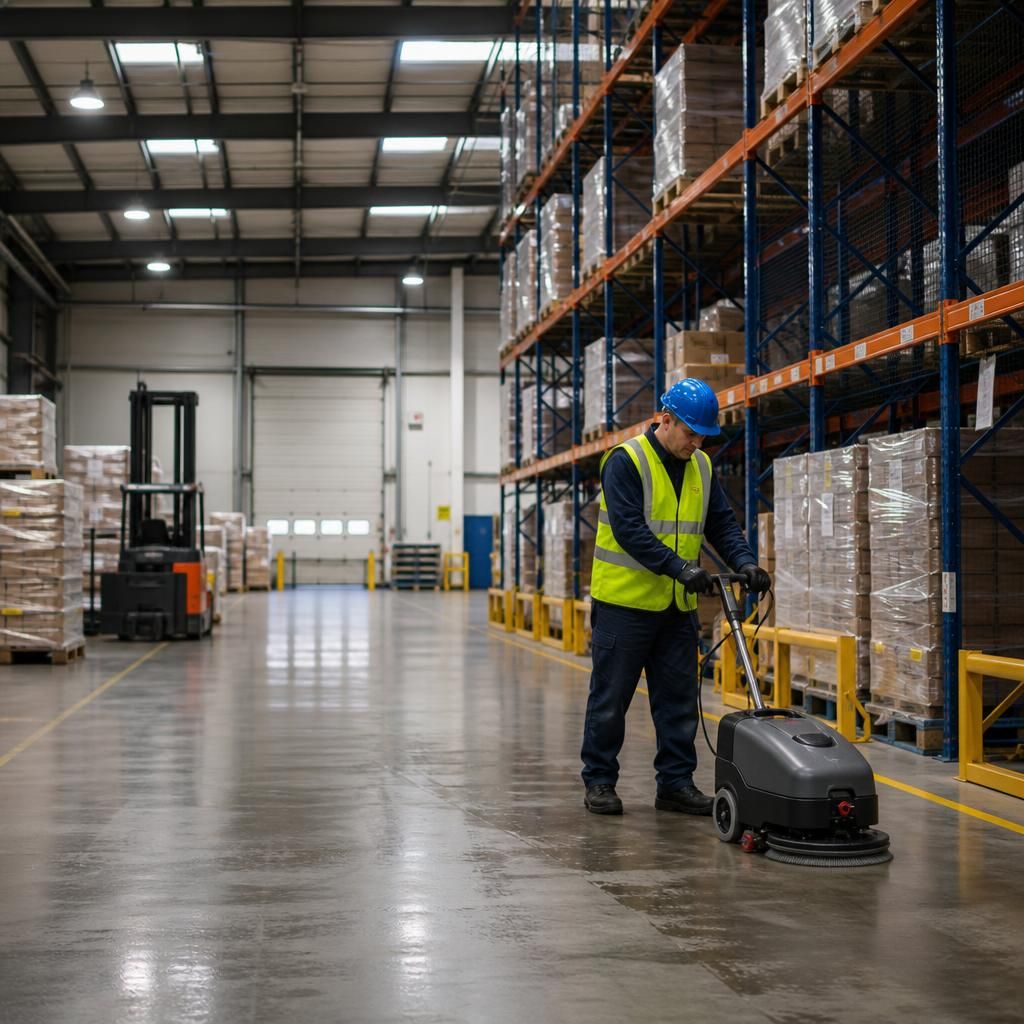
Warehouse cleaning frequency should be based on the level of traffic, contamination and operational risk in each area, rather than applying one routine to the entire facility. High-use zones such as loading bays, pedestrian routes, picking areas and welfare facilities usually need daily attention, while high-level structures, façades, roofs and other less frequently soiled surfaces can be managed through a planned periodic programme.
A practical schedule should combine:
- Immediate response: deal with spillages, damaged packaging, loose strapping and obstructions as soon as they are identified.
- Daily housekeeping: remove waste and clean floors, entrances, access routes and welfare areas.
- Weekly cleaning: address racking bases, corners, dock edges, stairways and areas beneath accessible equipment.
- Periodic specialist cleaning: remove high-level dust, heavy deposits, external staining and debris from roofs, gutters, yards or cladding.
Review the frequency after changes to stock, layout, traffic, weather conditions or building condition. Cleaning records and routine inspections help identify areas that require more frequent attention before dirt, debris or contamination creates a safety, maintenance or compliance issue.