
What are the key benefits of utilising professional warehouse cleaning services?
Professional warehouse cleaning services help maintain safer, more efficient and compliant facilities by removing dust, debris, spills and other hazards from floors, racking, loading areas and high-level surfaces. Specialist cleaners also provide the equipment, methods and planned maintenance needed to protect stock, support productivity and present a professional business environment.
Professional warehouse cleaning services provide planned, specialist cleaning for floors, racking, loading bays, façades, roofs, welfare areas and high-level surfaces. The main benefits are safer working conditions, more efficient operations, better protection for stock and equipment, support for health and safety compliance, and a consistently professional facility appearance.
Improved workplace health and safety
Warehouses accumulate dust, packaging waste, pallet fragments, oil, mud and other debris through normal operations. If these materials are not removed, they can create slip, trip and collision hazards, obstruct walkways or affect visibility around loading and storage areas. Professional cleaners use defined methods to clean floors, traffic routes, stairs, platforms and welfare spaces without creating additional risks for warehouse staff.
Specialist cleaning can also address less visible hazards. Dust on high-level beams, racking and services may fall onto working areas, while contaminated surfaces can transfer dirt to products, handling equipment and employees’ clothing. A structured cleaning plan identifies these areas and sets suitable controls for cleaning around vehicles, conveyors, forklifts, stored goods and pedestrian routes.
More efficient warehouse operations
Clean, unobstructed floors and clearly maintained access routes make it easier for employees and vehicles to move safely around the facility. Removing debris from loading bays, dispatch areas and workstations can reduce interruptions caused by avoidable obstructions, spills or accumulated waste. Clean surfaces also make damage, leaks and defects easier to identify during routine inspections.
Professional cleaning supports operational efficiency without requiring warehouse staff to leave their primary duties. A contractor can schedule work around deliveries, shifts and production activity, using suitable equipment and methods for the building and its operating conditions. This helps maintain standards while limiting disruption to normal warehouse activity.
Protection of stock, buildings and equipment
Dust and moisture can affect stored goods, packaging, electrical installations and mechanical equipment. In some environments, dirt can interfere with doors, loading mechanisms, ventilation systems or moving parts. Regular removal of these contaminants helps reduce the conditions that contribute to premature deterioration, although cleaning should form part of a wider inspection and maintenance programme.
Cleaning also helps preserve the fabric of the building. Floors, concrete yards, cladding, roofs and external access areas can deteriorate when substances such as oil, organic growth, salts or ingrained dirt remain on them. Appropriate pressure washing, steam cleaning or other controlled methods can remove contamination while reducing the risk of damage caused by unsuitable pressure, temperature or chemicals.
Support for health and safety responsibilities
A clean warehouse supports the practical application of workplace safety procedures. Clear routes, controlled spill response, maintained welfare areas and properly managed waste all contribute to a safer working environment. Professional contractors can work to site-specific risk assessments and method statements, with controls for issues such as traffic management, work at height, chemical use, electrical equipment and restricted access.
Cleaning does not by itself guarantee legal compliance, but it can provide important operational support for a facility’s health and safety arrangements. Records of scheduled work, identified defects and completed tasks may also assist internal inspections, contractor reviews and audits where appropriate. The exact documentation required should be agreed with the warehouse operator and responsible safety personnel.
Access to specialist equipment and expertise
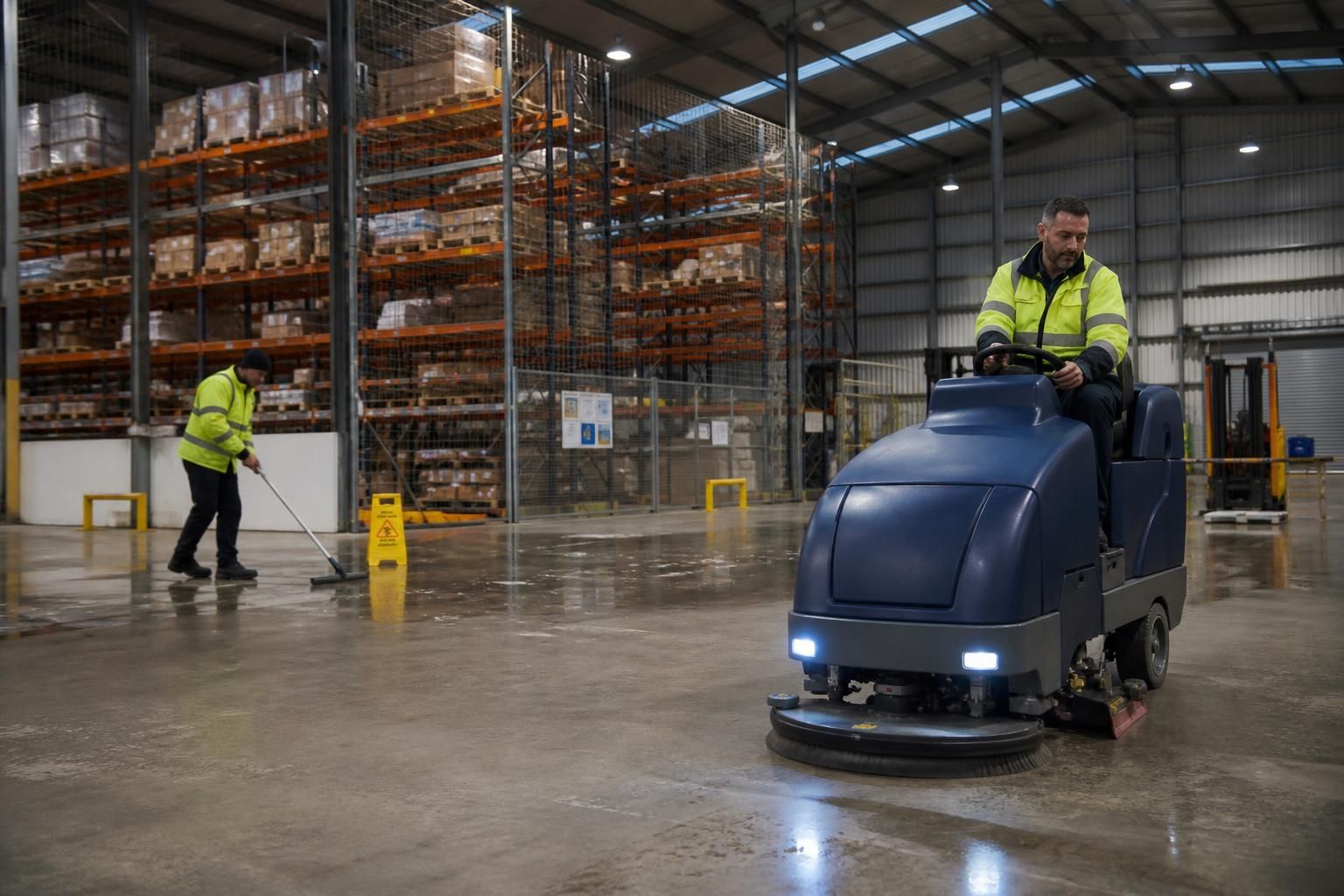
Warehouse cleaning often involves surfaces and locations that cannot be treated effectively with general-purpose equipment. Industrial scrubber dryers can clean large floor areas efficiently, while pressure washers and steam cleaners may be appropriate for external surfaces, loading zones, plant areas or stubborn contamination. High-level cleaning equipment and suitable access systems allow trained operatives to address beams, roofline features, lights and elevated racking with proper controls.
The method must match the surface and contamination. Excessive pressure can damage coatings, joints or seals, while excessive moisture may be unsuitable near electrical equipment, stored materials or sensitive flooring. An experienced cleaning contractor assesses the site, selects an appropriate process and controls overspray, runoff, access and drying times.
A more professional business environment
Warehouse cleanliness affects the impression created for employees, customers, suppliers, auditors and visiting contractors. Clean entrances, yards, loading bays, façades and internal work areas demonstrate that the site is being managed and maintained. This is particularly important where customers collect goods, where goods are handled on behalf of third parties, or where the premises form part of a wider commercial property portfolio.
A consistent standard is more effective than occasional reactive cleaning. Planned work can cover visible areas as well as less obvious locations, preventing dirt and staining from becoming established and ensuring that presentation does not depend solely on staff reporting problems.
Better control of cleaning costs and maintenance priorities
Professional services can help turn cleaning from an ad hoc task into a planned maintenance activity. A site survey can identify the surfaces requiring routine attention, the areas needing periodic deep cleaning and any locations that require specialist access or additional controls. This makes it easier to prioritise work according to traffic levels, contamination, operational risk and the condition of the building.
Planned cleaning may also reduce the need for disruptive emergency work following serious spills, heavy contamination or neglected external areas. It will not eliminate all maintenance requirements, but it can help prevent avoidable build-up and provide earlier visibility of issues such as cracked surfaces, blocked drainage, damaged coatings or water ingress.
Adaptable, documented service delivery
A professional warehouse cleaning programme can be adapted to the facility’s layout, working hours, storage arrangements and changing operational demands. The scope may include daily or periodic floor cleaning, high-level dust removal, washroom and welfare cleaning, loading bay maintenance, external pressure washing, graffiti removal and post-construction or refurbishment cleaning.
The most effective arrangement defines the required standard, access restrictions, permitted cleaning products, waste arrangements, reporting process and responsibilities for site staff. Regular reviews are useful when warehouse use changes, new equipment is installed, storage layouts are altered or seasonal conditions introduce additional mud, water or organic debris.
Overall, professional warehouse cleaning services provide more than a visibly tidy building. They combine suitable equipment, trained operatives, risk-controlled methods and planned scheduling to keep operational areas safer, support efficient movement and handling, protect the condition of the facility and maintain standards that can be demonstrated to relevant stakeholders.
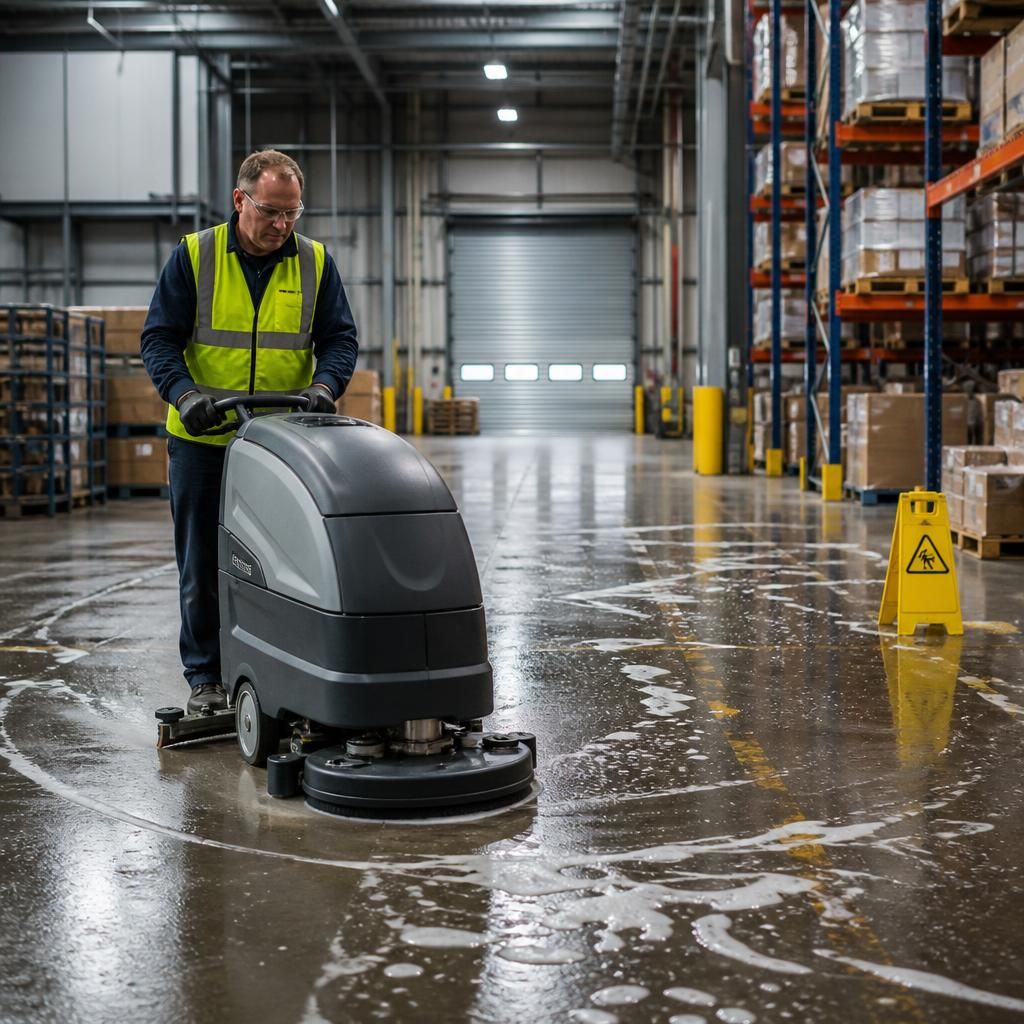
Professional warehouse cleaning services improve workplace safety by removing dust, packaging debris, spillages and other contaminants from floors, walkways, loading bays and high-level surfaces. A planned service helps control slip, trip and falling-object hazards while keeping cleaning activity separate from vehicle movements, stored goods and normal warehouse operations.
Trained operatives can select suitable equipment and methods for each area, including scrubber dryers for large floors, steam cleaning for stubborn contamination and controlled access systems for elevated surfaces. Cleaning should be supported by site-specific risk assessments, traffic controls and agreed reporting procedures so that hazards identified during the work can be passed to the responsible warehouse team.
Discuss your warehouse cleaning requirements
Discuss your warehouse cleaning requirements with our team to identify suitable cleaning methods, access arrangements and service intervals for your facility. We can help develop a practical cleaning plan around your operating hours and site-specific risks.