
What are the cost considerations for warehouse cleaning services?
The cost of warehouse cleaning services depends on factors including the size and condition of the facility, cleaning frequency, access requirements, floor and surface types, and any specialist work such as high-level cleaning, pressure washing or graffiti removal. A site assessment allows the scope of work, equipment, labour and access needs to be evaluated so the quotation reflects the actual requirements.
Warehouse cleaning service costs are determined by the amount of work required at the site rather than by floor area alone. A reliable quotation considers the warehouse’s size, condition, surfaces, cleaning frequency, access arrangements, equipment, staffing, waste requirements and any specialist treatments, such as high-level cleaning, pressure washing or graffiti removal.
The main cost considerations are outlined below.
- Warehouse size and layout: Larger floor areas generally require more labour, equipment time and cleaning materials. However, the layout is also important. Narrow aisles, multiple storage zones, mezzanines, offices, loading bays and welfare areas can make the work more time-consuming than an open warehouse of a similar size.
- Condition of the premises: A warehouse requiring a first-time deep clean may cost more than one receiving routine maintenance. Accumulated dust, oil, tyre marks, mud, packaging residue, food deposits or other contamination can require additional preparation, repeated cleaning passes or specialist products. A heavily soiled site may also need a separate initial clean before a regular maintenance schedule can begin.
- Cleaning frequency: Regular cleaning can make individual visits more efficient because contamination is controlled before it becomes difficult to remove. Daily, weekly, periodic or one-off arrangements each have different labour and scheduling implications. The appropriate frequency depends on factors such as site usage, vehicle movements, product handling, foot traffic, environmental exposure and the standard required for audits or inspections.
- Floor type and surface condition: Concrete, resin, painted floors, tiled areas, rubber surfaces, cladding and other materials require different methods and products. Damaged or porous surfaces may take longer to clean and can limit the use of aggressive chemicals or high-pressure equipment. The required finish also affects the work, particularly where slip resistance, presentation or hygiene is important.
- High-level and difficult-access cleaning: Roof structures, beams, lighting, racking, ductwork and elevated cladding require suitable access equipment and additional controls. Costs may include powered access platforms, specialist vacuum systems, scaffolding or other arrangements, depending on the height, reach, floor conditions and obstructions. A suitable method must be selected so that cleaning can be completed safely without interfering with warehouse operations.
- Specialist cleaning treatments: Pressure washing, steam cleaning, chewing gum removal, graffiti removal, roof cleaning, façade cleaning and oil-stain treatment involve different equipment, preparation and expertise. The treatment required depends on the substance being removed and the surface beneath it. Some work may also require containment, recovery of wastewater or additional protection for nearby stock and equipment.
- Access and site logistics: The availability of loading areas, parking, water, power and secure equipment storage can affect the time and resources needed. Restricted access, busy loading bays, security procedures or limited working hours may require the team to work in phases or attend outside normal operational periods. Travel distance and the location of a site can also influence the overall quotation, particularly for remote or multi-site work.
- Operational restrictions: Cleaning around forklifts, conveyors, production equipment, vehicles or stored goods requires coordination with the site team. If areas must be isolated, stock moved or work completed during shutdowns, the programme may require additional labour or attendance outside standard hours. A clear work plan helps reduce disruption and prevents avoidable delays.
- Health, safety and environmental controls: The quotation may need to account for risk assessments, method statements, site inductions, personal protective equipment, exclusion zones, traffic management and safe disposal of contaminated materials. Where water or chemical products are used, wastewater must be managed in line with site procedures and applicable environmental requirements.
- Waste removal: Routine cleaning does not always include the collection or disposal of general warehouse waste, spill materials, contaminated absorbents or bulky debris. If waste removal is required, its type, volume and disposal route should be identified separately so that the cost and responsibility are clear.
Labour is usually a significant part of the cost. The required team size depends on the area, the cleaning standard, the equipment being used and the available working time. A larger team can complete a project more quickly, but the total labour requirement is still governed by the work scope. Specialist operators may also be needed for powered access, high-level work or particular cleaning systems.
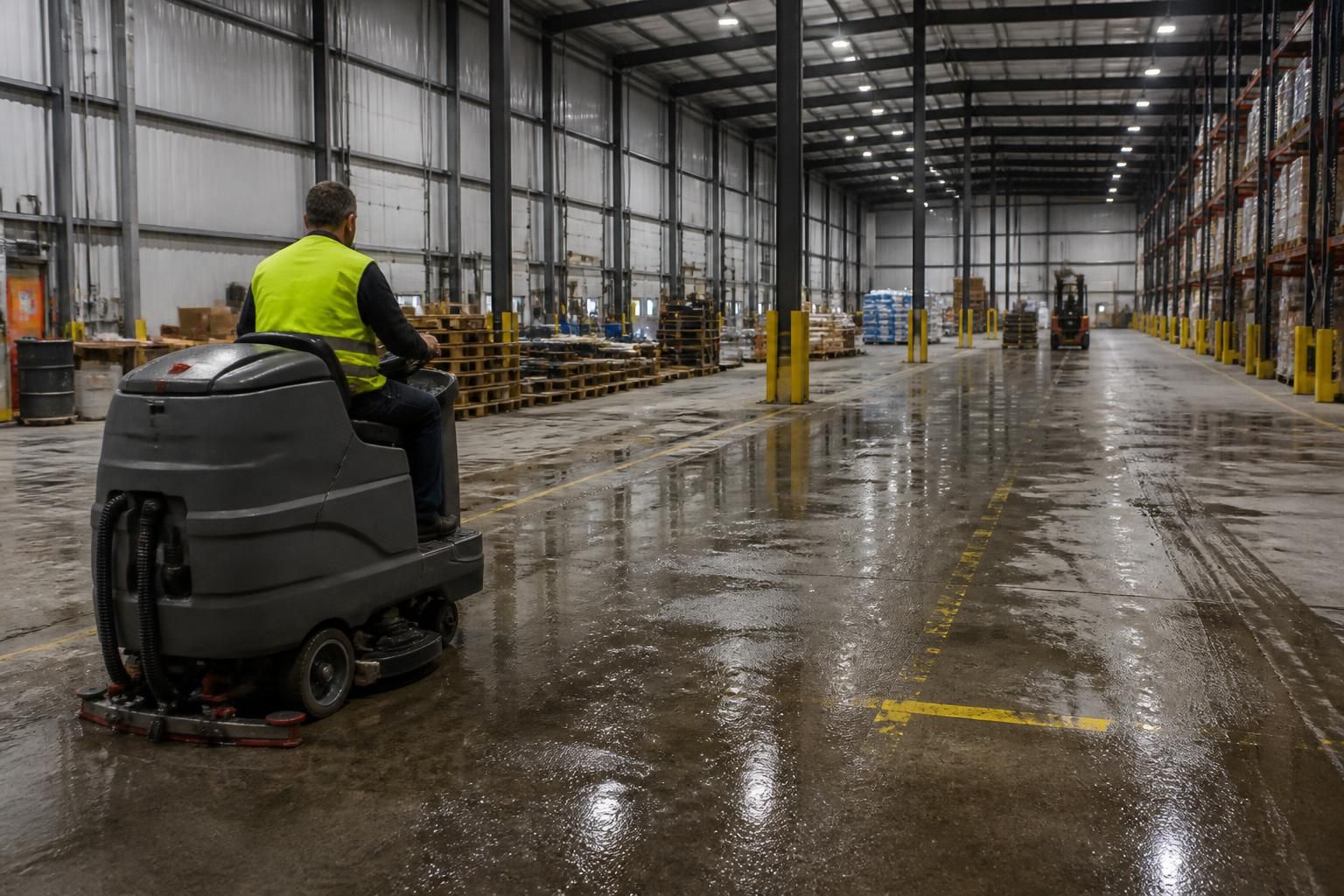
Equipment can affect the quotation in two ways. Standard floor-cleaning machinery may be suitable for open areas, while industrial vacuum systems, scrubber dryers, pressure washers, steam cleaners or access platforms may be needed for more demanding work. Equipment selection should be based on the surface, contamination and working environment. Using excessive pressure, unsuitable chemicals or inappropriate machinery can damage floors, cladding, stock or drainage systems and may create additional costs.
When comparing quotations, check whether they include labour, equipment, cleaning materials, travel, access equipment, waste disposal, out-of-hours working and any follow-up visits. Confirm the cleaning tasks, areas included, expected standard, exclusions and arrangements for additional work. An unusually low quotation may reflect a narrower scope, limited site preparation or the omission of access and disposal costs rather than a lower true cost.
A site assessment is the most reliable way to establish the likely cost. During an assessment, the cleaning contractor can review measurements, surface types, contamination, access points, working restrictions, water and power availability, drainage, safety requirements and the preferred schedule. Photographs, site plans and details of warehouse operations can support the assessment, but they may not identify every practical issue.
For ongoing maintenance, the most cost-effective arrangement is usually a clearly defined programme based on risk and usage rather than a fixed frequency applied to every area. High-traffic routes, loading bays and welfare facilities may need more regular attention, while less-used areas can be cleaned periodically. Separating routine cleaning from occasional specialist work also makes budgets easier to plan and ensures that major treatments are not confused with everyday maintenance.
To obtain a useful quotation, provide the warehouse location, approximate areas, operating hours, surface information, known contamination, access restrictions, required cleaning standard and any target dates. Include details of high-level areas, external surfaces, car parks, loading bays and waste requirements if they are part of the project. This allows the scope, resources and schedule to be assessed accurately, with fewer unexpected variations once work begins.

A site assessment is the most reliable way to establish the likely cost of warehouse cleaning. It allows the contractor to check the building’s size and layout, floor and surface types, contamination, access points, working height, drainage, water and power availability, and any restrictions caused by forklifts, stored goods or loading bays.
This assessment also clarifies whether the quotation needs to include powered access, specialist cleaning equipment, out-of-hours work, wastewater control or waste disposal. Providing operating hours, site plans, photographs and details of high-level areas in advance can improve the accuracy of the quotation, but an on-site review remains important because practical access and safety conditions are not always visible in supplied information.