
What are the benefits of using advanced equipment like steam cleaners and power washers for warehouse cleaning?
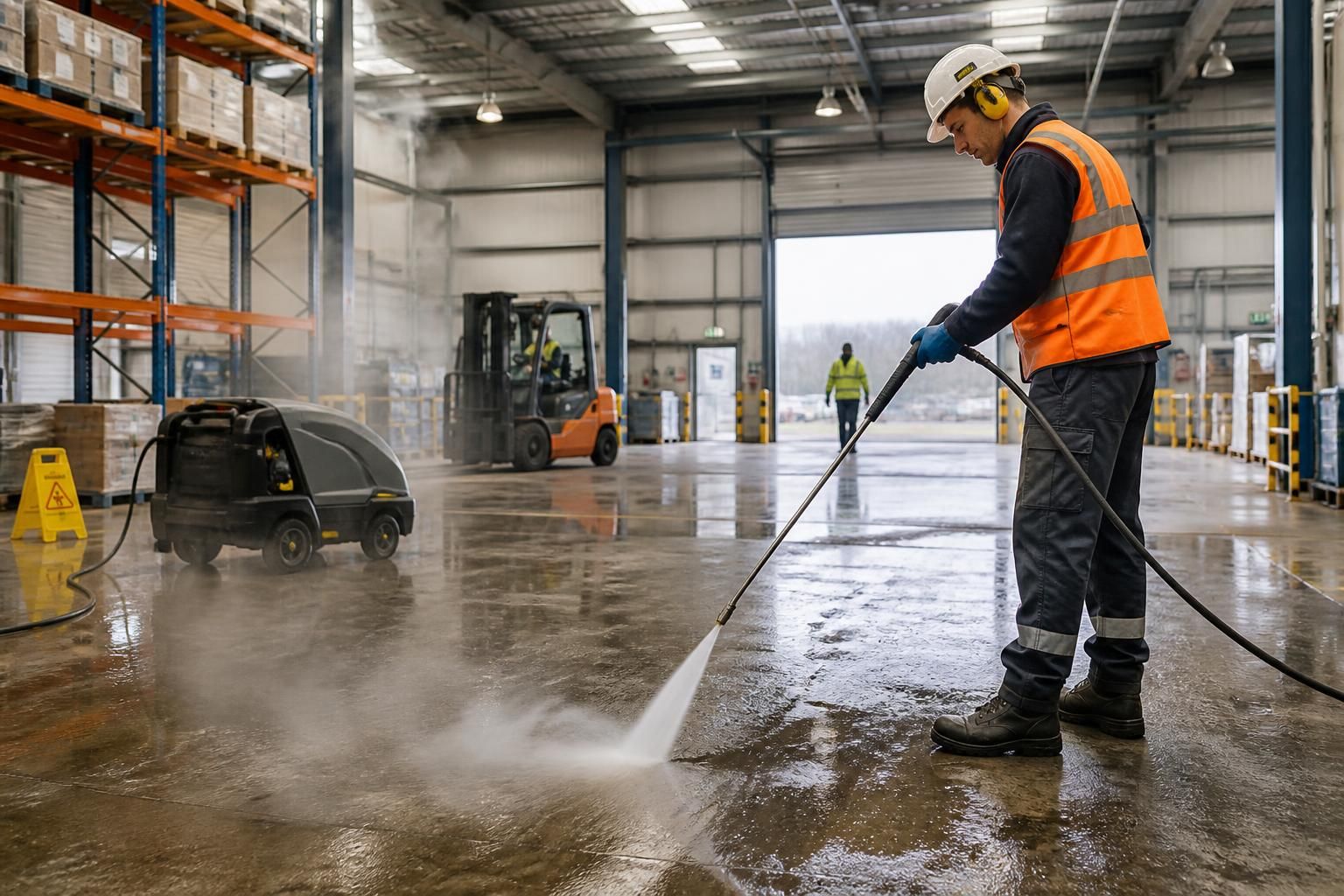
Advanced steam cleaners and power washers remove ingrained dirt, oil, dust and other residues from warehouse floors, loading areas, façades and equipment more effectively than routine manual cleaning. They can improve slip safety, hygiene and site presentation while helping maintain surfaces and meet workplace cleaning requirements when selected and operated correctly.
Advanced steam cleaners and power washers provide faster, more controlled removal of ingrained dirt, oil, dust, residues and organic contamination than routine manual cleaning. In a warehouse, they are particularly useful for floors, loading bays, dock areas, façades, cladding, shutters, plant, racking components and external hard-standing areas. The correct equipment and operating method can improve cleanliness, reduce slip hazards, support hygiene controls and help keep the site presentable and compliant with workplace requirements.
More effective removal of ingrained contamination
Warehouse traffic can press oil, rubber deposits, brake dust, pallet debris and general grime into porous or textured surfaces. Sweeping and mopping may remove loose material but often leave a bonded film behind. Power washers use pressurised water to break down and flush away contamination, while steam cleaners apply high-temperature moisture to soften residues and clean detailed areas with less water.
This is valuable in locations such as:
- Vehicle routes, forklift lanes and turning areas
- Loading bays, ramps and dock levellers
- Concrete floors and hard-standing areas
- Plant rooms and service areas
- External walls, cladding and roller shutters
- Waste storage areas and delivery compounds
The method still needs to match the contamination. Oil, chewing gum, food residue, biological growth and construction dust may require different temperatures, pressures, detergents, dwell times or agitation. Using more pressure is not automatically better; excessive pressure can damage coatings, force water into joints or spread contamination.
Improved slip safety
Grease, oil, algae, mud and compacted dust can reduce traction on warehouse floors, ramps and external circulation routes. Removing these deposits helps restore the surface’s available grip and reduces one potential contributor to slips and falls. Cleaning does not replace inspection, repairs, drainage improvements or suitable footwear, but it forms an important part of a wider risk-control programme.
Cleaning should be planned around operational risks. The area may need to be isolated, signed and allowed to dry before vehicles, pedestrians or warehouse activities resume. Particular care is needed on ramps, polished concrete, painted floors and surfaces where residual moisture can create a temporary hazard.
Better hygiene and contamination control
Steam cleaning can help remove residues from awkward or detailed areas while using relatively little water. The heat can assist with the removal of some organic contamination, although it should not be described as a universal disinfecting process. Effective hygiene depends on the contaminant, temperature, contact time, cleaning agent, surface condition and the required standard of cleanliness.
Power washing is useful where contamination is widespread and the surface can safely tolerate controlled water pressure. For food, pharmaceutical, healthcare or other regulated environments, the cleaning method should be agreed with the site’s hygiene procedures and documented requirements. Wastewater must also be contained and disposed of correctly rather than allowed to enter unsuitable drains.
Reduced cleaning time and disruption
Mechanical cleaning equipment can cover large areas more consistently than hand tools, particularly during periodic deep cleans or after construction, refurbishment or heavy deliveries. This may reduce the time that aisles, loading points and access routes are unavailable, provided the work is properly planned.
Professional operators can divide a warehouse into manageable zones, coordinate cleaning with shift patterns and use suitable access equipment for high-level or difficult-to-reach surfaces. They can also combine methods—for example, sweeping or vacuuming loose dust before washing, using steam around sensitive components, and power washing robust external concrete.
Protection of building surfaces and assets
Regular removal of dirt and organic growth helps prevent contamination from becoming more difficult to clean. On external areas, moss, algae and accumulated grime can retain moisture and obscure defects. Cleaning can make deterioration, damaged coatings, blocked drainage points and failed sealants easier to identify during inspection.
However, advanced equipment must be operated with surface protection in mind. The operator should assess the material, coating, joints, electrical components and drainage before work begins. Lower pressure, controlled steam, appropriate nozzles and careful working distances may be needed for painted cladding, insulation panels, resin floors, signage and machinery. Sensitive equipment should be protected from water ingress, and cleaning should not begin until isolation requirements have been confirmed.
More consistent results
Steam cleaners and power washers provide a repeatable cleaning process when operators control pressure, temperature, flow rate, detergent use and working distance. This supports consistent standards across large floor areas and helps identify sections that need additional treatment.
For ongoing warehouse maintenance, the cleaning specification should define the areas to be cleaned, the acceptable finish, exclusion zones, drying arrangements, wastewater controls and any restrictions on chemicals or water use. Before-and-after inspections can then confirm that the work has addressed the intended contamination without causing surface damage.
Potentially lower water and chemical use
Steam cleaning can be suitable where a low-moisture approach is preferred, while controlled pressure washing can remove heavy contamination efficiently without relying solely on aggressive chemicals. This may support water-management and environmental procedures, but actual consumption depends on the equipment, surface, contamination and cleaning technique.
Detergents should be selected according to the surface and the type of soil being removed. Safety data, dilution instructions and drainage restrictions must be followed. Where wastewater contains oil, chemicals, sediment or other contaminants, it may require collection, separation or specialist disposal.
How the equipment should be selected
The best results come from selecting equipment for the site rather than treating steam cleaning and power washing as interchangeable services. Consider:
- The material, age and condition of each surface
- Whether the contamination is dry, greasy, biological, chemical or embedded
- The required pressure, temperature and water volume
- Availability of drainage, water and electrical supplies
- Whether wastewater recovery is required
- Access restrictions, vehicle movements and pedestrian routes
- Noise, heat, fumes and ventilation requirements
- Working-at-height controls for façades, roofs and high-level structures
A competent contractor will survey the warehouse, identify vulnerable areas and agree a method statement before cleaning. They should also use appropriate personal protective equipment, manage hoses and cables, control overspray, protect stock and electrical systems, and follow the site’s permit and isolation procedures.
Advanced equipment is therefore most beneficial when it is combined with sound planning and experienced operation. Steam cleaners are often suited to targeted, low-moisture or heat-assisted cleaning, while power washers are effective for robust surfaces and larger areas of heavy contamination. Used appropriately, both methods can help maintain safer access routes, cleaner working conditions, better presentation and a more manageable warehouse maintenance programme.
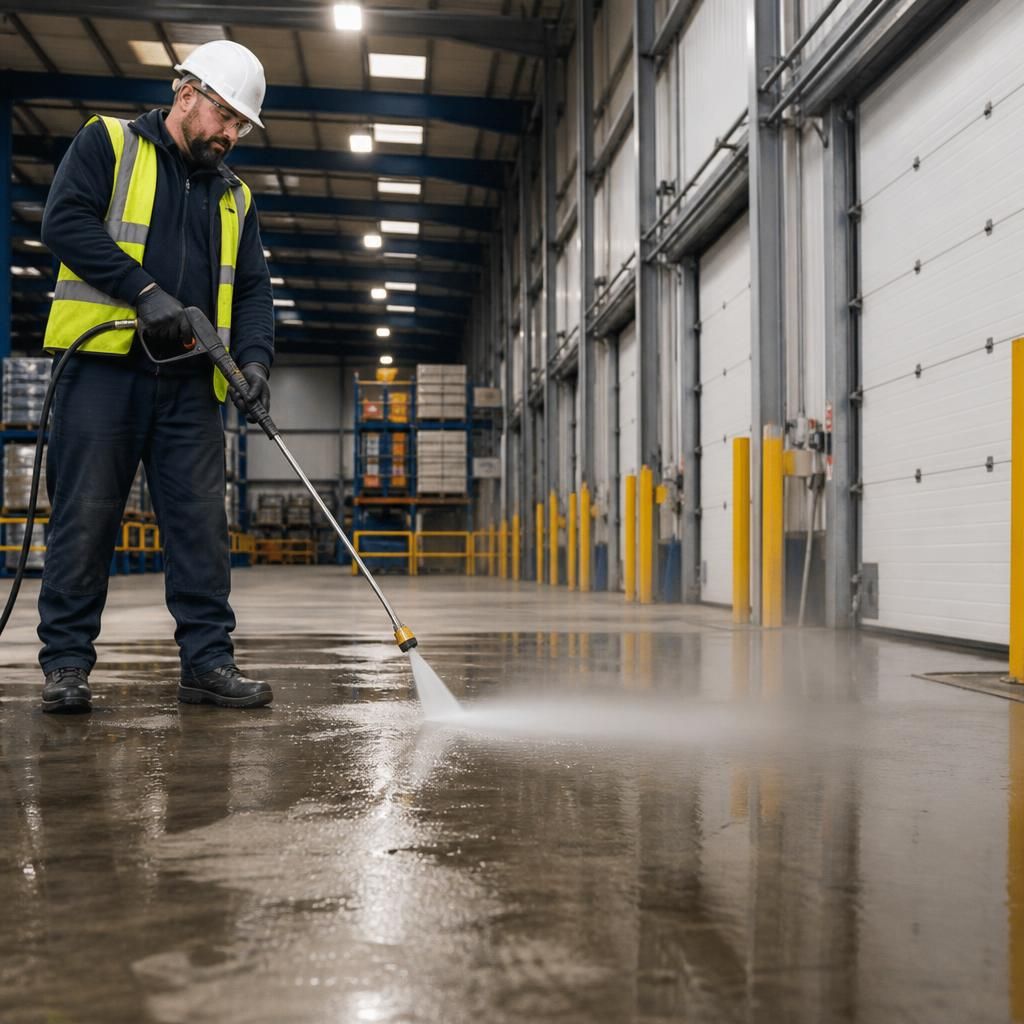
Steam cleaners and power washers improve warehouse cleaning by removing embedded contamination more effectively than routine sweeping or mopping. Steam uses high-temperature moisture to soften grease and residues with relatively little water, while power washing uses controlled water pressure to flush dirt from robust surfaces such as concrete floors, loading bays, ramps and external hard-standing.
This can help reduce slip hazards caused by oil, algae, mud and compacted dust, while also improving the appearance and hygiene of operational areas. The method must match the surface and contamination: excessive pressure can damage coatings, joints, cladding or equipment, and wastewater may require collection where it contains oil, chemicals or sediment. Areas should be isolated, signed and allowed to dry before normal warehouse activity resumes.