
How often should warehouse cleaning be scheduled to maintain optimal facility conditions?
Warehouse cleaning should combine daily housekeeping with scheduled weekly, monthly and periodic deep-cleaning tasks, adjusted to traffic levels, dust, storage activity, spill risk and regulatory requirements. High-use or high-risk areas may need cleaning more frequently, while a documented site assessment should determine the appropriate schedule for each facility.
Warehouse cleaning should combine daily housekeeping with planned weekly, monthly and periodic deep-cleaning tasks. The correct frequency depends on vehicle and pedestrian traffic, dust levels, storage activity, spill risks, the type of goods handled, building condition and applicable health and safety requirements. A documented site assessment should be used to set the schedule, with higher-risk areas cleaned more frequently than low-use spaces.
Daily cleaning and housekeeping
Daily tasks are the foundation of a safe warehouse and should normally be completed during each operating day, either throughout the shift or at a planned close-down period. They should include:
- Removing packaging, loose debris, damaged pallets and waste from aisles, loading areas and workstations.
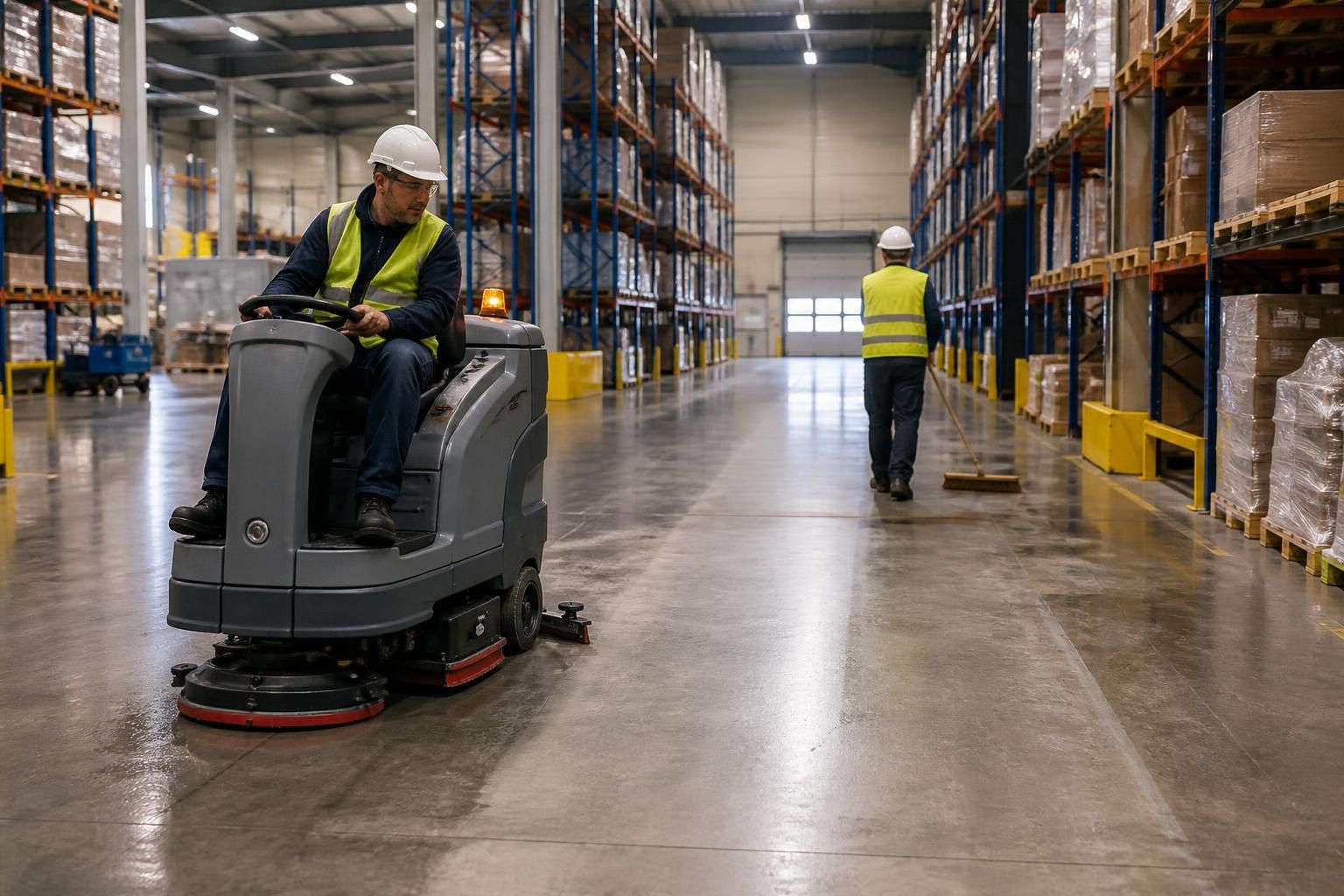
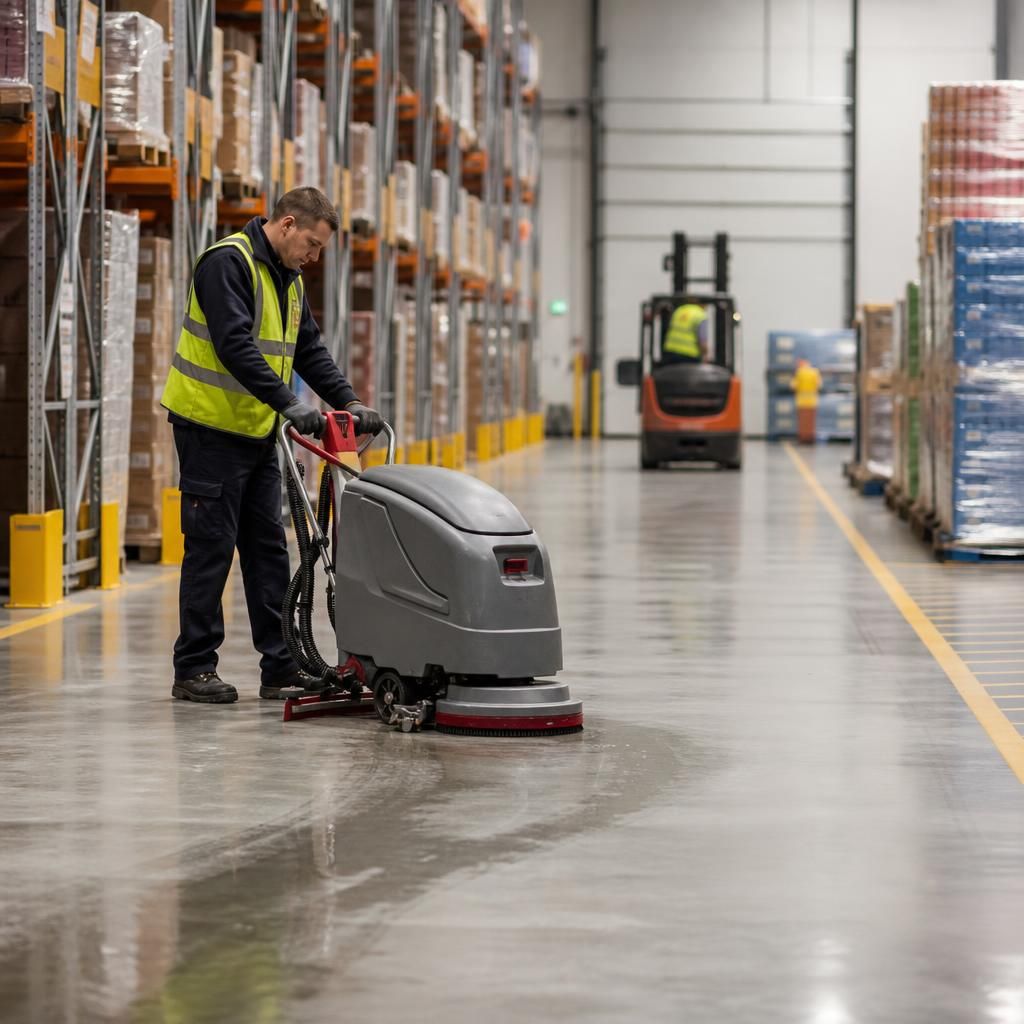
- Sweeping or machine-scrubbing floors where dust, dirt or product residue could affect vehicle movement or create slip risks.
- Cleaning spillages immediately using the correct procedure for the substance involved.
- Keeping pedestrian routes, emergency exits, fire points, stairs and access to equipment clear.
- Cleaning welfare areas, toilets, hand-washing points and frequently touched surfaces in line with their use.
- Checking loading bays, dock levellers and entrance areas, where outdoor dirt and rainwater are commonly brought into the building.
Spill response should never be postponed until the next scheduled clean. Oil, chemicals, food products, powders and other substances can create immediate slip, contamination, fire or handling risks and may require specialist treatment.
Weekly cleaning
Weekly tasks provide a more detailed clean of areas that accumulate dirt during normal operations. Depending on the facility, these may include machine scrubbing of warehouse floors, cleaning racking bases and lower surfaces, removing dust from corners and door tracks, washing loading bays, and cleaning internal doors, barriers and protective surfaces.
High-traffic aisles, goods-in and goods-out zones may need this level of cleaning more than once a week, particularly where forklift movements, pallet handling or external weather conditions bring in substantial debris. Lower-use storage areas may be suitable for a less frequent routine if inspections confirm that safety and cleanliness are being maintained.
Monthly and periodic deep cleaning
Monthly cleaning is often appropriate for areas that do not require daily attention but still affect the condition of the building. This can include higher-level ledges where safe access is available, racking and structural surfaces, warehouse doors, glazing, wall protection, service areas and difficult-to-reach floor edges. High-level dust should be removed using suitable access equipment and controlled methods rather than being allowed to fall onto stock, machinery or occupied areas.
Periodic deep cleaning should be planned around the building’s condition and operational demands. It may be required before or after an audit, following construction or refurbishment, after a change of tenant or use, or when accumulated dust and grime cannot be controlled through routine cleaning. External areas may also need separate programmes for façades, cladding, roofs, yards, car parks and loading zones. Pressure washing, steam cleaning or other specialist methods should be selected according to the surface, drainage arrangements and the type of contamination.
Factors that determine the right frequency
A warehouse handling clean, dry goods in a low-traffic environment will usually have different cleaning needs from a busy distribution centre, manufacturing unit or food-related facility. The schedule should take account of:
- Traffic and occupancy: Frequent forklift movements, deliveries, shift changes and contractor access increase the rate at which floors and contact surfaces become dirty.
- Dust and residue: Timber, aggregates, powders, packaging materials and other dusty goods may require more frequent sweeping, vacuuming or controlled washing.
- Spill and contamination risk: Liquids, oils, chemicals, food products or hazardous substances require immediate response procedures and may need specialist cleaning controls.
- Stock and equipment: Sensitive goods, automated handling systems, conveyors and machinery may need cleaning methods that limit moisture, dust and disruption.
- Building design: Open loading doors, uneven floors, poor drainage, roof leaks and difficult access points can increase cleaning requirements.
- Seasonal conditions: Wet weather, mud, grit and winter salt can make entrances, yards and loading bays require additional attention.
- Legal, contractual and audit requirements: Cleaning records and inspection routines may form part of workplace safety, environmental, quality or customer requirements.
How to set and review the schedule
Begin with a site survey that divides the warehouse into functional zones, such as aisles, loading bays, welfare facilities, offices, plant areas, external yards and high-level surfaces. Record the required cleaning method, frequency, responsible person, access arrangements and any controls needed to protect people, stock and equipment.
Cleaning should be scheduled to minimise disruption, for example during quieter operating periods or planned maintenance windows. Where cleaning equipment, water or access platforms could affect warehouse traffic, the area should be isolated and clearly managed until it is safe to reopen.
Supervisors should review inspection records, recurring spills, complaints, near misses, dust accumulation and floor condition. If an area becomes dirty before its planned service, the frequency or method is not adequate and should be revised. Conversely, low-risk areas can be reviewed to ensure resources are being used efficiently without reducing required standards.
Professional warehouse cleaning is most effective when routine housekeeping, responsive spill control and scheduled specialist work are managed as one documented programme. A written schedule, completion record and periodic review provide evidence that cleaning is being controlled rather than carried out only when visible dirt becomes a problem.
The right warehouse cleaning frequency is determined by risk and use, not by a fixed timetable alone. High-traffic aisles, loading bays and areas exposed to dust or spillages may need cleaning during every operating day, while low-use storage areas can follow a less frequent routine if inspections show that safety and cleanliness are being maintained. Record the required tasks for each zone, respond to spillages immediately and review the schedule whenever dirt, complaints or near misses indicate that the existing frequency is no longer sufficient.
Discuss Your Warehouse Cleaning Schedule
Discuss your warehouse cleaning schedule with Encanto Exterior Cleaning to review site-specific risks, cleaning frequencies and access requirements. We can help you develop a documented programme covering routine housekeeping, responsive spill control and periodic specialist cleaning.