
How do warehouse cleaning services contribute to maintaining health and safety standards?
Professional warehouse cleaning services support health and safety by removing dust, debris, spillages and other hazards that can cause slips, trips, contamination or equipment problems. Regular, documented cleaning also helps maintain clear walkways, hygienic work areas and compliance with workplace safety procedures.
Warehouse cleaning services contribute to health and safety by systematically removing hazards that can cause injury, illness, contamination or disruption. Professional cleaning helps keep floors, walkways, loading areas, workstations and welfare facilities in a safe condition, while planned methods, suitable equipment and documented checks support the site’s wider risk-control procedures.
Reducing slips, trips and falls
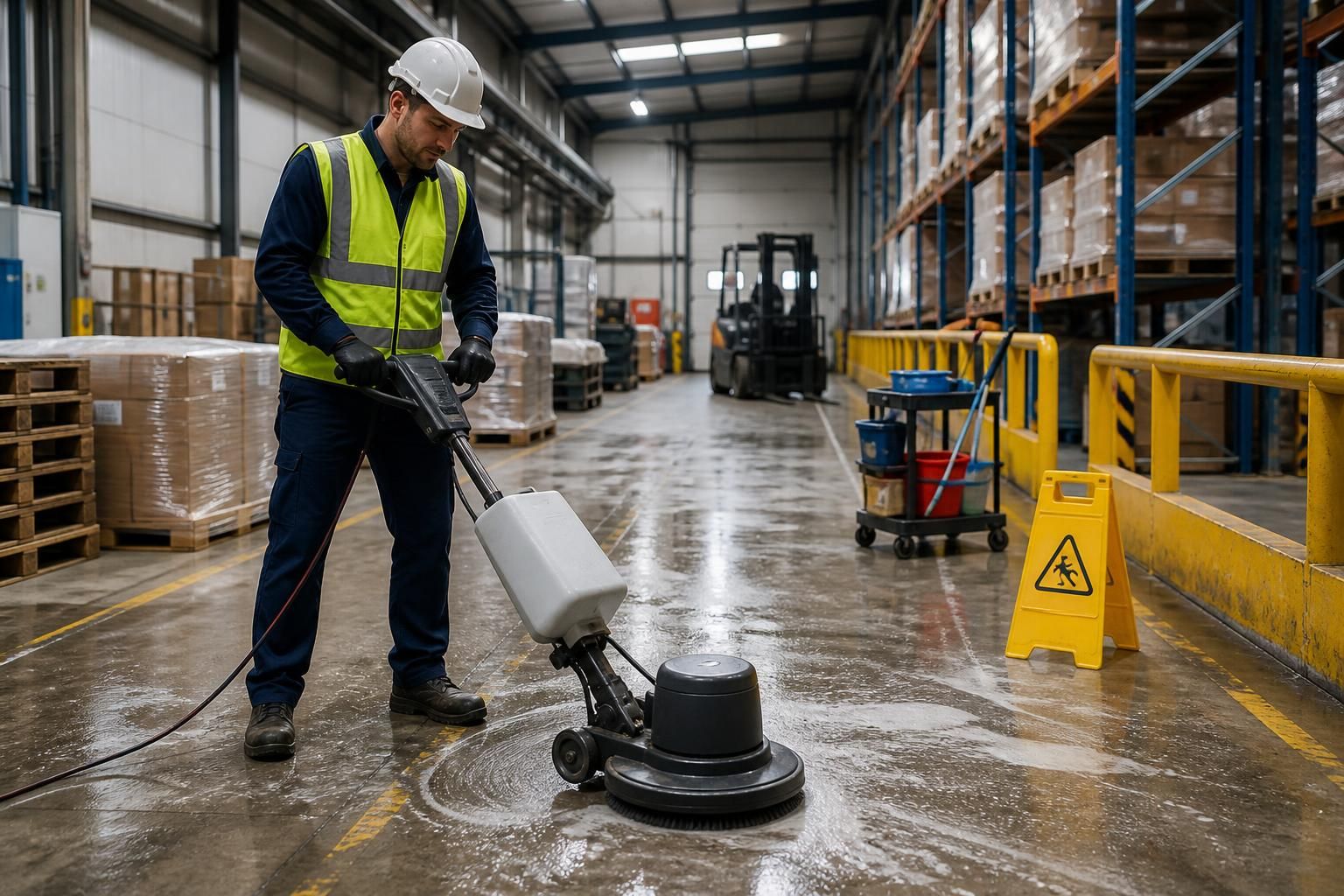
Dust, packaging fragments, pallets, plastic wrapping, strapping and loose stock can obstruct pedestrian routes and create trip hazards. Oil, water, food residue and other spillages can make warehouse floors slippery, particularly around loading bays, plant rooms and processing areas. A structured cleaning service removes loose debris, treats spillages promptly and identifies recurring sources of contamination.
Cleaning teams can also help maintain clearly defined pedestrian routes, access points and emergency exits. Floors should be cleaned using methods that are appropriate for the surface and the activity taking place nearby. Excess water, unsuitable detergents or poorly controlled wet-cleaning work can introduce additional risks, so areas should be controlled until they are safe to use.
Controlling dust and airborne contaminants
Warehouses can accumulate dust from cardboard, timber, building materials, vehicle movements and general handling operations. If dust is allowed to build up, it may affect air quality, settle on stock and machinery, or become airborne when vehicles and people move through the building. In some workplaces, dust may also form part of a more specific occupational exposure risk and requires controls beyond routine housekeeping.
Industrial vacuuming, controlled sweeping and suitable mechanical cleaning can remove dust without simply redistributing it. The cleaning approach should reflect the material being handled, the ventilation arrangements and any information available from the site’s risk assessments or COSHH assessments. Where hazardous substances or potentially combustible dusts are present, the cleaning method and equipment must be suitable for that environment.
Supporting hygienic working conditions
Warehouses storing food, pharmaceuticals, packaging, healthcare products or other sensitive goods require particular attention to hygiene. Cleaning removes residues, organic matter and general contamination from floors, surfaces, welfare areas and handling zones. It can also reduce conditions that attract pests, although cleaning is one part of an effective pest-management programme rather than a replacement for it.
High-touch areas such as door handles, handrails, control panels and shared equipment may require cleaning at an appropriate frequency. Welfare facilities, canteens and changing areas should be maintained in accordance with the use of the facility and the organisation’s hygiene procedures. Where a site has defined hygiene standards, cleaning schedules should identify the areas, methods, products and inspection requirements involved.
Protecting warehouse equipment and stock
Accumulated dust and debris can affect conveyor systems, rollers, sensors, vents and other equipment. Spillages may cause corrosion or interfere with moving parts, while poorly controlled washing can allow water to reach electrical components or stored goods. Planned cleaning helps identify these issues before they contribute to equipment failure, damaged stock or unsafe operation.
Cleaning must be coordinated with the warehouse’s operational controls. Plant may need to be stopped, isolated or made safe before work begins, and cleaning around conveyors, compactors, vehicles and other machinery should only take place under an agreed procedure. Cleaning operatives should not enter restricted areas or work near moving equipment without the required authorisation and controls.
Keeping fire and emergency arrangements effective
Clear access to fire exits, escape routes, fire-fighting equipment, electrical panels and first-aid facilities is an essential part of warehouse housekeeping. Packaging waste and stored materials should not be allowed to accumulate in these areas. Cleaning teams can remove waste and report obstructions, damaged surfaces, blocked routes or other conditions that could hinder an emergency response.
Cleaning should not obscure safety signage, fire-door operation or floor markings. Where high-level dust or deposits are present, the work should be planned so that material is not allowed to fall onto people, stock, electrical installations or escape routes.
Managing cleaning work safely
Professional warehouse cleaning should be based on a site-specific assessment of hazards, access arrangements, working hours, traffic routes, surfaces, substances and operational restrictions. Typical controls include:
- Agreeing the work area, sequence and exclusion zones before cleaning starts.
- Separating cleaning activities from pedestrians, forklifts, delivery vehicles and other traffic wherever practicable.
- Using warning signs, barriers and suitable temporary controls during wet or high-level work.
- Selecting detergents, degreasers and disinfectants in accordance with their safety data and COSHH requirements.
- Providing suitable personal protective equipment and ensuring operatives understand how to use it.
- Using inspected access equipment and appropriate fall-protection arrangements for high-level cleaning.
- Applying safe systems of work for pressure washing, steam cleaning, vacuuming and waste removal.
- Reporting defects, spillages, damaged flooring, leaks and other hazards rather than simply cleaning around them.
Pressure washing and steam cleaning can be effective for heavy deposits, but they must be controlled carefully in operational warehouses. Water pressure, heat, overspray, drainage, electrical equipment and nearby stock all need to be considered. Where water-based cleaning is unsuitable, low-moisture or dry methods may provide safer control.
Providing evidence of ongoing control
Cleaning records help demonstrate that planned housekeeping tasks have been completed and provide a basis for checking whether the frequency and method remain suitable. Records may include the area cleaned, date, operative, method, products used, defects identified and corrective action required. They are useful during internal inspections, contractor reviews and investigations into incidents or recurring hazards.
Cleaning records do not replace statutory inspections, maintenance checks, fire-safety arrangements or employer responsibilities. They form part of the wider health and safety system, alongside risk assessments, training, equipment maintenance, accident reporting and supervision.
Maintaining a suitable cleaning programme
The appropriate frequency depends on warehouse use, footfall, dust generation, stock type, weather exposure, vehicle movements and the consequences of contamination. High-traffic loading areas may need more frequent attention than low-use storage zones, while periodic deep cleaning may be required for high-level structures, cladding, racking surroundings or difficult-to-reach surfaces.
A practical programme combines routine housekeeping, responsive spill and debris removal, scheduled machine cleaning and periodic inspections. Reviewing findings from near misses, complaints, audits and maintenance reports can show where the programme needs to change. This makes cleaning a preventative safety measure rather than an activity carried out only when the warehouse appears visibly dirty.
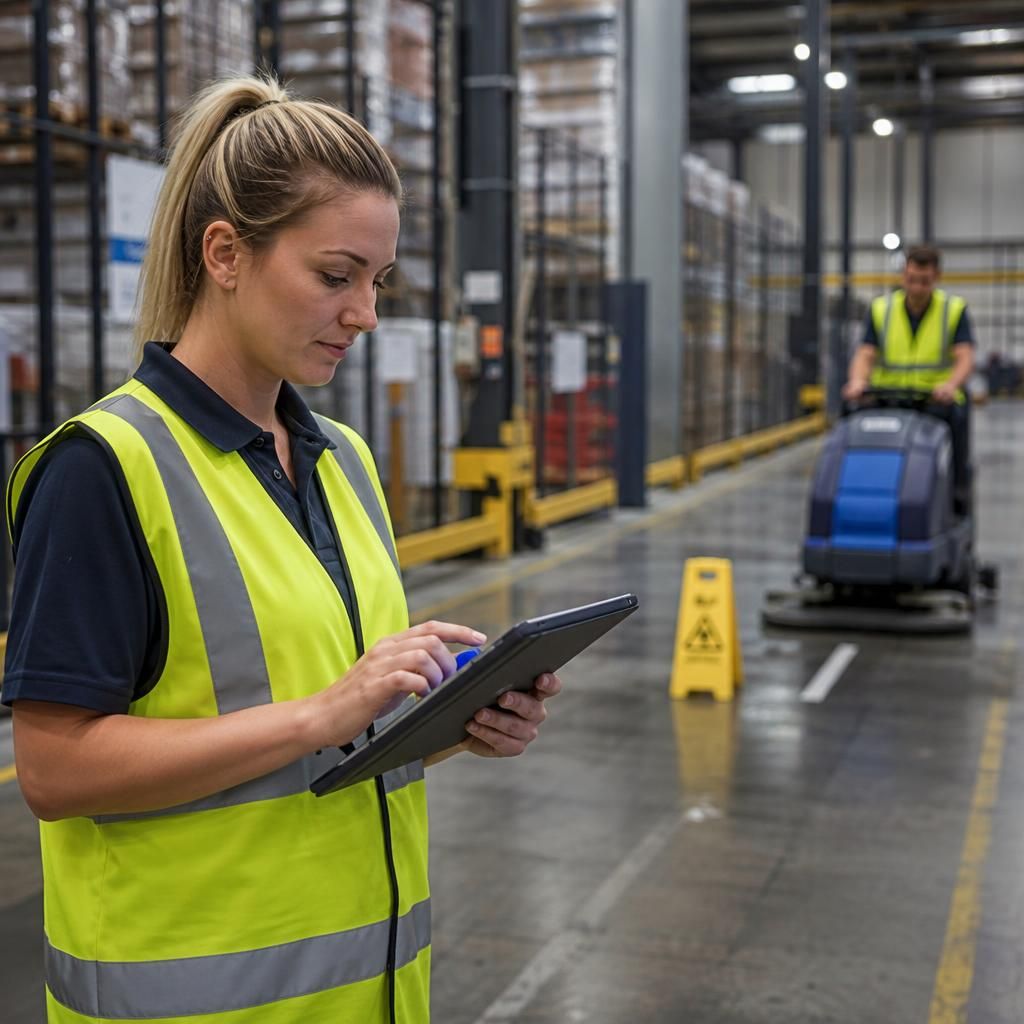
Documented warehouse cleaning provides evidence that health and safety controls are being maintained, not simply that the building has been made to look tidy. Cleaning records can show which areas were treated, when the work was completed, which methods and products were used, and whether hazards were identified during the process.
These records are particularly useful where cleaning teams find damaged flooring, leaks, blocked access routes, recurring spillages or defects around equipment. Reporting such issues allows the responsible site team to arrange corrective action instead of allowing operatives to clean around an unresolved risk. Records can also support internal inspections, contractor reviews and investigations following an incident or near miss.
Cleaning documentation should support, rather than replace, risk assessments, COSHH controls, equipment inspections, fire-safety checks, staff training and maintenance procedures. Reviewing the records regularly helps identify areas that need a different cleaning method or frequency, making warehouse housekeeping a preventative part of the wider safety management system.
Arrange a Warehouse Cleaning Assessment
Arrange a warehouse cleaning assessment with Encanto Exterior Cleaning to review site hazards, access requirements, cleaning methods and maintenance priorities. We can use the assessment to help develop a practical cleaning programme suited to your warehouse operations.