
What specialised techniques should a post construction clean up service utilise for optimal results?
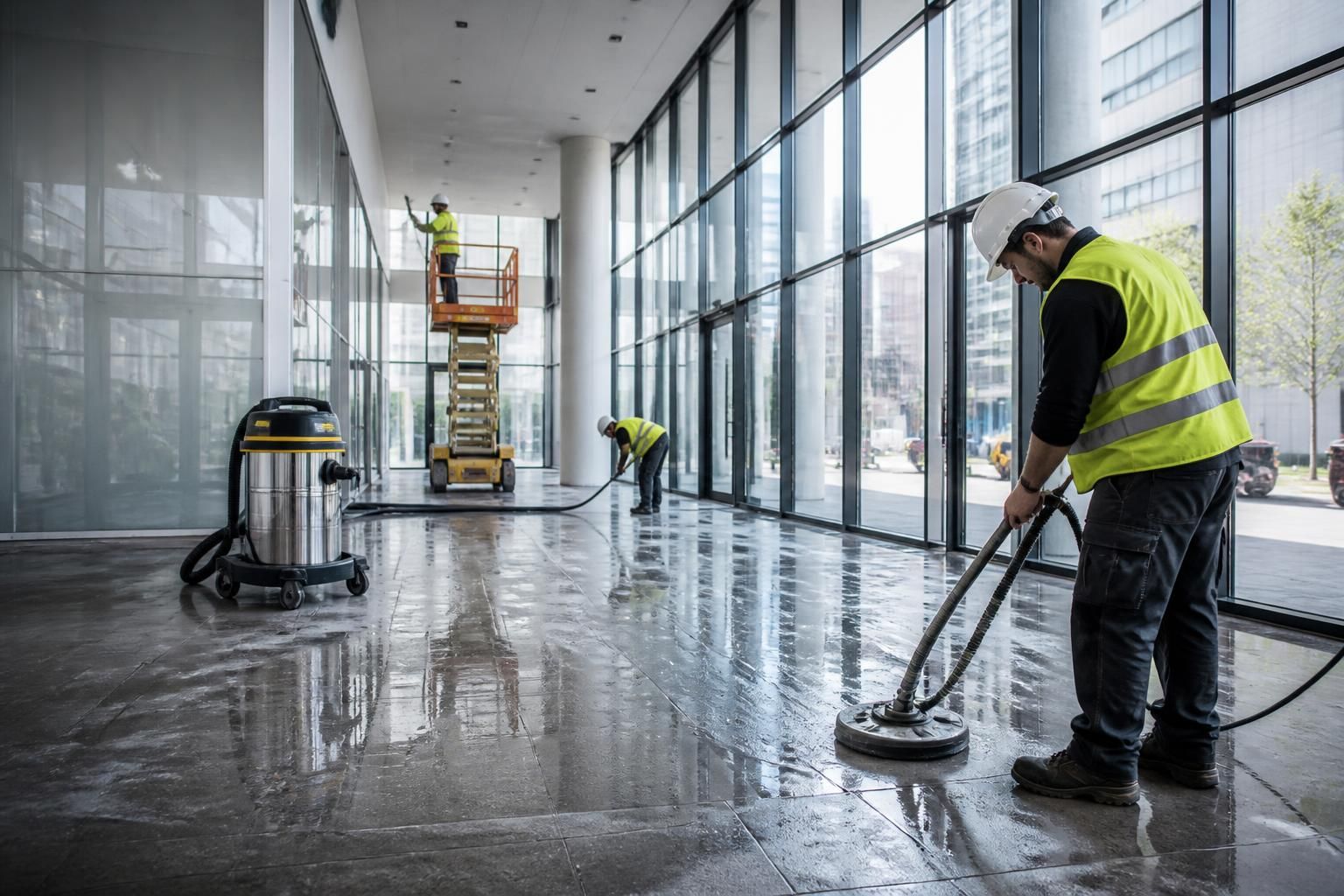
A specialist post construction clean up service should use controlled dust extraction, industrial vacuuming, pressure washing, steam cleaning and material-specific stain removal to eliminate construction dust, debris, adhesive residue, cement and paint safely. The process should also include careful high-level cleaning, waste segregation and a final inspection to confirm that surfaces are clean, undamaged and ready for occupation.
A specialist post construction clean up service should combine controlled dust extraction, industrial vacuuming, surface-specific washing, steam cleaning, stain treatment and safe high-level access. These techniques remove fine construction dust, cement residue, adhesive, paint, plaster, packaging and general debris without damaging newly installed finishes. The correct method depends on the material, the type of contamination and whether the area is ready for occupation.
Initial inspection and method selection
Cleaning should begin with a site inspection rather than a standard commercial cleaning routine. The cleaning team should identify the construction materials present, areas requiring access equipment, fragile finishes, residual building products and any hazards left by contractors. This assessment determines whether a surface needs dry removal, damp cleaning, pressure washing, steam, mechanical agitation or a carefully selected chemical treatment.
New surfaces can be vulnerable to scratching, moisture penetration, alkaline products and excessive pressure. For example, an unsealed stone floor may require a different approach from powder-coated cladding, glazed brickwork or newly painted walls. A small test area should be used where the compatibility of a cleaning method is uncertain, with the result checked before wider application.
Controlled dust removal
Fine dust should be removed in a controlled way to prevent it being redistributed through the building. Dry sweeping and indiscriminate use of compressed air can move plaster, cement and silica-containing dust into occupied or newly finished areas. Instead, operatives should use industrial vacuums with suitable filtration, extraction attachments and, where appropriate, damp-wiping techniques.
High-filtration vacuuming is particularly important around ventilation grilles, window frames, skirting, service risers, electrical fittings and other locations where dust collects. The team should work from high surfaces downwards and from cleaner areas towards dirtier areas, repeating the process after other trades have completed their work. Dust-control measures may also include localised extraction, sealed waste containers and controlled access between clean and unfinished zones.
Industrial vacuuming and mechanical removal
Construction sites commonly leave behind sawdust, insulation fibres, plaster fragments, packaging and larger debris. Industrial vacuum systems and suitable floor tools can remove this material more efficiently than domestic equipment, while mechanical sweepers may be appropriate for large warehouses, car parks and external paved areas.
Mechanical equipment must still be selected carefully. Hard brushes or aggressive pads can mark resin floors, polished concrete, vinyl and other newly installed surfaces. Operatives should use the least aggressive setting that achieves the required result and protect vulnerable edges, thresholds and expansion joints from impact.
Pressure washing and steam cleaning
Pressure washing is effective for external areas such as façades, paving, loading bays, car parks, retaining walls and construction compounds. It can remove soil, loose mortar, cement dust and general site contamination, but pressure, water volume and nozzle selection must be matched to the substrate. Excessive pressure can erode mortar joints, damage coatings, drive water into building fabric or mark soft stone.
Where water use needs to be limited, steam cleaning can provide a controlled alternative. Steam is useful for removing grime, light cement films, adhesive residue and some biological contamination from hard surfaces, plant, fittings and detailed areas. It can also reduce the need for chemical products, although it is not suitable for every material. Moisture-sensitive boards, unsealed timber, vulnerable electrical components and surfaces that can warp or delaminate require particular care.
External washing should include measures to prevent contaminated water entering drains, landscaped areas or neighbouring premises. Run-off should be controlled and collected or treated in line with the site requirements and applicable environmental procedures.
Material-specific stain and residue removal
Post construction cleaning often involves residues that ordinary detergent will not remove. Cement and mortar films may require a compatible acidic treatment, while oils, bitumen, silicone, paint and adhesive may need different solvents, alkaline products or mechanical techniques. These products must never be applied solely because they are effective on another material.
Operatives should follow product instructions, use the required personal protective equipment and prevent chemicals from drying on the surface. They should also protect adjacent finishes, rinse or neutralise treated areas where necessary and manage the resulting waste. Paint splashes on glass, for example, may be removed with a suitable scraper and lubricant, but the tool must be used at the correct angle and kept free from grit to avoid scratching. Adhesive on flooring may require controlled softening rather than forceful scraping.
Detailed cleaning of fixtures and finishes
A thorough clean includes more than visible floors and walls. Operatives should detail doors, frames, ironmongery, glazing, sills, ledges, sanitaryware, shelving, radiators, light fittings, sockets and built-in equipment. Protective films should be removed at the appropriate stage, because leaving adhesive backing in place can make later removal more difficult, while removing it too early may expose finishes to further trade damage.
Glazing should be cleaned using clean tools and suitable solutions so that abrasive particles are not dragged across the glass. Frames, seals and tracks need separate attention because they retain plaster dust and fine debris. Newly installed stainless steel, chrome and powder-coated surfaces should be wiped with non-abrasive materials and dried to prevent water marks or residue.
High-level and difficult-access cleaning
Ceilings, roof structures, beams, ductwork, cladding and upper glazing require planned access rather than improvised ladders or unsafe reaching. A specialist contractor may use mobile elevated work platforms, access towers, telescopic equipment or other suitable systems, subject to a site-specific risk assessment and the condition of the ground.
High-level work should be coordinated with other trades and controlled to prevent falling objects, damage to finished areas and contamination of already cleaned surfaces. Dust and debris removed from elevated locations should be collected rather than allowed to fall onto floors, machinery or workstations.
External areas, waste and final verification
External post construction cleaning should address access roads, pedestrian routes, car parks, loading areas, drainage surrounds and boundary features. Debris should be segregated where site arrangements require it, with hazardous or controlled waste handled through the appropriate channels. Waste should not be washed into drains or left where it can obstruct access or create a trip hazard.
The final stage should include a systematic inspection in suitable lighting. This should check for remaining dust on horizontal surfaces, streaks on glazing, cement haze, paint spots, adhesive residue, blocked drainage points and damage that may have been concealed by dirt. Defects caused by construction should be recorded separately from cleaning issues, allowing the responsible contractor to rectify them without confusing the handover record.
For larger projects, the clean should be completed in phases, with completed areas protected from subsequent trades and re-cleaned if later work creates fresh contamination. This combination of controlled dust management, appropriate equipment, material-specific treatment, safe access and documented inspection produces a site that is not merely presentable, but suitable for handover and occupation.
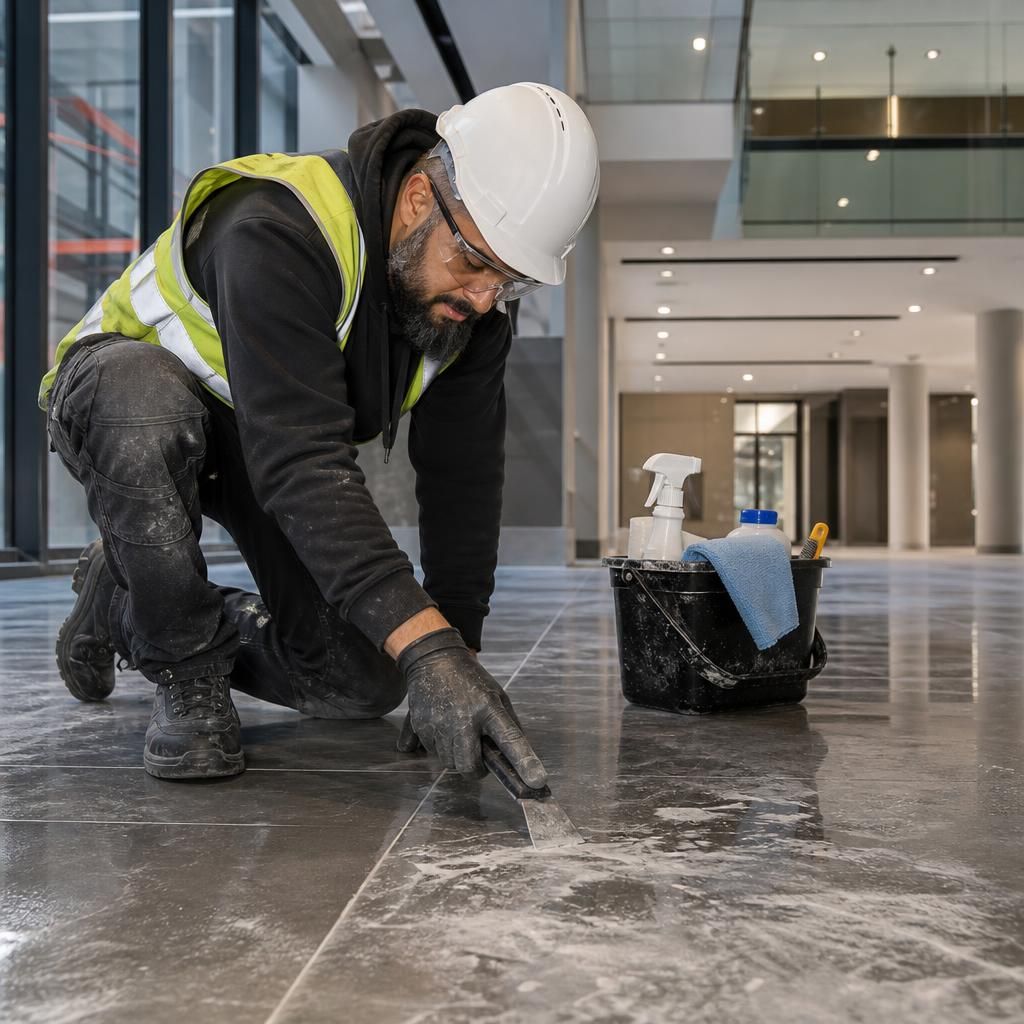
Material-specific residue removal is essential after construction because cement film, adhesive, paint, silicone and oil each respond to different cleaning methods. A professional post construction clean up service should first identify the residue and confirm that the chosen product or technique is safe for the surface.
Operatives may use controlled scraping, steam, mechanical agitation or a compatible chemical treatment, depending on the material and contamination. Newly installed stone, glass, flooring, coatings and metalwork can be damaged by excessive pressure, abrasive tools or unsuitable solvents, so a discreet test area should be checked before wider cleaning begins.
Any chemical treatment should be applied in accordance with the product instructions, with adjacent finishes protected and treated areas rinsed or neutralised where required. This approach removes stubborn building residues while preserving the appearance and performance of newly completed surfaces.
Discuss Your Post Construction Cleaning Requirements
Discuss your post-construction cleaning requirements with Encanto Exterior Cleaning to agree the appropriate techniques, access arrangements and finishing standards for your site. Share your project details so we can plan a safe, thorough clean ready for handover or occupation.