
What safety measures are implemented during post construction clean up?
Post construction clean up is carried out with documented site risk assessments, suitable personal protective equipment (PPE), controlled access and safe work procedures. Teams identify hazards such as dust, sharp materials, unstable surfaces, live services and working at height before cleaning, then use appropriate equipment and methods to protect workers, visitors and the finished property.
Post construction clean up is managed through documented risk assessments, suitable personal protective equipment (PPE), controlled access and safe systems of work. Before cleaning begins, the team checks for hazards including construction dust, sharp materials, unstable surfaces, live services, hazardous substances, moving plant and work at height. Controls are then selected for the specific building, access conditions, cleaning methods and stage of completion.
Site assessment and method planning
A competent supervisor should inspect the site before work starts and record the findings in a risk assessment and method statement. The assessment considers the condition of floors, façades, roofs, stairs, scaffolding, access routes and service areas. It also confirms which areas are ready for cleaning, which remain under construction and where other contractors may still be working.
The work plan should identify the cleaning sequence, equipment requirements, chemical controls, waste arrangements, emergency procedures and responsibilities on site. It should be reviewed if conditions change, such as when access equipment is moved, new materials are delivered or previously concealed hazards are exposed.
Controlled access and communication
Unauthorised people should be kept away from active cleaning areas using barriers, warning signs and clearly defined routes. Where the building remains occupied or other trades are present, the cleaning team coordinates its activities with the principal contractor, site manager or client representative. Doors, loading areas and vehicle routes may need temporary controls to prevent collisions and protect passers-by.
Workers should receive a site induction and task-specific briefing before starting. Communication is particularly important when using pressure washing equipment, access platforms, lifting equipment or chemical products. Work should stop if an unsafe condition cannot be controlled immediately.
Personal protective equipment
PPE is selected according to the identified hazards rather than used as a substitute for safer working methods. Depending on the task, this can include safety footwear with suitable grip, gloves, eye or face protection, hearing protection, hard hats, high-visibility clothing and protective clothing. Respiratory protective equipment may be required where dust or airborne contaminants cannot be adequately controlled by other means.
PPE must be compatible, correctly fitted, maintained and replaced when damaged or contaminated. Workers should also know how to remove contaminated clothing safely and how to report defects.
Dust and airborne contaminant control
Construction dust can contain cement, plaster, masonry, insulation fibres, wood particles and other materials. Dry sweeping and uncontrolled compressed air can spread dust through the building, so teams generally use suitable extraction, damp-cleaning methods or carefully controlled vacuuming. Equipment used for fine dust should be appropriate for the material being removed and maintained to prevent recirculation.
Where the material or site history indicates a possible asbestos-containing material, the area must not be disturbed. Work should stop and the concern should be referred to the responsible duty holder or a qualified asbestos professional. Specialist cleaning should only proceed once the material has been assessed and the correct controls are in place.
Safe use of water, chemicals and cleaning equipment
Cleaning products should be selected for the surface and contamination, used in accordance with the product safety information and stored securely. Chemicals must not be mixed unless the manufacturer specifically permits this, as some combinations can produce dangerous fumes. Appropriate gloves, eye protection and ventilation are used where the product assessment requires them.
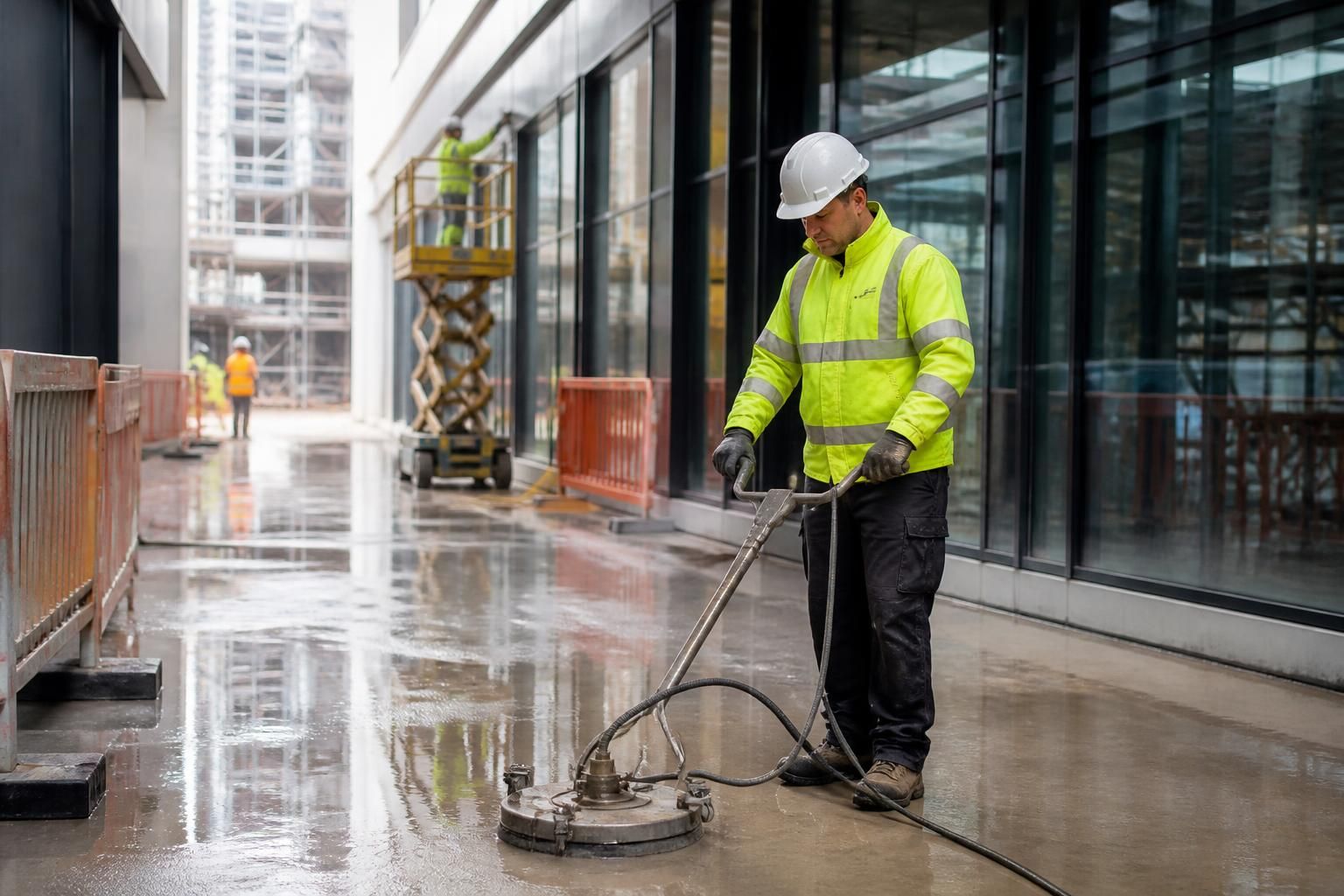
Pressure washing and steam cleaning require control of spray direction, pressure, temperature, electrical connections and drainage. Operators should protect unfinished surfaces, openings, cables and sensitive equipment from water or heat damage. Hoses and leads should be routed to reduce trip hazards, and wet areas should be isolated until they are safe to enter.
Machinery is checked before use, with guards, cables, hoses, controls and emergency stops kept in serviceable condition. Only trained and authorised workers should operate specialist equipment, and equipment should be isolated before clearing blockages or carrying out maintenance.
Work at height and difficult access
High-level façades, windows, roofs and structural elements are assessed before access equipment is chosen. The preferred approach is to avoid work at height where possible; otherwise, the team uses suitable towers, mobile elevating work platforms, scaffolding or other approved access systems. Equipment must be inspected, positioned on suitable ground and operated by trained personnel.
Edge protection, guardrails and harness systems are used where required by the risk assessment. Tools and materials are secured to prevent falling objects, and the area below is kept clear. Ladders are reserved for suitable short-duration tasks rather than used as a general substitute for properly planned access equipment.
Slips, trips, falls and structural hazards
Loose rubble, fixings, packaging and offcuts are removed progressively rather than left around the work area. Wet floors are cleaned in sections, signposted and allowed to dry before normal access resumes. Hoses, extension leads and waste containers are positioned so that they do not obstruct escape routes or create trip points.
Floors, roofs and temporary surfaces are checked for openings, weak areas, uneven levels and unsecured coverings. A surface that cannot safely support people, equipment or water must not be accessed until the responsible contractor has made it safe.
Waste handling and manual tasks
Waste is separated and removed using suitable containers, with sharp or hazardous items handled carefully and never compressed by hand. Teams use mechanical aids or coordinated lifting methods where loads are heavy, awkward or unstable. Good housekeeping reduces both manual-handling risks and the likelihood of puncture injuries.
Waste is transferred through agreed routes and stored in designated areas so it does not interfere with other trades, fire exits or vehicle movements. Materials that may be hazardous are identified and handled according to their specific controls rather than placed in general waste.
Monitoring, inspections and emergency arrangements
Supervisors should monitor the work throughout the clean-up, check that controls remain effective and record relevant equipment or access inspections. The team should know the location of first-aid facilities, fire points, emergency exits, assembly arrangements and site contacts. Incidents, near misses, spills and damaged equipment should be reported promptly and investigated before work resumes.
Before the area is handed back, the supervisor should complete a final inspection. This confirms that cleaning materials, waste, temporary barriers and equipment have been removed, surfaces are safe to use, drainage has not been obstructed and no damage has been caused to the completed works. These checks provide the client and principal contractor with a clear, controlled transition from construction activity to normal occupation.
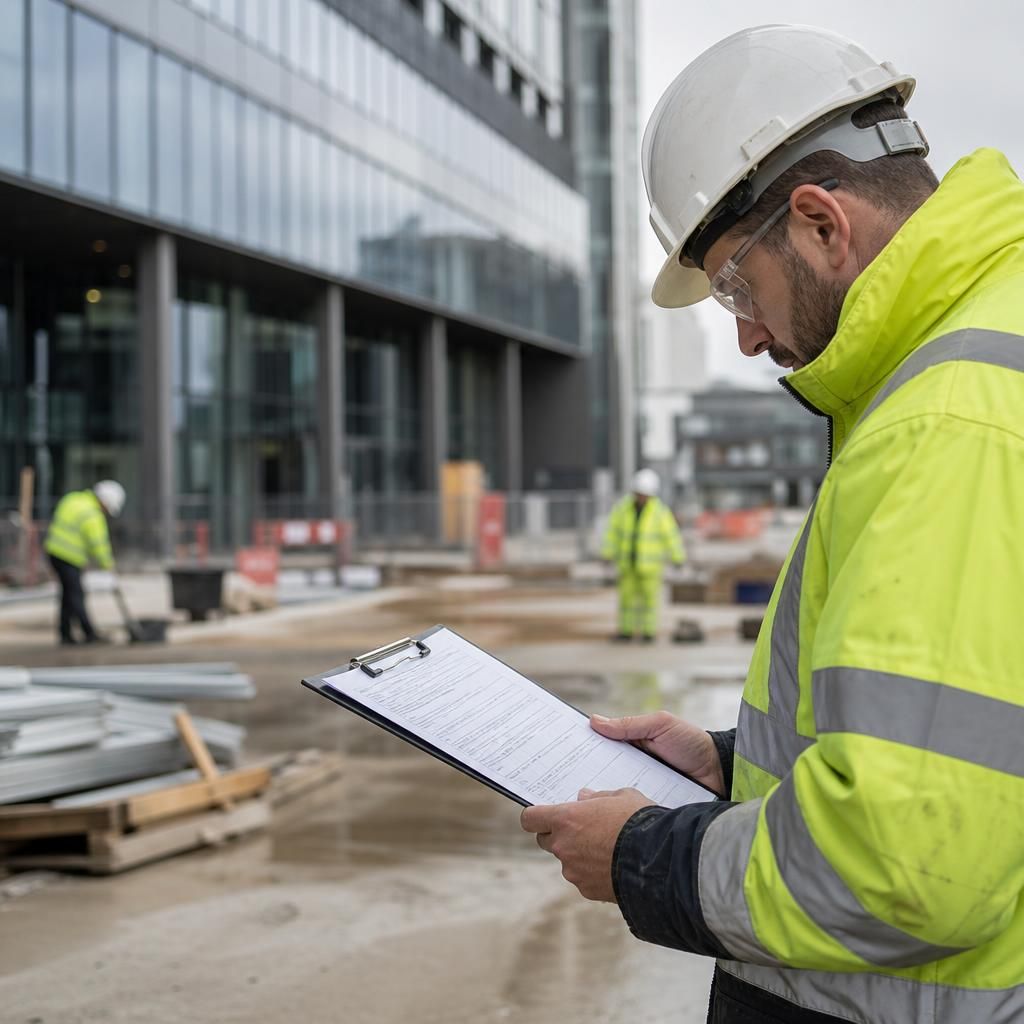
Before post construction cleaning begins, the site should be assessed and a task-specific method statement prepared. This identifies hazards such as unstable surfaces, exposed services, construction dust, live work areas and work at height, then sets out the controls needed to protect workers, other contractors, visitors and the finished building.
Access to active cleaning areas is controlled with barriers, warning signs and agreed routes. The cleaning team coordinates with the site manager where other trades or occupants are present, and work is paused if conditions change or a hazard cannot be controlled safely.