
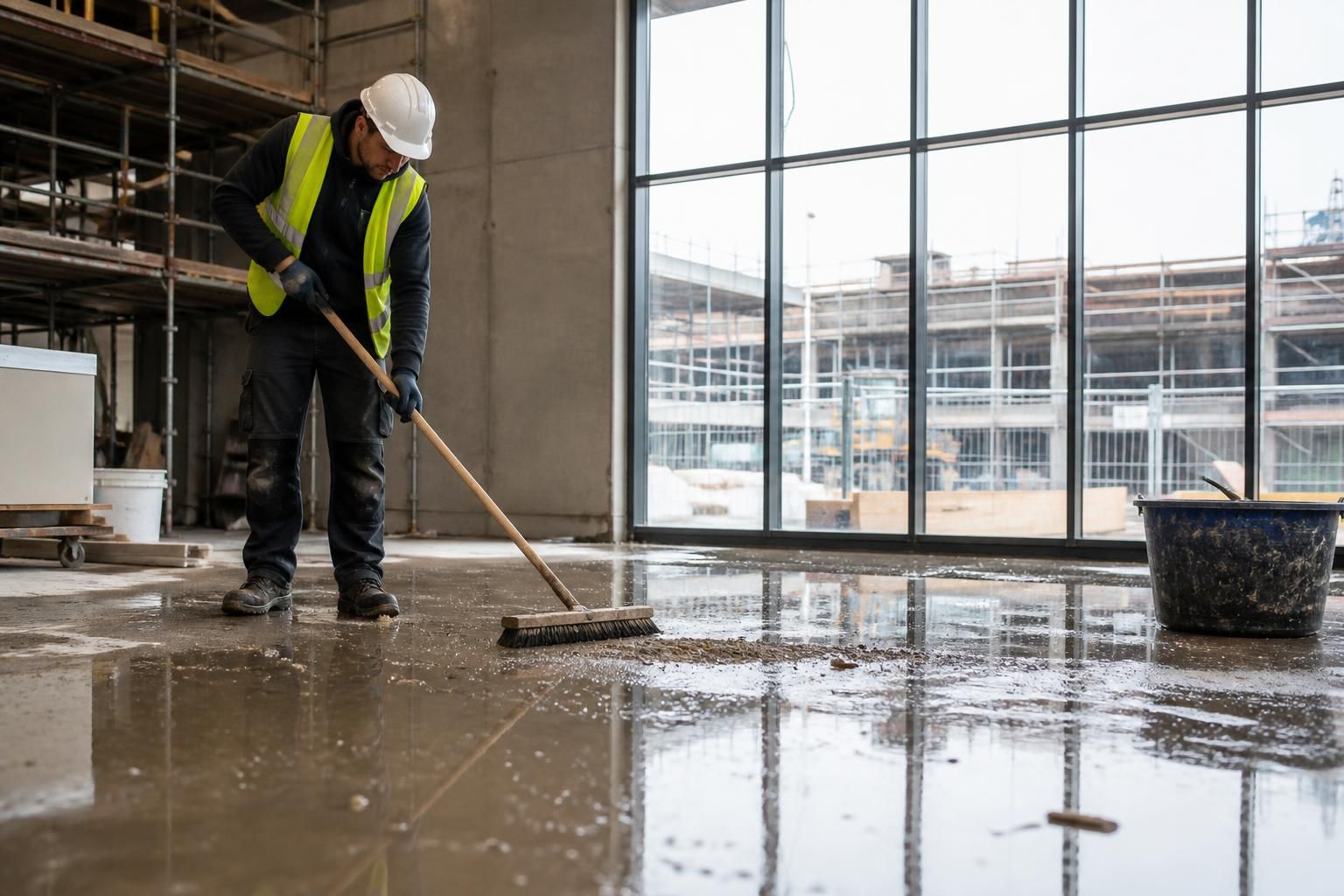
What factors influence the cost of post construction clean up services?
The cost of post construction clean up services is influenced by the site size and condition, the amount and type of building residue, required cleaning methods, access constraints, waste disposal needs and the timescale for completion. A clear quotation should account for labour, specialist equipment, access equipment, risk controls and any additional works such as high-level cleaning or external pressure washing.
The cost of post construction clean up services is mainly determined by the size and condition of the site, the amount and type of building residue, the cleaning methods required, access arrangements, waste disposal, site risks and the time available for completion. A reliable quotation should separate the core cleaning work from additional requirements such as high-level access, external pressure washing, specialist stain removal, protection of finished surfaces and the removal of construction waste.
Site size, layout and level of detail
The total area is an important starting point, but floor area alone does not determine the workload. A compact site with several storeys, difficult-to-reach rooms or extensive fixtures may take longer to clean than a larger, open-plan area. Cost can also be affected by the number of rooms, stairwells, plant areas, toilets, loading bays, external walkways, façades and other surfaces included in the specification.
A clean may be priced differently depending on whether the requirement is a builders’ clean, a more detailed sparkle clean before handover, or a phased clean during an active construction programme. More detailed work generally involves cleaning frames, ledges, fittings, skirting, joinery, glazing, floors and other areas where fine dust or residue can accumulate.
The condition of the site and the type of residue
Post construction sites do not all require the same treatment. Loose dust, packaging and light surface dirt can usually be removed using standard industrial cleaning equipment. Cement film, plaster, grout, paint, adhesive, silicone, mortar, bitumen, rust marks and other firmly bonded residues require additional time and carefully selected techniques.
The material beneath the residue is also relevant. Natural stone, concrete, brick, metal cladding, painted surfaces, glass, ceramic tiles, resin floors and specialist finishes can respond differently to chemicals, abrasion, heat and pressure. Testing may be needed before a cleaning method is applied across the site. Where residue is difficult to remove without risking damage, the quotation should allow for controlled treatment rather than assuming that a stronger chemical or higher pressure will always be suitable.
Cleaning methods and specialist equipment
The required method has a direct effect on labour, preparation and equipment costs. A project may involve industrial vacuuming, mechanical floor cleaning, low-pressure washing, pressure washing, steam cleaning, chemical treatment, stain removal or a combination of techniques. Specialist methods may be necessary for façades, cladding, concrete, paving, loading areas and other external surfaces.
Equipment selection depends on the surface, residue, water supply, drainage arrangements and the required finish. Some work may require recovery systems to collect dirty water, dust-control measures, surface protection or additional time for drying. The cost may also include transporting larger machines to and from the site, setting them up and cleaning them down after use.
Access and working height
High-level or difficult-to-reach cleaning can be a significant cost factor. The quotation may need to account for mobile elevated work platforms, towers, scaffolding, abseiling systems or specialist pole equipment, depending on the building and the risk assessment. Access equipment may need to be hired, delivered and operated by trained personnel.
Restricted entrances, narrow service yards, upper floors without suitable lifts, limited parking and occupied neighbouring premises can also increase the time required. If equipment cannot be positioned close to the work area, additional handling and setup may be necessary. The availability of safe access routes should therefore be confirmed during the site survey rather than assumed from drawings or photographs.
Waste volume, classification and disposal
Waste removal is often separate from the cleaning itself. The cost depends on the quantity, weight and type of waste, as well as whether it can be handled as general construction waste, recyclable material or controlled waste. Plasterboard, timber, packaging, rubble, paint containers, contaminated materials and liquid waste may require different handling and disposal arrangements.
Where dirty water, slurry or chemical residues are produced, suitable containment, collection and disposal may be required. Hazardous materials, including suspected asbestos-containing materials, must not be treated as ordinary construction waste. They require assessment and handling by appropriately licensed specialists, which should be arranged separately where necessary. Accurate information about the waste stream helps prevent disposal charges being added unexpectedly.
Labour, risk controls and site conditions
Labour costs reflect the number of operatives required, the complexity of the work and the level of supervision needed. A site with multiple contractors, incomplete services, active plant or restricted working areas may require more coordination and stronger controls than an empty, finished building.
Safe post construction cleaning may require inductions, method statements, risk assessments, personal protective equipment, exclusion zones, dust control, electrical safety checks and coordination with the principal contractor or site manager. These measures are part of responsible delivery and may affect the time and resources included in the quotation.
Sites with poor lighting, limited water or power supplies, challenging weather conditions, standing water or unfinished surfaces may also require additional preparation. External work is particularly affected by weather, ground conditions and the need to protect nearby vehicles, pedestrians, landscaping and drainage systems.
Programme, deadlines and phased work
A fixed handover date can influence the price, particularly when the work must be completed outside normal hours, at weekends or in multiple phases. Out-of-hours work may involve additional supervision, lighting, security coordination and travel arrangements. A compressed programme may require more operatives or separate teams working in different areas.
Phased cleaning can reduce recontamination when other trades remain on site, but it may involve repeated mobilisation, setup and final inspections. If the clean is scheduled too early, dust and debris from unfinished works may make a return visit necessary. The most economical programme is usually agreed with the construction schedule, allowing the main clean to take place after dusty trades have finished while leaving sufficient time for snagging and handover checks.
Scope, specification and exclusions
Two quotations may differ because they cover different levels of service. A clear specification should state which internal and external areas are included, the surfaces to be cleaned, the expected finish, whether glazing and frames are included, how waste will be handled and whether access equipment is included.
It should also identify exclusions such as the removal of heavy building materials, repairs, paint stripping, hazardous waste, damaged surfaces, pest contamination or cleaning behind fixed equipment. Clarifying these points before work starts makes quotations easier to compare and reduces the risk of additional charges.
How to obtain a more accurate quotation
- Provide drawings, floor plans, photographs and the site address where available.
- Describe the intended handover standard and list every area requiring cleaning.
- Identify the materials and residues present, including any known chemical or hazardous substances.
- Confirm access restrictions, available lifts, water and power supplies, parking and working-hour requirements.
- Explain whether waste collection, high-level cleaning, external cleaning or final touch-ups are required.
- Share the construction programme and required completion date.
A site survey is particularly useful for larger commercial and industrial projects. It allows the cleaning contractor to assess surfaces, access, drainage, hazards, waste and the likely equipment requirement before preparing a fixed or clearly itemised quotation. The final cost should then show what is included, what may vary and how any additional work will be agreed.

A site survey is one of the most effective ways to establish an accurate post construction clean up cost. It allows the contractor to assess the areas included, surface types, building residue, access restrictions, available water and power, waste arrangements and any health and safety controls required.
Providing photographs, drawings, the construction programme and the required handover standard in advance can also improve quotation accuracy. The final price should clearly distinguish included cleaning from variable or excluded work, such as high-level access, hazardous waste, specialist stain removal, external pressure washing or return visits caused by ongoing construction activity.