
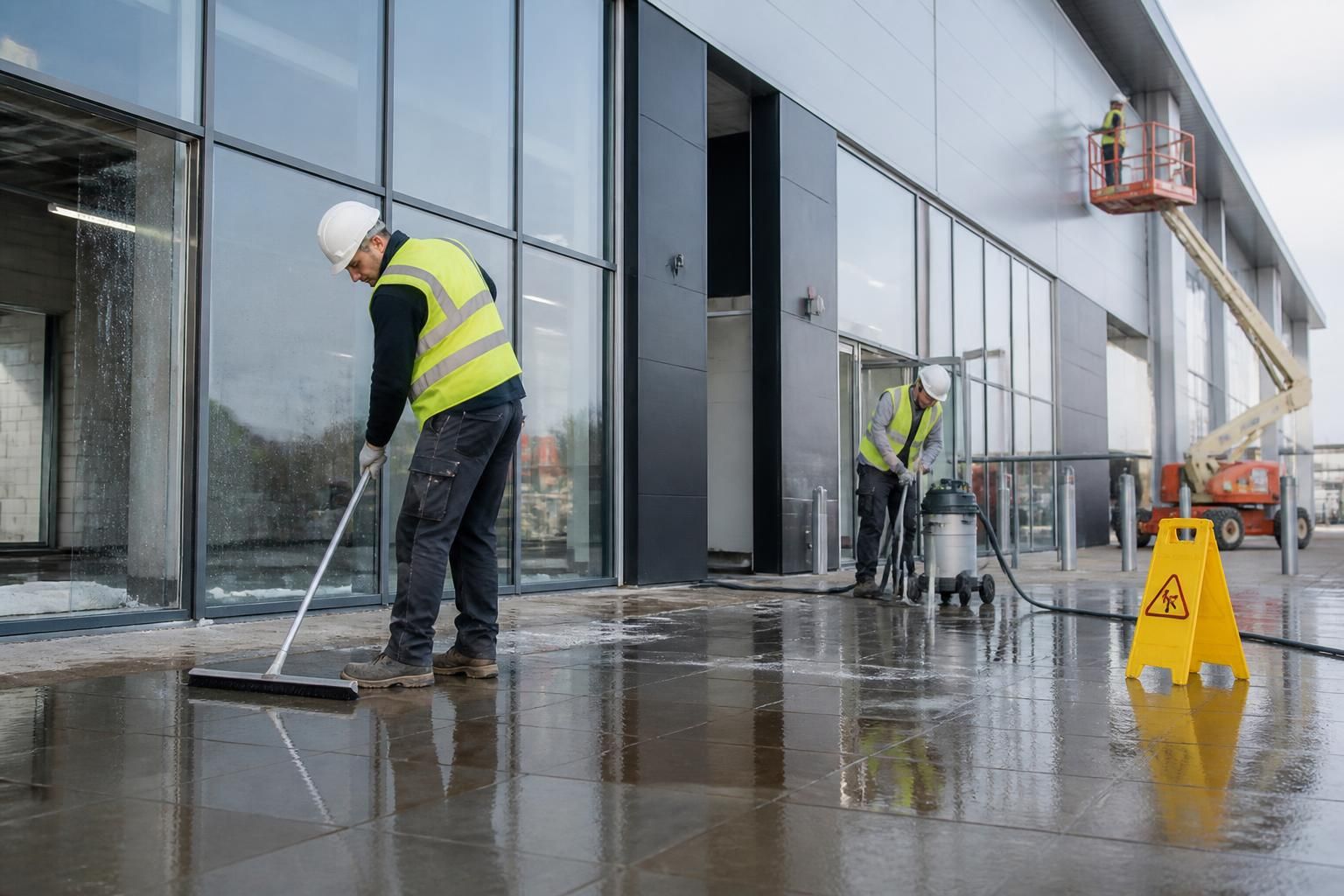
What are the typical costs associated with post construction cleaning services, and how are they calculated?
Post-construction cleaning costs are usually calculated from the size and condition of the site, the areas and surfaces requiring cleaning, the level of detail needed, access requirements, waste handling and the equipment or labour involved. Contractors typically assess the project through its plans, specifications or a site visit before providing a tailored quotation, rather than applying a standard fixed price.
Post-construction cleaning costs are normally calculated from the size and condition of the site, the type of cleaning required, the number and nature of surfaces, access arrangements, waste handling and the labour, equipment and time needed. For commercial and industrial projects, a reliable contractor will usually review the site, plans or specification before preparing a quotation, because the cost cannot be assessed accurately from floor area alone.
Post-construction cleaning is usually priced as a project rather than as a standard domestic-style cleaning service. The work may involve removing construction dust, cement residue, adhesive, paint splashes, protective films, packaging, general waste and marks left by other trades. It can also include detailed cleaning of façades, cladding, windows, roofs, loading areas, car parks and external hard surfaces. Each requirement affects the amount of preparation, specialist equipment and supervision involved.
How contractors calculate the cost
A quotation is generally built from a combination of the following:
- Site size and layout: The total floor area is relevant, but so are the number of rooms, levels, stairwells, plant areas, service yards, façades and external zones. A compact building may be quicker to clean than a larger but more complex site with restricted access.
- Condition of the surfaces: Light dusting and routine builders’ debris require less time than hardened cement, grout, paint, silicone, adhesive, plaster or mortar deposits. The age of the residue and the surface it has bonded to can also affect the method required.
- Cleaning standard: A practical builders’ clean, a detailed sparkle clean and a specialist industrial clean have different scopes. A handover clean may require close inspection of glass, frames, fittings, floors, corners and touchpoints, whereas an initial clearance may focus on removing bulk debris and construction dust.
- Surface types: Brick, concrete, stone, render, powder-coated cladding, metal, glass, block paving and resin-bound surfaces each require suitable chemicals, pressure levels and techniques. Delicate or newly installed materials may need testing and gentler treatment, which can increase working time.
- Access and working height: High façades, roofs, atriums and difficult-to-reach areas may require mobile elevated work platforms, scaffolding, telescopic equipment, water-fed systems or other access solutions. The quote may need to include equipment hire, delivery, operator competency, setup and dismantling.
- Waste and material handling: Removing loose construction waste, bagging debris, moving materials around the site and arranging disposal are separate considerations from washing or wiping surfaces. Waste must be handled in accordance with its type and the site’s arrangements.
- Programme and working hours: Short deadlines, phased handovers, night work, weekend work or cleaning around other contractors can affect labour planning and site supervision. A flexible or accelerated programme may require additional resources.
- Location and logistics: Travel, parking, loading restrictions, water and power availability, security procedures and the distance between work areas can all influence the time and resources required.
Common pricing structures
Contractors may use one pricing structure or combine several, depending on the project:
- Fixed project price: This is suitable where the scope, access and site condition are clearly defined. The quotation should state what is included, the assumptions made and any exclusions.
- Area-based pricing: A rate may be applied to a measured floor area, façade area or external surface area. This approach is most reliable where the surfaces are reasonably consistent and the level of soiling is known.
- Labour and equipment pricing: Some projects are calculated from the expected labour hours, specialist equipment, chemicals, access systems and waste services. This can be appropriate where conditions are uncertain or the work is being completed in stages.
- Schedule-of-rates pricing: Larger projects may be broken into separate tasks, such as pressure washing, window cleaning, cement removal, graffiti removal, roof cleaning and waste clearance. Each task is priced according to its scope and measured quantity.
What a site assessment normally covers
Before confirming a cost, the contractor may inspect the construction phase, review drawings and specifications, identify the surfaces to be treated and establish what other trades are still working on site. The assessment should also consider drainage, water run-off, electrical supplies, fragile finishes, hazardous substances, traffic routes and suitable areas for equipment.
The contractor may ask whether the work is intended as a first clean, a final handover clean or an ongoing programme. It is also important to establish who is responsible for removing skips, surplus materials, protective coverings and construction waste. If these items remain on site, cleaning may take longer or require a revised scope.
Typical cost categories in a quotation
A clear quotation commonly separates or explains the following elements:
- Pre-start assessment, planning and site documentation.
- Labour, supervision and any required specialist training.
- Pressure washing, steam cleaning, soft washing or manual cleaning.
- Cleaning chemicals, abrasives, water treatment and other consumables.
- Access equipment and the associated delivery, operation or hire costs.
- Protection of finished surfaces, fixtures, landscaping and nearby property.
- Collection, movement and disposal of waste where included.
- Traffic management, permits or out-of-hours working where applicable.
- Final inspection, snagging visits and any agreed re-cleaning.
VAT is normally shown separately or identified clearly in the quotation, depending on the contractor’s invoicing arrangements. A commercial client should also check whether the price includes all planned visits, equipment mobilisation and disposal, rather than comparing only the headline figure.
Why two apparently similar projects can have different costs
Two buildings with a similar floor area may require very different levels of work. One may have been kept relatively clean during construction and have good access for machinery. Another may have heavy dust, dried mortar on external paving, adhesive on glazing, several storeys, restricted loading access and a tight handover date. The second project will require more labour, preparation and specialist controls even if the measured area is similar.
Weather can also affect external cleaning programmes. Wet conditions, freezing temperatures, strong wind or poor drainage may limit the safe use of equipment and chemicals. If cleaning has to be split into phases, additional mobilisation and return visits may need to be included.
How to obtain a more accurate quotation
- Provide the site address, building plans or measured areas where available.
- Describe the stage of construction and identify the required handover date.
- List the surfaces, rooms, external areas and specialist items that must be cleaned.
- Explain the type of residue or waste present, including cement, paint, plaster, adhesive or oil.
- Confirm access arrangements, working hours, water and power availability, parking and security requirements.
- State whether waste removal, high-level cleaning, window cleaning and final snagging are required.
- Ask the contractor to identify exclusions, assumptions, possible additional charges and the conditions under which the price could change.
The most useful comparison is therefore not the lowest initial price, but the quotation that provides the clearest scope and accounts for the actual site conditions. A properly calculated post-construction cleaning price should explain the work method, labour and equipment requirements, access arrangements, waste responsibilities and completion standard. If the site condition changes materially after the quotation, the contractor should discuss the change and agree any revised cost before carrying out additional work.

A site assessment is the most reliable way to calculate post-construction cleaning costs. The contractor reviews the areas and surfaces involved, identifies construction residue, checks access and working conditions, and confirms whether waste removal or specialist equipment is required. This prevents a simple floor-area rate from overlooking high-level work, hardened deposits, restricted access or additional external areas.
The quotation should clearly distinguish included work from exclusions, such as skip removal, traffic management, out-of-hours attendance or return visits for snagging. If the site condition, programme or scope changes after the assessment, any revised cost should be explained and agreed before additional work begins.