
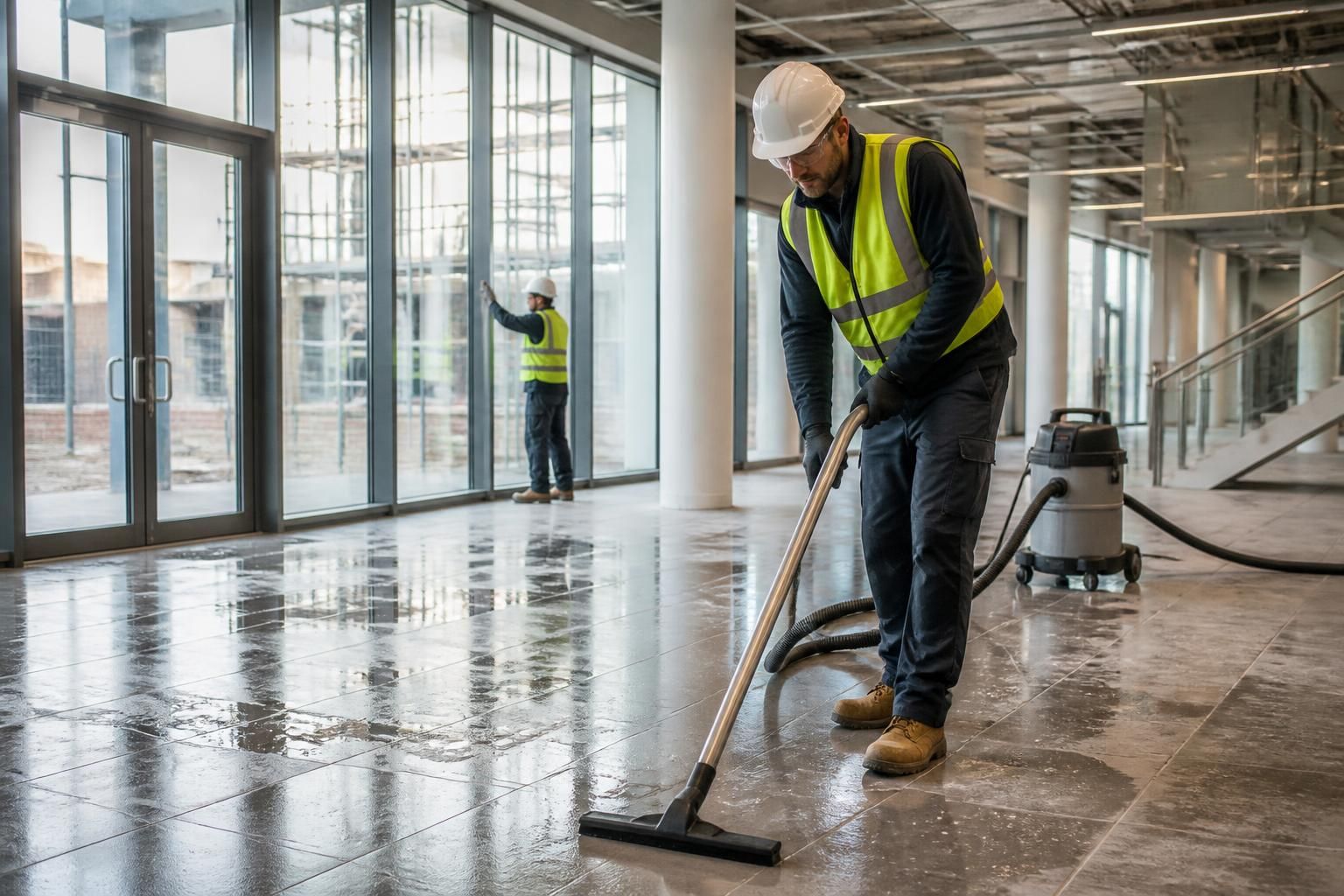
What are the key steps involved in a thorough post construction clean up?
A thorough post construction clean up involves a site assessment, removal of construction debris and leftover materials, dust and residue removal from all surfaces, detailed cleaning of floors, façades, fixtures and access areas, followed by safe waste disposal and a final inspection. Any defects, hazardous materials or areas requiring specialist treatment should be identified and addressed before the premises are handed over for use.
A thorough post construction clean up is a controlled process that prepares a newly built, refurbished or renovated premises for safe occupation and handover. It begins with a site assessment and risk review, followed by removal of waste and leftover materials, detailed cleaning of internal and external surfaces, appropriate waste disposal, and a final inspection to confirm that the required standard has been achieved.
Site assessment and preparation
The cleaning team should first inspect the site with the project manager or appointed representative. This establishes the scope of work, identifies areas requiring specialist treatment and confirms which construction activities are complete. The assessment should cover floors, walls, ceilings, glazing, façades, cladding, roofs, access routes, plant areas, car parks and loading areas where relevant.
Before work starts, the team should also establish:
- Which areas are ready to clean and which remain under construction
- The location of construction waste, stored materials and temporary facilities
- Any hazards, restricted zones, fragile finishes or live services
- The surfaces and materials that require specific cleaning methods
- How waste will be segregated, stored and removed from site
- What finish and handover standard the client expects
This initial review prevents incompatible methods from being used on sensitive materials and helps coordinate cleaning with other contractors still working on the premises.
Risk controls and site set-up
Post construction cleaning should not begin until the relevant health and safety controls are in place. The team should review the site-specific risk assessment and method statement, wear suitable personal protective equipment and maintain separation from moving plant, unfinished structures and other ongoing works. Access equipment, pressure washing systems and electrical equipment must be checked before use.
Work areas may need to be cordoned off, particularly where wet cleaning, elevated work, chemical treatments or machinery are involved. Water, cleaning products and dislodged debris must be controlled so they do not create slip hazards, damage newly installed finishes or enter unsuitable drainage systems.
Removal of debris and leftover materials
The first physical cleaning stage is usually the removal of large debris and surplus construction materials. This can include packaging, timber offcuts, plasterboard, concrete residue, fixings, protective film, cable ties, dust sheets and discarded sealant tubes. Items belonging to the construction team or future occupier should be separated rather than disposed of.
Loose debris is removed from rooms, stairwells, plant areas, roof spaces, service yards and external access routes. Larger pieces may require manual handling controls or mechanical assistance. Waste should be placed into suitable containers and segregated where possible, with hazardous or controlled materials handled through the appropriate waste process.
High-level and dry dust removal
Construction dust settles on horizontal and vertical surfaces, including beams, ledges, pipework, ventilation grilles, door heads, light fittings and the tops of cabinets. Cleaning generally progresses from high areas downwards so that loosened dust is not deposited on surfaces that have already been completed.
Industrial vacuum equipment with suitable filtration is used where appropriate, followed by careful wiping or damp cleaning. Dry sweeping can redistribute fine dust and is therefore unsuitable for many finished areas. Particular care is needed around electrical components, ventilation systems and newly fitted equipment, which must be cleaned in accordance with the manufacturer’s instructions.
Removal of marks, residues and splashes
Once loose dust has been removed, the team can treat construction-related residues. Common examples include adhesive, grout, mortar, paint, plaster, silicone, cement film, bitumen and water marks. The correct treatment depends on the residue and the surface beneath it.
Cleaning products should be tested in an inconspicuous area before wider use. Aggressive scraping, acidic products or high-pressure water can etch glass, stain stone, remove coatings or damage joints. Specialist tools and controlled techniques may be needed for delicate flooring, coated cladding, powder-coated metal, natural stone and newly sealed surfaces.
Detailed cleaning of internal areas
Internal cleaning normally covers floors, walls, ceilings, doors, frames, skirting, glazing, sanitary areas, kitchens, fixtures and fitted furniture. Floors may need vacuuming, mopping, mechanical scrubbing, extraction or treatment to remove ingrained construction dust and residues. The method should reflect the flooring material and the condition of any protective coating.
Glazing requires careful removal of labels, adhesive and construction film without scratching the glass or damaging frames and seals. Doors, handles, switches, sockets, radiators, sanitaryware and other touchpoints should be cleaned and checked for residue. Toilets, welfare areas and kitchens may require separate hygiene procedures from the general builders’ clean.
Where rooms contain newly installed equipment, the cleaning team should avoid moving or operating it unless authorised. Protective coverings should only be removed when the relevant works are complete and the surfaces are ready for final cleaning.
Cleaning façades and external areas
External post construction cleaning may include façades, cladding, brickwork, paving, balconies, roofs, loading bays, car parks and entrance areas. The selected method can include low-pressure washing, pressure washing, steam cleaning, soft washing or manual treatment, depending on the substrate and the type of contamination.
Before water or chemicals are applied, the team should check drainage, protect vulnerable features and identify areas where run-off could cause pollution or damage. Access equipment must be suitable for the building and ground conditions, with controls in place for work at height. External cleaning should remove construction dust, mortar stains, traffic film, adhesive, paint marks and general site residue without damaging the building envelope.
Waste handling and environmental controls
Collected waste, used materials and contaminated water must be managed responsibly. Waste should be segregated where practical and transferred through an authorised disposal route. Chemicals must be stored, diluted and used according to their safety information, while wash water and slurry should be prevented from entering surface-water drainage unless it is suitable and permitted.
Environmental controls are particularly important when removing cement, paint, oil or other substances from external surfaces. The cleaning plan should account for drainage, nearby watercourses, weather conditions and the risk of overspray or run-off affecting neighbouring property.
Final detailing and inspection
After the main cleaning stages, the team should carry out a close inspection under suitable lighting. This final pass identifies remaining dust, smears, streaks, adhesive, paint spots, damaged protective film or residue around edges and fittings. Floors, glazing, corners, thresholds, staircases and high-touch areas deserve particular attention because small defects are often most visible at handover.
The inspection should be completed against the agreed scope rather than a general impression of cleanliness. Any areas that do not meet the required standard should be recleaned or referred to the relevant contractor if the issue is a construction defect rather than removable contamination. Defects, damage or inaccessible areas should be recorded and reported rather than concealed by cleaning.
Handover and ongoing maintenance
A completed post construction clean up should finish with a handover review. This can include confirmation of completed areas, waste transfer information where required, photographs, outstanding items and recommendations for protecting newly cleaned surfaces. The premises should only be released for occupation when unsafe debris, residues and cleaning hazards have been removed and the agreed areas have been inspected.
For larger commercial or industrial sites, a planned maintenance schedule can then address façades, entrances, car parks, roofs and other external areas. This helps preserve the handover condition and prevents construction residue, traffic film and weathering from becoming more difficult to remove later.
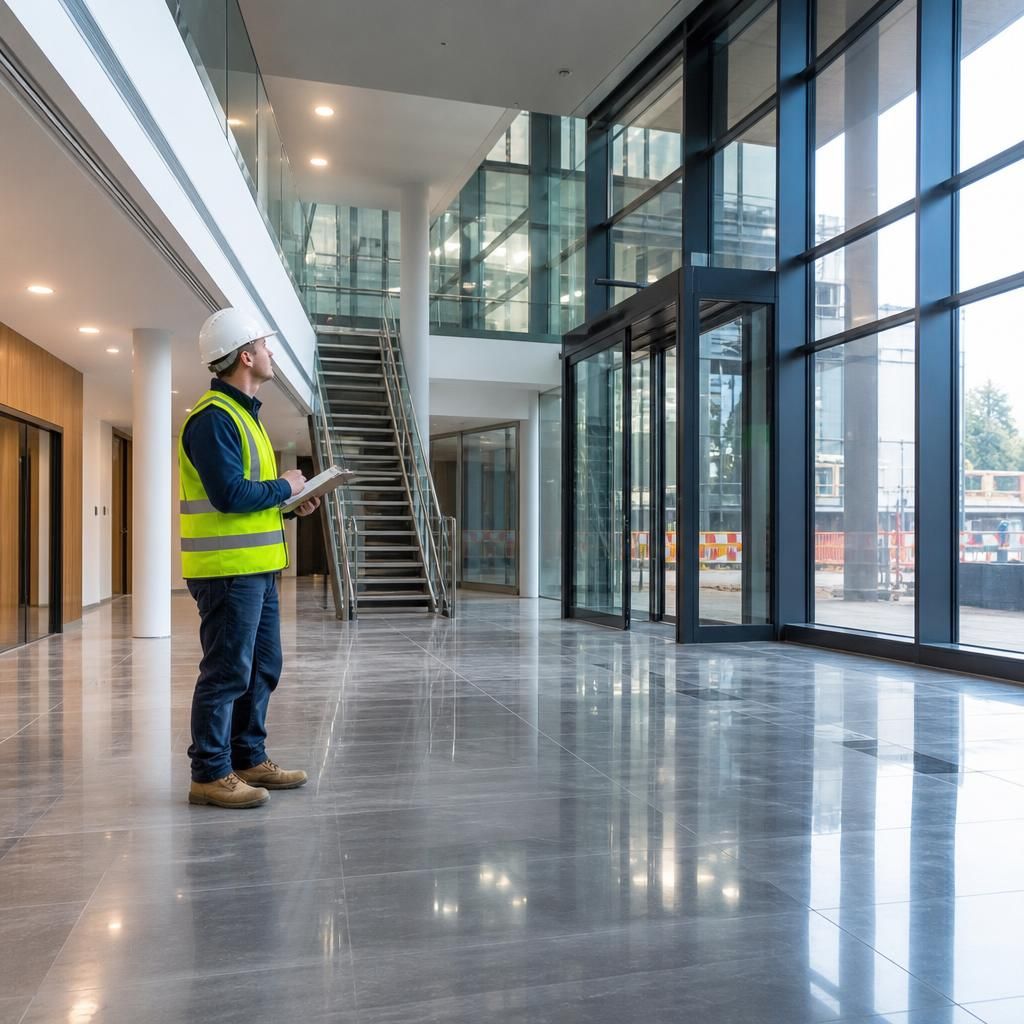
A final inspection is the quality-control stage of a thorough post construction clean up. It checks that dust, adhesive, paint splashes, grout, packaging and other construction residues have been removed from the agreed areas before handover.
The inspection should cover floors, glazing, corners, thresholds, stairways, fixtures, access routes and external areas such as entrances, façades and car parks. Suitable lighting helps reveal smears and fine residue that may not be visible during the main cleaning process. Any remaining contamination should be recleaned, while damage, incomplete construction work or inaccessible areas should be recorded and referred to the relevant contractor rather than concealed.