
How does post construction cleaning differ from regular commercial cleaning?
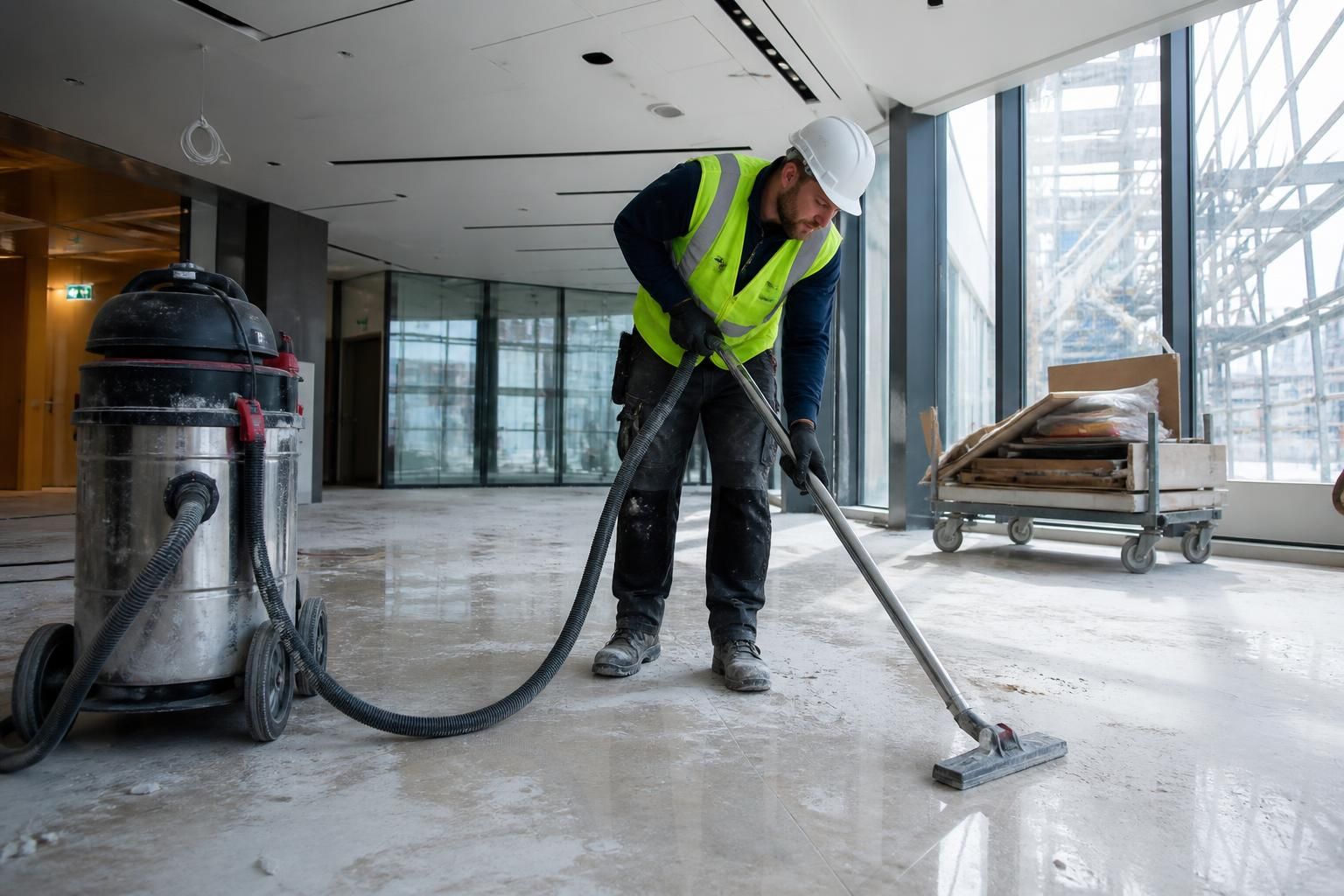
Post-construction cleaning removes building dust, cement residue, adhesive, paint splashes, packaging and other construction debris so a newly completed site is safe and ready for occupation. Regular commercial cleaning maintains an already operational workplace through routine tasks such as vacuuming, mopping, sanitising and washroom cleaning, whereas post-construction work usually requires specialist equipment, detailed finishing and stricter site-safety controls.
Post-construction cleaning is a specialist, project-based service that removes building dust, cement residue, plaster, grout, sealant, paint splashes, adhesive, packaging and construction debris before a new or refurbished property is handed over. Regular commercial cleaning is an ongoing maintenance service for an occupied or operational premises, focused on controlling everyday dirt, waste, spills, germs and surface wear. Although both involve cleaning, they differ substantially in purpose, methods, equipment, safety controls and the standard required at completion.
The main differences are:
- Purpose: post-construction cleaning prepares a newly built, renovated or altered space for safe use, inspection or occupation. Regular commercial cleaning preserves the condition and hygiene of a workplace that is already in use.
- Type of contamination: construction sites contain fine dust, concrete deposits, mortar, plaster, silicone, adhesive, paint, protective films, metal fragments and surplus materials. Commercial premises more commonly require the removal of tracked-in dirt, food residue, general dust, fingerprints, waste and routine sanitary contamination.
- Work pattern: post-construction cleaning is normally completed as a defined project, often in stages as trades finish their work. Regular cleaning follows a planned recurring schedule, such as daily, weekly or periodic visits.
- Equipment and techniques: post-construction work can require industrial vacuum systems, pressure washing, steam cleaning, specialist detergents, scraping tools, floor machines and access equipment. Routine cleaning usually relies on standard vacuums, mops, cloths, washroom equipment and approved maintenance chemicals.
- Safety requirements: post-construction teams may be working around incomplete surfaces, open areas, tools, temporary services, dust-producing activities, access equipment and other contractors. The work therefore requires closer coordination, suitable personal protective equipment, controlled access and task-specific risk assessments.
- Completion standard: the objective is not simply to make the site look tidy. Dust and residues must be removed from surfaces, fixtures, floors, glazing and hard-to-reach areas so the premises can be inspected, occupied or transferred to the client. Routine cleaning maintains an agreed presentation and hygiene standard rather than completing a handover process.
What post-construction cleaning involves
A post-construction clean commonly begins with the removal of loose waste, packaging and protective materials, subject to the agreed scope and the site’s waste procedures. Operatives then work through high-level areas, walls, ceilings, fittings, frames, doors, glazing, floors and external surfaces. Fine dust is removed before detailed wiping and washing, because dry construction dust can spread easily and settle again if the sequence is poorly planned.
More persistent contamination is treated according to the material and surface. Cement or grout residue may need controlled descaling methods, while paint or adhesive can require careful softening and mechanical removal. The wrong chemical, pad or scraping method can mark glazing, damage coatings, dull polished floors or affect newly installed finishes. For this reason, products and techniques should be selected after considering the substrate, manufacturer’s guidance and the age of the installation. Small test areas are appropriate where a surface is unfamiliar or particularly sensitive.
Cleaning is often carried out progressively. An initial builders’ clean removes larger debris and the heaviest dust. A second stage can address remaining residues, construction marks and areas exposed as other trades finish. A final sparkle or presentation clean focuses on visible detailing, fingerprints, glazing, fittings and inspection points. The exact stages depend on the project programme, the condition of the site and the handover requirements.
How regular commercial cleaning differs
Regular commercial cleaning is designed around how a building operates. Tasks may include vacuuming and mopping floors, emptying internal bins, cleaning washrooms, wiping touchpoints, replenishing consumables and maintaining kitchens, offices, communal areas or reception spaces. Periodic services may add carpet cleaning, internal glazing, machine scrubbing or high-level dusting, but these tasks support ongoing maintenance rather than removing construction-related contamination.
Operational premises also require cleaning methods that minimise disruption. Work may be scheduled outside trading or office hours, divided into zones or coordinated with staff and visitors. On a construction or refurbishment project, the priority is more often safe access, dust control, protection of finished work and readiness for the next stage or final handover.
Why ordinary cleaning may not be sufficient after construction
Construction dust is often finer and more widespread than everyday commercial dirt. It can settle on high-level ledges, service areas, vents, frames and newly installed equipment, while wet residues can bond to floors or glazing if left untreated. A standard mop and vacuum routine may remove visible loose dirt but leave cement film, paint spots, adhesive marks or dust within edges and joints.
Post-construction work also needs to account for materials that are still curing or vulnerable to damage. Excessive water, aggressive chemicals or unsuitable machinery can compromise finishes. Professional planning helps determine which areas can be cleaned, which must remain protected and when particular tasks should be completed in relation to other contractors.
Equipment and access considerations
Depending on the site, specialist equipment may include dust-controlled industrial vacuums, steam systems, pressure-washing equipment, floor scrubbers, extraction machines and access platforms. Access equipment is used where high-level glazing, façades, roofs, atriums or elevated surfaces cannot be cleaned safely from ground level. The equipment must be appropriate for the surface and used by trained operatives under suitable controls.
Regular commercial cleaning generally uses equipment selected for efficiency across repeat visits and familiar surfaces. It does not usually require the same combination of heavy-duty residue removal, high-level access and construction dust management. However, the two services can overlap; a completed project may move into a regular maintenance programme once the handover clean has been accepted.
Safety, waste and environmental controls
Post-construction cleaning should be planned alongside the principal contractor, site manager or client representative. Before work starts, the scope, hazards, access arrangements, work areas, remaining trades and emergency procedures should be confirmed. Risks can include slips caused by water or residues, airborne dust, sharp waste, unstable materials, chemical exposure, vehicle movements and interaction with other site activities.
Waste must be separated, stored and removed in accordance with the project’s arrangements and applicable requirements. Cleaning chemicals should be used at the correct dilution, stored safely and selected to reduce unnecessary impact on surfaces, people and the environment. Where pressure washing or wet cleaning is required, runoff should be controlled so contaminated water does not enter unsuitable drainage systems or affect surrounding areas.
What the client should expect from the scope
A clear post-construction cleaning specification should identify the areas and surfaces included, the types of residue to be removed, the treatment of glazing and floors, any high-level or external work, waste responsibilities, access arrangements and the required handover standard. It should also state whether cleaning is being completed before or after fixtures, furniture and equipment are installed.
In practical terms, post-construction cleaning is a transition service: it moves a site from the building or refurbishment phase towards safe, presentable use. Regular commercial cleaning then maintains that condition through routine, proportionate tasks. Separating the two requirements when planning a project helps avoid gaps in the scope, protects new finishes and ensures the premises are assessed against the correct standard.
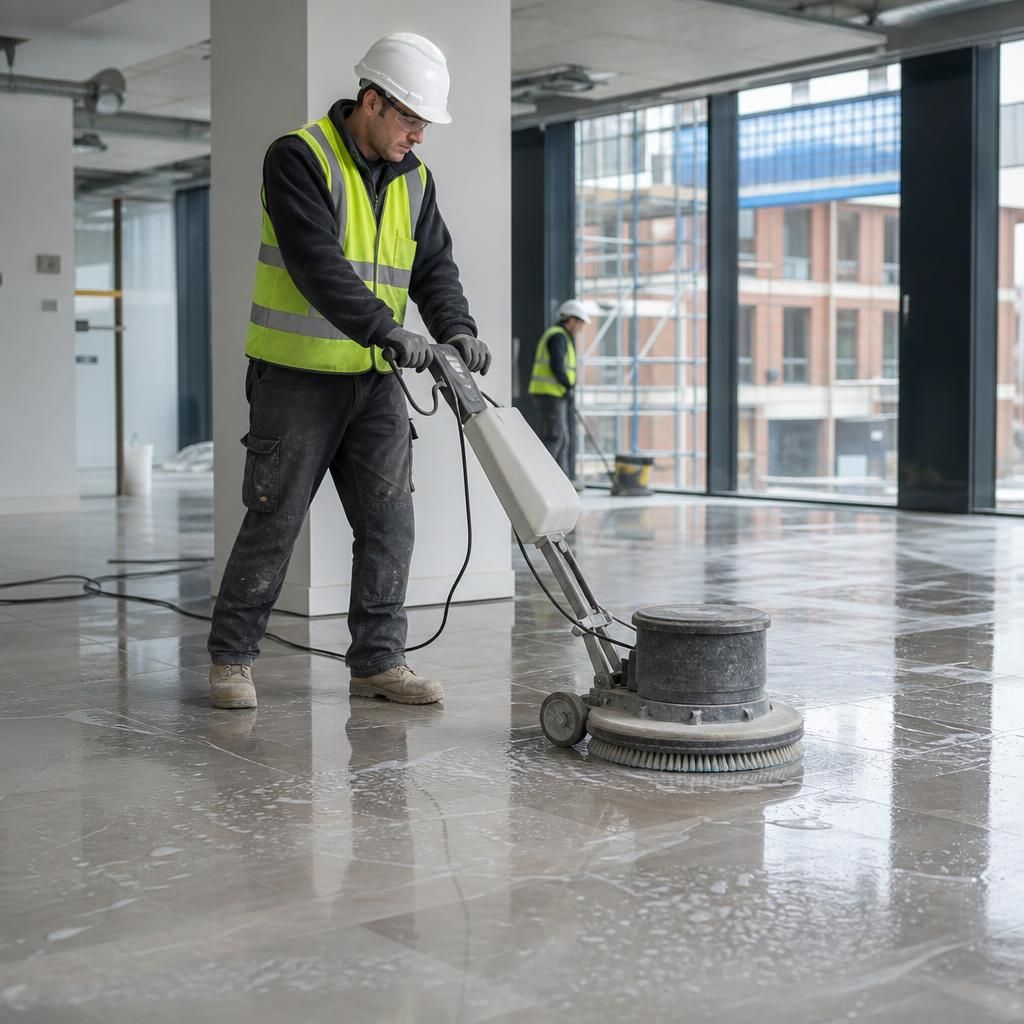
Post-construction cleaning requires surface-specific treatment because building residues are more difficult and potentially damaging than everyday commercial dirt. Cement film, grout, plaster, adhesive and paint should be identified before cleaning so the correct chemical, pad, scraper or steam method can be selected for each surface.
Cleaning is normally completed in stages: loose debris and fine dust are removed first, followed by residue treatment and a final presentation clean. This sequence limits recontamination and helps protect new flooring, glazing, coatings and fittings. Regular commercial cleaning, by contrast, is intended to maintain an occupied building through repeat tasks such as vacuuming, mopping, sanitising and waste removal.