
How can post construction clean up services ensure compliance with environmental regulations?
Post construction clean up services help ensure environmental compliance by controlling dust, preventing contaminated water or debris from entering drains and watercourses, and segregating construction waste for lawful reuse, recycling or disposal. Competent contractors also identify hazardous materials, use appropriate containment and cleaning methods, transfer waste to authorised facilities and retain the documentation needed to demonstrate compliance with relevant UK environmental requirements.
Post construction clean up services support environmental compliance by controlling dust and contaminated run-off, identifying hazardous materials, segregating waste and ensuring that each waste stream is transferred to an appropriately authorised facility. A competent cleaning contractor should work within the project’s environmental management plan, coordinate with the principal contractor and retain clear records showing how waste, wastewater, chemicals and potentially polluting materials were handled.
Compliance is not achieved by removing visible dust and debris alone. Construction residues can include cement, plaster, paint, sealants, oils, treated timber, packaging, contaminated soil and broken materials. The cleaning process must therefore consider what each substance contains, where it may travel and whether it can harm people, drainage systems, soil or watercourses.
Waste should be classified and segregated at source. Separate handling makes it easier to apply the waste hierarchy, which prioritises prevention, reuse, recycling and recovery before disposal. Typical measures include:
- Keeping recyclable materials such as metals, clean timber, cardboard, plastics and uncontaminated aggregates separate from general waste.
- Preventing hazardous and non-hazardous waste from being mixed.
- Using suitable, labelled containers that prevent leaks, windblown debris and unauthorised access.
- Inspecting waste before removal so that contaminated or restricted materials are not sent to an unsuitable facility.
- Arranging reuse or recycling where this is lawful and technically appropriate, rather than assuming that all material can be recovered.
Under the environmental duty of care, organisations that produce, handle or arrange the transfer of waste must take reasonable steps to store it safely, describe it accurately and use an authorised waste carrier and receiving site. A post construction cleaning contractor should be able to explain who is responsible for each waste stream and provide the relevant transfer documentation. Hazardous waste requires additional controls and documentation, including accurate classification and the appropriate consignment paperwork. Records should be retained in line with the applicable legal and project requirements.
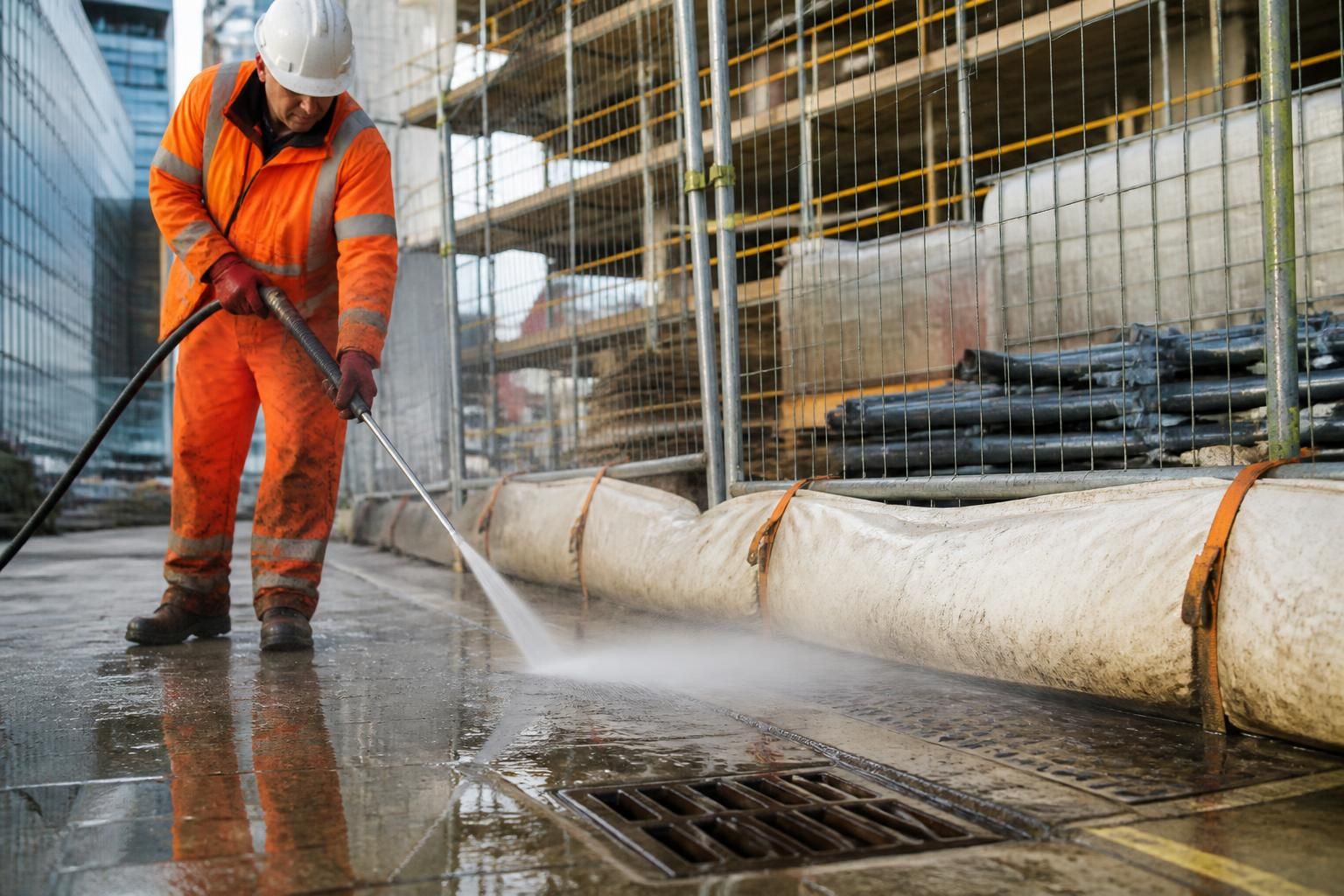
Wastewater and run-off require particular control. Pressure washing can mobilise cement dust, fine particles, oils, detergents, paint residues and other pollutants. Discharging this water into a surface-water drain, foul drain, watercourse or onto surrounding ground without checking the requirements can cause pollution and may breach sewer or environmental controls. Effective procedures can include:
- Surveying drainage routes before work begins and identifying surface-water gullies, soakaways, watercourses and sensitive areas.
- Using drain covers, bunds, booms, vacuum recovery and temporary containment where there is a risk of polluted run-off.
- Collecting slurry and wash water for controlled treatment, disposal or an approved discharge route.
- Selecting cleaning agents that are suitable for the surface and the drainage arrangements, and using them only at the necessary concentration.
- Never allowing cement washout, solvents, oils or paint-contaminated water to enter a drain or watercourse without authorisation.
Where wastewater is proposed for discharge to a sewer, the contractor or project team should confirm the sewerage undertaker’s requirements. A discharge to controlled waters may require an environmental permit or other regulatory approval, depending on the substance, location and circumstances. Permission to use a drain should not be assumed simply because a drain is nearby.
Dust control is both an environmental and workplace requirement. Dry sweeping, uncontrolled brushing and the use of compressed air can spread fine construction dust beyond the work area. Contractors should use extraction-equipped machinery, damp methods where suitable, localised cleaning and sealed waste containers. The method must also account for the material being removed: dust from concrete, mortar, stone, coatings or insulation may require specific controls and personal protective equipment under the site’s risk assessment and COSHH arrangements.
Before cleaning starts, the site should be checked for asbestos-containing materials, lead-based coatings, chemical residues, fuel, contaminated soil, sharps and other hazardous substances. General cleaning operatives should not disturb or remove suspected asbestos or unknown hazardous materials. The area should be isolated and assessed by a suitably competent specialist, with removal or remediation carried out under the applicable controls. Cleaning should resume only when the responsible person confirms that the area is safe to access.
Environmental compliance also depends on preventing secondary pollution during transport and storage. Waste containers should be stable, covered where necessary and protected from damage. Vehicles should be loaded securely so that dust, liquid or loose debris cannot escape. Waste should be taken only to facilities permitted or otherwise authorised to accept the relevant material. A contractor’s waste carrier registration and the receiving facility’s authorisation should be checked as part of the project’s procurement and audit process.
A reliable close-out file normally includes the agreed cleaning method, risk and environmental assessments, waste classifications, transfer or consignment notes, details of the carrier and receiving facility, records of any wastewater arrangements, product information for chemicals used, and incident or corrective-action reports. Photographs, inspection sheets and completion records can also help demonstrate that drains were protected, waste was removed lawfully and the site was left in the specified condition.
Responsibility is shared. The client and principal contractor remain responsible for the wider construction project and its environmental arrangements, while the cleaning contractor must carry out its work competently and follow the site rules. Requirements can differ between England, Wales, Scotland and Northern Ireland, so the project location, contract documents and instructions from the relevant environmental regulator should be checked before work begins. Early planning, accurate waste information and documented controls reduce the risk of pollution, enforcement action, delays and additional disposal costs.
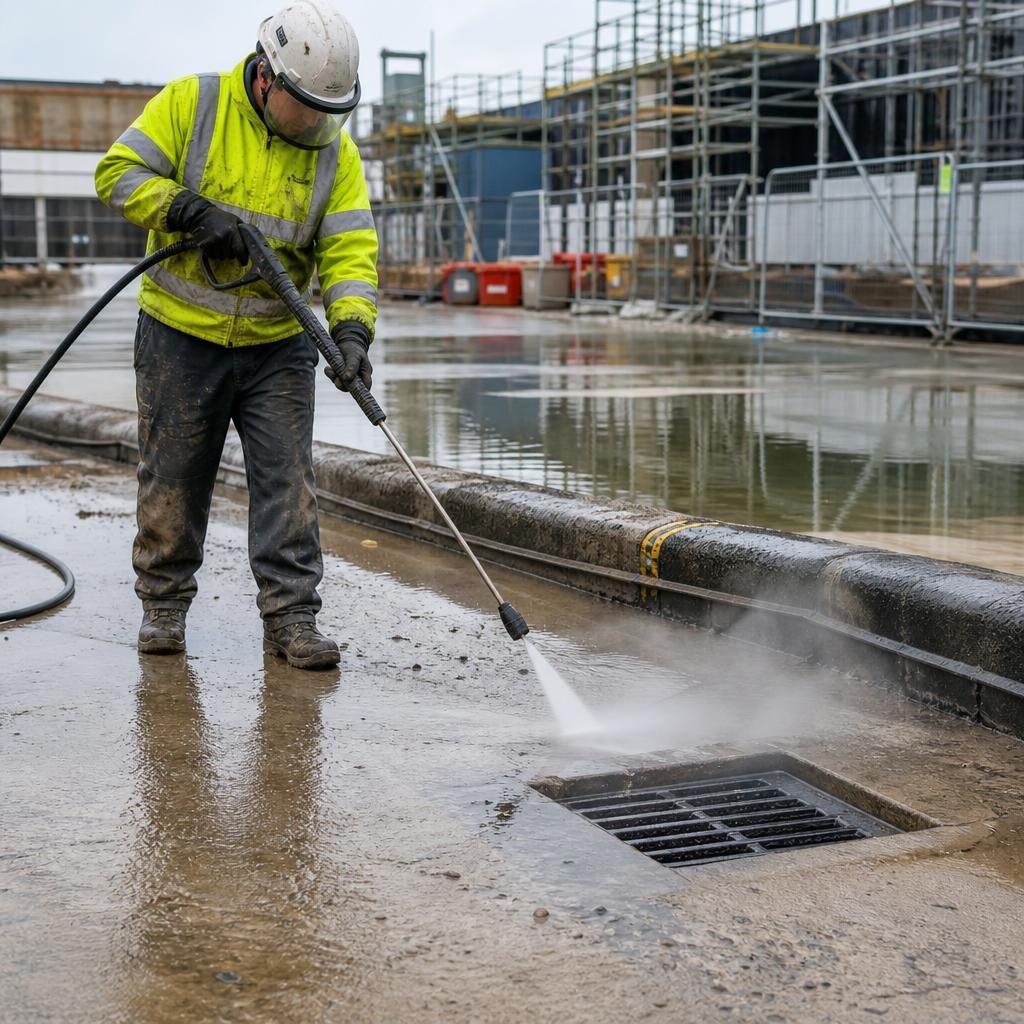
Controlling wash water and surface run-off is a key part of environmentally compliant post construction cleaning. Pressure washing can carry cement residue, paint particles, oils and detergents into surface-water drains, soil or nearby watercourses, so the cleaning method must be planned before work starts.
A competent contractor will identify drainage routes, protect gullies with suitable covers or barriers, recover slurry and collect contaminated water where required. Discharge to a sewer or controlled water must follow the relevant permissions and the requirements of the sewerage undertaker or environmental regulator; a nearby drain is not automatically a lawful disposal route. Keeping records of the agreed method, wastewater handling and any disposal arrangements provides useful evidence that pollution risks were properly controlled.
Plan Your Compliant Post Construction Clean Up
Arrange a compliant post construction clean up with Encanto Exterior Cleaning and we can agree the waste, wastewater, dust-control and documentation requirements before work begins. Contact our team to plan the clean-up around your project’s environmental management procedures.