
What methods are used for effective industrial brick cleaning?
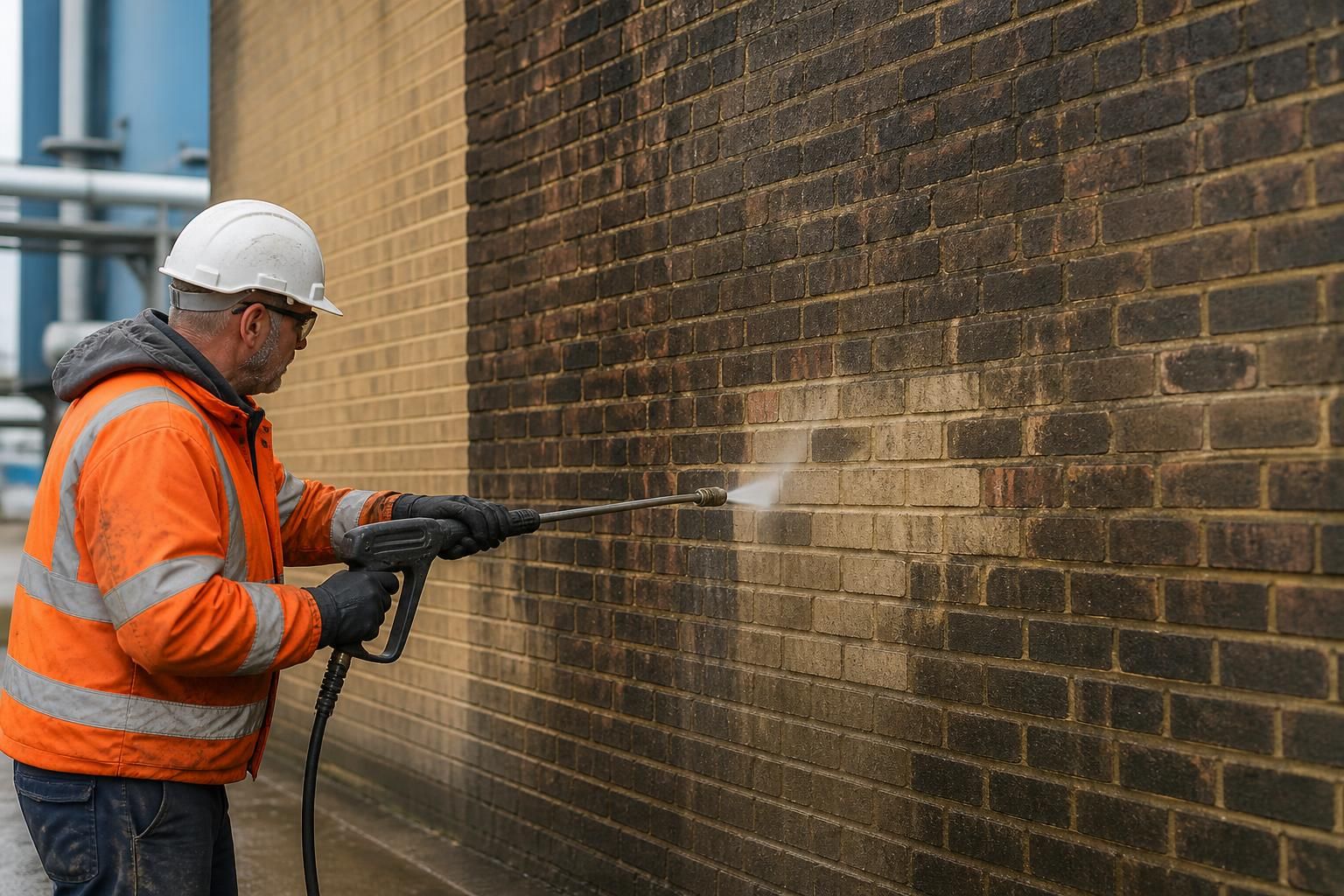
Effective industrial brick cleaning typically combines controlled pressure washing, low-pressure steam cleaning and, where appropriate, specialist chemical treatments. The correct method depends on the brick type, contamination, condition of the masonry and the need to protect surrounding surfaces.
Effective industrial brick cleaning uses the least aggressive method that will remove the specific contamination without damaging the brick face, mortar joints or surrounding finishes. In practice, this usually means controlled low- to medium-pressure washing, steam cleaning, specialist chemical treatment, or a carefully managed combination of methods. The brick type, age, condition, contamination and site environment should all be assessed before work begins.
Method selection starts with a site assessment
Industrial brickwork can be affected by cement residue, mortar smears, atmospheric staining, oil, traffic film, algae, moss, soot, paint, graffiti and general accumulated dirt. These contaminants do not respond equally to the same cleaning process. A method that is suitable for removing loose dust may be ineffective against cement deposits, while an overly aggressive approach can remove the fired surface of the brick or erode the mortar.
A professional assessment should identify the brick type, surface finish, joint condition, previous repairs, areas of deterioration and any nearby materials that could be affected. A small test area is then normally cleaned using the proposed process. This confirms whether the method is effective and helps establish suitable pressure, temperature, dwell time and rinsing requirements before the full project starts.
Controlled pressure washing
Pressure washing is widely used for removing loose dirt, soil, traffic film, algae and other surface contamination from robust industrial brickwork. Its effectiveness depends on controlling the pressure, water flow, nozzle type, spray distance and cleaning pattern rather than simply using the highest available pressure.
Lower-pressure washing is generally preferred for older, softer or weathered bricks, particularly where the surface has started to delaminate or the mortar is friable. More robust engineering brickwork may tolerate a stronger setting, but this should still be confirmed by testing. The operator should avoid concentrating the spray on one point, forcing water into open joints or directing water beneath damaged brick faces.
Pressure washing is often combined with a suitable detergent or pre-treatment where oily deposits and ingrained grime are present. Thorough rinsing is important because remaining detergent or loosened contamination can cause streaking, staining or later deterioration.
Steam cleaning
Steam cleaning uses heated water vapour, usually at relatively low pressure, to soften and lift dirt. It is useful for brick façades, listed or sensitive masonry, soot, biological growth and deposits that can be removed without aggressive abrasion. The heat can also help break down greasy films and reduce the need for chemical products.
Because steam cleaning applies less mechanical force than conventional high-pressure washing, it can be appropriate where mortar joints, decorative brickwork or weathered surfaces need additional protection. However, it is not automatically suitable for every building. Heat and moisture can affect fragile coatings, previously repaired areas and porous materials, so the surface should still be tested first.
Specialist chemical cleaning
Chemical cleaning may be required where deposits have bonded to the brick or cannot be removed safely with water alone. Different products are formulated for different contaminants, including cement and mortar residues, atmospheric staining, oil, paint and biological growth. The product must be compatible with the brick and mortar; an acid-based cleaner, for example, can damage acid-sensitive materials, metallic fittings, glazed surfaces and some types of stone.
Chemicals should be applied in a controlled manner and for the manufacturer’s specified contact time. Surrounding surfaces, windows, seals, drainage points, planted areas and equipment must be protected. The treated area should be rinsed thoroughly, with wash water collected or managed in accordance with site and environmental requirements. Applying a stronger product or leaving it on the surface for longer does not necessarily improve the result and may cause permanent discolouration or surface damage.
Soft washing and biological treatment
Algae, moss, lichen and other organic growth are often best addressed with a low-pressure application of an appropriate biocidal or cleaning treatment, followed by controlled rinsing. Soft washing avoids the unnecessary force that can dislodge mortar or drive water into porous brickwork. Where growth is heavy, mechanical removal may be carried out carefully before treatment.
Biological treatment should include consideration of run-off, nearby vegetation, drainage systems and watercourses. Removing visible growth without addressing the conditions that support it, such as persistent dampness or blocked rainwater goods, can allow the problem to return.
Manual and mechanical techniques
Hand tools, non-metallic brushes and controlled scraping are useful for localised deposits, delicate detailing and areas where water or chemicals cannot be used. These techniques can provide greater control around joints, vents, fixings and architectural features. Abrasive cleaning, including blasting, is more restricted because it can remove the brick’s fired outer surface, expose a softer core and increase future water absorption.
Where an abrasive process is being considered, the media, pressure and application method must be selected specifically for the masonry. It should not be treated as a standard solution for heavily soiled industrial brickwork. In many cases, a combination of pre-treatment, steam or low-pressure washing and localised manual work provides a safer result.
A typical industrial brick cleaning process
-
Inspect the brickwork, mortar, contamination and surrounding surfaces, including access and drainage arrangements.
-
Carry out a test clean using the proposed method and record the settings and products that produce an acceptable result.
-
Protect windows, doors, vents, electrical equipment, signage, landscaping and adjacent finishes.
-
Remove loose contamination and pre-wet or pre-treat the surface where appropriate.
-
Clean in manageable sections, working systematically to prevent missed areas, runs and uneven shading.
-
Rinse or neutralise the surface as required, while controlling contaminated water and protecting site drainage.
-
Inspect the completed brickwork after drying and identify any areas requiring additional localised treatment or masonry repairs.
The final appearance should be judged after the brickwork has dried, as damp masonry can temporarily appear darker or uneven. Cleaning should remove harmful or unwanted deposits while retaining the natural character of the brick. It should not be used to conceal defective pointing, failed coatings, cracked bricks or moisture problems that require separate repair.
For large façades, warehouses, industrial units and multi-building sites, the most reliable approach is usually a planned combination of methods rather than one uniform treatment. Controlled pressure washing may deal with general dirt, steam may be used around sensitive areas, and specialist chemical or manual work may be reserved for cement, oil, paint or localised staining. This targeted approach improves consistency, limits unnecessary chemical and water use, and reduces the risk of damage to the industrial brickwork.
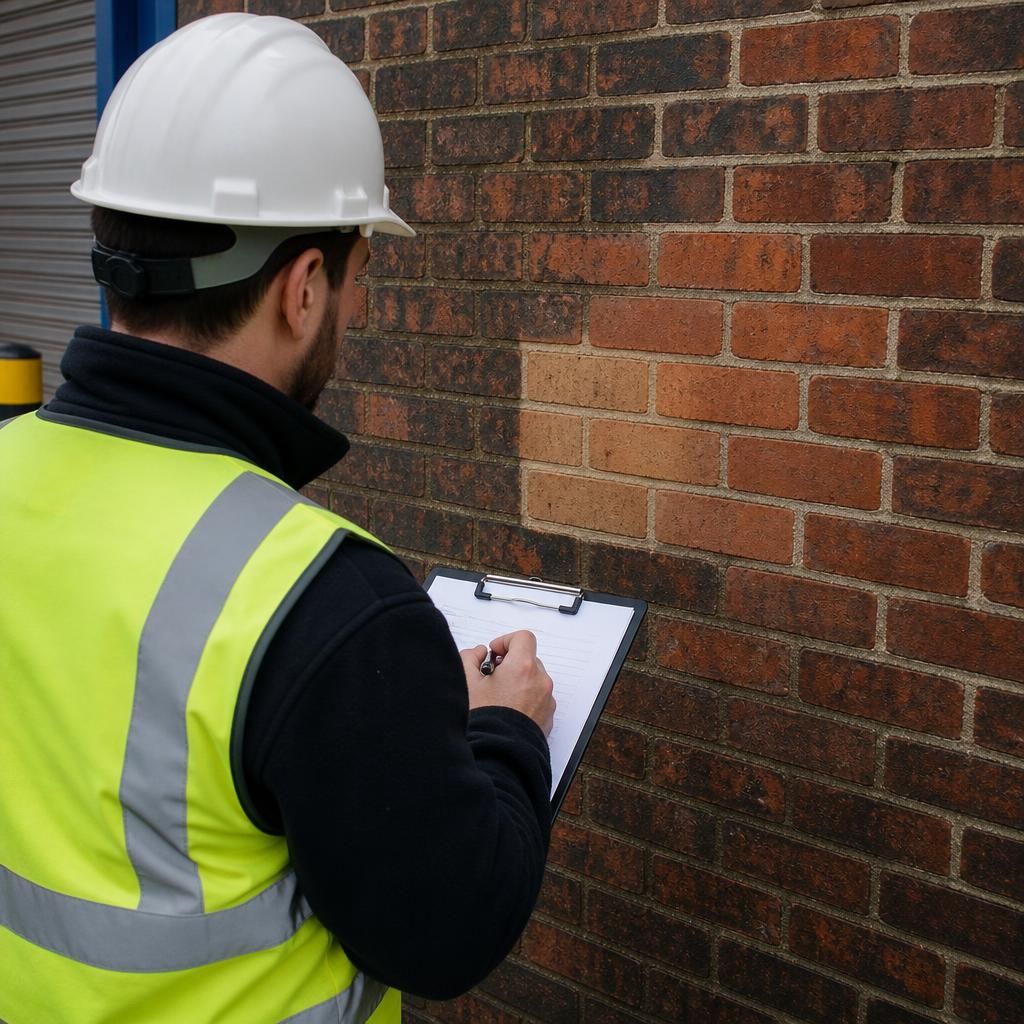
A small test area is essential before industrial brick cleaning because it shows whether the proposed method removes the contamination without damaging the brick face or mortar joints. The test should reflect the intended pressure, temperature, chemical contact time, nozzle distance and rinsing process.
Once the area has dried, it can be checked for colour change, surface loss, staining, mortar damage and uneven cleaning. The results help determine whether to proceed, adjust the process or use a gentler method on sensitive sections of the façade.