
What is the best method for cleaning industrial brickwork?
The best method for cleaning industrial brickwork is usually a controlled, low-pressure clean using the least aggressive approach that removes the contamination without damaging the brick or mortar. Steam cleaning is often preferable for delicate, historic or heavily stained brickwork, while carefully managed pressure washing may suit robust modern brickwork after a surface assessment and test clean.
The best method for cleaning industrial brickwork is a controlled, low-pressure process based on the brick type, mortar condition and contamination present. The objective is to remove soiling with the least aggressive method that achieves a satisfactory result. In many cases, steam cleaning is the safest option for delicate, historic or heavily stained brickwork, while carefully managed pressure washing can be suitable for robust modern brickwork following a surface assessment and test clean.
Steam cleaning is often the preferred starting point. A steam-cleaning system uses heated water, usually with limited pressure, to soften and lift atmospheric grime, soot, algae, bird fouling and some oil-based residues. It is particularly useful where the brick face or mortar joints could be damaged by high-pressure water. The heat can also help reduce the need for aggressive chemicals, although the method still needs to be selected and controlled according to the contamination.
Low-pressure steam cleaning is commonly appropriate for older industrial buildings, handmade bricks, weathered façades and surfaces with friable or eroded mortar. It can clean detailed brickwork, recessed joints and architectural features without relying on force alone. However, steam is not automatically suitable for every deposit. Thick paint, hard cement contamination, tar and some deeply embedded oils may require a separate treatment, specialist chemical application or carefully controlled mechanical removal.
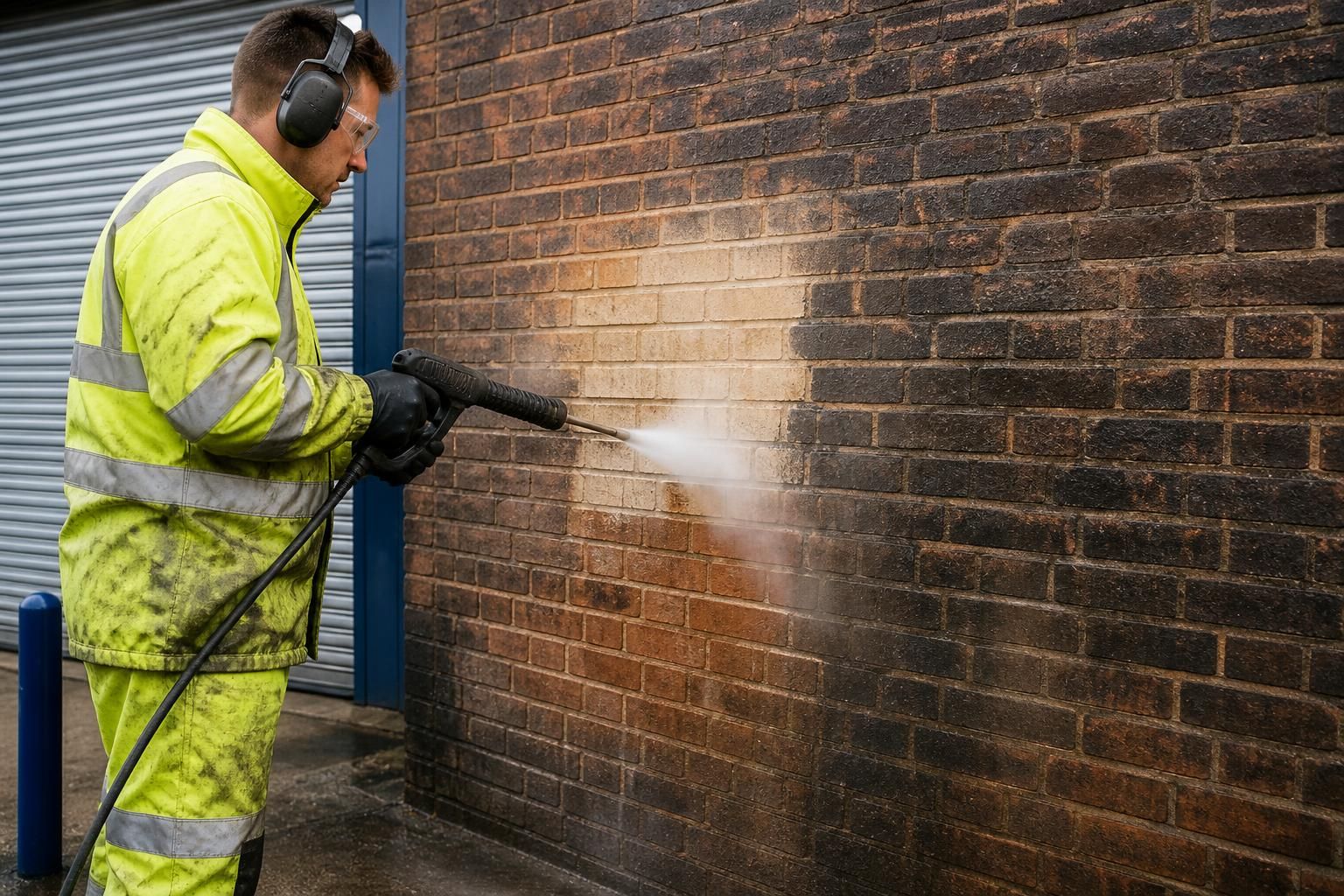
Pressure washing can be effective on sound, modern brickwork. The pressure, water flow, nozzle type and distance from the surface must be controlled by an experienced operator. Excessive pressure can erode the brick face, open the surface, remove pointing and force water into cavities or defective joints. A broad spray pattern and an appropriate working distance are generally safer than a concentrated jet. The operator should avoid directing water into cracks, open joints, vents, electrical equipment or areas where the wall is already failing.
High-pressure washing is not a default solution for industrial brick cleaning. A surface may look robust while having soft bricks, weak mortar or previous damage beneath the visible dirt. Pressure can also create a temporarily clean appearance while leaving contaminants in porous areas. For this reason, cleaning should begin with an inspection rather than with equipment being applied immediately to the façade.
The correct method should be confirmed with a survey and test clean. The assessment should consider:
- the age, manufacture and hardness of the brick;
- whether the brick is glazed, painted, coated or previously repaired;
- the condition, depth and strength of the mortar joints;
- the type and thickness of the contamination;
- water ingress risks, internal finishes and vulnerable building areas;
- access requirements, including work at height and restricted areas; and
- drainage, wastewater collection and environmental controls.
A test patch should be carried out in an inconspicuous area using the proposed equipment, pressure, temperature, nozzle, dwell time and any cleaning product. The result should be checked after the surface has dried, as wet brick can conceal changes in colour or texture. The test should confirm that the dirt is being removed without scarring the brick, loosening the pointing, spreading staining or leaving an unacceptable colour difference. A larger cleaning programme should not proceed until the test area has been assessed and approved.
The type of contamination determines whether additional treatment is needed. General atmospheric dirt, soot and biological growth can often be removed with steam or a suitable low-pressure wash. Efflorescence, which appears as a powdery white deposit, may need gentle dry removal and controlled rinsing rather than aggressive washing. Cement and mortar residues require care because attempts to remove them mechanically can damage the brick face. Paint, graffiti, oil and tar may require a compatible specialist cleaning product, applied for the correct contact time and then removed without allowing residues to enter the ground or drainage system.
Chemical cleaning should never be selected simply because it is quicker. The product must be compatible with the brick, mortar, adjacent metals, glass, coatings and landscaping. It should be applied in accordance with the manufacturer’s instructions and relevant site controls. Some products can discolour brickwork, attack mortar or create hazardous run-off if they are mixed, over-applied or inadequately rinsed. Where a chemical is necessary, containment, collection and disposal of wash water should form part of the method statement.
Abrasive cleaning is usually the most aggressive option. Blasting with abrasive media can remove coatings and heavy deposits, but it can also strip the fired surface of the brick, expose softer material and accelerate future water absorption. It should only be considered after less aggressive methods have been assessed and rejected, and then only with suitable media, equipment and controls. It is generally unsuitable for soft, historic or highly weathered brickwork unless a specialist conservation assessment supports its use.
The cleaning sequence is also important. Loose debris should be removed first, vulnerable fittings and openings should be protected, and the work should proceed in manageable sections. Cleaning from the top down can reduce streaking, but each area should be rinsed or treated in a way that prevents dirty water from drying onto previously cleaned brickwork. Mortar joints, vents, windows, roofs, paving and drainage channels should be monitored throughout the work.
Industrial sites require additional controls because the façade may be close to employees, vehicles, machinery, public areas and electrical installations. The work plan should address access equipment, exclusion zones, falling debris, water supply, slip hazards, electrical safety, chemical handling and weather conditions. Where contaminated residues are present, the waste must be contained and disposed of in line with site and regulatory requirements rather than being allowed to run into surface-water drains.
After cleaning, the brickwork should be inspected for remaining deposits, damaged pointing, open joints, cracks and areas of water penetration. Cleaning does not correct defective masonry, so repointing or repair may be needed once the wall is dry and its condition can be assessed accurately. Any protective treatment should be considered separately and used only where it is compatible with the brickwork and appropriate for the building. In many situations, good maintenance, sound pointing and prompt removal of new contamination provide better long-term protection than applying an unsuitable coating.
In practical terms, the best method is not the one with the highest pressure or the strongest chemical. It is the lowest-risk method that produces the required level of cleanliness while preserving the brick and mortar. For most industrial façades, that means starting with a professional assessment and test patch, considering steam or low-pressure cleaning first, and introducing specialist chemical or abrasive techniques only where the contamination and substrate justify them.
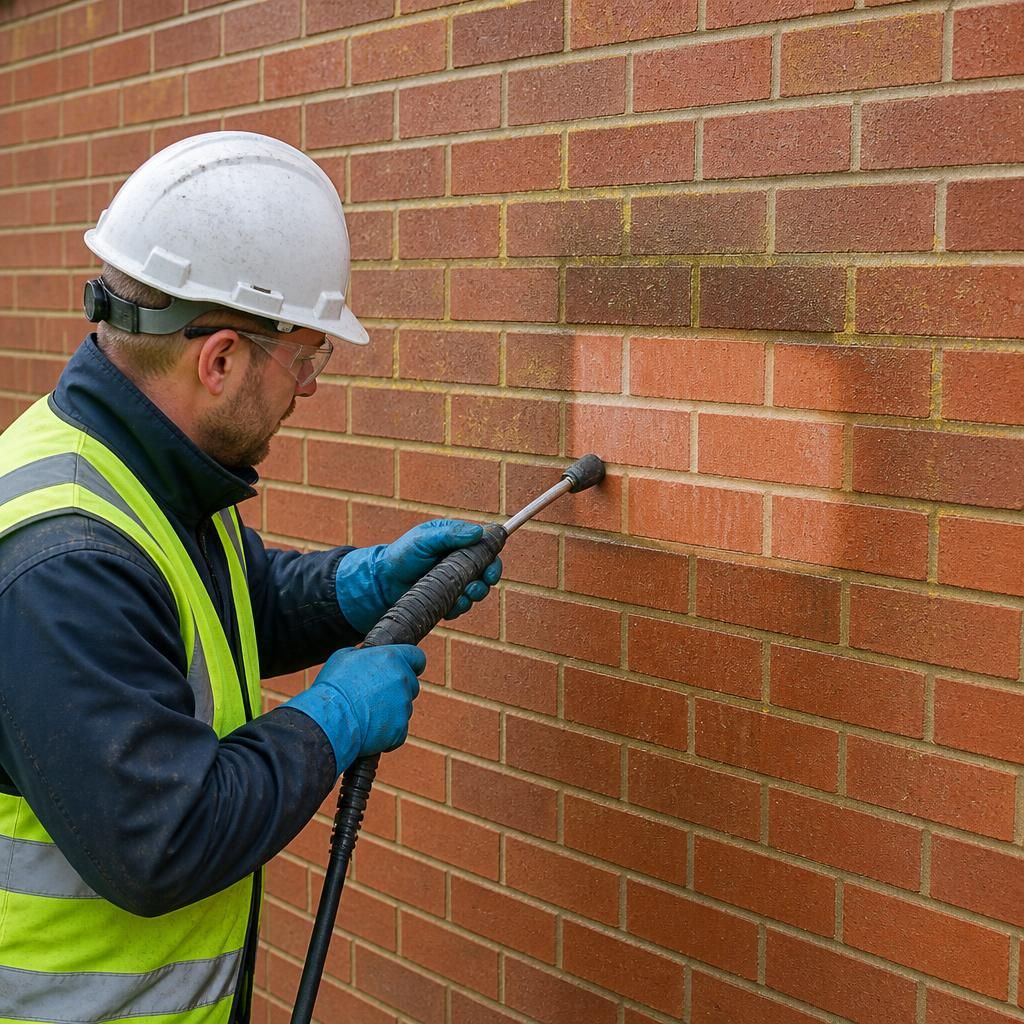
A small test patch is the most reliable way to confirm the best method for cleaning industrial brickwork. It allows the cleaning team to assess how the brick face and mortar respond to the proposed pressure, temperature, nozzle, cleaning product and contact time before work extends across the façade.
The test area should be inspected once the brick has dried, as water can temporarily disguise colour changes, surface marking or damage. If the trial removes the contamination without eroding the brick, loosening the pointing or creating visible variation, the approved method can be applied in controlled sections. Where the result is unsatisfactory, the process can be adjusted or a less aggressive technique, such as low-pressure steam cleaning, can be considered.