
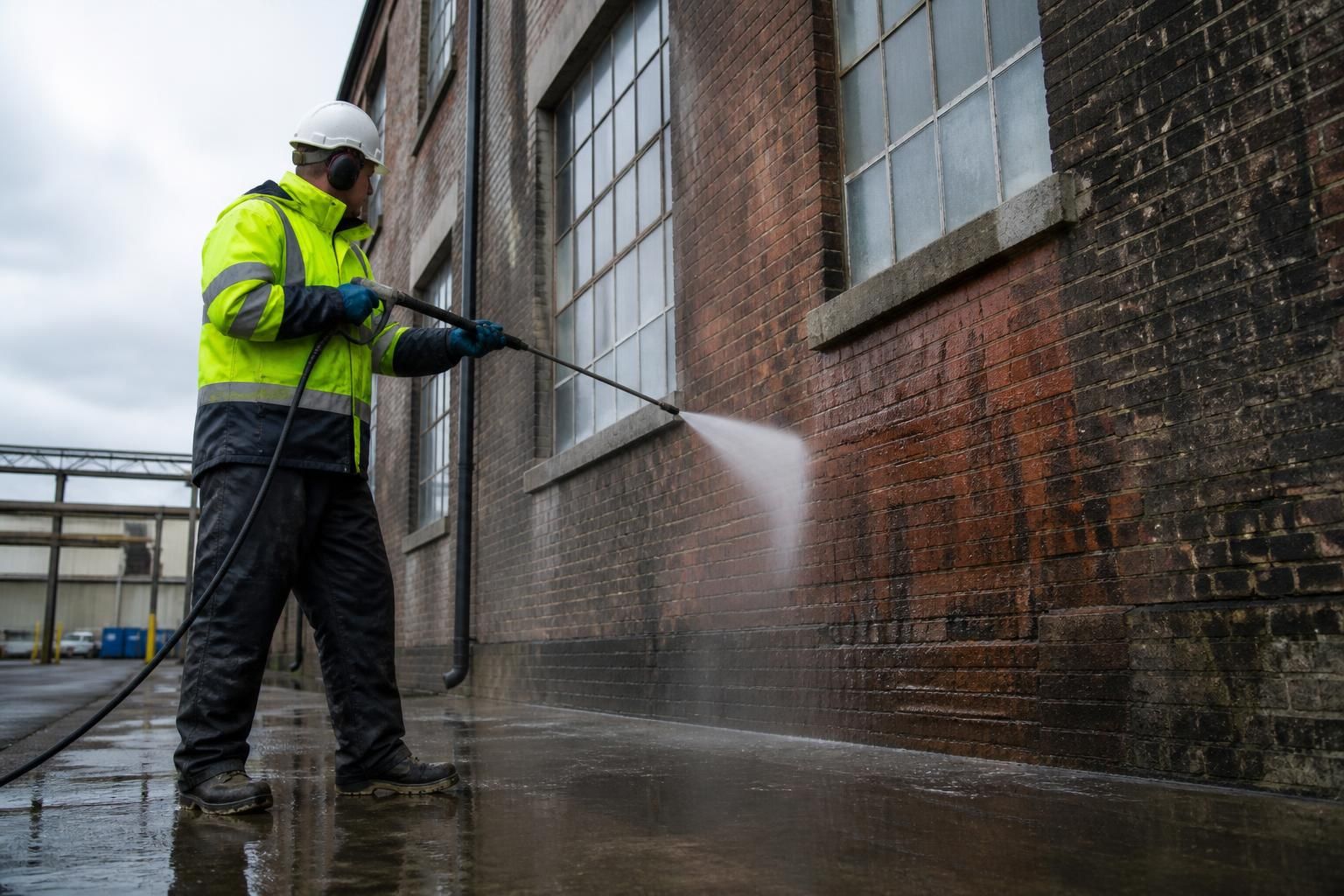
What are the potential risks and challenges of industrial brick cleaning?
Industrial brick cleaning can damage masonry, mortar and surrounding materials if the cleaning method, pressure or chemicals are unsuitable. Other challenges include working at height, controlling dust and run-off, protecting nearby equipment and managing access without disrupting site operations.
Industrial brick cleaning presents several potential risks, particularly damage to the brick or mortar, unsafe working conditions, contamination of surrounding areas and disruption to site operations. These risks are manageable when the building is assessed properly, the cleaning method is matched to the masonry, and suitable controls are used for access, water, chemicals, dust and waste.
Damage to bricks and mortar
The most serious cleaning risk is removing part of the brick face or weakening the mortar joints. Excessive pressure, an unsuitable nozzle, prolonged cleaning in one area or aggressive chemical treatment can cause surface erosion, spalling, etching and premature deterioration. Older, handmade, soft or weathered bricks are particularly vulnerable. Repointed areas may also be weaker than the surrounding masonry.
Industrial brickwork can contain different brick types and mortar mixes across the same elevation, especially where a building has been extended or repaired. A setting that is suitable for hard, modern engineering brick may damage softer historic brick. Professional cleaning should therefore begin with a visual assessment and controlled test areas. The test should examine the finished appearance as well as whether the brick face, joints, coatings and adjacent materials remain sound.
Unsuitable cleaning methods
There is no single method that is appropriate for every industrial building. High-pressure washing may drive water into porous brickwork, open defective joints or spread contamination. Abrasive systems can alter the surface texture and remove the weathered face that protects the brick. Steam cleaning is often useful for some deposits, but heat and moisture still need to be controlled around fragile surfaces, electrical equipment and internal spaces. Chemical cleaning can leave staining, salts or altered colour if the product is incompatible, incorrectly diluted or insufficiently rinsed.
Cleaning should be selected according to the type of brick, mortar condition, age of the building, nature of the contamination and surrounding risks. Areas affected by soot, oil, paint, efflorescence, algae or cement residue may require different treatments. A contractor should explain why a particular method is proposed rather than relying on one standard process for the whole site.
Hidden defects and water ingress
Cleaning can reveal defects that were concealed by dirt, coatings or biological growth. Cracked bricks, open joints, failed sealants, loose coping stones and damaged render may become more apparent once the surface is clean. Water used during cleaning can then enter through these defects, affecting internal finishes, insulation, stored materials or electrical systems.
Before work begins, vulnerable openings, vents, service penetrations and damaged areas should be identified and protected. Any significant repair requirements should be recorded and, where appropriate, addressed before cleaning. Cleaning is not a substitute for brick replacement, repointing, waterproofing or structural repair.
Working at height and access challenges
Industrial façades, roofs, silos and high-level brick structures often require mobile elevated work platforms, towers, scaffolding, abseil access or other specialist equipment. Risks include falls, dropped objects, unstable ground, contact with overhead services and restricted movement around plant, vehicles or loading areas. Wind, rain and poor visibility can also affect access equipment and the consistency of the cleaning process.
A suitable plan should cover access selection, ground conditions, exclusion zones, equipment inspections, rescue arrangements and protection for people below. Operatives need appropriate training and personal protective equipment, while site staff and visitors must be kept away from active work areas. Access requirements should be agreed before mobilisation because they can affect the programme, permits and cost.
Dust, spray and chemical exposure
Removing mortar residue, coatings, soot or other deposits can create airborne dust and contaminated spray. This may affect workers, neighbouring premises, members of the public and sensitive machinery. Cleaning products can also cause skin, eye or respiratory irritation if they are handled or applied incorrectly.
Controls may include low-dust techniques, localised application, water suppression, suitable respiratory and eye protection, gloves, protective clothing and controlled ventilation. Product safety information should be available on site, and chemicals should be stored, mixed and disposed of in accordance with the manufacturer’s instructions and applicable requirements. Operatives should never combine products unless compatibility is confirmed.
Run-off, drainage and environmental contamination
Wash water can carry detergents, paint fragments, oils, heavy deposits, salts and fine masonry particles into drains, soil or nearby watercourses. Uncontrolled run-off may breach site procedures, stain paving and landscaping, or create a slip hazard. It can also contaminate areas that were not included in the cleaning specification.
Before cleaning, drainage points and discharge routes should be assessed. Measures may include drain covers, bunding, temporary collection, filtration, controlled recovery and authorised disposal. The correct approach depends on the contaminants and the site’s drainage arrangements. Run-off should not be allowed to enter surface-water systems without confirming that this is permitted.
Damage to adjacent materials and equipment
Brick façades are rarely isolated from other materials. Windows, seals, painted metal, cladding, signage, lighting, sensors, cameras, vehicles and production equipment may be damaged by pressure, water, heat, chemicals or abrasive particles. Overspray can also mark finished surfaces or enter ventilation systems.
Adjacent assets should be identified during the pre-start inspection and protected with suitable covers or temporary screening. Covers must not trap heat or moisture around sensitive equipment, and electrical items may require isolation by a competent person. A controlled test should include interfaces between brickwork and other materials, not only an open section of brick.
Unexpected deposits and inconsistent results
Industrial brickwork may have multiple layers of dirt, paint, carbon, rust staining, mortar smears or biological growth. Deposits can vary significantly between sheltered and exposed elevations. Removing one layer may reveal another, while previous cleaning, repairs or coatings can produce an uneven appearance.
It is important to agree the required finish before work starts. In some cases, the objective is to remove loose contamination while retaining sound weathering and the character of the masonry, rather than making every area look newly installed. Test panels help establish realistic expectations and confirm whether additional treatment is needed.
Programme and operational disruption
Industrial cleaning can interfere with deliveries, vehicle routes, manufacturing activities, staff access, tenants and nearby businesses. Noise, water, access equipment and exclusion zones may restrict normal use of the site. Weather can also delay external work, particularly where surfaces need to remain within suitable conditions for treatment or drying.
A practical method statement should set out work areas, sequencing, working hours, access restrictions, isolation requirements, emergency contacts and cleaning stages. Dividing a large project into manageable sections can reduce disruption and make it easier to inspect the result before progressing. The programme should also allow time for protection, set-up, rinsing, waste handling and final checks rather than allowing only for active cleaning.
How these risks should be controlled
- Inspect the brickwork, mortar, access conditions, drainage and surrounding assets before pricing or starting work.
- Identify the brick type, contamination and any visible defects, repairs or coatings.
- Carry out representative test areas and record the method, pressure, temperature, dwell time and finish achieved.
- Use the least aggressive effective method, adjusting the process for different elevations or materials where necessary.
- Prepare a risk assessment and method statement covering access, chemicals, water, dust, falling objects, public protection and emergency procedures.
- Protect windows, services, equipment, landscaping and drainage, and agree how contaminated water and waste will be managed.
- Coordinate the work with site operations and stop or change the process if unexpected damage, unstable masonry or uncontrolled run-off is discovered.
Using an experienced industrial brick cleaning contractor reduces the likelihood of avoidable damage, but it does not remove the need for a site-specific assessment. The safest and most reliable result comes from matching the method to the masonry, testing before full-scale work and maintaining clear controls throughout the project.
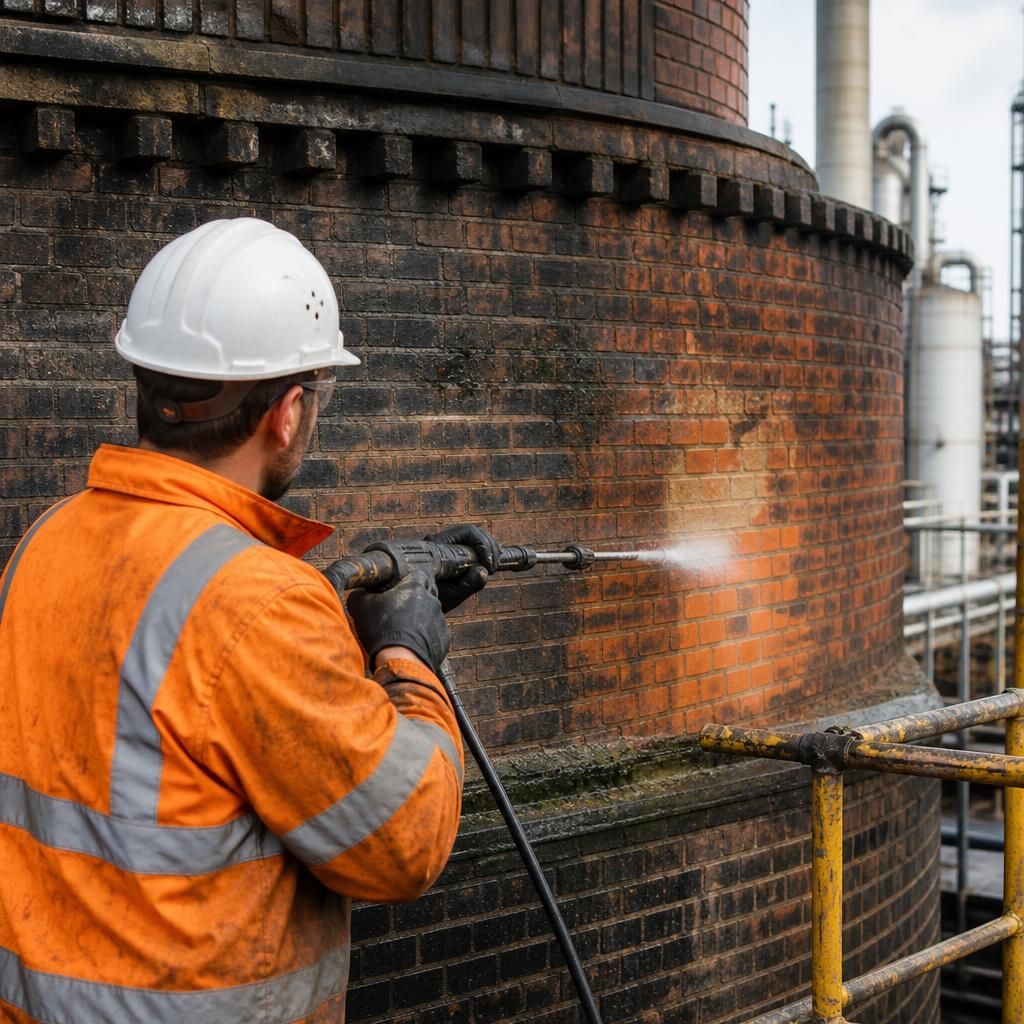
Industrial brick cleaning can cause permanent damage when pressure, heat, abrasives or chemicals are unsuitable for the brick and mortar. Softer, older or weathered masonry may suffer surface erosion, spalling, etching or weakened joints even when the damage is not immediately obvious.
A professional assessment should identify the brick type, mortar condition, contamination and nearby vulnerable materials before work begins. A representative test area then confirms whether the proposed method removes the deposits without altering the brick face or surrounding surfaces. The safest approach is to use the least aggressive effective method and adjust it where different elevations or repairs require separate treatment.