
What are the environmental considerations for industrial brick cleaning?
Industrial brick cleaning should minimise water consumption, prevent chemicals, dirt and contaminants entering drains or soil, and use the least aggressive effective method for the brickwork. Responsible practice includes selecting suitable detergents, containing and disposing of wastewater correctly, controlling dust and slurry, and complying with environmental regulations.
Environmental considerations for industrial brick cleaning centre on controlling water, chemicals, debris, dust and energy use throughout the work. The appropriate approach is to remove soiling effectively while causing the least possible damage to the brickwork, mortar, surrounding land, drainage system and local environment. This requires a planned method, suitable containment and responsible collection and disposal of wastewater and other residues.
Assess the brickwork and contamination first
Environmental performance begins with selecting a cleaning method that matches the brick type, mortar condition and nature of the soiling. Overly aggressive pressure, abrasive blasting or strong chemicals can erode the brick face, open the surface to further water penetration and create additional waste through failed or repeated cleaning.
A competent assessment should identify whether the contamination consists of general dirt, algae, carbon deposits, cement, mortar, paint, oil, salts or another substance. It should also consider the age and condition of the brickwork, previous treatments, nearby vegetation, drainage points and the potential for hazardous residues. A small test area can help confirm that the chosen method is effective without unnecessarily increasing pressure, chemical strength or water use.
Control water consumption
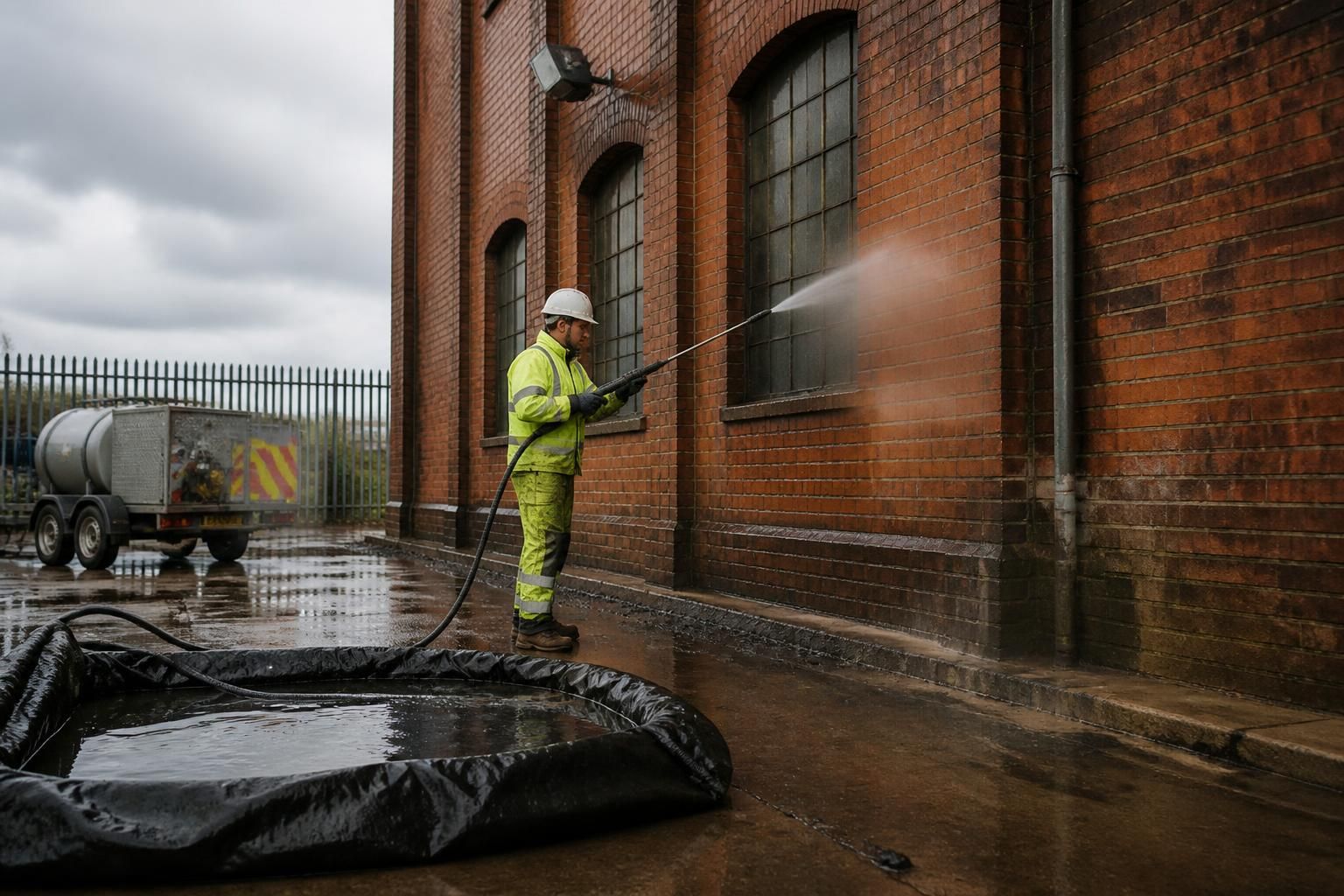
Pressure washing can use substantial quantities of water, particularly on large façades, yards and industrial buildings. Water use can be reduced by removing loose deposits dry where appropriate, pre-treating specific areas rather than applying detergent across the entire elevation, using controlled pressure and avoiding repeated passes. Water-efficient equipment and trained operators also help prevent unnecessary consumption.
Steam cleaning may use less water for certain types of soiling and can reduce the need for chemical detergents, but it is not automatically the most sustainable option in every situation. Its environmental impact also depends on the energy source, the equipment and the duration of the work. The best method is the one that achieves the required result with the lowest overall impact while protecting the brickwork.
Prevent contaminated runoff
Water used to clean industrial brickwork can contain silt, mortar particles, paint, oils, detergents, salts, biological material and other pollutants. It must not be allowed to flow uncontrolled into surface-water drains, watercourses, soil or neighbouring property. Runoff should be managed using measures such as drain covers, bunding, temporary barriers, collection points, wet vacuums and controlled pumping.
Before work begins, the drainage layout should be checked so that clean and contaminated water can be kept separate. Discharge to a foul sewer may require permission from the relevant water company, while discharge to surface water or land may require approval from the appropriate environmental regulator. If consent is not available, wastewater should be collected, stored safely and removed by an appropriately authorised waste contractor.
Use chemicals selectively and responsibly
Brick cleaning chemicals should be selected for the specific contaminant and used at the lowest effective concentration. Product instructions, safety data sheets and the condition of the masonry must be considered before application. Acidic or alkaline products can damage brick, mortar, metalwork, glazing, coatings and nearby plants if they are poorly selected, left on the surface or inadequately rinsed.
Where a detergent, biocide or specialist treatment is necessary, the application should be controlled to prevent overspray and unnecessary chemical use. Adjacent surfaces should be protected, and the area should be rinsed or neutralised in accordance with the product requirements. Chemical containers and residues must be stored, handled and disposed of as required by their classification rather than poured into drains or onto the ground.
Manage slurry, dust and solid waste
Cleaning can produce slurry made up of water, brick dust, mortar fragments and removed coatings. Dry methods, abrasive techniques and the removal of old paint may also create airborne dust. Dust suppression, local containment, suitable extraction and appropriate personal protective equipment help protect workers, occupants and neighbouring premises.
Collected sludge and solid residues should be assessed before disposal. Material contaminated with oil, heavy metals, old coatings or other hazardous substances may need separate handling and specialist disposal. Waste should be stored in sealed, clearly identified containers and transferred through an authorised route, with relevant records retained for the project.
Protect surrounding areas and wildlife
Plants, grassed areas, soil, watercourses, air-intake systems and sensitive equipment should be protected from spray, dust and chemical drift. Cleaning near nesting birds, roosting bats or other protected wildlife may require additional checks and changes to the programme. The building owner or site manager should identify ecological constraints before access equipment and cleaning systems are set up.
Noise, vibration and temporary obstruction can also affect neighbouring occupiers, particularly where high-pressure equipment, generators or abrasive systems are used. Planning the work during suitable hours, maintaining equipment properly and using the quietest effective method can reduce these effects.
Consider the full environmental impact of equipment
Fuel-powered pumps, access equipment and generators produce emissions and noise. Where practical, electrically powered equipment can reduce local exhaust emissions, provided a suitable power supply is available. Efficient equipment, preventative maintenance and careful planning reduce idle time, fuel use and unnecessary transport movements. Equipment should never be selected on energy use alone if it requires harsher chemicals or causes greater damage to the masonry.
Meet site and legal requirements
Industrial sites may have their own environmental management plans, trade effluent rules, pollution-prevention procedures and waste documentation requirements. These should be reviewed alongside applicable UK environmental, waste, drainage and workplace safety obligations. A method statement should explain how water, chemicals, slurry, dust, spills and accidental releases will be controlled.
For larger or higher-risk projects, it is sensible to agree the cleaning method and discharge arrangements with the site environmental manager before mobilisation. Operators should also have a spill response plan, suitable absorbent materials and a clear procedure for stopping work if containment fails or unexpected contamination is found.
A practical approach for industrial brick cleaning
- Survey the brickwork, mortar, contamination, drainage and nearby sensitive areas.
- Test the least aggressive effective method before full-scale cleaning.
- Use water and chemicals only where they are necessary and control application carefully.
- Seal or protect drains and contain all dirty water, slurry and debris.
- Obtain the required permission before discharging wastewater.
- Separate, store and dispose of contaminated waste through the correct authorised route.
- Control dust, spray, noise and equipment emissions throughout the work.
- Record the products used, waste movements, discharge arrangements and any environmental incidents.
In practice, the most environmentally responsible brick cleaning project is not necessarily the one using the least water or no chemicals. It is the one where the method is proportionate to the contamination, the brickwork is not damaged, pollutants are contained, wastewater and waste are handled lawfully, and the site is left clean without transferring the problem to drains, soil or the surrounding environment.
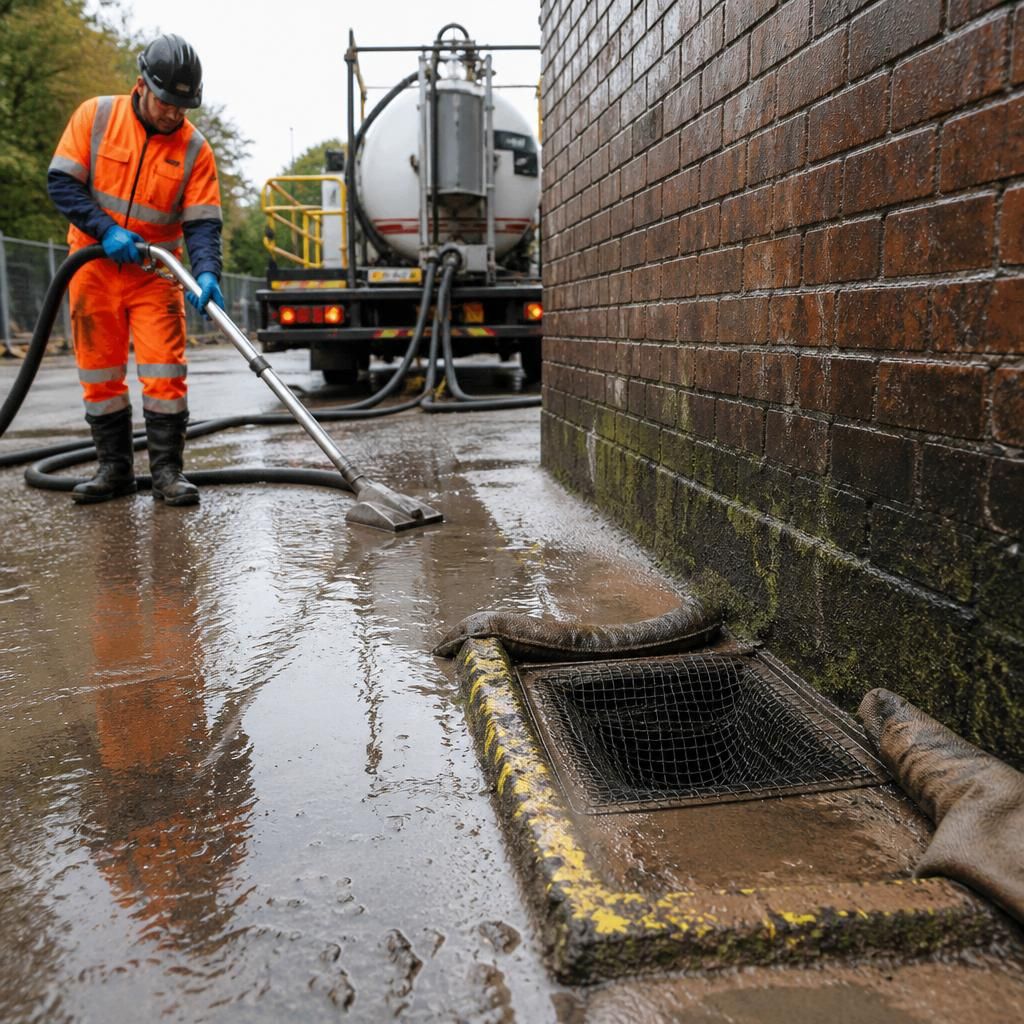
Controlling wastewater is one of the most important environmental considerations during industrial brick cleaning. Runoff can contain silt, brick dust, mortar particles, detergents, oils, salts and removed coatings, so it must not be allowed to enter surface-water drains, soil or nearby watercourses.
Before cleaning begins, the drainage layout should be checked and vulnerable drains protected with suitable covers or barriers. Dirty water and slurry should be collected using controlled pumping or wet-vacuum equipment, then discharged only where permission has been obtained or removed by an appropriately authorised waste contractor. This prevents the cleaning process from transferring pollutants from the brickwork into the surrounding environment.