
How long does an industrial brick cleaning process typically take?
An industrial brick cleaning process can take from a single working day to several weeks, depending on the size and condition of the building, the cleaning method, access requirements and weather. A site assessment and test clean provide the most reliable programme, including preparation, cleaning, rinsing, drying and any necessary post-cleaning repairs.
An industrial brick cleaning process can take from a single working day to several weeks. The timescale depends mainly on the area to be cleaned, the condition and type of brickwork, the cleaning method, access arrangements, the level of soiling and the weather. The most reliable programme is produced after a site survey and a controlled test clean, allowing preparation, cleaning, rinsing, drying and any follow-on work to be considered.
It is important to distinguish between the time spent actively cleaning and the total project duration. A straightforward section of accessible brickwork may be cleaned in one working day, while a large industrial building, multi-elevation site or complex refurbishment project may require several working days or weeks. The programme may also need to allow for scaffolding, powered access, protection of adjacent surfaces, waste-water control, inspections and remedial repairs.
A typical industrial brick cleaning programme includes the following stages:
- Site assessment and preparation: The brick type, mortar condition, staining and surrounding materials are assessed. Windows, doors, electrical equipment, landscaping and other vulnerable areas are protected before work starts.
- Test cleaning: Small trial areas are treated using suitable methods and products. This confirms the level of cleaning achievable without damaging the brick or mortar and helps establish a realistic working rate.
- Access installation: Scaffolding, mobile elevated work platforms, towers or other access equipment may be required. The time involved varies according to building height, ground conditions, restricted areas and site traffic.
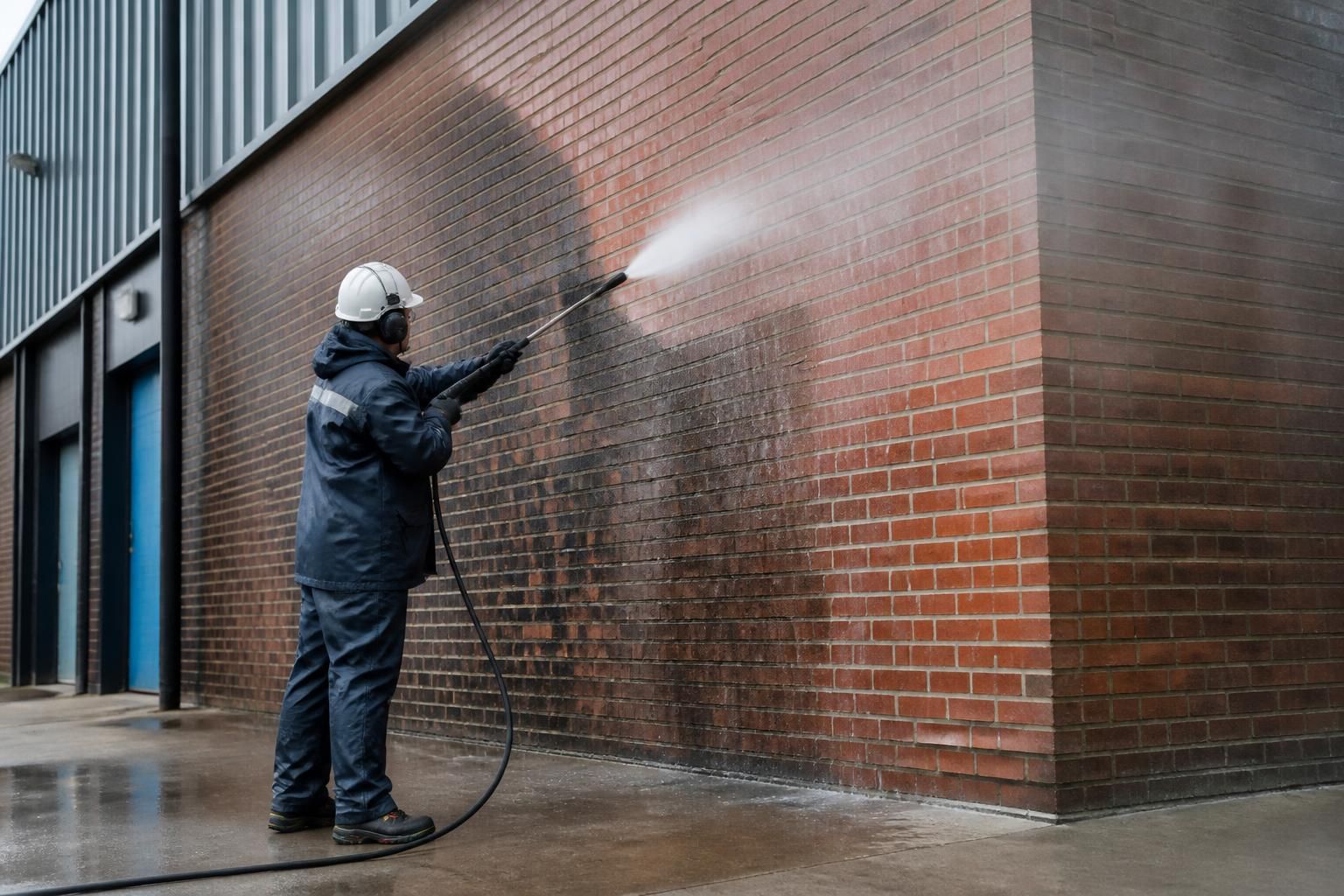
- Main cleaning: Technicians work systematically across the elevations. Depending on the substrate and contamination, this may involve low-pressure washing, steam cleaning, controlled chemical treatment, abrasive techniques or a combination of methods.
- Rinsing and inspection: Residue and loosened contamination are removed, and the cleaned brickwork is checked for missed areas, remaining staining or defects that require attention.
- Drying and completion: Brickwork may look different as it dries. Final observations, removal of protection, collection of equipment and any agreed repairs or additional treatments are then completed.
The main factors that affect the duration are:
- Size and layout of the building: Extensive façades, multiple elevations, courtyards and roof-level brickwork take longer than a single accessible wall.
- Type and severity of contamination: Light dust and surface dirt can usually be removed more quickly than heavy carbon deposits, paint, mortar smears, efflorescence, oil contamination, biological growth or embedded industrial staining.
- Brick and mortar condition: Weathered, soft, friable or previously damaged brickwork needs a more controlled approach and slower working speeds. Loose mortar, cracked bricks and failed pointing may also need to be recorded or repaired.
- Cleaning method: Steam cleaning and low-pressure washing can be efficient on suitable surfaces, whereas carefully controlled chemical or abrasive treatments may require additional application, dwell time, rinsing and neutralisation.
- Access and site logistics: Restricted access, live traffic routes, tenant activity, security controls, plant movement and the need to work outside normal operating hours can extend the programme.
- Weather and drying conditions: Heavy rain, frost, strong wind and low temperatures can affect safety, chemical performance, visibility and drying. Work at height and some treatments may need to pause until conditions are suitable.
- Environmental controls: Where run-off or chemical residue must be collected, filtered or disposed of in a controlled manner, these arrangements add time but are an essential part of responsible industrial cleaning.
Large projects are often divided into manageable zones rather than treated as one continuous operation. This can allow part of a building to remain in use while another elevation is cleaned, inspected and handed back. The sequence may be arranged around deliveries, pedestrian routes, tenant access, construction phases or local authority requirements.
A test clean is particularly useful when the brickwork has several types of staining or when the building contains different brick units, coatings or mortar profiles. It demonstrates the expected finish, identifies areas needing slower treatment and helps establish how much rinsing, drying and post-cleaning work will be required. A test area cannot remove every scheduling uncertainty, but it provides a more dependable basis for estimating the full project.
Before work begins, the programme should clarify what is included. This may cover access equipment, protection, test panels, cleaning and rinsing, wastewater management, removal of loose material, final inspection and reporting. Repairs such as repointing, brick replacement, paint removal or treatment of persistent staining are often separate operations and may extend the overall completion date.
For an accurate timescale, provide details of the building’s approximate elevations, height, access restrictions, operating hours, known contamination and any planned construction or maintenance work. Encanto Exterior Cleaning can then assess the site, recommend an appropriate method and set out a practical programme rather than relying on the building size alone. The final duration remains subject to the test-clean results, site conditions and suitable weather.
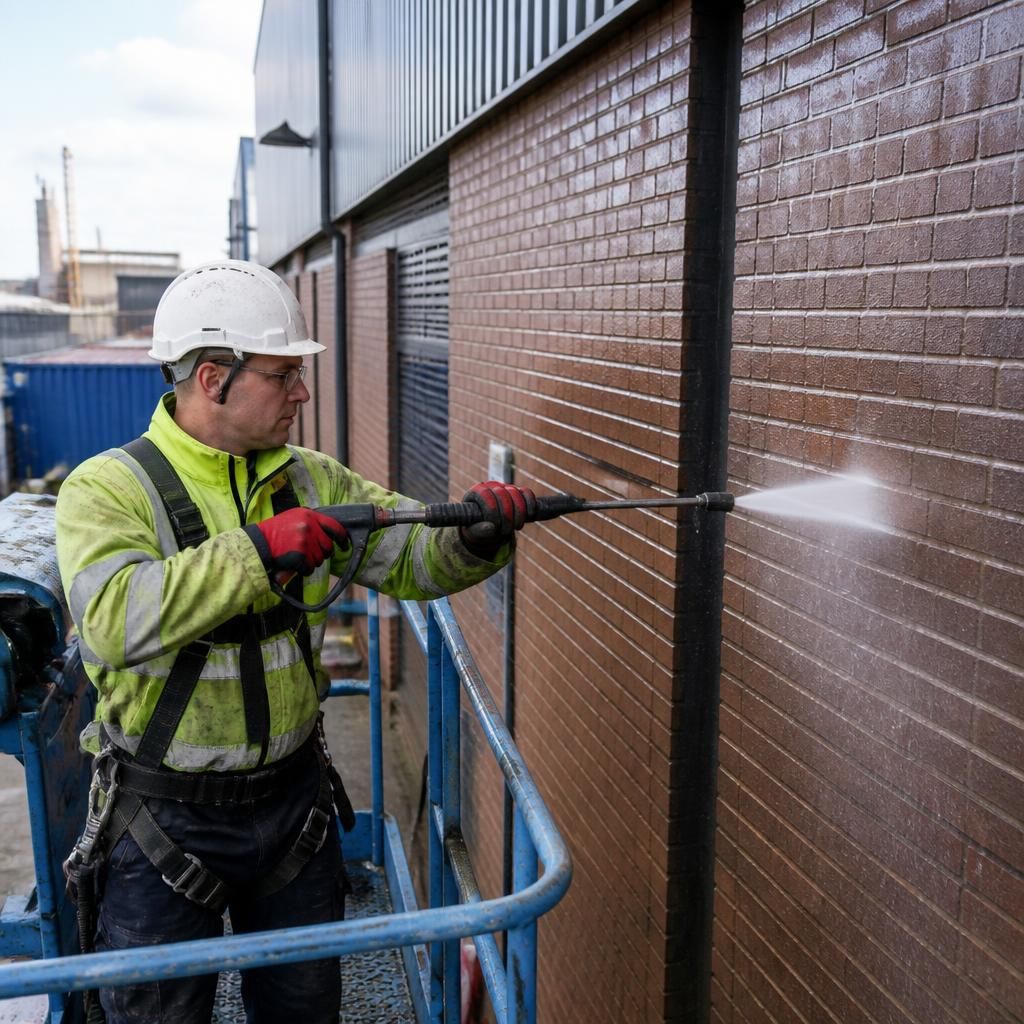
The duration of industrial brick cleaning includes more than the time spent washing the brickwork. Site preparation, access installation, protection of surrounding surfaces, controlled cleaning, rinsing, drying, inspection and wastewater management can all affect the overall programme.
A test clean is an important planning stage, particularly where brickwork has heavy staining, fragile mortar or several types of contamination. It confirms how the brick responds to the proposed method, shows the likely finish and helps establish a realistic working rate. The final programme can then be arranged by elevation or work zone, reducing disruption to occupants, traffic routes and ongoing site operations.