
How do I determine the appropriate cleaning method for my specific type of industrial brick?
The appropriate industrial brick cleaning method depends on the brick’s age, hardness, surface condition, mortar strength and the type of soiling present. A professional assessment and small test area should be used to confirm whether low-pressure washing, steam cleaning or another controlled treatment will remove the deposits without damaging the brick or joints.
The appropriate cleaning method for industrial brickwork is determined by the brick’s composition, age, surface condition, mortar strength and the type of soiling present. A professional assessment should identify these factors before work begins, followed by a controlled test clean on an inconspicuous area. The selected method should remove the deposits at the lowest effective pressure, temperature and chemical strength, without eroding the brick face or weakening the joints.
Start by identifying the brick and its condition. Industrial buildings may contain engineering bricks, common bricks, wire-cut bricks, handmade bricks, glazed bricks or older, softer stock bricks. Their resistance to water pressure, heat and abrasion can vary considerably. The visible face may also have been damaged by frost, previous cleaning, impact, chemical exposure or prolonged damp. Look for:
- Flaking, spalling, powdering or friable areas on the brick face.
- Open, recessed or crumbling mortar joints.
- Cracks, failed repairs and loose coatings.
- Glazed, painted or treated surfaces that could react differently from exposed brick.
- Evidence of rising damp, penetrating damp, salt deposits or blocked drainage.
Older or softer brickwork normally requires a gentler approach than dense engineering brick. However, hardness alone does not determine the method. Strong brick can still be damaged by excessive pressure, while sound-looking mortar may fail when saturated or subjected to aggressive cleaning.
Assess the deposits rather than treating all dirt in the same way. Atmospheric grime, traffic film, algae, moss, oil, cement residue, paint, efflorescence and graffiti each require different treatment. Loose dust and general surface dirt may respond to low-pressure washing or steam. Biological growth may need a controlled biocidal treatment and gentle rinsing. Cement, mortar and concrete splashes require careful removal because aggressive mechanical methods can take away the brick surface with the residue. Oil contamination may need a suitable detergent or degreaser, together with measures to prevent contaminated water entering drains or surrounding ground.
Common methods are selected as follows:
- Low-pressure washing: Suitable for stable brickwork with loose dirt, dust and some atmospheric deposits. Water pressure, flow rate, nozzle type and working distance must be controlled. The operator should avoid directing the jet into open joints, cracks, vents or vulnerable details.
- Steam cleaning: Useful where heat and a relatively low mechanical impact can loosen grime, algae and some organic deposits. It can be appropriate for sensitive or detailed brickwork, but heat and moisture still need to be controlled, particularly where mortar is weak or salts are present.
- Detergent or specialist chemical cleaning: Sometimes required for oils, carbon deposits, paint, biological growth or other residues that water alone will not remove. The product must be compatible with the brick, mortar, adjacent metals, glazing, sealants and drainage arrangements. It should be applied, contained and rinsed in accordance with its safety data and the manufacturer’s instructions.
- Mechanical or abrasive cleaning: Generally considered only when gentler methods cannot achieve the required result. Abrasive systems can remove the fired surface, alter the texture and expose the brick to future water penetration, so they should not be used as a routine first option.
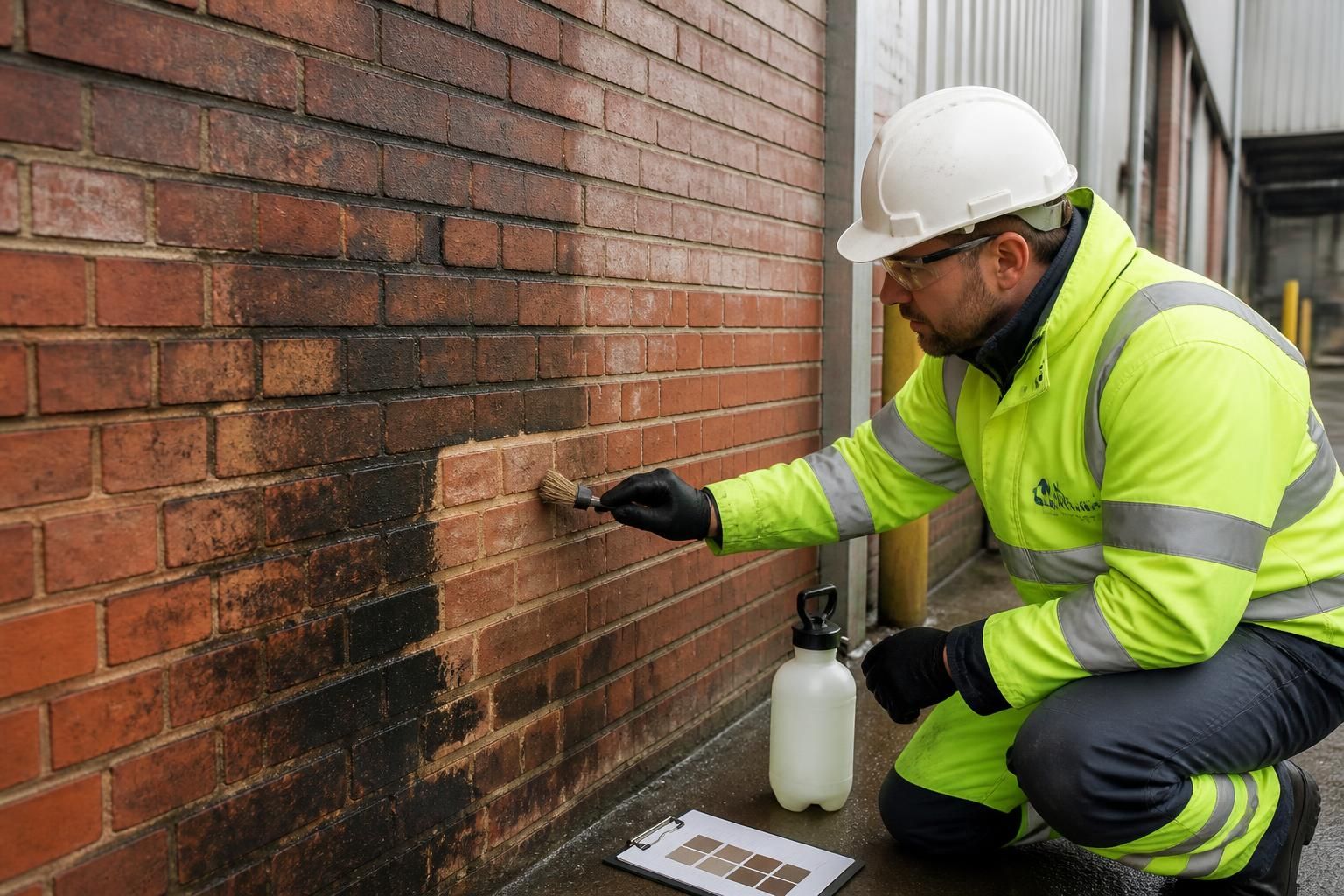
Use a test area to confirm the decision. A test panel should include representative brick, mortar, staining and any vulnerable features. It should demonstrate whether the proposed method removes the deposit evenly, how much water is used, whether residues remain and whether the brick colour or texture changes. Allow the area to dry before making a final assessment, as damp brick can temporarily appear darker or cleaner than it will after drying. The test should also check for colour runs, chemical staining, efflorescence and damage to pointing.
The test should compare the least aggressive practical options first. For example, a contractor may begin with dry brushing or gentle rinsing, then assess low-pressure washing or steam before considering a compatible chemical treatment. Increasing pressure or using an abrasive process simply to shorten the cleaning time can create defects that are more difficult and expensive to rectify than the original soiling.
Give particular attention to mortar and surrounding materials. Brick cleaning is not limited to the brick faces. Water and cleaning products can affect pointing, lintels, stone trim, concrete, render, windows, sealants, painted metalwork, electrical fittings and drainage systems. Weak or recessed joints may require local repair before cleaning, while damaged areas may need protection or exclusion from the treatment. Windows, vents and openings should be sealed or shielded appropriately, without obstructing essential ventilation or creating trapped moisture.
For listed, historic or architecturally significant buildings, the assessment should be more conservative. Original brick surfaces can contain weathered finishes that should not be stripped away, and old mortar may be softer than the brick. Cleaning specifications may also need approval from the relevant building owner, conservation professional or authority. In these situations, preserving the fabric of the building is more important than achieving a uniformly bright appearance.
Consider access, scale and site controls before confirming the method. Industrial façades may require powered access, scaffold, edge protection or controlled work zones. The method must be practical across the entire elevation, not just on a small test panel. A suitable plan should address water supply, run-off collection, waste handling, nearby vehicles and equipment, occupants, pedestrians, noise, overspray and weather conditions. Chemical use may require additional controls under the Control of Substances Hazardous to Health requirements, along with appropriate personal protective equipment and emergency arrangements.
A professional method statement should record the brick and mortar assessment, identified contaminants, test results, proposed equipment settings, chemicals if applicable, protection measures, access arrangements and waste controls. It should also state what will happen if the deposit does not respond as expected. This prevents operators from escalating to a more aggressive method without reassessing the risk.
In practical terms, the right choice is usually the least aggressive method that produces an acceptable, even result after testing. Low-pressure washing or steam may be appropriate for sound brick with general dirt; a controlled chemical treatment may be needed for specific contaminants; and abrasive cleaning should remain a carefully justified last resort. Where the brick type, mortar condition or contamination is uncertain, arrange an on-site assessment and test clean before approving the full industrial brick cleaning programme.
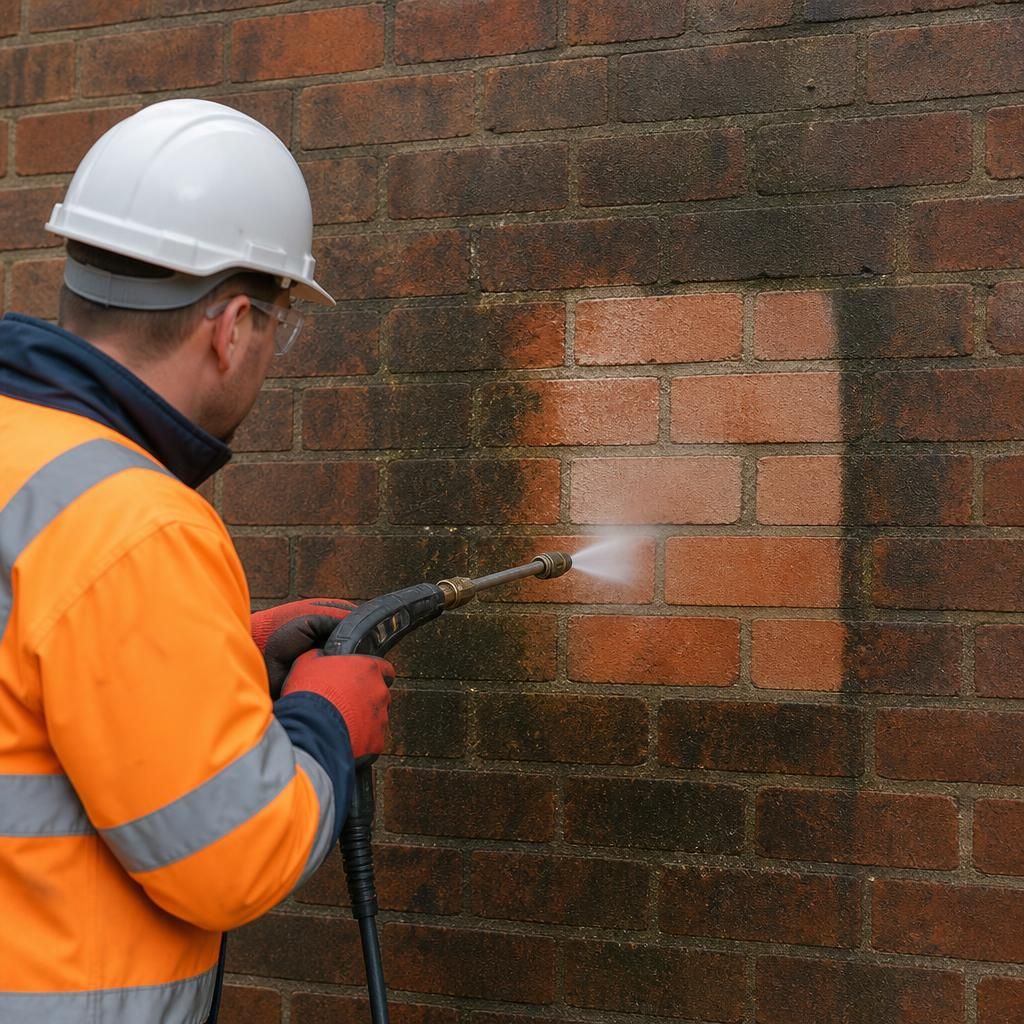
A small test panel is the most reliable way to determine whether a proposed cleaning method is suitable for a specific industrial brick. It should be carried out on an inconspicuous but representative area containing the same brick, mortar, staining and surface details as the wider elevation.
Begin with the least aggressive practical option, such as gentle rinsing, low-pressure washing or steam cleaning, and only increase the treatment if the deposit remains. After cleaning, allow the panel to dry fully before assessing the result. Check for changes in colour or texture, exposed brick, damaged pointing, chemical marks, salt deposits and uneven cleaning. The method should be approved for the main work only when it removes the contamination without affecting the brick face, mortar or adjacent materials.