
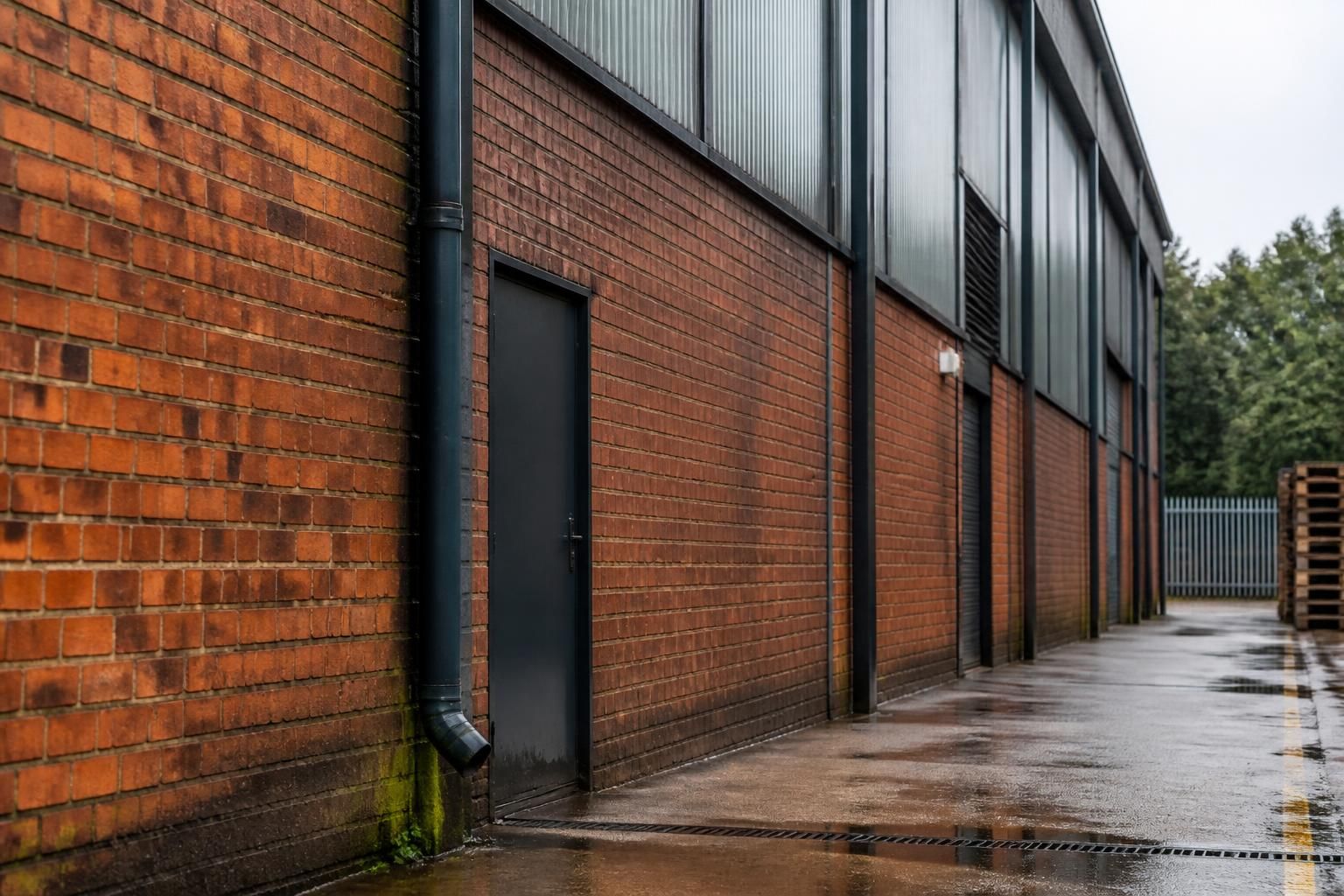
How can I maintain the cleanliness of industrial brickwork between professional cleanings?
Maintain clean industrial brickwork between professional cleans by removing surface debris promptly, controlling sources of dirt and moisture, and addressing stains before they become established. Use gentle, approved methods for routine spot cleaning and arrange professional attention for ingrained grime, efflorescence, biological growth or areas affected by pollution.
Maintain industrial brickwork between professional cleans by removing loose debris promptly, controlling sources of dirt and moisture, and dealing with localised marks before they become ingrained. Routine maintenance should be gentle and consistent: it should preserve the brick face, mortar joints and protective finishes rather than attempting to replicate a specialist deep clean.
Keep the surrounding area clean
- Remove leaves, soil, packaging, dust and other loose debris from ledges, wall bases, loading areas and access routes before they become wet and adhere to the brickwork.
- Keep bins, pallets, aggregate and stored materials away from external walls where practical. These can trap moisture, transfer dirt or cause impact damage.
- Sweep hard surfaces near the building regularly, particularly around entrances, service yards and loading bays where vehicle movement can deposit grit and oily residue.
- Clear gutters, outlets and drainage channels so that dirty water does not repeatedly run down the façade or collect against the base of the wall.
Control moisture and staining at the source
Persistent dampness is a major cause of discolouration and biological growth on industrial brickwork. Check for overflowing gutters, leaking downpipes, defective seals around doors and windows, failed roof details and sprinkler overspray. Repairing the source is more effective than repeatedly cleaning the resulting stain. Where water is running over a wall, avoid directing hoses or wash-down water towards the brick face.
Oil, grease and chemical residues should be contained quickly in yards and service areas. Use the site’s approved spill procedure and prevent contaminated wash water from entering drains or spreading across adjoining brickwork. Do not use absorbents, degreasers or chemical treatments unless they are suitable for the particular brick and mortar and have been approved for the site.
Use a careful approach to spot cleaning
For light, recent soiling, start with dry removal using a soft brush or clean cloth. If further cleaning is needed, test a small, inconspicuous area first. Use clean water sparingly and, where appropriate, a mild, non-abrasive detergent approved for masonry. Work gently from the cleanest area towards the soiled area, then rinse without forcing water into joints, cracks or openings.
- Use soft-bristled brushes rather than wire brushes, abrasive pads or scraping tools that can damage the fired surface.
- Avoid aggressive pressure washing on isolated marks. High pressure can erode the brick face, open mortar joints and drive water or contaminants into the wall.
- Do not apply strong acids, bleach, solvents or unapproved graffiti removers. These may alter the colour, damage mortar, create salts or leave residues that attract further dirt.
- Do not repeatedly clean one patch without checking the cause of the mark. Uneven spot cleaning can create visible differences in colour and texture.
Always follow the product manufacturer’s instructions and the building’s maintenance requirements. Before applying any treatment, consider whether the brick is soft, weathered, painted, coated or previously repaired, as these surfaces can react differently from sound, dense engineering brick.
Monitor common industrial brickwork problems
Include the brick elevations in routine site inspections and record changes with dated photographs. Pay particular attention to:
- Efflorescence: white, powdery deposits caused by soluble salts moving through masonry. Do not seal in dampness or repeatedly soak the area; identify and address the moisture source and seek professional advice if the deposits persist.
- Algae, moss and other biological growth: usually associated with shade and prolonged moisture. Remove the cause where possible and arrange suitable treatment rather than scraping aggressively or allowing roots to penetrate joints.
- Black atmospheric or traffic deposits: these can bond firmly to porous brick and may require controlled steam cleaning or another specialist method. Home or site-level pressure washing can make the appearance worse.
- Graffiti and paint: report it promptly. The longer it remains, the more likely pigments are to penetrate the surface, but unsuitable solvents can cause a larger visible patch.
- Cracked or open mortar joints: report these before cleaning. Water and pressure can enter defective joints and increase deterioration.
- White staining below metal fittings: inspect for corrosion, failed fixings or water runoff. Cleaning alone will not prevent the mark returning.
Protect the surface during site activities
Set clear controls for contractors and maintenance teams working near external walls. Prevent cement, render, paint, expanding foam, cutting dust and welding residue from contacting the brickwork. Use suitable sheeting or temporary protection during construction and refurbishment, but ensure it does not trap moisture or rub against the surface. Keep vehicle routes, skips and lifting operations far enough from the façade to reduce impact, splashback and exhaust deposition.
Where vehicles regularly soil the lower wall, review traffic flow, speed, drainage and wash-down arrangements. A cleanable hardstanding or suitable barrier may reduce repeated contamination, provided it does not obstruct ventilation or conceal defects.
Know when to arrange professional cleaning
Routine maintenance is appropriate for loose surface debris and minor, recent marks. Professional attention is more suitable when brickwork has ingrained pollution, widespread oil contamination, heavy biological growth, efflorescence, graffiti, cement residues or staining across a large elevation. It is also advisable where the wall is listed, historic, soft, painted or visibly deteriorated.
A specialist can assess the brick and mortar, carry out a controlled test area, select a compatible method and manage access, run-off and surrounding surfaces. Steam cleaning, low-pressure washing or a masonry-safe chemical treatment may be appropriate, but the correct choice depends on the brick’s condition and the contaminant. Do not assume that a stronger chemical or higher pressure will produce a better result.
Keep inspection notes, photographs and records of any products used between professional visits. Sharing this information helps maintain a consistent cleaning approach and allows developing drainage, damp or surface defects to be addressed before they affect a larger area. The most effective maintenance plan combines good housekeeping, prompt reporting and periodic professional cleaning based on the building’s exposure and use.
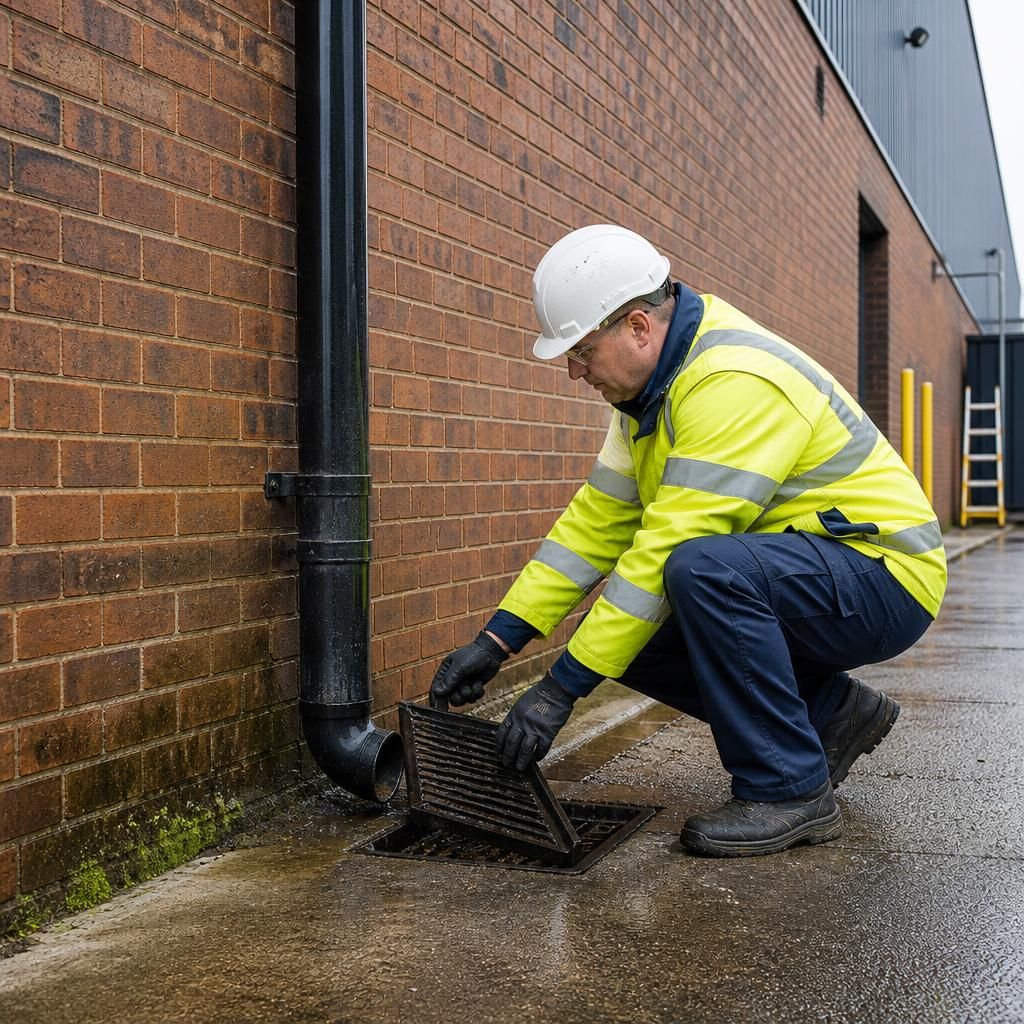
Controlling moisture and drainage is one of the most effective ways to keep industrial brickwork clean between professional cleans. Persistent water flowing over a façade carries dirt onto the brick, encourages algae and moss, and can leave efflorescence as soluble salts reach the surface.
Include gutters, downpipes, outlets, seals around doors and windows, sprinkler systems and drainage channels in routine inspections. Clear blockages and report leaks promptly rather than repeatedly cleaning the resulting marks. Keep stored materials, pallets and waste away from the wall where practical, as they can trap moisture and transfer grime. Where staining continues after the source has been corrected, arrange an assessment before applying pressure, chemicals or sealants.
Arrange Your Next Industrial Brick Cleaning Assessment
If your industrial brickwork has persistent staining, biological growth, efflorescence or ingrained pollution, arrange your next cleaning assessment with Encanto Exterior Cleaning. We can review the surface condition, identify likely causes and recommend a suitable maintenance and cleaning approach.