
How does professional construction cleaning ensure compliance with health and safety standards?
Professional construction cleaning supports health and safety compliance by removing dust, debris, residues and other hazards identified through site risk assessments and method statements. Trained operatives use appropriate equipment, PPE, COSHH controls and safe access procedures, while documented inspections and cleaning records help demonstrate that the site is being maintained to the required standard.
Professional construction cleaning supports health and safety compliance by identifying and removing site hazards before they cause injury, illness or damage. Dust, sharp waste, loose materials, contaminated surfaces, wet floors, paint residues and obstructed access routes can all create risks on a construction site. A competent cleaning contractor controls these hazards through planned work, suitable equipment, trained operatives, appropriate personal protective equipment (PPE) and clear records that show how the site has been maintained.
Cleaning is part of the wider construction health and safety system rather than a replacement for the principal contractor’s risk assessments, method statements or site rules. The work should be planned around the site’s current phase, the materials being used and the risks identified by the project team. This allows cleaning activities to support duties under relevant UK requirements, including the Health and Safety at Work etc. Act, the Construction (Design and Management) Regulations, the Control of Substances Hazardous to Health Regulations (COSHH) and work-at-height controls where applicable.
Site-specific risk assessment and method statements
Before work starts, the cleaning team should assess the location, surfaces, contaminants, access arrangements and interaction with other trades. The resulting method statement should explain how the work will be completed safely, including the sequence of tasks, equipment to be used, exclusion zones, control measures and emergency arrangements. It should also account for changing conditions, such as unfinished flooring, temporary electrical supplies, moving plant, open edges, restricted areas and simultaneous construction activities.
A suitable assessment will normally consider:
- slips, trips and falls caused by debris, mud, standing water, trailing hoses or uneven surfaces;
- airborne dust from concrete, brick, plaster, insulation and other construction materials;
- exposure to cleaning chemicals, cement residues, oils, paints, sealants or other hazardous substances;
- contact with sharp waste, broken materials, nails, fixings and discarded packaging;
- risks associated with pressure washing, steam cleaning, electrical equipment and water near temporary electrics;
- work at height, fragile surfaces, roof edges, scaffolding, MEWPs and other access equipment; and
- vehicle movements, lifting tasks, noise, restricted visibility and the presence of other workers or members of the public.
Control of dust and airborne contaminants
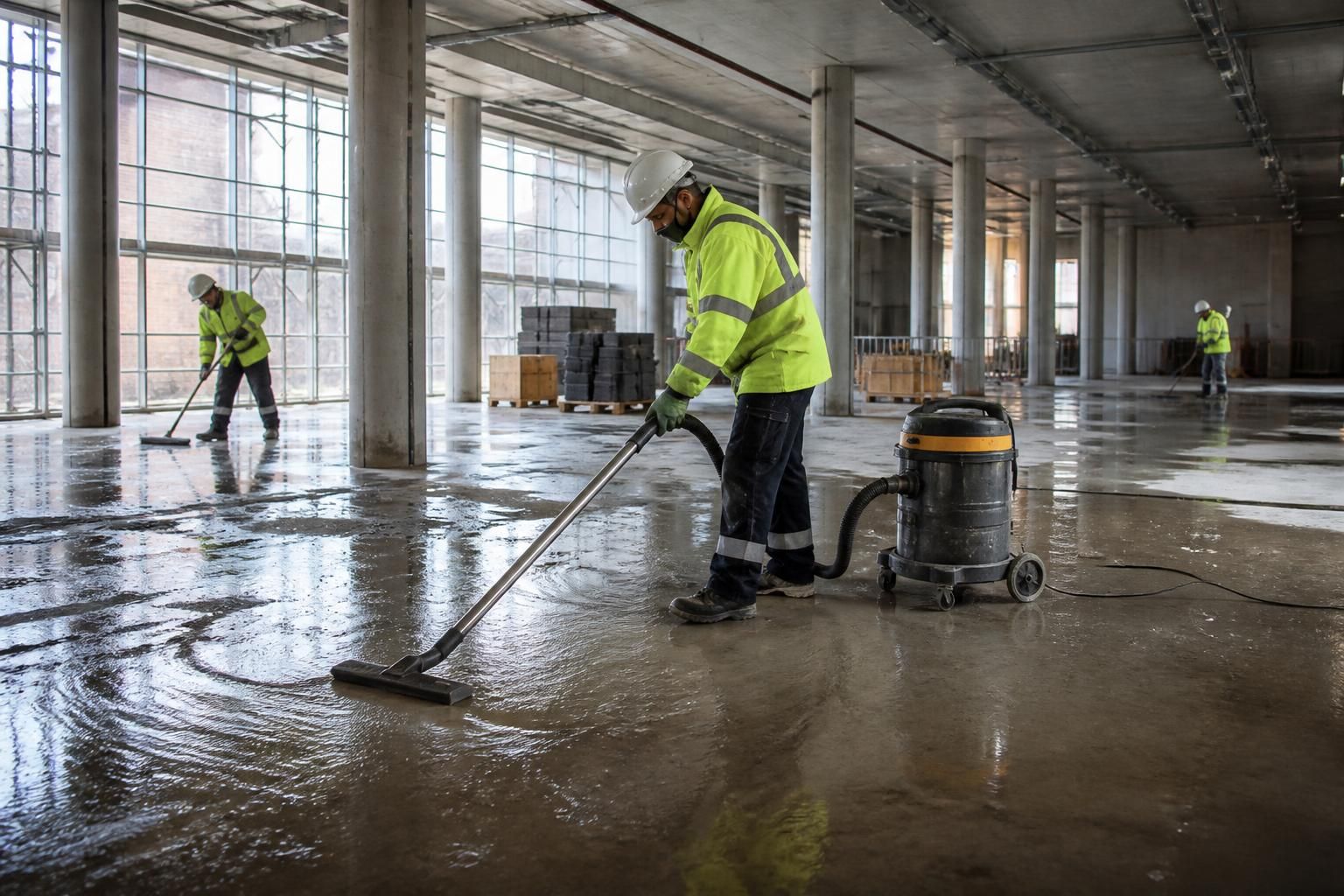
Construction dust can affect respiratory health and can also reduce visibility, contaminate completed areas and interfere with other site operations. Professional cleaning controls it by selecting methods that remove contamination rather than simply redistributing it. Depending on the surface and material, this may include industrial vacuuming with suitable filtration, damp cleaning, controlled pressure washing or steam cleaning. Dry sweeping is avoided where it would unnecessarily put fine dust back into the air.
Operatives should use the correct respiratory protective equipment where the risk assessment requires it, alongside ventilation, localised extraction, controlled work areas and suitable cleaning techniques. Dust control is particularly important when preparing occupied areas, enclosed spaces or zones where follow-on trades are working.
COSHH and chemical controls
Cleaning products must be selected and used in accordance with their safety data sheets and COSHH assessments. Operatives need to understand the hazards, required dilution, application method, ventilation requirements, incompatible substances, spill response and disposal arrangements. Chemicals should be clearly labelled, securely stored and transported in a way that prevents leaks or unauthorised access.
Where possible, mechanical methods such as steam cleaning or controlled water cleaning can reduce reliance on chemicals. This is not suitable for every surface or contaminant, so the method must be chosen based on the material, residue and surrounding conditions. Chemicals must never be mixed unless the manufacturer’s instructions specifically permit it, as some combinations can produce dangerous fumes or reactions.
Safe access and work at height
Façades, roofs, upper-level glazing, cladding and difficult-to-reach areas may require ladders, towers, scaffolding, mobile elevated work platforms or other access systems. Work-at-height planning should use the safest reasonably practicable access method, confirm that equipment is suitable and inspected, and ensure that operatives are trained and authorised to use it.
Cleaning equipment, hoses and tools should be secured so that they cannot fall onto people below. Ground-level exclusion zones, barriers and warning signs may be required, particularly where high-pressure water, steam or falling debris is involved. Access routes must remain clear, and cleaning should be coordinated with lifting operations, deliveries and other activities taking place beneath or near the work area.
Managing slips, trips and physical hazards
Housekeeping is one of the most visible ways that cleaning contributes to site safety. Debris should be collected into suitable containers rather than left in work areas or circulation routes. Nails, screws, glass, sharp metal, timber offcuts and broken masonry require appropriate handling and disposal. Spillages should be contained promptly, with wet areas either dried, isolated or clearly signed until they are safe to use.
Hoses, cables and pressure-washing equipment should be routed away from walkways wherever possible. Where they must cross a route, they should be protected and clearly marked. Operatives should also use safe manual-handling techniques and mechanical aids when moving waste, equipment or containers, particularly in areas with restricted access.
Equipment, PPE and operator competence
The equipment selected should match the cleaning task and the construction environment. Industrial vacuums, pressure washers, steam cleaners, scrubber-driers and access equipment all present different risks. Equipment should be maintained, checked before use and operated in accordance with the manufacturer’s instructions. Electrical equipment and leads must be suitable for the conditions, while water-fed equipment must be managed carefully around electrical installations.
PPE is a final layer of protection and may include safety footwear, gloves, eye or face protection, hearing protection, helmets, high-visibility clothing, protective clothing and respiratory protection. The exact combination depends on the risk assessment. PPE must fit correctly, be kept in serviceable condition and be compatible with other items being worn. Training should cover not only how to operate equipment, but also how to recognise changing risks and stop work when conditions are unsafe.
Waste segregation and environmental controls
Construction cleaning can produce mixed waste, including packaging, rubble, contaminated absorbents, sludge and chemical containers. Waste should be segregated where required, stored safely and transferred through appropriate disposal arrangements. Liquids and wash water must not be allowed to enter surface-water drains, watercourses or unprotected ground if they contain silt, oils, chemicals or construction residues.
Run-off controls may include drain covers, bunding, collection systems, wet vacuums, filtration or controlled discharge arrangements. The correct approach depends on the site drainage system and the type of contamination. Environmental controls also protect health by preventing contaminated water, dust and residues from spreading to adjacent areas.
Coordination with the construction team
Cleaning should be scheduled in coordination with the principal contractor, site manager and other trades. Daily briefings or toolbox talks can communicate changes to access, hazards, exclusion zones and emergency procedures. The cleaning team should know how to report defects, near misses, spillages, damaged services and newly identified hazards.
Phased cleaning is often safer and more effective than attempting to clean an entire project at the end. Initial clearance can keep work areas usable, follow-on cleaning can remove construction residues as trades complete their tasks, and final cleaning can prepare the building for inspection, handover or occupation. Each stage should be carried out only when the area is sufficiently stable and safe to enter.
Inspection, documentation and evidence
Records help demonstrate that cleaning controls have been applied consistently. Depending on the project, useful documentation may include risk assessments, method statements, COSHH assessments, equipment inspection records, training or competency evidence, waste transfer documentation, site attendance records, cleaning checklists and photographs of completed areas.
These records do not guarantee that a site is compliant, but they provide evidence of a controlled process and make it easier to identify outstanding issues. Supervisors should inspect completed areas against agreed standards, record defects and arrange corrective cleaning where necessary. Particular attention should be given to access routes, emergency exits, stairways, plant areas, welfare facilities, fire points and surfaces that will be handed over or occupied.
In practice, professional construction cleaning helps compliance by making hazards visible, applying proportionate controls and maintaining a documented standard of housekeeping. The cleaning plan should be reviewed whenever the site layout, materials, access arrangements or construction activities change. This ongoing approach reduces preventable risks while helping the wider project team maintain a safer, more orderly and inspection-ready site.
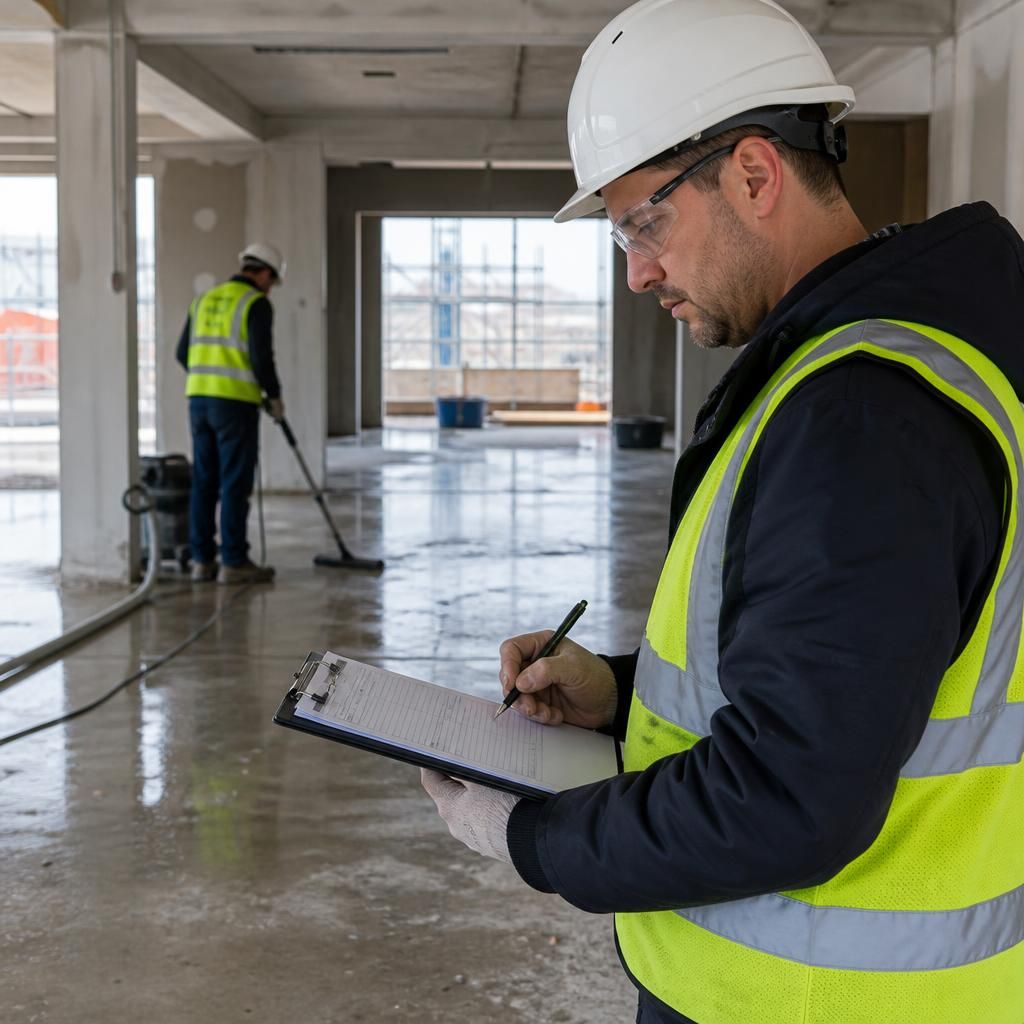
Documented cleaning checks provide evidence that construction site hazards have been identified, controlled and reviewed. A competent cleaning team should record the relevant risk assessment and method statement, COSHH controls, equipment checks, waste handling and inspections of completed areas.
These records help the principal contractor verify that access routes, stairways, emergency exits, work areas and handover spaces have been maintained to the agreed standard. Photographs, checklists and defect records can also show where corrective cleaning was required. Documentation does not replace site management duties or guarantee compliance, but it supports a clear, traceable process and helps identify problems before they affect workers, visitors or other trades.
Discuss Your Construction Cleaning Requirements
Discuss your construction cleaning requirements with Encanto Exterior Cleaning to agree a safe, phased approach covering access, equipment, waste handling and required site records. We can help plan cleaning around your programme and site-specific health and safety controls.