
How can I assess the quality and reliability of equipment used by construction cleaning services to ensure effective site maintenance?
Assess construction cleaning equipment by checking its suitability for the surfaces and site conditions, visible condition, maintenance records, inspection certificates, pre-use checks and safety features. A reliable service should also provide trained operators, demonstrate effective performance without causing damage, and have contingency arrangements for equipment failure or changing site requirements.
Assess the quality and reliability of construction cleaning equipment by checking whether it is suitable for the required surfaces and site conditions, properly maintained, safe to operate and supported by competent operators. Equipment should deliver the required cleaning result without damaging façades, paving, cladding, coatings, drainage systems or unfinished construction materials.
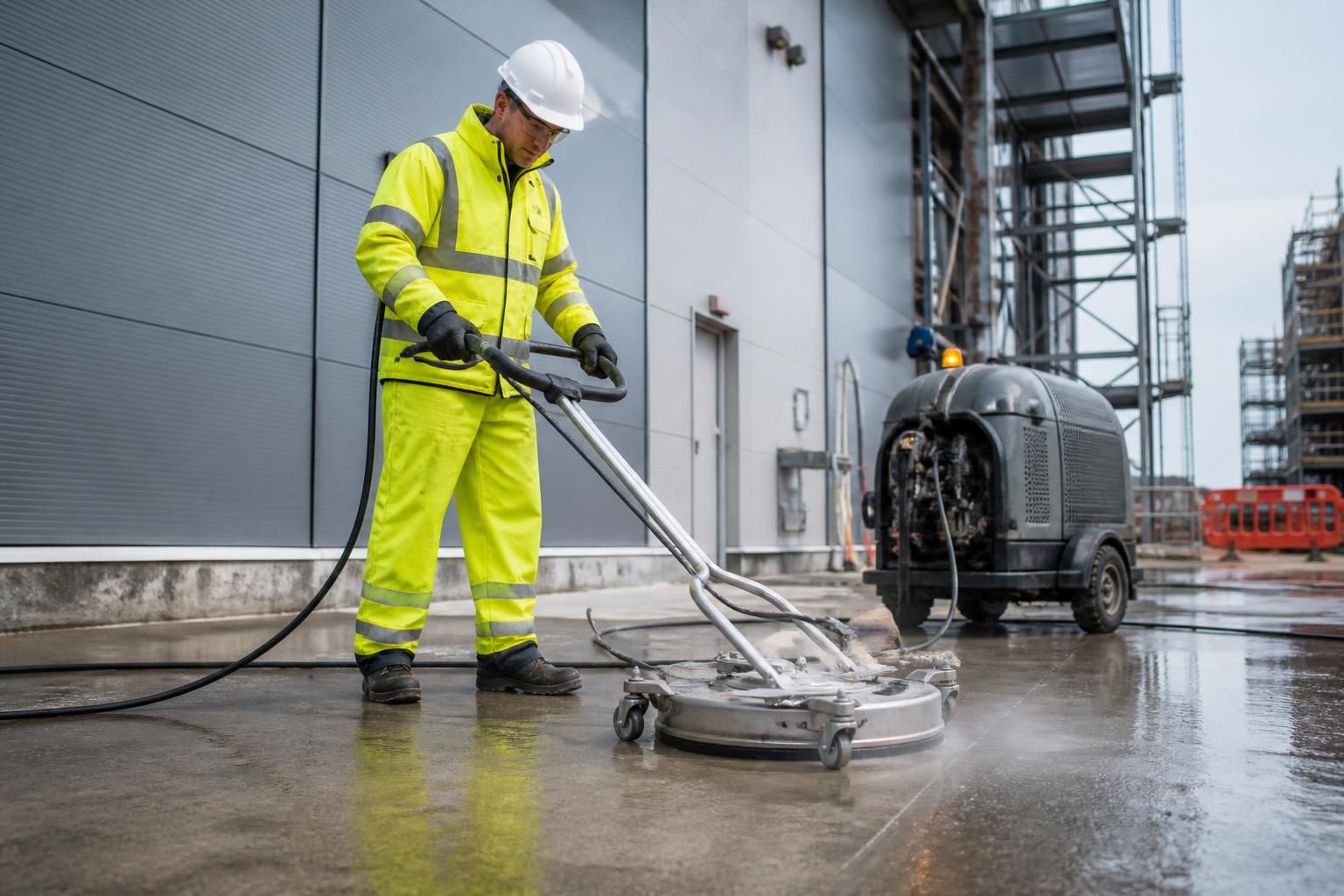
Start with suitability for the work. The equipment selected should reflect the material, level of soiling, access restrictions and finish required. Pressure washing may be appropriate for robust concrete, paving or some external structures, while steam cleaning can be better suited to sensitive surfaces, areas where water use must be controlled or cleaning near finished details. Access equipment should match the height, reach, ground conditions and available working space. Ask the contractor to explain:
- Why the chosen cleaning method is suitable for each surface;
- How pressure, temperature, flow rate and cleaning products will be controlled;
- Whether attachments such as surface cleaners, rotary tools or vacuum recovery systems are required;
- How the equipment will work around scaffolding, hoists, temporary works, vehicles and other trades; and
- How wastewater, slurry, dust and removed coatings will be contained and disposed of.
A capable contractor should be able to recommend a method based on the site survey rather than using the same equipment for every task. A small test area is useful where the surface is unfamiliar, newly installed, coated, weathered or vulnerable to staining.
Inspect the visible condition of the equipment. Clean, orderly and well-maintained machinery is not proof of performance by itself, but obvious neglect is a warning sign. Check for leaking hoses, damaged cables, worn couplings, exposed wiring, cracked guards, missing labels, unsecured components and signs of oil or fuel leakage. Pressure hoses, lances, nozzles, spray guns, electrical leads and access-platform controls should be in good condition and appropriate for the equipment being used.
Equipment should also be correctly set up for transport and operation. Hoses and cables need to be routed to avoid trip hazards, fuel-powered machinery must be positioned to prevent exhaust exposure, and water and electrical supplies must be protected from cross-contamination and weather conditions. On occupied or active sites, the contractor should have a clear arrangement for securing equipment when it is unattended.
Request maintenance and inspection evidence. Reliable equipment is supported by records, not just verbal assurances. Depending on the machinery, useful evidence may include:
- Planned maintenance records and service history;
- Pre-use inspection checklists;
- Electrical inspection or testing records where applicable;
- Manufacturer or competent-person inspection records for access equipment;
- Examination certificates and thorough examination reports where legally or operationally required;
- Records showing servicing of pumps, boilers, pressure systems, vacuum units and recovery equipment; and
- Calibration or condition checks for gauges, control devices and monitoring equipment where accurate readings affect safe operation.
The documentation should identify the equipment, inspection date, findings, remedial action and next review requirement. A certificate alone does not demonstrate that a machine is suitable for the current task, so records should be considered alongside the site risk assessment and method statement. Any defects should be resolved before use, with equipment clearly withdrawn from service if it is unsafe.
Check safety features and controls. Equipment should have functioning emergency stops, guards, isolation controls and pressure or temperature controls appropriate to its design. Operators should know how to shut down the machinery quickly and what to do if a hose fails, a nozzle blocks, a machine overheats or power is lost. For powered access equipment, check that the controls, alarms, emergency lowering systems, stabilisers and ground-condition requirements have been considered.
Cleaning equipment can create risks from high-pressure water, hot surfaces, electricity, noise, exhaust fumes, flying debris, dust and chemical exposure. The contractor should identify these hazards and provide suitable controls, including exclusion zones, signage, personal protective equipment, ventilation, hearing protection, eye and face protection, gloves and respiratory protection where required. Personal protective equipment should supplement, rather than replace, safer equipment selection and physical controls.
Assess the operator as well as the machine. Even high-quality equipment can cause damage or injury if used incorrectly. Ask whether operators are trained and authorised for the machinery they will use, particularly for powered access, pressure systems, electrical equipment and chemical application. They should understand surface sensitivity, safe operating distances, nozzle selection, pressure adjustment, water management and the risks of cleaning near people or live site activities.
Competent operators should be able to explain the controls before work begins and carry out a pre-use check. They should also know when to stop. Work should pause if the surface reacts unexpectedly, weather affects stability, visibility becomes poor, equipment develops a fault or the agreed controls cannot be maintained.
Look for controlled performance, not maximum power. The most powerful machine is not necessarily the most effective choice. Excessive pressure, heat or aggressive chemicals can etch masonry, strip protective coatings, force water behind cladding, damage pointing or spread contamination. Effective equipment allows the operator to adjust the cleaning variables and work progressively.
During a trial or early work area, check whether the equipment:
- Removes the specified dirt, mortar, dust, paint or other residue;
- Produces an even result without visible striping, etching, staining or surface discolouration;
- Controls overspray, splashback, dust and wastewater;
- Reaches the required areas without unsafe stretching, improvisation or excessive repositioning;
- Operates consistently for the planned duration; and
- Leaves the surface and surrounding work area in the condition agreed in the cleaning specification.
Photographs, inspection points and agreed acceptance criteria can help compare the completed work with the required standard. Where cleaning forms part of a handover, the site team should record defects or areas requiring further treatment before equipment is removed.
Consider reliability during the whole project. Equipment reliability includes the contractor’s ability to maintain progress if a machine fails or the site changes. Ask whether replacement hoses, nozzles, filters, fittings and other consumables are available, whether a backup machine can be provided, and how faults are reported and repaired. A sensible contingency plan should cover changes in access, unexpected surface conditions, water restrictions, weather disruption and interference with other contractors.
For larger or phased projects, confirm which equipment will be used for each work area and how it will be cleaned between tasks. This is particularly important where removing dust, paint, oils, biological growth or contaminated material could transfer residues to another surface. Equipment, tools and recovery systems should be managed to prevent cross-contamination.
Review the supporting documents. Equipment quality should form part of the wider contractor assessment. Before work starts, request or review the relevant risk assessment, method statement, equipment inspection information, operator competence records and emergency arrangements. The documents should correspond with the actual machinery brought to site, the surfaces being cleaned and the access conditions present on the day.
For ongoing maintenance, include equipment checks in site meetings or service reviews. Record any recurring faults, delays, surface damage, excessive water use or inadequate containment. This provides a practical basis for deciding whether the cleaning method and machinery remain suitable rather than relying solely on the original specification.
Use a practical acceptance checklist. Before authorising the work, confirm that the equipment is suitable, visibly serviceable, inspected, safely operated and capable of meeting the required finish. The contractor should be able to demonstrate its controls, explain the cleaning parameters and provide a clear response to equipment failure. If records are incomplete, defects are visible or the proposed method relies on uncontrolled pressure, heat or chemical use, ask for clarification or a revised method before work begins.
This approach assesses both the machine and the system around it. Reliable construction cleaning depends on suitable equipment, documented maintenance, competent operators, controlled performance and a contingency plan that protects safety, programme and the finished site.
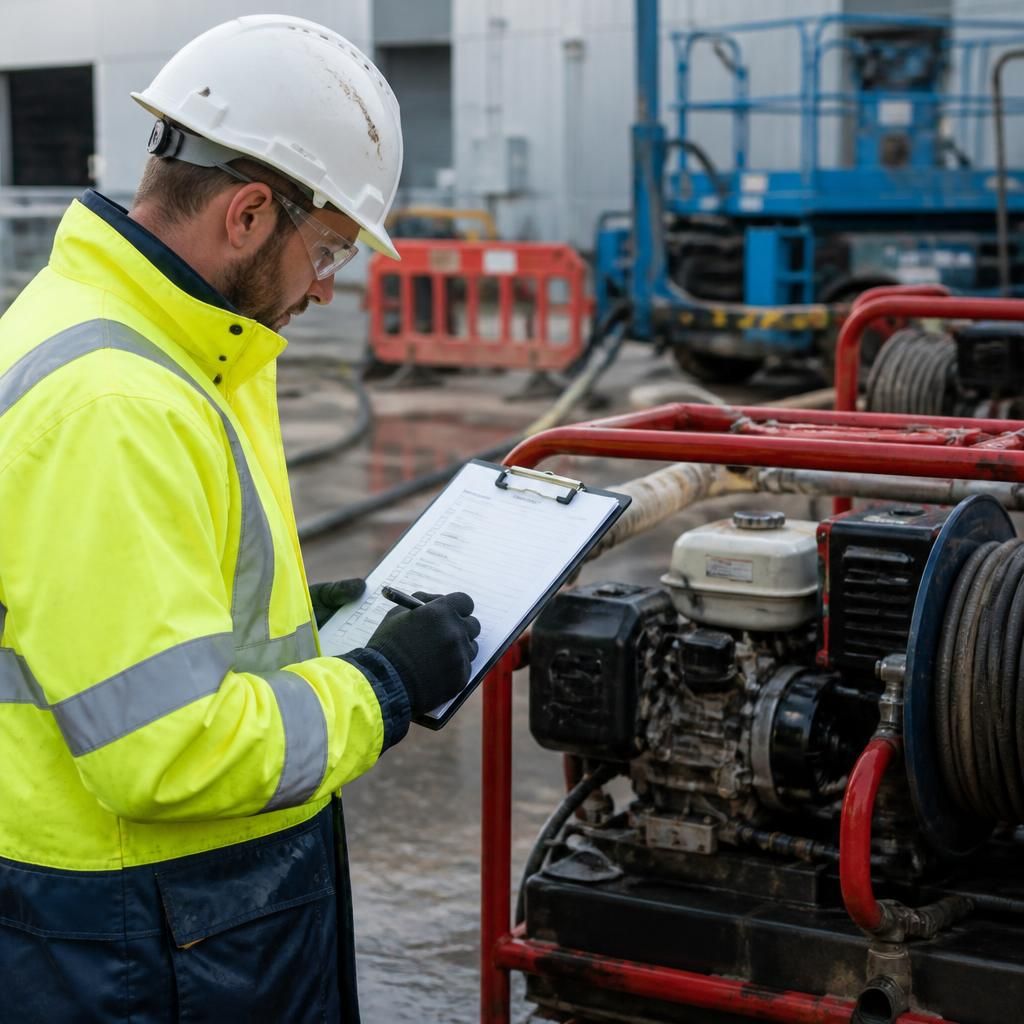
Reliable construction cleaning equipment is supported by documented maintenance and safety checks, not just a clean appearance or verbal assurance. Before work starts, ask to see relevant service records, pre-use inspection checklists and examination certificates for access equipment or other machinery where required.
Records should identify the equipment, inspection date, findings and any corrective action. The machinery brought to site should match the documentation and the agreed method statement. During setup, check for damaged hoses, leaking connections, exposed wiring, faulty guards or missing safety labels. These checks help confirm that the equipment is suitable for the surfaces, access conditions and cleaning controls required on your project.