
How can construction cleaning services help minimise health hazards and improve the safety of a site?
Construction cleaning services reduce health hazards by removing dust, hazardous residues, sharp debris, spillages and other waste that can cause respiratory problems, slips, trips, cuts or equipment damage. Thorough cleaning also improves visibility, access routes and housekeeping, helping site managers maintain safer working conditions and meet relevant health and safety requirements.
Professional construction cleaning services help minimise health hazards by removing dust, cement residues, sharp debris, spillages, surplus materials and other contaminants before they can cause injury, illness or damage. A planned cleaning regime also keeps walkways, work areas, access points and welfare facilities orderly, improving visibility and housekeeping while supporting the site manager’s health and safety responsibilities.
Reducing airborne dust and respiratory hazards
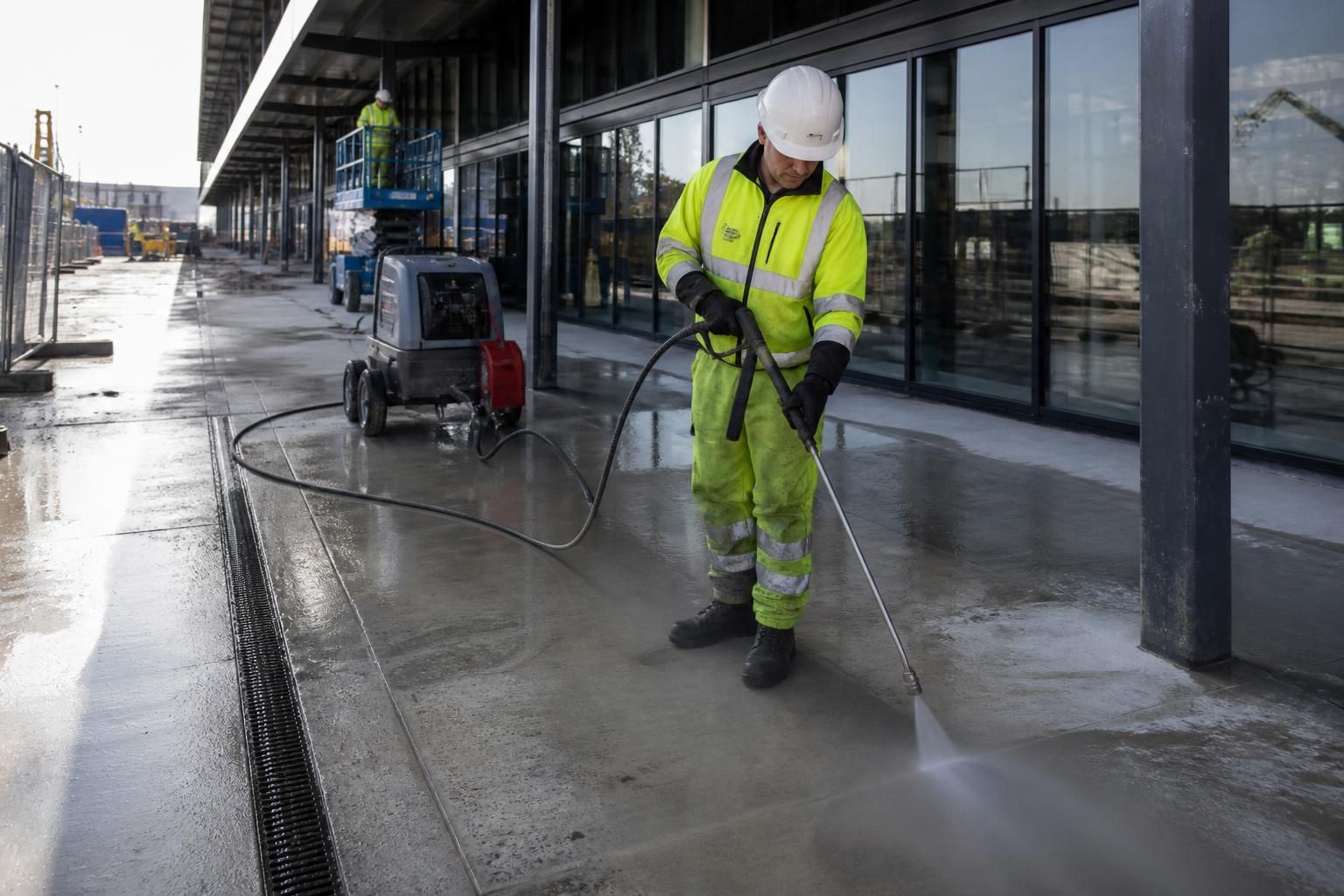
Construction dust can be generated by cutting, drilling, grinding, sanding and handling dry materials. Fine dust may irritate the eyes, skin and respiratory system, while respirable crystalline silica from materials such as concrete, mortar, brick and stone requires particularly careful control. Dry sweeping or blowing dust with compressed air can redistribute contaminants, so professional cleaners use suitable vacuum extraction, damp-cleaning methods or controlled pressure washing where the surface and site conditions allow.
Cleaning should be coordinated with the construction programme so that areas are not cleaned before dusty work has finished. Where dust may contain hazardous substances, the appropriate control measures, personal protective equipment and waste-disposal arrangements should be confirmed through the site’s risk assessments and method statements. Cleaning is an important control, but it should complement source controls such as water suppression, local extraction and effective ventilation rather than replace them.
Removing slip, trip and fall hazards
Loose packaging, offcuts, cables, fixings, rubble and surplus materials can obstruct routes and create trip hazards. Wet cement, plaster, paint, oil, fuel and other spillages can make floors and external surfaces slippery, particularly around entrances, loading areas, ramps and plant routes. Construction cleaning teams help by:
- Clearing waste and loose materials from designated access routes and work zones.
- Removing residues from floors, stairs, ramps, paving, car parks and loading areas.
- Cleaning spillages promptly using a method suitable for the substance and surface.
- Keeping entrances and transition areas free from mud and tracked-in debris.
- Reporting damaged surfaces, obstructions, poor drainage or unsafe conditions that cleaning alone cannot resolve.
Surfaces should be left in a condition that is safe for their intended use. Where cleaning involves water, the work area may need to be isolated, signed and allowed to dry before it is returned to normal traffic.
Controlling sharp objects and physical debris
Nails, screws, broken tiles, glass, metal fragments, timber splinters and masonry fragments can cause cuts, puncture wounds and damage to tyres or equipment. A thorough construction clean includes visual inspection as well as the removal of visible waste. Suitable tools and collection methods are used to avoid handling sharp materials unnecessarily, and waste is placed in the correct containers rather than left in general work areas.
Particular care is needed around service risers, plant rooms, roof areas, stairwells, drainage channels and landscaped areas, where small debris can be difficult to see. After a builders clean or post-construction clean-up, the area should be checked again under suitable lighting so that remaining fragments, dust deposits and construction residues are identified before handover or occupation.
Managing chemical and biological risks
Construction sites may contain wet cement, sealants, adhesives, solvents, coatings, fuels and cleaning chemicals. These substances can cause burns, skin irritation, eye injuries or harmful vapours if they are spread, mixed or removed incorrectly. Cleaning methods should therefore be selected after considering the substance, surface, ventilation, drainage and manufacturer’s instructions. COSHH information and site-specific risk assessments are relevant where cleaning products or construction residues present a health risk.
Occupied or partially occupied sites also require attention to hygiene. Cleaning welfare areas, shared access points, offices and communal surfaces helps reduce contamination from mud, dust and construction residues. Any suspected biological contamination, contaminated water or unknown substance should be isolated and escalated for specialist assessment rather than treated as routine waste.
Improving safe movement around the site
Good housekeeping makes it easier for workers, visitors and delivery drivers to see hazards and follow designated routes. Clear pedestrian paths, clean stairways and unobstructed emergency exits support the site traffic-management plan. Cleaning around vehicle routes can also reduce the transfer of mud and loose material onto public roads, although vehicle movements and road cleanliness remain matters for the site’s wider control arrangements.
Work should be planned around live construction activities, lifting operations, deliveries and moving plant. A cleaning contractor should agree exclusion zones, access arrangements, contact points and the sequence of work with the principal contractor or site manager. This prevents cleaners from entering areas where overhead work, vehicle movements, exposed services or unfinished structures create additional risks.
Supporting work-at-height safety
Façades, roofs, cladding, glazing and high-level structures may require reach equipment, scaffold access, powered access or other specialist systems. Removing dirt from these areas can improve visibility and prevent residues from falling onto people or equipment below, but the cleaning activity itself must be planned as work at height. This includes checking access equipment, ground conditions, edge protection, weather conditions, harness requirements where applicable, rescue arrangements and exclusion zones.
Access equipment should be operated by suitably trained and authorised personnel, with inspections and controls appropriate to the equipment and task. Pressure washing at height also requires attention to spray reaction, overspray, electrical installations, drainage and the risk of making lower-level surfaces slippery.
Protecting equipment, services and finished surfaces
Construction dust and residues can enter machinery, ventilation systems, electrical equipment and drainage channels. Careful cleaning reduces the risk of blocked components, corrosion, contamination and premature deterioration. Methods must be matched to the surface: pressure, temperature, steam, detergents and water volume that are suitable for concrete may damage fresh coatings, sensitive cladding, sealants, insulation or electrical installations.
Before work begins, the cleaning team should identify vulnerable finishes, newly installed systems, drainage routes and areas where water ingress could cause damage. Test cleaning, controlled pressure and low-moisture methods may be appropriate where the surface is delicate or not fully cured. Any defects, staining that cannot be safely removed, or damage revealed during cleaning should be recorded and referred to the responsible contractor rather than concealed.
Making waste handling safer
Effective cleaning includes collecting, separating and transferring waste in line with the site’s arrangements. Materials such as timber, metal, packaging, rubble and contaminated waste may require different handling. Waste should not be left in escape routes, near ignition sources or where it can be blown or washed into drains. Sharps, chemical containers and unknown residues need particular care and should be managed according to the applicable assessment and disposal requirements.
Removing waste progressively is safer than allowing it to accumulate until the end of a project. Scheduled cleaning can maintain clear work areas during construction, while a final clean addresses fine dust, adhesive marks, labels, grout haze, paint splashes and other residues before handover. The precise scope should be agreed in advance, including who is responsible for removing surplus materials, hazardous waste and items that require specialist treatment.
How cleaning supports site compliance
Construction cleaning does not, by itself, guarantee compliance with health and safety legislation. It supports the site’s wider management system by helping to implement housekeeping controls identified in risk assessments, method statements, inductions and inspection regimes. Useful records may include cleaning schedules, task briefings, equipment checks, waste transfer information, photographs and reports of defects or inaccessible areas.
The cleaning plan should reflect the project’s Construction Phase Plan and be reviewed when the work sequence, materials, access arrangements or occupancy conditions change. On complex or high-risk sites, the cleaning contractor should liaise with the principal contractor, facilities team and relevant specialists so that responsibilities are clear and completed areas are not re-contaminated by subsequent trades.
Practical measures for a safer result
- Define the areas, surfaces, hazards and required finish before work starts.
- Complete a site-specific risk assessment and method statement, including controls for dust, chemicals, water, access equipment and vehicle movements.
- Use trained operatives with task-appropriate personal protective equipment.
- Choose cleaning equipment and chemicals that are suitable for the material and construction stage.
- Segregate or cordon off active work areas and wet surfaces.
- Clean progressively, not only at final handover.
- Inspect the work after cleaning and report defects, contamination or hazards outside the agreed scope.
- Coordinate the final clean with commissioning, snagging, deliveries and occupation.
For construction, refurbishment and handover projects, the most effective approach is a documented cleaning programme linked to the site’s changing risks. Combining dust control, debris removal, safe access, spill management, waste handling and final inspection creates cleaner working conditions and gives the responsible site team clearer evidence that housekeeping hazards are being actively controlled.
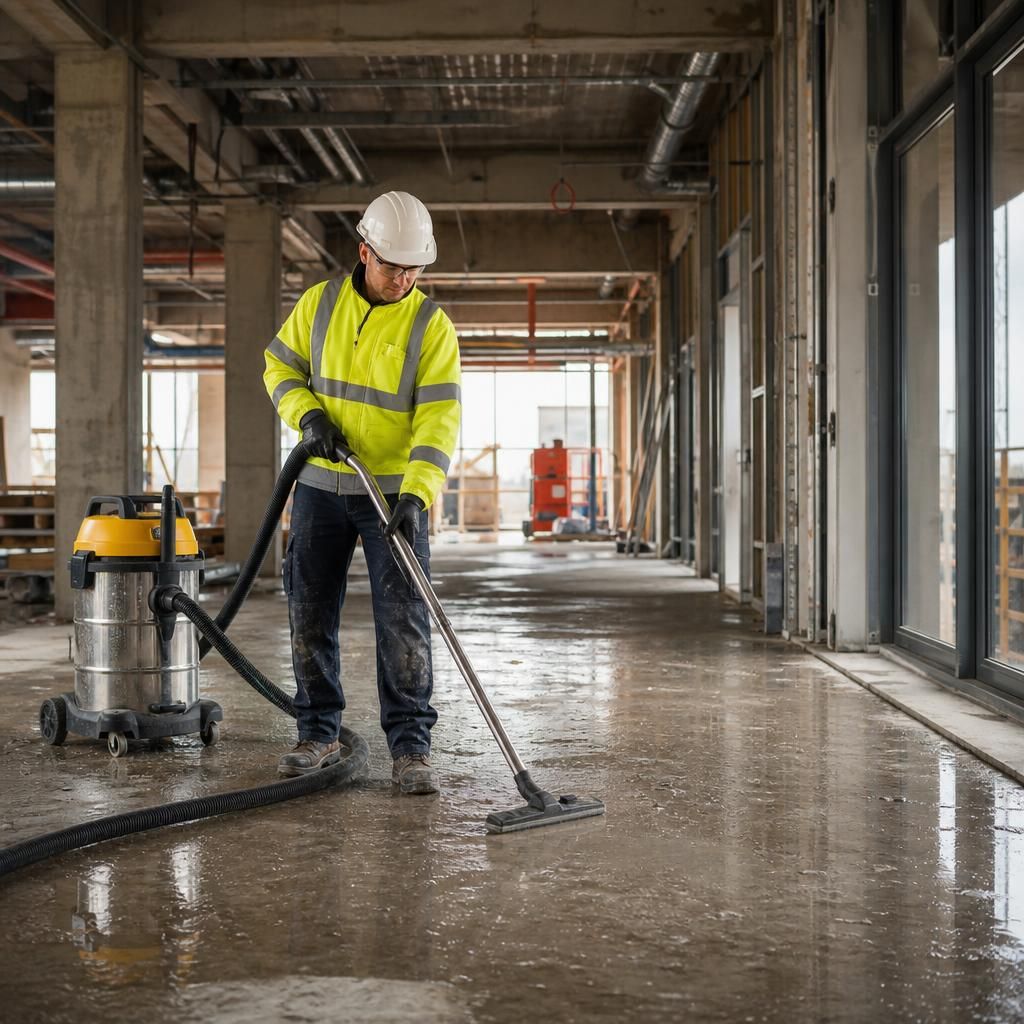
Construction cleaning helps control health hazards by removing dust and debris before they can affect workers, visitors, equipment or completed surfaces. Fine dust from cutting, drilling and grinding can remain airborne or settle on floors, ledges and ventilation components, while larger fragments can cause slips, trips, cuts and punctures.
Professional cleaners use suitable vacuum extraction, damp-cleaning or controlled pressure washing methods rather than simply redistributing dust through dry sweeping or compressed air. Cleaning is coordinated with the construction programme, and active work areas are isolated where necessary. This progressive approach keeps access routes and work zones clearer while supporting the site’s wider dust-control, housekeeping and risk-management measures.