
What specific techniques are utilised in cleaning high-traffic areas of construction sites?
High-traffic construction areas are cleaned using scheduled sweeping and vacuuming, dust suppression, pressure washing, steam cleaning and targeted spot treatment for oil, mud and cement residues. These techniques are combined with controlled access, suitable signage and rapid spill removal to keep walkways, site entrances, loading zones and welfare areas safe, accessible and compliant.
High-traffic construction areas are cleaned through a combination of scheduled sweeping, industrial vacuuming, dust suppression, pressure washing, steam cleaning and targeted spill removal. The method depends on the surface, the type of contamination and the risk posed to people, vehicles and nearby drainage. Cleaning is normally coordinated with site activities so that access routes, entrances, loading zones, pedestrian walkways and welfare areas remain safe and usable.
Initial assessment and preparation
Before work starts, the cleaning team identifies the busiest routes, changes in ground level, vehicle turning points, material storage areas and locations where mud or debris is likely to accumulate. The assessment also considers the surface material, weather conditions, drainage, nearby occupied premises and the presence of dust-producing work. Suitable barriers, warning signs and temporary diversions are put in place where cleaning could create a slip, visibility or vehicle-movement hazard.
Where possible, cleaning is scheduled during quieter operating periods or carried out in sections. This prevents a wet surface, operating machinery or a temporarily restricted route from creating an additional risk. A clean-as-you-go approach is also used so that contamination is removed before it is compacted by tyres or walked into adjoining areas.
Mechanical sweeping and industrial vacuuming
Mechanical sweepers are effective on large access roads, yards, car parks and loading areas where loose soil, aggregate, packaging and general construction debris have accumulated. Brushes collect material into a hopper for controlled disposal, reducing the need for repeated manual handling. Ride-on or walk-behind equipment can be selected according to the available space and the condition of the surface.
Industrial vacuum systems are used around kerbs, drainage channels, loading bays, service routes and confined areas that mechanical sweepers cannot reach effectively. Vacuuming is particularly useful for fine dust and loose particles because it removes them rather than redistributing them. Attachments can also be used around door thresholds, plant bases and temporary site offices.
Dust suppression and controlled sweeping
Dry sweeping can lift respirable dust and spread it into pedestrian or working areas. Water misting, damp sweeping and dust-controlled vacuum equipment help suppress airborne particles during routine cleaning. The amount of water is controlled carefully: excessive application can turn fine soil into slippery mud, affect unfinished surfaces or carry pollutants towards drains.
Dust suppression is combined with source control. This can include keeping spoil and aggregate within designated areas, cleaning vehicle wheels before they leave the site and removing accumulated material from routes before it is driven over. Where dust may contain construction-specific contaminants, the cleaning method and respiratory protection are selected following the site risk assessment rather than relying on water alone.
Pressure washing for mud and built-up deposits
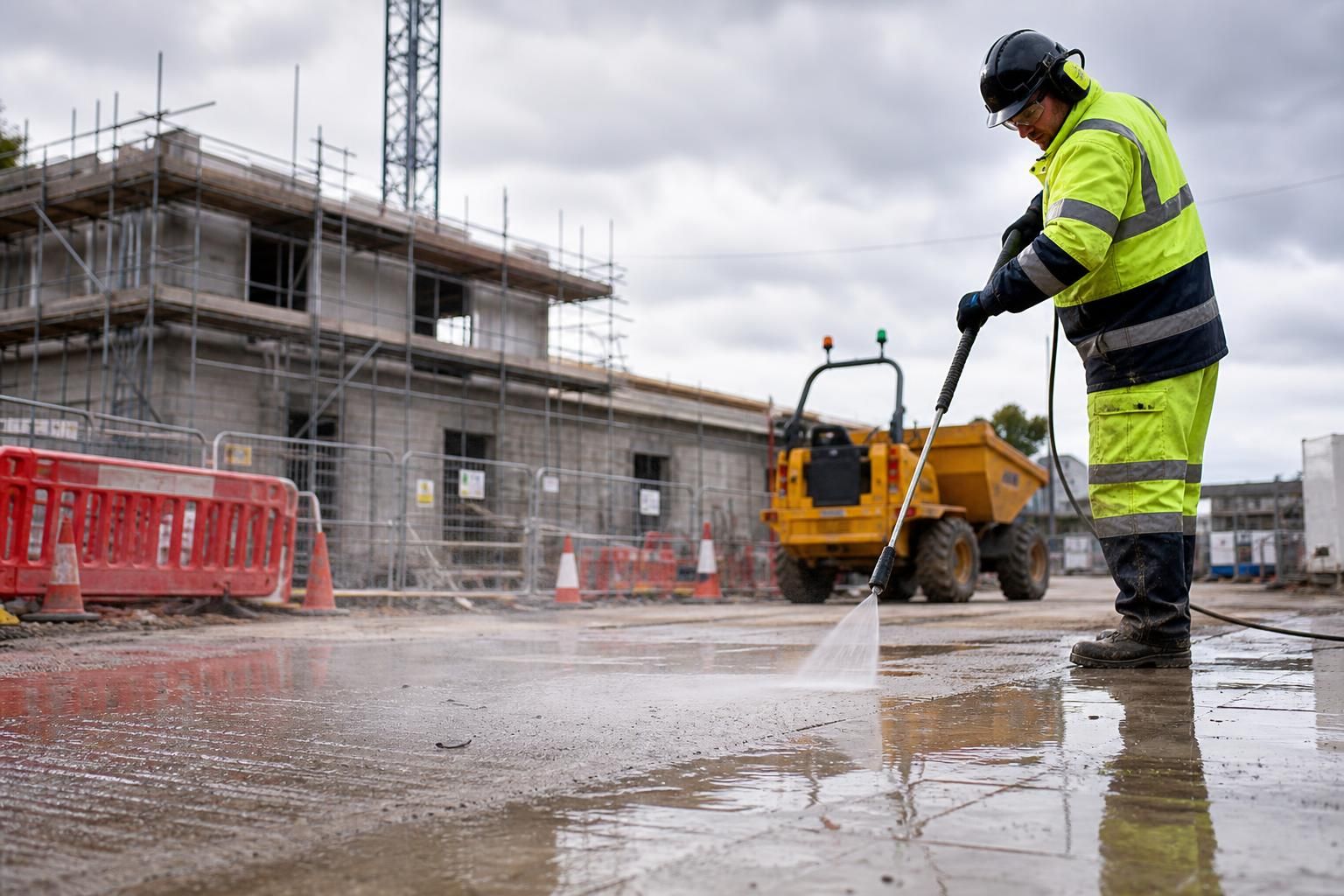
Pressure washing is used on hard-surfaced yards, concrete approaches, paved walkways, ramps and vehicle entrances where mud, clay, cement residue and embedded dirt have bonded to the surface. Operators select the pressure, flow rate, nozzle and working distance according to the substrate. A controlled technique is important on joints, painted markings, drainage covers, façade finishes and unfinished concrete, which can be damaged by excessive pressure.
At vehicle exits, pressure washing may be combined with a wheel-wash or dedicated wash-down area. Run-off should be contained and directed to an appropriate collection or treatment point rather than allowed to enter surface-water drains without assessment. Silt, cement washout, oils and other contaminants require suitable recovery and disposal arrangements.
Steam cleaning and low-moisture methods
Steam cleaning is useful for removing grease, oil films, adhesive residues, tyre marks and certain cementitious deposits from hard surfaces. It uses heat to soften contamination, which can reduce the need for aggressive chemicals or abrasive action. The operator must confirm that the surface, nearby equipment and drainage arrangements are suitable for the temperature and moisture involved.
Low-moisture cleaning is preferable in areas containing electrical equipment, temporary installations or surfaces that need to return to service quickly. Scrubbers, extraction machines and controlled-pressure systems can clean and recover water in the same operation, helping to limit standing water and slip risks.
Scrubbing and water recovery
Ride-on or walk-behind scrubber dryers are used on smooth concrete, sealed floors, warehouse approaches and other high-use surfaces where routine sweeping is not sufficient. Rotary brushes loosen tracked-in soil while the machine collects the dirty solution through a recovery system. This leaves the surface cleaner and drier than conventional mopping or uncontrolled wash-down.
Brush pressure, pad type and cleaning solution are matched to the floor finish and contamination. Operators avoid allowing dirty water to accumulate at thresholds, ramps or pedestrian crossing points. Recovered water and debris are managed in accordance with the site’s waste and drainage controls.
Targeted treatment of oil, cement and other spills
Oil, diesel, hydraulic fluid and curing compounds are isolated and treated promptly because vehicle traffic can spread them across a much wider route. Absorbent materials, compatible degreasers, mechanical agitation and extraction may be used, depending on the substance and surface. The contaminated absorbent is then contained and disposed of through the appropriate waste route.
Wet cement, grout and mortar are removed before they harden wherever practicable. Hardened residues may require careful scraping, rotary equipment or a suitable specialist treatment. The cleaning team checks that the chosen method will not scar concrete, remove markings or create airborne dust. Unknown or potentially hazardous substances are not treated as ordinary dirt; the area is isolated and the site’s hazardous-materials procedure is followed.
Entrances, walkways and loading zones
Construction entrances receive frequent attention because vehicles transfer mud and aggregate from the site onto public or shared roads. Cleaning may include scraping heavy deposits, mechanical sweeping, controlled pressure washing and inspection of the immediate external approach. Pedestrian routes are kept clear of cables, packaging, loose aggregate and trailing debris, with edges and changes in level checked for trip hazards.
Loading zones are cleaned around delivery times and after material handling because broken pallets, straps, dust and spillages can obstruct vehicle movements. Where routes are shared by pedestrians and vehicles, cleaning is sequenced so that one safe route remains available and temporary barriers are visible to site users.
Frequency, inspection and records
High-traffic areas normally require a planned cleaning schedule supported by trigger-based cleaning after heavy deliveries, adverse weather, concrete works, earthmoving or a significant spill. Supervisors inspect routes after cleaning to confirm that debris, mud, standing water and residues have been removed. Records can include the area treated, method used, waste or run-off controls, defects identified and any follow-up action required.
These techniques work best as part of the site’s wider housekeeping and control arrangements. Clear communication with the principal contractor and other trades ensures that cleaning does not conflict with lifting operations, plant movements or unfinished work. It also provides a traceable process for maintaining safe access and addressing recurring sources of contamination.
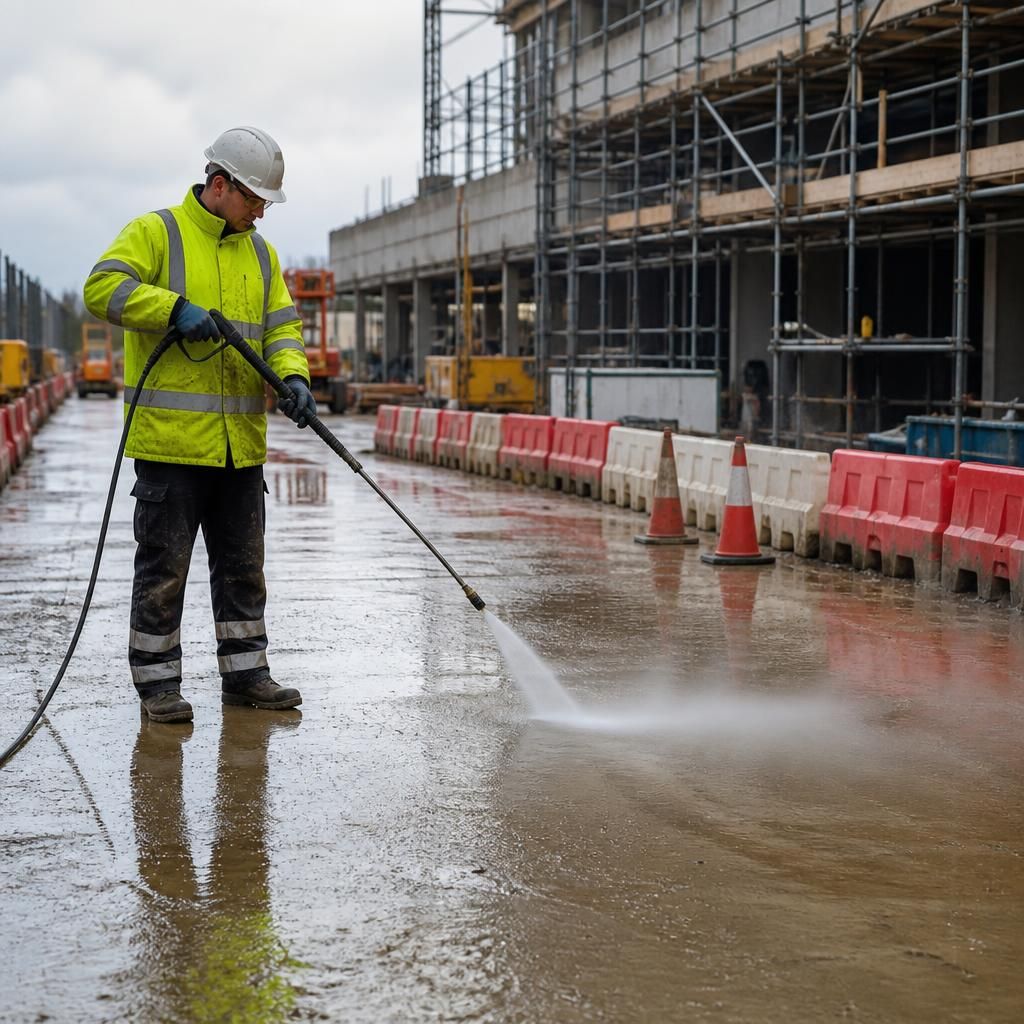
Pressure washing is a targeted technique for removing compacted mud, cement residue, tyre marks and oil films from high-traffic construction areas such as entrances, ramps, loading bays and concrete access routes. The operator adjusts the pressure, nozzle and working distance to suit the surface, preventing damage to joints, markings, unfinished concrete and drainage covers.
Cleaning is normally carried out in controlled sections with barriers and warning signs in place. Where possible, dirty water is recovered or directed to an approved collection point rather than entering surface-water drains. This limits slip hazards, protects drainage systems and allows silt, oils and cement residues to be handled through the correct waste procedure. Pressure washing is often combined with mechanical sweeping, industrial vacuuming or scrubber-drying to remove loose debris and leave the route ready for safe use.