
What specific methods and equipment are used in construction site cleaning to ensure compliance with health and safety regulations?
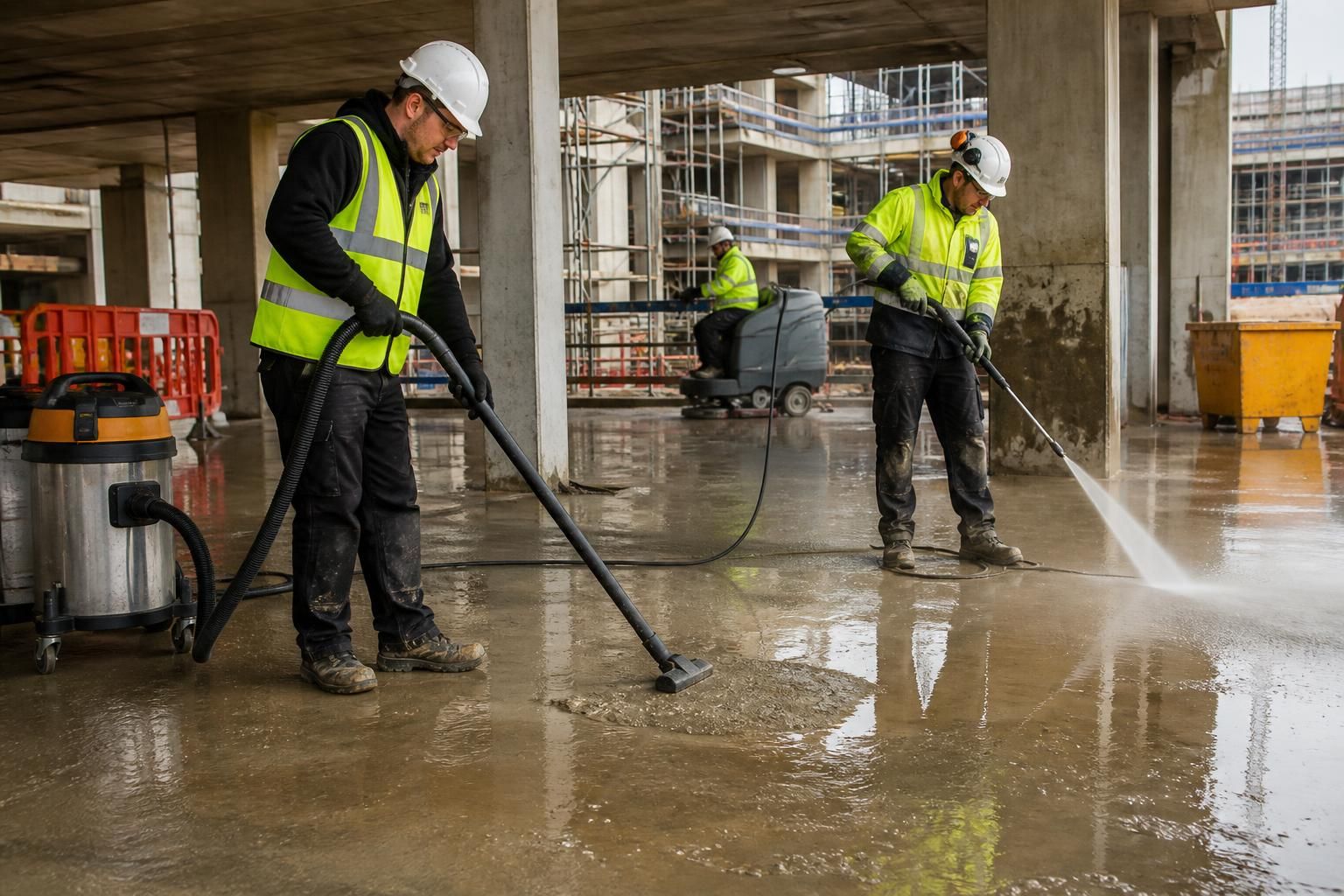
Construction site cleaning uses controlled methods such as vacuuming, pressure washing, steam cleaning, spill response and waste segregation, supported by equipment including dust-extraction vacuums, low-pressure washers, scrubber dryers and suitable access platforms. Trained operatives select equipment and controls through risk assessments and method statements, using appropriate PPE, signage, exclusion zones and dust or chemical controls to comply with site health and safety requirements.
Construction site cleaning achieves health and safety compliance by combining controlled cleaning methods with correctly selected, maintained equipment and documented working procedures. The approach is based on a site-specific risk assessment and method statement, with controls for dust, water, chemicals, waste, traffic, work at height, electrical equipment, slips and trips, and any hazardous substances present.
Before work starts, the cleaning team reviews the construction phase plan, site rules, access arrangements, current activities and known hazards. The assessment should identify what is being cleaned, the material and contamination involved, nearby workers and members of the public, and the safest practical method. Method statements then set out the sequence of work, required equipment, personal protective equipment, exclusion zones, emergency arrangements and waste-disposal procedures. These documents must be updated when site conditions or the cleaning scope changes.
Dust control and vacuum cleaning
Fine dust from cutting, drilling, sanding, plastering and dry sweeping can affect respiratory health and reduce visibility. Where practicable, dry sweeping is replaced with vacuum extraction, damp cleaning or a combination of both. Industrial vacuums fitted with suitable filtration collect dust at source and prevent it being redistributed into the air. The required dust class depends on the material and risk; medium-dust extraction is commonly used for general construction dust, while higher-risk materials require more stringent controls.
Operatives check filters, hoses, seals and collection systems before use. Vacuums should be emptied using a method that limits dust release, and filters must be cleaned or replaced in line with the manufacturer’s instructions. Where power tools are used during cleaning or preparation, local extraction or on-tool dust capture is preferable to relying solely on general ventilation. Respiratory protective equipment may also be required following the assessment, but it should not replace effective source control.
Dust suspected of containing asbestos, lead or another hazardous substance must not be treated as ordinary site debris. Work should stop, the area should be isolated and the material referred to the responsible site manager and appropriately authorised specialists. Specialist surveys, procedures and disposal arrangements may be required before cleaning can resume.
Pressure washing and water-based cleaning
Pressure washing removes mud, cement residue, plaster, dust and general contamination from hard surfaces, plant areas, access roads and external elevations. Operators select the lowest pressure and water volume that will achieve the required result. This reduces the risk of damaging unfinished surfaces, forcing water into buildings, dislodging materials or creating unnecessary spray.
Before pressure washing, the team protects electrical equipment, openings, drainage points and vulnerable finishes. The work area is signed and segregated, hoses are routed to avoid trip hazards, and pedestrians and vehicles are kept clear of the spray and wet surface. Run-off is controlled so that contaminated water, cement washout or cleaning chemicals do not enter surface-water drains or surrounding ground. Where necessary, the water is contained, collected, filtered or passed through an approved treatment arrangement before disposal.
Pressure-washing equipment requires pre-use checks covering the lance, trigger, hose, couplings, guards and connections. Operators use suitable footwear, gloves, eye or face protection and waterproof clothing where the assessment requires it. They are also trained to manage kickback and to avoid directing high-pressure water at people, live electrical systems, fragile materials or unprotected building elements.
Steam cleaning and low-pressure techniques
Steam cleaning uses heated water vapour to loosen oils, grime, algae, residues and some biological contamination while often reducing the need for chemical products. It can be useful where a controlled, lower-volume cleaning process is needed, although surfaces must still be assessed for heat and moisture sensitivity. Low-pressure systems are selected for delicate façades, cladding, coated surfaces and areas where aggressive cleaning could cause damage.
The cleaning team controls the temperature, pressure, dwell time and direction of application. Steam and hot-water equipment is checked for leaks, hose condition, pressure controls and safe operation. Suitable gloves, eye protection and protective clothing help prevent burns and contact injuries. Surfaces are assessed afterwards for residual moisture, and wet areas are kept segregated until they are safe for normal access.
Scrubber dryers, sweepers and mechanical cleaning
Ride-on or pedestrian scrubber dryers provide controlled washing and drying of large floors, welfare areas, loading zones and other high-traffic surfaces. They apply cleaning solution, agitate the surface, recover the dirty water and leave the area drier than conventional mopping. This helps reduce slip exposure, provided the correct pad, brush, chemical dilution and recovery settings are used.
Mechanical sweepers are used for roads, yards, car parks and large paved areas. Dust suppression systems can dampen fine material during sweeping, while suction and filtration capture debris. The operator must consider visibility, reversing movements, vehicle routes and the risk of projecting material. Warning beacons, audible alarms, banksman arrangements and site traffic controls may be required according to the risk assessment.
Equipment is selected for the surface and working environment rather than simply for speed. Battery-powered machines may be appropriate indoors or in poorly ventilated areas, while petrol or diesel equipment requires suitable ventilation and controls for exhaust emissions, fuel storage and fire risk. Charging points, cables and batteries must be managed to prevent electrical, trip and ignition hazards.
Manual cleaning and detail work
Manual methods remain important around edges, corners, fixtures, drainage channels, temporary protections and areas that machines cannot reach. Microfibre systems, damp cloths, non-abrasive pads, scrapers and controlled detergent application can remove residues without spreading contamination. Tools are kept clean and separated where cross-contamination is a risk, particularly in welfare, food preparation or occupied areas.
Operatives use correct lifting and handling techniques when moving waste, equipment or containers. Heavy or awkward items are moved with trolleys, lifting aids or mechanical assistance where practicable. Rotating tasks, improving access and keeping materials close to the point of use can reduce musculoskeletal strain.
Spill response and hazardous material controls
Fuel, oil, hydraulic fluid, wet cement, paint and chemical spills require prompt isolation and a response suited to the substance. Spill kits may contain absorbent pads, granules, drain covers, over-drums and disposal bags. The team prevents the spill from reaching drains, identifies the substance from site information or safety data, uses the specified PPE and packages contaminated absorbent material as the correct waste stream.
Cleaning chemicals are controlled under the Control of Substances Hazardous to Health requirements. Safety data sheets, product labels and COSHH assessments inform storage, dilution, ventilation, PPE, first aid and disposal arrangements. Chemicals should never be mixed unless the manufacturer specifically permits it, as incompatible products can produce harmful gases or dangerous reactions. Substitution with a less hazardous product or a non-chemical method is considered where it provides an effective alternative.
Waste collection, segregation and disposal
Waste is gathered using suitable bins, sacks, wheeled containers, skips or sealed containers, depending on its type and condition. Segregation prevents general debris from being mixed with recyclable materials, contaminated absorbents, sharp objects, chemical containers or other controlled waste. Waste routes are kept clear and containers are not overloaded, left unstable or positioned where they obstruct fire exits, access routes or emergency equipment.
Waste is transferred only to an appropriately authorised collection and disposal route, with records retained where required. Broken glass, exposed fixings and sharp construction debris are handled with tools and suitable gloves rather than by hand. Where waste presents an unknown or unusual risk, it is isolated and escalated to the principal contractor or site manager for identification and instruction.
Access equipment and work at height
Façades, roofs, canopies and elevated structures may require mobile elevating work platforms, towers, scaffold access, podiums or other suitable platforms. The safest option is selected after considering whether the task can be completed from ground level. Access equipment is used only by trained and authorised operatives, positioned on suitable ground and kept clear of openings, live traffic, overhead services and unstable materials.
Pre-use checks confirm the condition of platforms, guardrails, wheels, outriggers, harness systems and emergency controls where applicable. Inspection, examination and maintenance requirements must be met, including the relevant requirements for lifting and work equipment. Tools and hoses are secured to prevent falling objects, and exclusion zones are established below or around the work area. Ladders are not used as a general work platform where a safer, more stable option is reasonably practicable.
PPE, segregation and site communication
Personal protective equipment is selected from the identified hazards and may include safety footwear with suitable slip resistance, gloves, eye protection, hearing protection, hard hats, high-visibility clothing, respiratory protective equipment and waterproof or chemical-resistant clothing. PPE must be compatible, correctly fitted, inspected and replaced when damaged or contaminated.
Barriers, cones, warning signs and temporary screens separate cleaning activities from workers, vehicles and the public. Cleaning is coordinated with the principal contractor so that it does not conflict with lifting operations, deliveries, hot works, powered access or other high-risk activities. Radios, permits, toolbox talks and handover records help communicate changing conditions and confirm when an area is safe to reopen.
Inspection, maintenance and verification
Compliance depends on ongoing checks rather than equipment selection alone. Operatives complete pre-use inspections and report defects immediately. Electrical equipment, leads, portable tools, pressure systems and access equipment are maintained and examined in accordance with the manufacturer’s instructions and applicable site procedures. Damaged or unsuitable equipment is removed from service.
Supervisors verify that the agreed method is being followed, that dust and run-off controls are working, and that waste has been handled correctly. Completion checks may include visual inspection, moisture or residue checks, confirmation that drains and routes are clear, and recording of any outstanding defects. Incident, near-miss and exposure reports are reviewed so that controls can be improved during the project.
For complex or high-risk construction environments, the cleaning plan should be integrated with the principal contractor’s health and safety arrangements. This ensures that methods, equipment, training, PPE, permits, emergency procedures and waste controls remain suitable for the actual site conditions and support compliance throughout the cleaning programme.
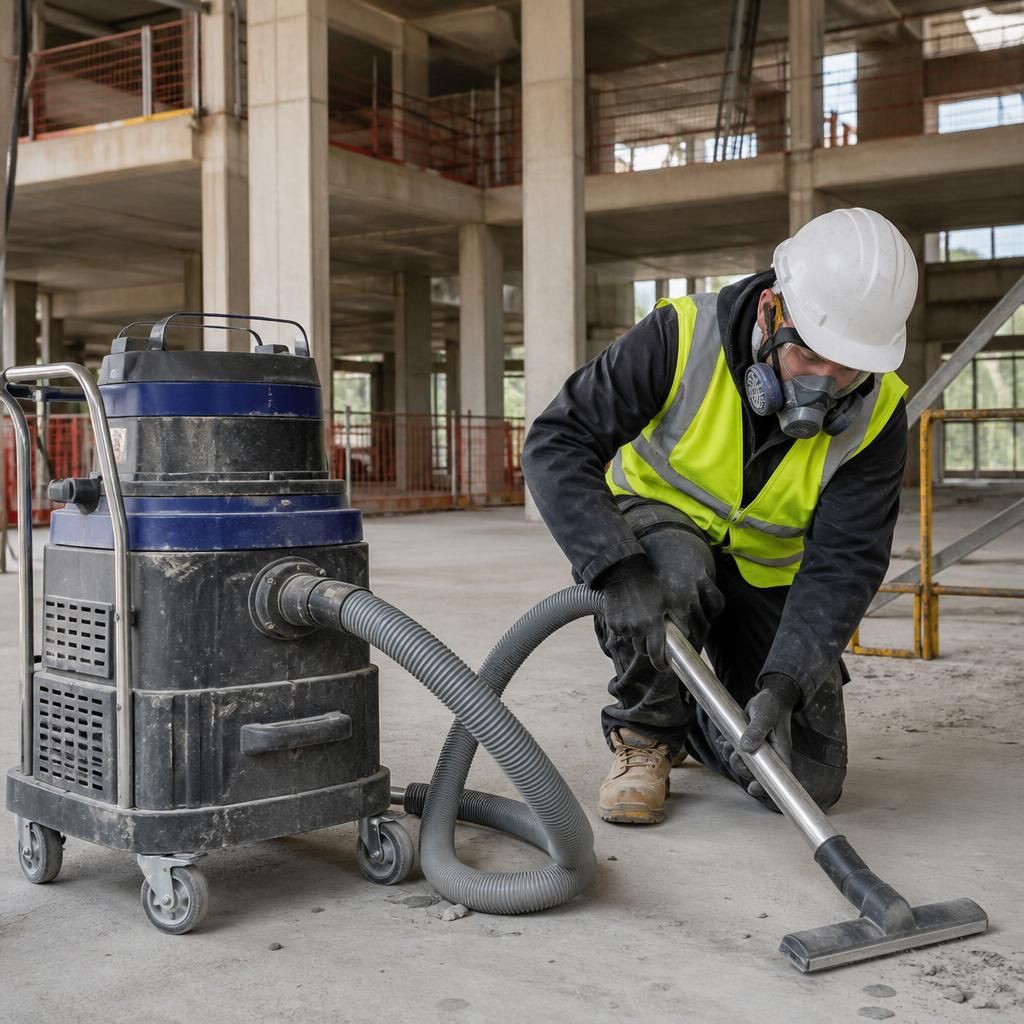
Dust extraction is a key construction site cleaning control because it removes fine particles at source rather than redistributing them through the work area. Industrial vacuums with suitable filtration, on-tool extraction and damp-cleaning methods are used instead of dry sweeping wherever practicable.
Before use, operatives check filters, hoses, seals and collection systems, then select equipment appropriate to the material and level of risk. Dust suspected of containing asbestos, lead or another hazardous substance is not handled as ordinary debris: the area is isolated and the issue is referred to the site manager and authorised specialists. This approach supports respiratory protection, reduces visibility and slip risks, and provides a documented method for keeping the site safe.
Discuss Your Construction Site Cleaning Requirements
Discuss your construction site cleaning requirements with Encanto Exterior Cleaning to agree suitable methods, equipment and safety controls for your site conditions. We can support planned cleaning programmes, specialist tasks and ongoing maintenance across Birmingham, the West Midlands and the UK.