What innovative cleaning technologies are commonly deployed in construction site cleaning?
Construction site cleaning commonly uses high-pressure and low-pressure washing, steam cleaning, industrial vacuum systems, mechanised scrubber-dryers and specialist access equipment. These technologies remove dust, mud, cement residue, oil, graffiti and other site contamination efficiently while helping contractors control water use, protect surfaces and maintain safer working conditions.
Construction site cleaning commonly combines pressure washing, steam cleaning, industrial vacuum systems, mechanised scrubber-dryers, dust-control equipment and specialist access systems. The appropriate technology depends on the surface, contamination, stage of construction, available water and drainage, access constraints, and the required standard of finish. In practice, the safest and most effective results usually come from combining several methods rather than relying on one machine.
High-pressure washing is widely used for removing mud, cement splashes, dust, algae, traffic film and general construction debris from robust external surfaces. It is suitable for areas such as concrete yards, loading areas, kerbs, paving, plant access routes, car parks and some masonry. Operators select the pressure, flow rate, nozzle pattern and working distance according to the surface. Excessive pressure can damage pointing, coatings, soft brickwork and unfinished materials, so controlled testing is important before cleaning a large area.
Low-pressure and soft-washing systems provide an alternative where high pressure could cause damage. These systems apply cleaning solutions or water at a lower pressure, allowing contamination to be loosened without unnecessarily abrading the surface. They can be useful for rendered façades, painted surfaces, delicate masonry, insulation boards and completed areas with sensitive finishes. Any chemical used must be compatible with the material, applied at the correct concentration and fully rinsed or recovered in line with the site’s environmental controls.
Steam cleaning uses heated water to break down oils, grease, traffic film, biological growth and some cement-based residues. The combination of heat and controlled pressure can reduce the need for aggressive chemicals and may be useful around entrances, finished façades, plant areas and surfaces where a lower-water process is preferred. Steam cleaning is not suitable for every material or contamination type, and hot surfaces, runoff and wastewater still require proper control.
Industrial vacuum systems are used to collect dry dust, loose debris, slurry and wastewater rather than allowing contamination to spread across the site. Units may incorporate filtration designed for fine construction dust, including systems suitable for hazardous dust classifications where the risk assessment requires them. Vacuum recovery is particularly valuable when cleaning near drainage systems, occupied premises, sensitive equipment or newly completed finishes. The collected material must be stored, transported and disposed of according to its classification.
Mechanised scrubber-dryers improve the cleaning of large, relatively even floors and hardstanding. A rotating brush or pad agitates the surface while the machine dispenses cleaning solution and recovers dirty water in the same pass. This can provide a more consistent finish than manual mopping across warehouses, basement areas, corridors, plant rooms, car parks and commercial units. The machine must be matched to the floor type, contamination and available clearance, with suitable arrangements for ramps, thresholds and areas that cannot be reached mechanically.
Ride-on sweepers and industrial sweepers are commonly deployed on larger sites where loose dust, aggregate, packaging fragments and general debris accumulate across extensive hard surfaces. Mechanical sweeping reduces manual handling and helps prepare areas for washing or hand finishing. Dust suppression may be incorporated, but sweeping equipment must be operated carefully around pedestrians, vehicles, temporary works and exposed drainage channels.
Dust-control technology can include fine water misting, wet vacuuming, enclosed extraction and localised suppression at points where dust is generated or disturbed. These measures help limit airborne dust during clearance, cutting-related cleaning and the movement of dry debris. They should support, not replace, source control, suitable ventilation and the site’s arrangements for occupational dust exposure. Water mist must also be managed so that it does not create slippery surfaces, electrical risks or uncontrolled runoff.
Specialist access equipment extends cleaning capability to façades, cladding, roofs, atria, high-level steelwork and other elevated areas. Depending on the site, this may include mobile elevated work platforms, powered access, telescopic systems, scaffold-based access, water-fed poles or rope-access techniques. The selected system must reflect the height, reach, ground conditions, overhead hazards, exclusion zones and rescue arrangements. Access equipment is not a cleaning technology in isolation; it is part of a planned system of work requiring competent operators and appropriate inspection and control.
Water-fed pole systems and pure-water cleaning are useful for windows, glazing, cladding and other high-level surfaces where safe reach from ground level is possible. Purified water helps reduce spotting as it dries and can limit the need for detergents on suitable surfaces. This approach can reduce work at height, although it is not appropriate where the surface requires agitation, abrasive removal or specialist chemical treatment.
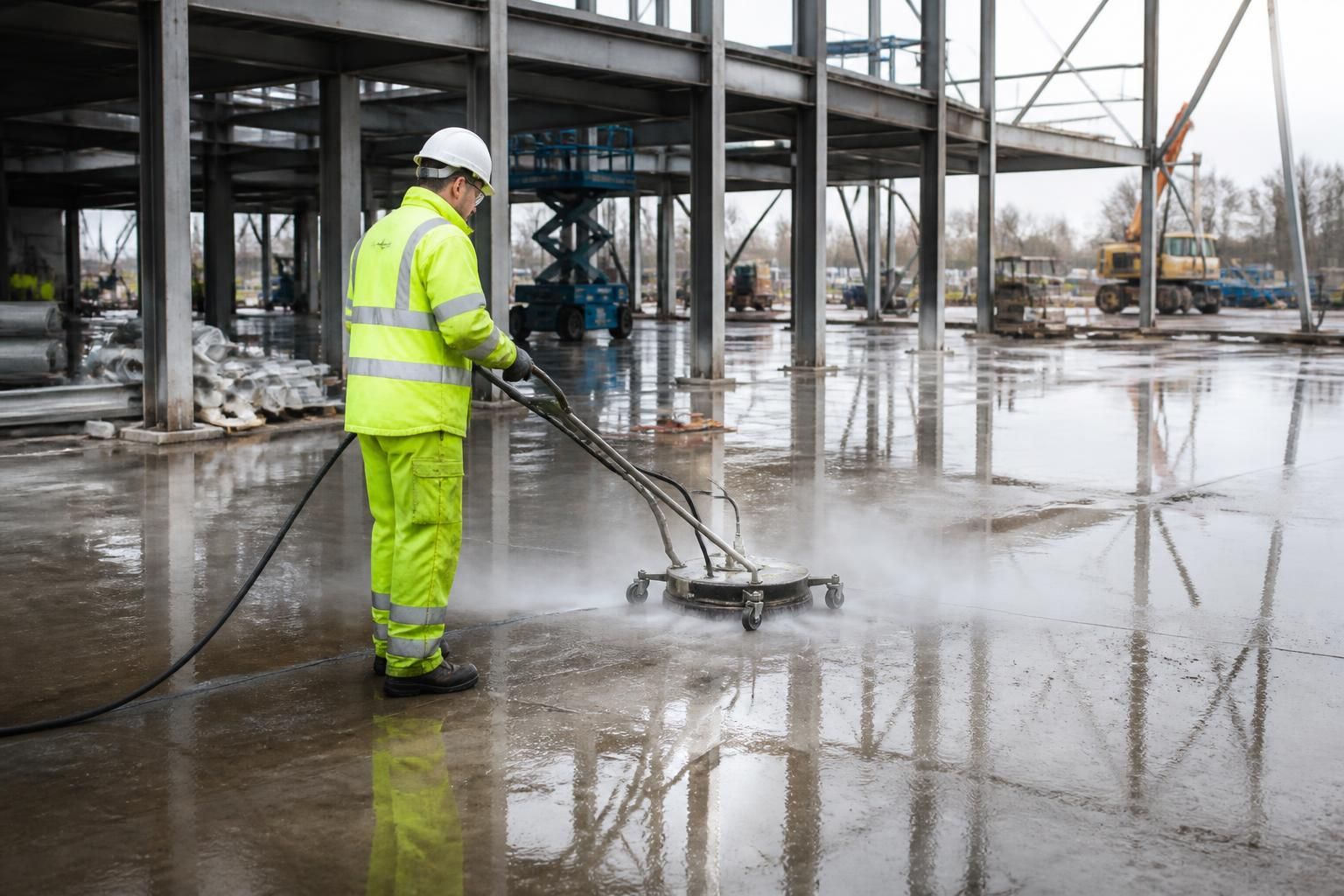
Pressure-washing attachments and surface cleaners help improve consistency on large paved or concrete areas. Rotary surface-cleaning heads contain spray within a guarded housing, reducing overspray and producing a more even result than an exposed lance. Some systems can be paired with vacuum recovery to collect wastewater. They still require careful control around joints, drainage covers, unfinished concrete and areas where dirty water could enter the environment.
Laser cleaning and other specialist non-abrasive systems may be considered for particularly sensitive or high-value surfaces, although they are less routine on general construction sites than washing, vacuuming or steam cleaning. A controlled laser beam can remove selected deposits from materials such as stone or metal without using water or conventional blasting media. It requires specialist assessment, trained operators and strict exclusion and eye-protection controls, so its use is normally limited to specific restoration, precision-cleaning or delicate-finish requirements.
Robotic and remote-controlled equipment is increasingly relevant where cleaning involves steep slopes, confined spaces, contaminated areas or repetitive work that would expose operatives to unnecessary risk. Remote operation can support high-pressure cleaning, sweeping or inspection while keeping people farther from the hazard. These systems are not a substitute for planning: communication, visibility, emergency stopping, equipment recovery and interaction with other site activities must be addressed before deployment.
Digital inspection and monitoring tools also contribute to modern site cleaning. Photographic records, mobile inspection forms, location-based task reporting and water or waste logs can help teams identify recurring contamination, verify completed areas and provide an auditable record for the principal contractor or property manager. Moisture meters and surface inspection tools may assist where cleaning must be completed without compromising newly installed materials. Technology should support a documented inspection process rather than replace a competent visual assessment.
Technology selection should follow a site-specific assessment. The cleaning team should establish the type and age of each surface, the contamination involved, whether finishes are fully cured, the presence of electrical installations or sensitive equipment, and the consequences of water or chemical use. Drainage, weather, pedestrian and vehicle movements, noise, overspray, wastewater recovery and access restrictions must also be considered. A small trial area is often appropriate where the material or contamination is uncertain.
Modern equipment can improve productivity and reduce exposure, but it does not remove the need for competent operators. Pre-use checks, suitable personal protective equipment, segregation from other trades, controlled hoses and cables, plant inspection, chemical handling procedures and clear exclusion zones remain essential. Operators should also know when to stop: unknown residues, suspected asbestos, sharps, live services, unstable surfaces and unidentified chemical contamination require escalation rather than routine cleaning.
Environmental controls are an important part of innovative construction cleaning. Water-efficient nozzles, steam systems, closed-loop recovery, industrial vacuums and targeted application can reduce unnecessary consumption and prevent polluted runoff. Recovered water and solid waste must be assessed before discharge or disposal, particularly where it contains oil, cement, paint, chemical residues or fine dust. The most sustainable method is not automatically the one using the least water; it is the method that removes the contamination effectively while minimising material damage, chemical use, waste and repeat cleaning.
For most construction projects, the strongest approach is a planned combination: mechanical sweeping or vacuuming for loose debris, controlled washing or steam for bonded contamination, scrubber-drying for internal floors, specialist access for elevated surfaces, and recovery systems wherever runoff could create a risk. This staged process allows the cleaning method to match the construction phase and helps deliver a safe, presentable site without damaging completed work or interfering with remaining trades.
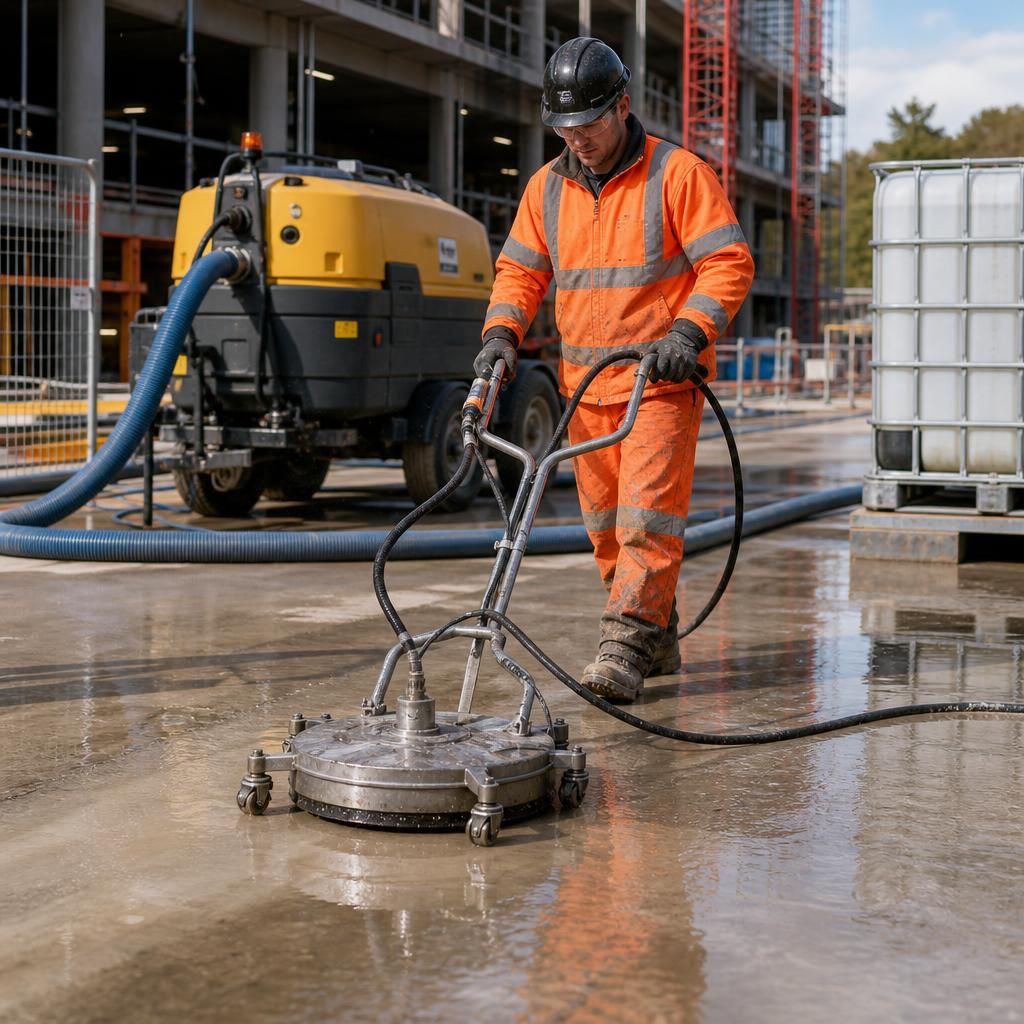
Innovative construction site cleaning technologies combine controlled cleaning with recovery, dust suppression and safer access. For example, a pressure washer fitted with a rotary surface-cleaning head can remove bonded dirt from concrete and paving more evenly than an exposed lance, while an integrated vacuum system collects slurry and wastewater as the work progresses.
This approach helps prevent contaminated runoff entering drains, reduces overspray around other trades and leaves hardstanding ready for inspection or handover more quickly. The equipment still needs to be matched to the surface and contamination, with operators checking drainage, electrical risks, pedestrian routes and waste classification before work begins.
Discuss the Right Cleaning Technology for Your Construction Site
Speak to Encanto Exterior Cleaning to discuss the right combination of pressure washing, steam cleaning, vacuum recovery, dust control and access equipment for your construction site. We can assess the surfaces, contamination, access requirements and wastewater controls before recommending a suitable cleaning plan.