
What are the key benefits of hiring professional construction site cleaners?
Hiring professional construction site cleaners helps keep sites safer, more compliant and ready for handover by removing dust, debris, mud, hazardous residues and construction waste using appropriate equipment and controlled methods. It also reduces pressure on site teams, improves the quality of the finished presentation and supports efficient project completion.
Hiring professional construction site cleaners helps make a site safer, more compliant and ready for handover by removing dust, mud, debris, construction residues and waste using controlled methods and suitable equipment. Their work reduces the cleaning burden on site teams, supports efficient completion and presents the finished project to clients, occupants and inspectors in an orderly condition.
Improved health and safety
Construction sites can contain sharp materials, loose rubble, excessive dust, wet surfaces, packaging and residues from building products. If these are left in access routes, work areas or shared spaces, they can create slip, trip, respiratory and other avoidable hazards. Professional cleaners identify the risks associated with different surfaces and materials, then use appropriate methods to remove them without creating additional exposure or spreading contamination.
Routine cleaning also helps maintain clear walkways, loading areas, staircases, welfare facilities and emergency access routes. Removing waste as work progresses makes hazards easier to identify and gives site managers better control over changing conditions.
More effective dust and residue removal
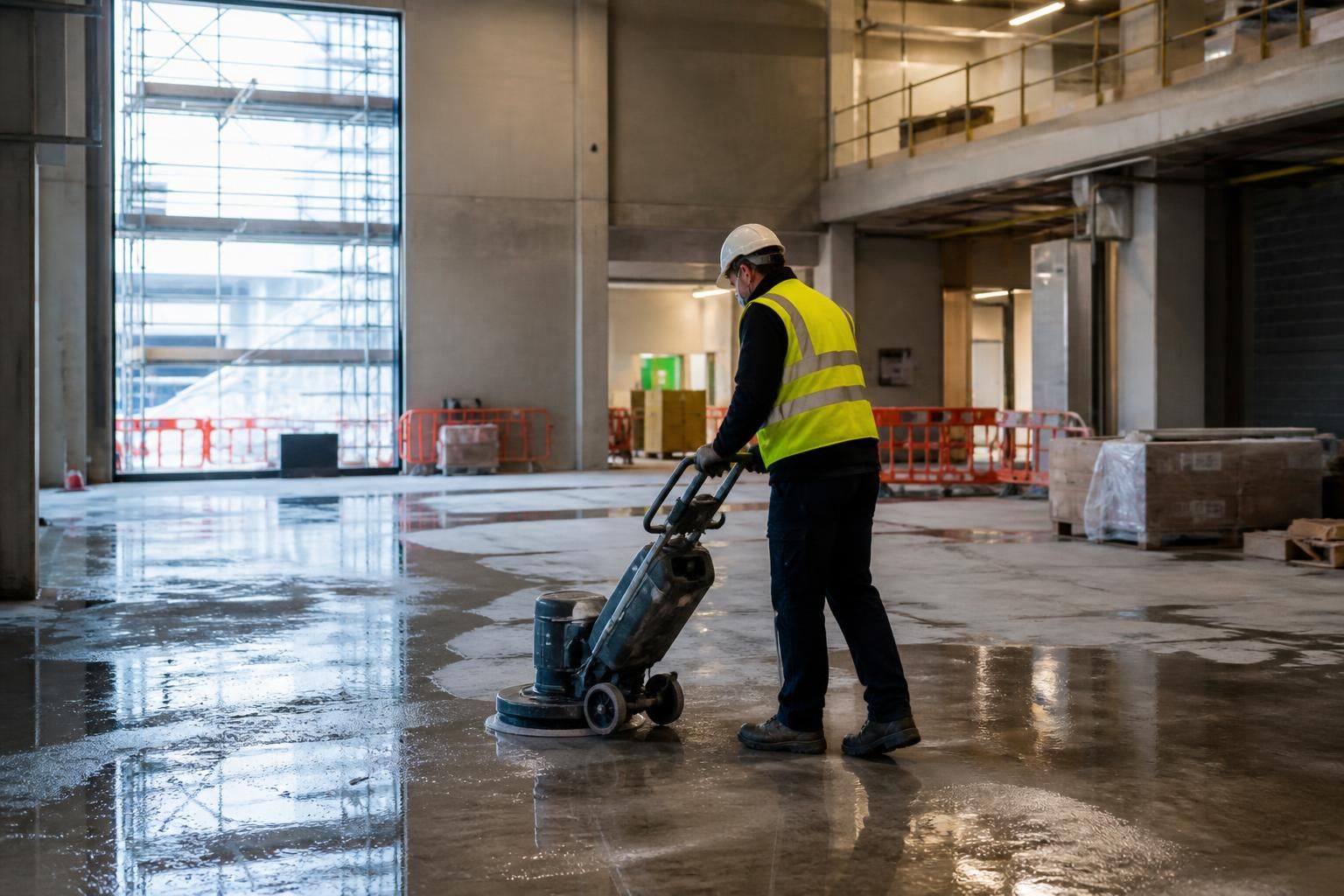
Construction dust can settle on floors, ledges, façades, glazing, plant and installed fixtures. Dry sweeping may disturb fine particles and redistribute them, while unsuitable chemicals or excessive pressure can damage new surfaces. Professional teams can select methods such as controlled vacuuming, damp cleaning, pressure washing, steam cleaning or manual detailing according to the material, level of soiling and stage of the project.
This is particularly important during final cleaning, when plaster, cement, paint, adhesive, sealant and grout residues may need to be removed without marking floors, cladding, brickwork, glass or newly fitted elements. A methodical approach produces a cleaner result while reducing the risk of surface damage and rework.
Better compliance and site control
Cleaning forms part of wider construction site management. A professional service can work within the site’s induction procedures, risk assessments, method statements, control measures and waste arrangements. Operatives should understand relevant hazards, use suitable personal protective equipment and follow agreed controls for equipment, chemicals, access and work at height.
Keeping cleaning activities documented and coordinated with the principal contractor or site manager can also support inspections and handover records. Professional cleaning does not replace the client’s or contractor’s legal responsibilities, but it provides a structured way to manage housekeeping and cleaning-related risks.
Faster progress towards completion and handover
Cleaning is often required at several stages rather than only at the end of a project. Builders’ cleans can remove heavier debris and residues, while sparkle or final cleans focus on presentation, detailing and readiness for occupation. Using a dedicated team allows other trades to concentrate on their work and reduces the chance that cleaning is left until it delays inspections, snagging or handover.
Clean surfaces also make defects easier to see. Marks, scratches, incomplete finishes, damaged fittings and areas requiring remedial work can be identified more clearly when dust and construction residue have been removed. This gives project teams an opportunity to address issues before the building is presented to the client or opened for use.
Reduced pressure on construction teams
Site managers, tradespeople and general operatives may be able to carry out basic housekeeping, but they may not have the time, specialist equipment or training required for a full construction clean. Assigning the work to professional cleaners creates a clearer division of responsibility and helps prevent skilled site personnel from being diverted from critical construction activities.
A dedicated contractor can also plan labour and equipment around the construction programme, phased handovers, restricted access times and other site requirements. This is useful on large or occupied projects where cleaning needs to be coordinated without disrupting contractors, visitors or building users.
Access to appropriate equipment and expertise
Professional construction site cleaners bring experience in selecting equipment for different environments. Depending on the requirements, this may include industrial vacuum systems, pressure washing equipment, steam cleaners, scrubber dryers, water-fed cleaning systems and access equipment. The correct choice depends on the surface, contamination, drainage arrangements, nearby assets and environmental controls.
Experience is equally important. Cleaning a newly installed façade, a concrete floor, a roof area or a car park requires different techniques and precautions. Operatives need to understand pressure, temperature, chemical compatibility, run-off, surface condition and safe access. This helps achieve a consistent result while protecting completed work.
A more professional presentation
The quality of a construction project is judged partly by its condition at practical completion and handover. Dusty glazing, dirty entrance areas, marked floors, cement splashes and waste around the perimeter can undermine otherwise high-quality work. Professional cleaning provides the detailed finish required for client inspections, marketing photography, occupation and formal handover.
A clean site is also more suitable for incoming occupants, facilities teams and maintenance contractors. Where a project involves refurbishment or work within an operational premises, controlled cleaning helps maintain a professional environment for staff, visitors and the public.
Lower risk of damage and avoidable rework
Improvised cleaning can cause scratching, staining, chemical damage, water ingress or damage to sensitive finishes. Professional cleaners assess the surface before work begins and use test areas where necessary. They can adjust the process for delicate materials, installed equipment, drainage limitations and areas where water or debris must be carefully controlled.
Removing residues promptly can also prevent them becoming harder to clean later. For example, some cement-based deposits, adhesives and coatings become more difficult to remove once fully cured. Early, suitable intervention can therefore reduce the need for aggressive treatment or replacement of affected materials.
Controlled waste handling
Construction cleaning generates different types of waste, including packaging, rubble, dust, disposable materials and contaminated residues. A professional service can segregate waste where required, keep work areas orderly and follow the arrangements established for the site. Hazardous or potentially hazardous materials should not be handled as ordinary waste; they require an appropriate assessment, containment and disposal route.
Clear waste handling helps prevent blocked drainage, windblown debris, cross-contamination and unnecessary disruption to other site activities. It also supports the principal contractor’s wider environmental and housekeeping procedures.
Greater flexibility for complex projects
Professional cleaners can support different project stages and site conditions, including new builds, refurbishments, fit-outs, demolition preparation and phased occupation. They may be required to clean external façades, roofs, yards, access roads, loading areas, car parks, welfare spaces and internal finishes, depending on the project scope.
Before work starts, the cleaning requirements should be agreed with the site team. This should cover the areas included, required finish, access arrangements, water and power availability, working hours, protection of completed work, waste handling and any restrictions around occupants or neighbouring premises. A clear scope helps prevent gaps between construction, cleaning and facilities responsibilities.
In summary
The main benefit of using professional construction site cleaners is controlled, specialist cleaning that supports safety, compliance, productivity and handover quality. A suitable service removes construction debris and residues without unnecessary risk to people or finished surfaces, works around the construction programme and provides the level of detail expected from a completed project. For the best outcome, cleaning should be planned early and reviewed as the site moves from active construction through to final handover.
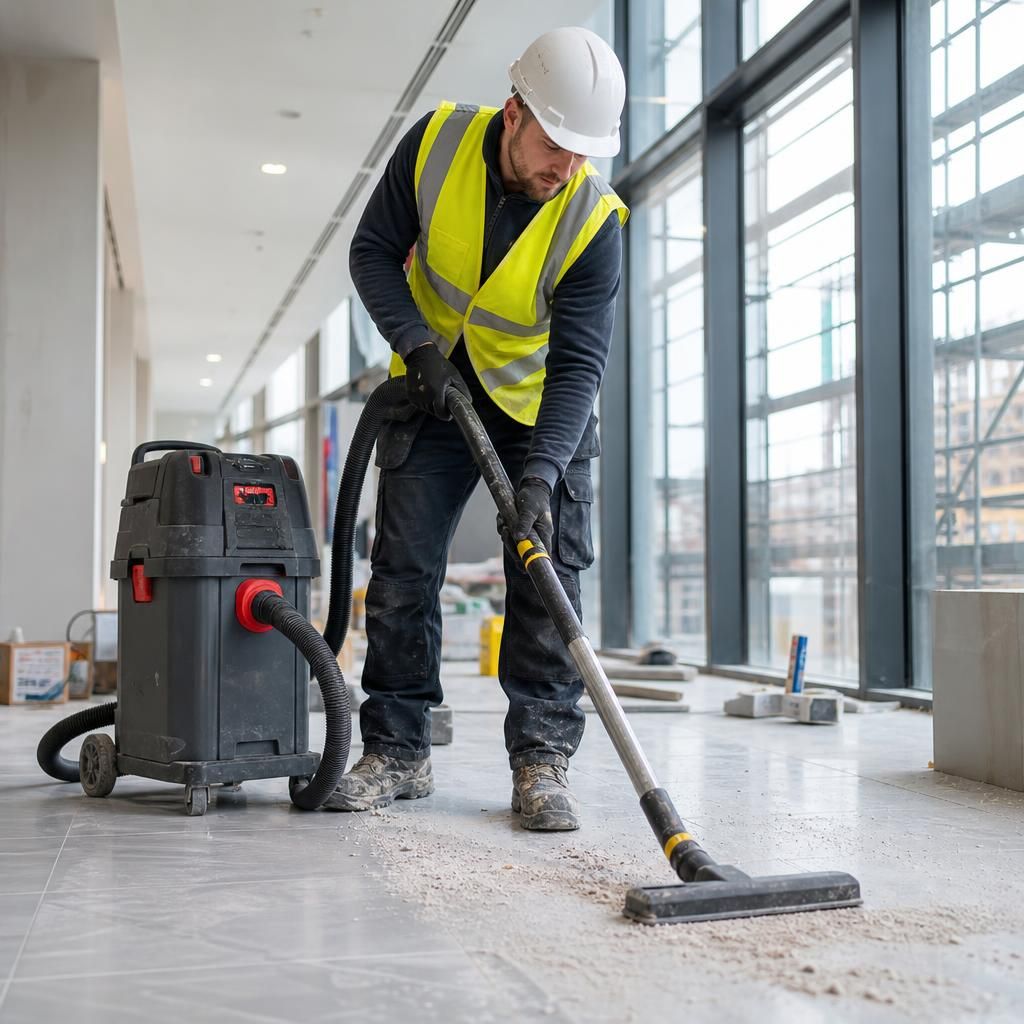
Professional construction site cleaners support safer, more efficient handovers by removing building dust, debris and surface residues without damaging completed work. Their work helps site teams inspect finishes accurately and present the project in a condition suitable for clients, occupants and inspectors.
A structured builders’ clean can remove heavier waste and construction residue, while a final or sparkle clean focuses on glazing, floors, fixtures, entrances and other visible details. Cleaning before inspection also makes defects, marks and incomplete finishes easier to identify, giving contractors time to complete remedial work before handover. Using trained operatives and suitable equipment reduces the risk of scratches, staining, water damage or residue being spread across newly completed areas.