
How do construction site cleaning services ensure compliance with health and safety regulations?
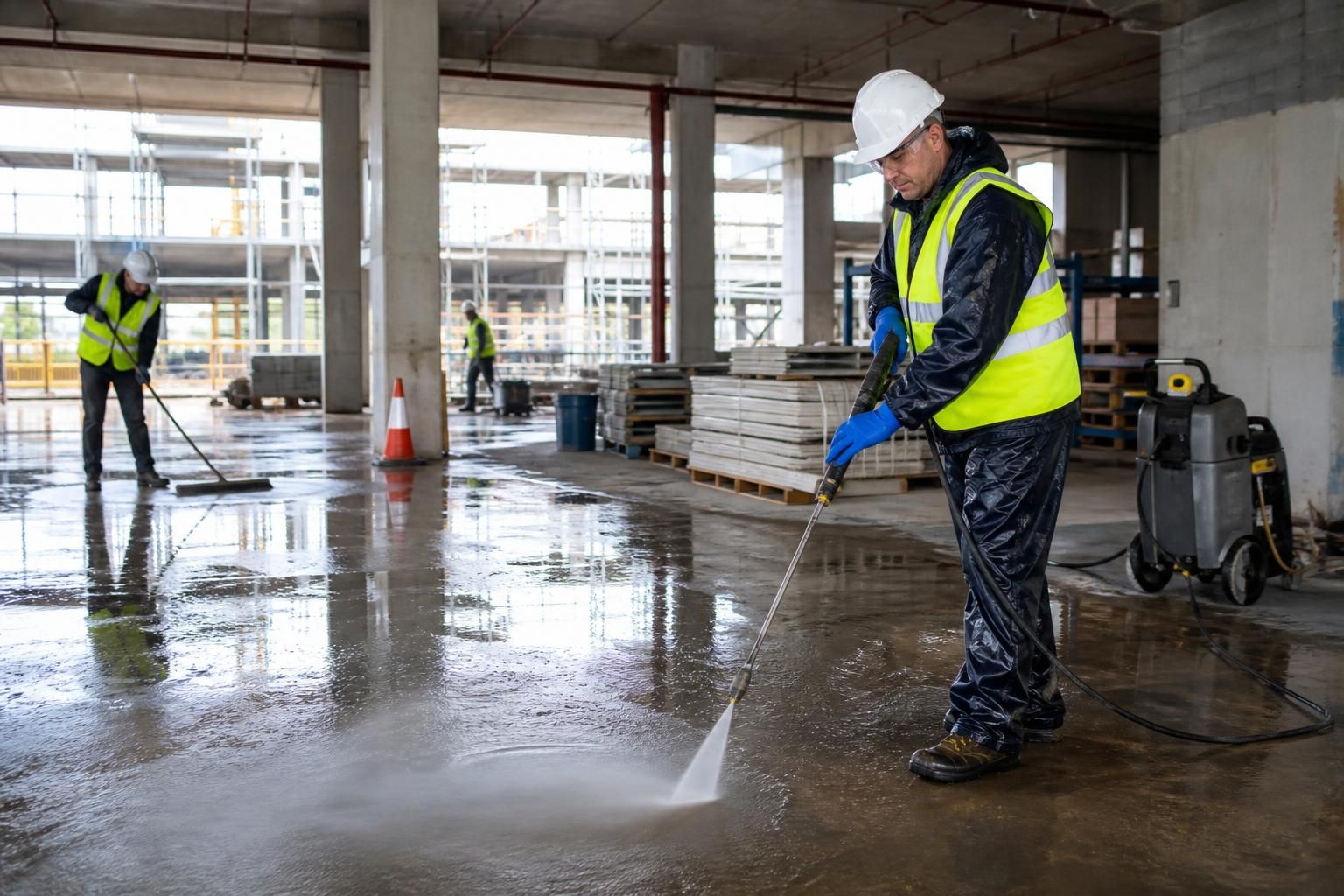
Construction site cleaning services support health and safety compliance by following site-specific risk assessments, method statements and control measures for dust, debris, spills, waste and hazardous materials. Trained operatives use suitable equipment and PPE, maintain clear access routes and emergency areas, and record inspections and completed cleaning tasks for review by the site management team.
Construction site cleaning services support compliance with UK health and safety requirements by planning cleaning activities around the construction phase, assessing site-specific risks, using suitable control measures and keeping clear records of the work completed. The cleaning contractor works under the site’s overall management arrangements, while the principal contractor and other duty holders retain responsibility for coordinating health and safety across the project.
Effective compliance is therefore more than removing visible dirt. It involves controlling dust, debris, spills, waste, contaminated materials, access routes, plant movements and other hazards that could injure workers, visitors or members of the public.
Site-specific planning and risk assessment
Before work begins, the cleaning team should review the construction programme, site rules, access arrangements and known hazards. A suitable risk assessment and method statement (RAMS) should explain how the work will be carried out safely, including:
- The areas to be cleaned and the type of contamination or waste present.
- Risks from moving vehicles, plant, scaffolding, temporary works, excavations and unfinished surfaces.
- Potential exposure to construction dust, chemicals, oils, cement residue, sharp objects or other hazardous substances.
- The equipment, cleaning chemicals, access systems and personal protective equipment required.
- How workers, deliveries and the public will be separated from the cleaning operation.
- Emergency procedures, including arrangements for spills, exposure, injury, equipment failure or changing site conditions.
RAMS should be communicated to the operatives carrying out the work, not simply prepared as paperwork. They must also be reviewed when the site layout, materials, weather, construction activity or level of contamination changes.
Working within the principal contractor’s arrangements
Construction cleaning is normally coordinated through the principal contractor’s site management system. Operatives should complete the required induction, follow site access and permit arrangements, attend relevant briefings and report hazards through the agreed process. Cleaning schedules should be coordinated with construction activities so that operatives are not exposed unnecessarily to lifting operations, vehicle routes, demolition, cutting or other high-risk work.
This approach supports the requirements of the Construction (Design and Management) Regulations and the general duties under the Health and Safety at Work etc. Act. A cleaning contractor should not assume that a general commercial cleaning procedure is suitable for every construction environment.
Controlling dust and airborne contaminants
Construction dust can arise from cutting, drilling, sanding, grinding, demolition and the disturbance of dry residues. Cleaning methods are selected to prevent the dust from becoming airborne. Depending on the surface and contamination, this may include controlled vacuuming, damp wiping, wet cleaning or equipment fitted with effective dust extraction.
Dry brushing and compressed air are generally avoided where they could redistribute fine dust. Operatives may also need respiratory protective equipment, but PPE is not a substitute for controlling the source of the dust. Where substances fall within the Control of Substances Hazardous to Health Regulations, the cleaning method, exposure controls, storage arrangements and disposal route should reflect the relevant COSHH assessment and safety data.
Managing slips, trips and access routes
Good housekeeping protects workers by removing loose materials, packaging, cables, mud, standing water and spillages from working areas. Cleaning teams should maintain safe pedestrian routes, keep stairs and ramps unobstructed, and ensure that emergency exits, fire points, access for rescue and other designated routes remain clear.
Wet cleaning requires additional controls. The area may need to be isolated with barriers or warning signs, and the cleaning sequence should allow surfaces to dry before normal access resumes. Water should not be allowed to run into electrical installations, open excavations, unfinished floors or other areas where it could create a further hazard.
Using equipment and access systems safely
Pressure washers, steam cleaners, industrial vacuums and other powered equipment should be selected for the surface, contamination and working environment. Operators should be trained and authorised to use the equipment, with pre-use checks covering hoses, cables, guards, connections, safety devices and visible damage.
Electrical equipment must be suitable for the conditions, particularly where water, temporary power supplies or outdoor work are involved. Hoses and cables should be routed to avoid creating trip hazards and should not obstruct vehicle or emergency routes.
Where façades, roofs, upper levels or difficult-to-reach areas require access equipment, the work should be planned under the Work at Height Regulations. Suitable access systems, edge protection, fall prevention or fall arrest arrangements must be used where required. Operatives should never improvise with unstable platforms, site materials or unsuitable ladders. Access equipment must be inspected and used in accordance with the manufacturer’s instructions and the site’s control procedures.
Handling waste and hazardous materials
Construction cleaning can involve ordinary site waste as well as contaminated materials, sharp objects, chemical residues, oils, asbestos-containing materials or other substances requiring specialist controls. Waste should be identified, segregated, contained and transferred through an appropriate disposal route. Operatives should not disturb or remove suspected asbestos or unknown hazardous substances unless the work has been specifically assessed and the required specialist arrangements are in place.
Hazardous substance controls may include suitable containers, labelled storage, spill kits, controlled access, hand-washing facilities and procedures for preventing contamination of drains and soil. Waste transfer and hazardous waste documentation should be retained where required. These arrangements support obligations under waste and environmental legislation as well as workplace health and safety requirements.
Personal protective equipment and welfare
PPE is determined by the risk assessment and may include safety footwear, gloves, eye protection, hearing protection, hard hats, high-visibility clothing, protective coveralls and respiratory protection. PPE must be compatible with the task, correctly fitted, maintained and replaced when damaged or contaminated.
Operatives should also have access to suitable welfare facilities, drinking water, hand-cleaning arrangements and instructions on hygiene. This is particularly important after handling construction residues, chemicals or contaminated waste. PPE and welfare controls work alongside engineering and organisational measures rather than replacing them.
Training, competence and supervision
Cleaning operatives should be competent for the tasks assigned to them. Relevant instruction may cover site induction, RAMS, COSHH, manual handling, equipment operation, pressure washing, access equipment, waste segregation, spill response and the use of respiratory or other specialist PPE.
Supervisors should check that controls are being followed and that operatives understand when to stop work. Work should be paused if an unexpected material is found, conditions become unsafe, access arrangements change or another contractor creates an incompatible risk. Concerns should be reported promptly to the site management team rather than managed informally.
Inspection, communication and records
Reliable cleaning services use inspection and reporting processes to demonstrate that controls have been applied. Records may include completed RAMS briefings, equipment checks, access inspections, waste documentation, incident and near-miss reports, photographs, cleaning schedules and sign-off sheets.
These records help the principal contractor verify that areas have been cleaned and made safe before handover or the next construction activity begins. They also provide an audit trail when a recurring issue, spill, blocked route or unsafe condition needs investigation. Documentation should be accurate and reflect the work actually completed; paperwork alone does not demonstrate compliance if the physical controls are absent.
Monitoring changing site conditions
Construction sites change rapidly. New materials may be delivered, temporary routes may move, surfaces may become unstable and different trades may work in the same area. Cleaning plans should therefore be reviewed through regular briefings, inspections and communication with the site manager.
Weather is also relevant to external cleaning. Rain, ice, wind, heat and poor visibility can affect surface drying, chemical use, pressure washing, access equipment and pedestrian safety. The work method should be adapted or postponed where conditions exceed the safe limits identified in the risk assessment.
In practice, a compliant construction site cleaning service combines competent people, suitable equipment, documented procedures and active coordination with site management. This helps maintain safer working conditions and supports the project’s legal and contractual requirements, while recognising that overall site compliance remains a shared responsibility between the client, principal contractor, contractors and other duty holders.
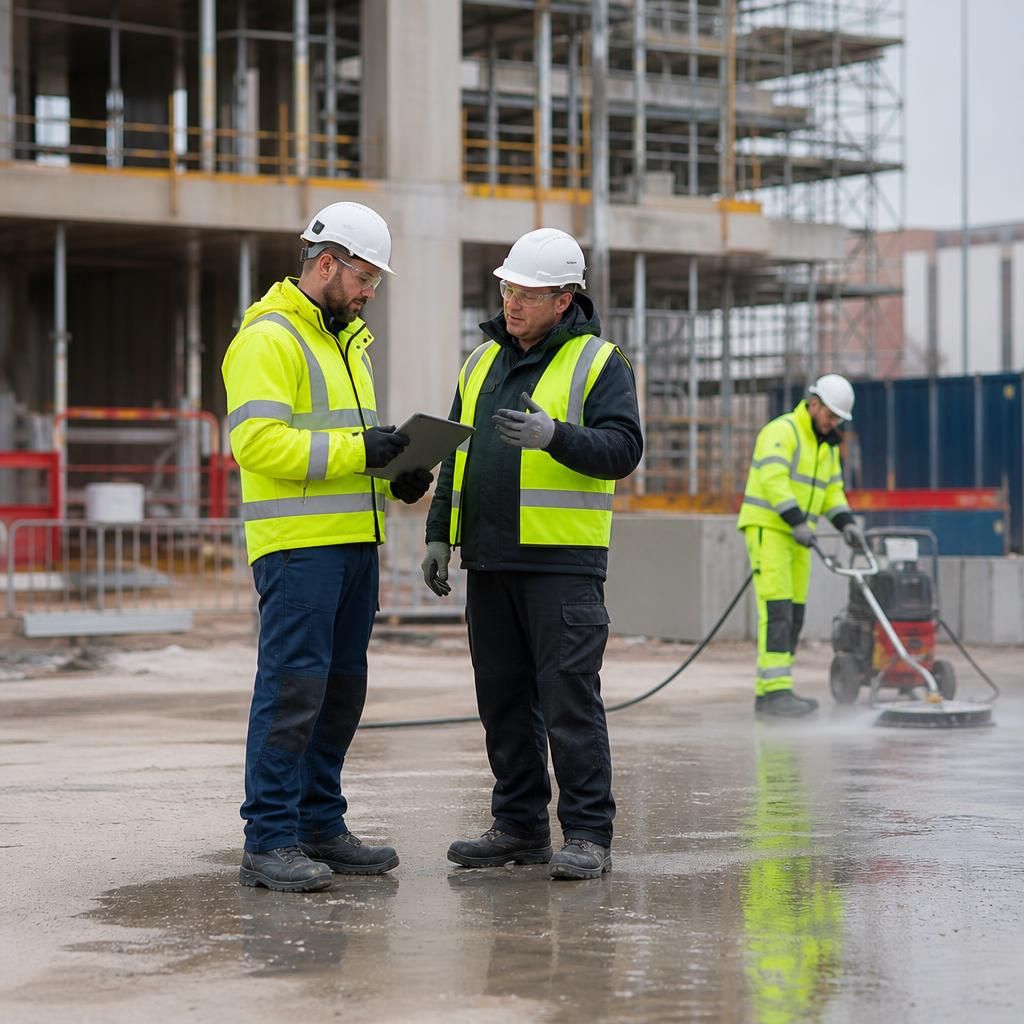
Construction site cleaning services help maintain compliance by reviewing and adapting their controls as site conditions change. Cleaning teams coordinate with the site manager before working near vehicle routes, lifting operations, temporary works, excavations or other active hazards, and pause the task if conditions no longer match the agreed RAMS.
Operatives also record inspections, equipment checks, waste movements, completed cleaning and any hazards identified. This gives the principal contractor a clear audit trail and helps confirm that access routes, work areas and shared facilities have been left safe for the next activity.