
How do construction site cleaning services contribute to environmental sustainability?
Construction site cleaning services support environmental sustainability by controlling dust, preventing pollutants from entering drains and watercourses, and ensuring waste is segregated for reuse, recycling or responsible disposal. Professional teams also use water-efficient cleaning methods, suitable chemicals and well-maintained equipment to reduce resource consumption while keeping the site safe and compliant.
Construction site cleaning services contribute to environmental sustainability by preventing pollution, reducing waste, using water and cleaning products responsibly, and keeping materials within appropriate reuse or recycling streams. Professional cleaning is not limited to making a site look presentable. It helps control the environmental effects of construction activity throughout the project, from early groundworks and structural work through to final handover and ongoing site maintenance.
Controlling dust and airborne pollution
Construction dust can affect neighbouring properties, public areas, drainage systems and local air quality. Cleaning teams help control it by removing accumulated dust and loose debris before it is redistributed by vehicles, wind or foot traffic. Suitable methods may include vacuuming, damp cleaning, low-pressure washing and controlled misting, selected according to the surface, dust type and site conditions.
Effective dust control also reduces the need for repeated cleaning and limits the amount of particulate matter leaving the site on workers’ clothing, plant, tools and vehicle tyres. High-traffic routes, loading areas and access points require particular attention because they are common sources of dust transfer beyond the construction boundary.
Preventing water pollution
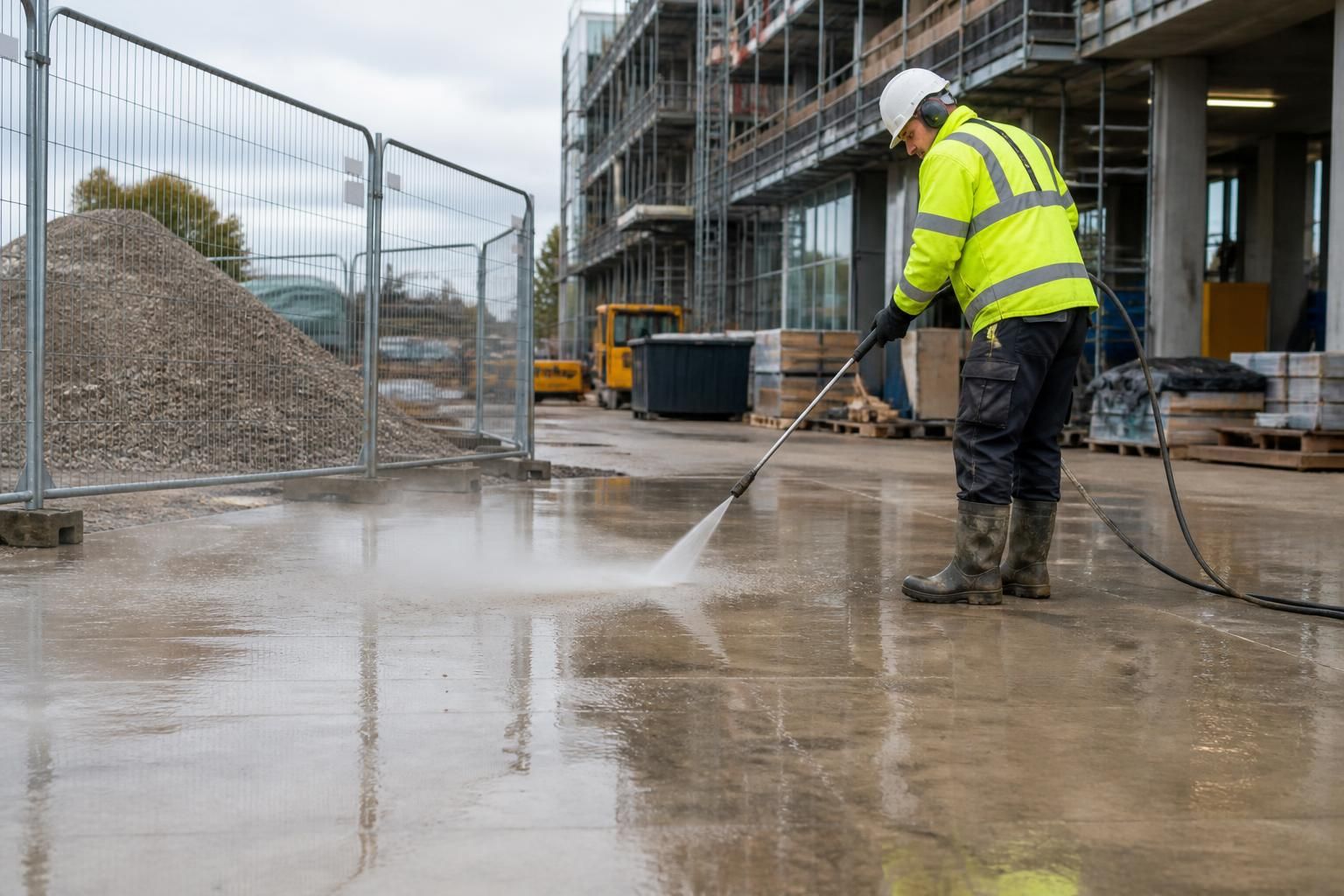
Run-off from construction sites can carry silt, cement residue, oils, paint, detergents and other contaminants into surface-water drains or nearby watercourses. Professional cleaning services reduce this risk by planning wash-down activities, protecting drainage points and containing contaminated water rather than allowing it to flow uncontrolled across the site.
Where pressure washing or steam cleaning is required, the cleaning method should be matched to the drainage arrangements and the type of contamination present. Slurry, sediment and chemical residues may need to be collected, filtered or removed by an appropriate waste contractor. Cleaning wastewater should never be discharged to a surface-water drain unless it is permitted and suitably uncontaminated. This approach supports pollution prevention and helps the principal contractor meet the site’s environmental management requirements.
Reducing construction waste
Cleaning teams support the waste hierarchy by helping prevent unnecessary disposal and by keeping different materials separate. Packaging, timber, metals, plastics, plasterboard, concrete fragments, soil and general waste should be collected in suitable containers and segregated where site arrangements allow. Separating materials at source generally makes reuse and recycling more practical than dealing with mixed waste later.
During cleaning and clearance, teams can also identify materials that are suitable for reuse, such as temporary protection products, pallets or recoverable building materials, subject to the contractor’s instructions and condition checks. Damaged, contaminated or hazardous items must not be placed in general recycling. They should be managed through the appropriate waste stream, with transfer documentation retained where required.
Using water efficiently
Water-intensive cleaning is not automatically the most effective option. Experienced operatives select the least resource-intensive method that will achieve the required result. Dry removal, brushing, industrial vacuuming or targeted steam cleaning may be appropriate where large volumes of water would create avoidable run-off or waste.
Where water is necessary, controlled pressure, spray nozzles, trigger-operated equipment and targeted application can reduce unnecessary consumption. Water should not be left running between tasks, and equipment should be checked for leaks or inefficient operation. Capturing and treating suitable wash water for reuse may also be possible, depending on the contamination, site facilities and environmental controls.
Choosing safer cleaning products
Cleaning products should be selected according to the surface and contaminant rather than using stronger chemicals by default. Biodegradable or lower-impact products may be suitable for some applications, but they still need to be used in accordance with the manufacturer’s instructions and the site’s COSHH assessment. A product described as environmentally preferable is not harmless if it is overused, incorrectly diluted or discharged into a drain.
Good practice includes accurate dilution, controlled application, secure storage, spill prevention and the safe removal of empty containers. Product selection should also consider whether the chemical could damage cladding, coatings, sealants, paving, landscaped areas or drainage infrastructure. Steam cleaning or hot-water methods can sometimes reduce chemical use, although the correct choice depends on the material and type of contamination.
Maintaining efficient equipment
Well-maintained pressure washers, steam cleaners, vacuums and access equipment operate more efficiently and are less likely to leak fuel, oil, water or cleaning solution. Routine inspections help identify damaged hoses, worn seals, blocked filters and excessive exhaust emissions before they cause a problem. Equipment should be switched off when not in use and selected at an appropriate size for the task, avoiding unnecessary energy consumption.
For larger projects, the cleaning plan can reduce environmental impact by coordinating equipment deliveries, water supplies, waste collections and access arrangements. Completing related tasks in a planned sequence can limit repeated journeys, duplicated set-up work and disturbance to adjoining areas.
Managing spills and hazardous contamination
Construction sites may contain fuels, oils, solvents, paints, adhesives, cement products and contaminated absorbents. Cleaning personnel should know how to recognise these materials and should not treat them as ordinary site debris. Spill kits, drain covers and suitable containment equipment can help prevent a release from spreading while the responsible person or specialist contractor is contacted.
Hazardous waste must be identified, segregated, labelled and stored securely before collection by an appropriately authorised waste carrier. The cleaning team should follow the site risk assessment, method statement and COSHH controls, using the required personal protective equipment and avoiding actions that could create contaminated dust or wash contaminated material into drainage systems.
Protecting soil, landscaping and surrounding areas
Careful cleaning reduces the transfer of cement dust, silt, oils and debris onto soil, planted areas and public footways. Before work begins, operatives should identify sensitive surfaces, trees, planting, water features and drainage routes. Run-off controls, temporary covers and defined wash-down areas can help protect these features during cleaning.
Vehicle and plant cleaning should be carried out in a designated area wherever practicable. Keeping mud and loose material within the site also reduces tracking onto public roads, which can create a safety hazard and require additional street cleaning.
Supporting environmental compliance
Environmental sustainability on a construction project depends on consistent controls, not simply the use of a particular machine or product. A professional cleaning service can work to the project’s environmental management plan, pollution prevention procedures, waste arrangements and site rules. Records may include waste transfer information, product assessments, equipment checks, water controls, incident reports and details of specialist waste collections.
These records help the principal contractor demonstrate that cleaning activities were planned and controlled. They also make it easier to investigate an incident, improve future work and provide evidence during client, insurer or regulatory reviews. Requirements vary according to the site, location, materials and contract, so environmental controls should be agreed before cleaning starts.
How the approach works in practice
- Inspect the site to identify dust sources, drainage routes, sensitive surfaces, waste types and potential contamination.
- Choose cleaning methods that achieve the required standard while limiting water, chemical and energy use.
- Protect drains and adjoining areas, and establish suitable arrangements for collecting or controlling wastewater.
- Segregate recoverable, recyclable, general and hazardous waste in accordance with the site’s waste plan.
- Use maintained equipment and trained operatives who understand the relevant risk assessments and environmental controls.
- Check the completed work, remove remaining debris and record waste, incidents or corrective actions where required.
For construction projects in Birmingham, the wider West Midlands or elsewhere in the UK, the most sustainable cleaning solution will depend on the site layout, construction materials, access conditions, drainage, contamination and required finish. Discussing these factors during planning allows the cleaning programme to support both environmental objectives and practical site delivery, while reducing the likelihood of pollution, avoidable waste and repeat work.
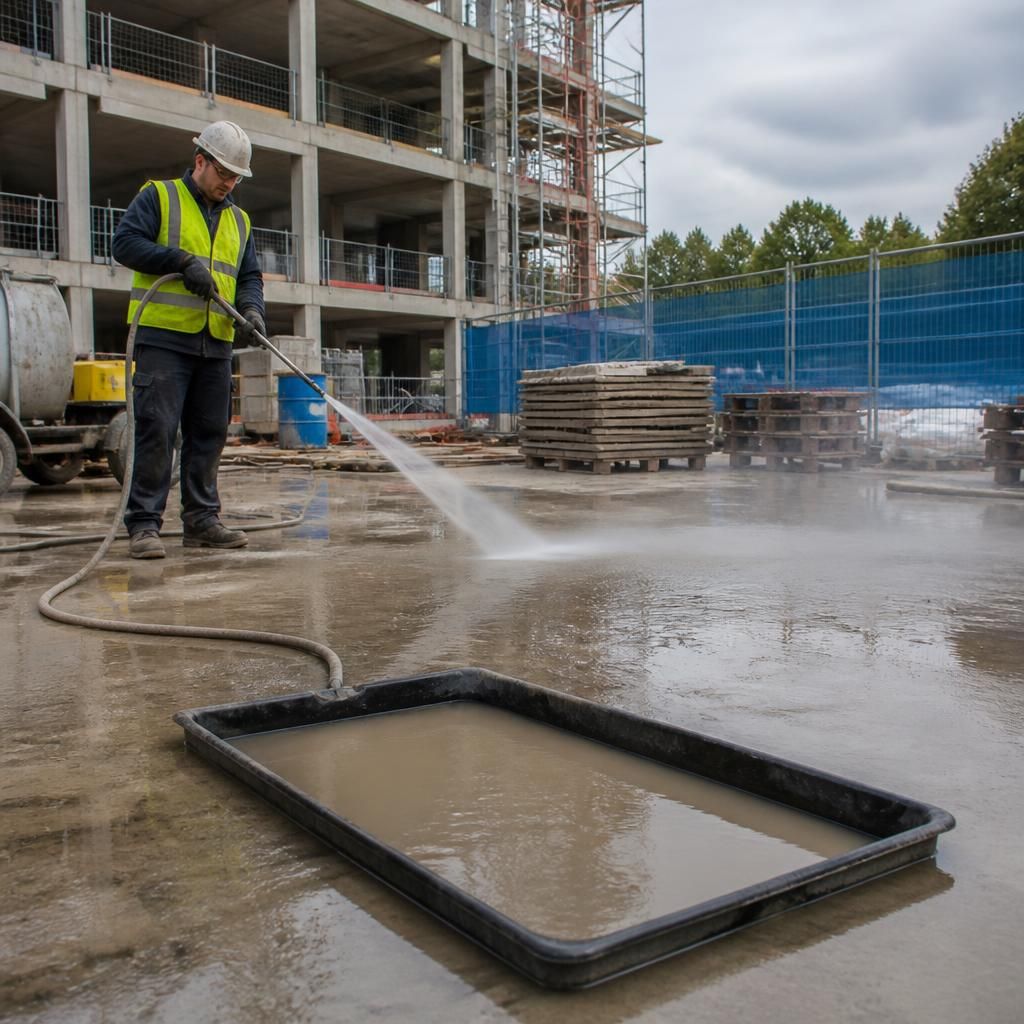
Controlling construction-site wash water is a key way cleaning services support environmental sustainability. Pressure washing and surface cleaning can mobilise silt, cement residue, oils, paint and detergents, so wastewater must be contained and managed rather than allowed to enter surface-water drains or nearby watercourses.
Before cleaning begins, operatives should identify drainage routes, protect vulnerable inlets and use a designated wash-down area where practicable. The cleaning method can then be adapted to the contamination, with slurry and sediment collected, filtered or transferred through an appropriate waste route. This prevents pollution while helping the project meet its environmental management requirements.
Professional teams also reduce the volume of wastewater by using targeted pressure, steam cleaning, vacuum recovery or dry removal where suitable. The correct approach depends on the surface, contamination and site drainage arrangements, and any discharge must be permitted and suitably uncontaminated.