
What specific tasks are included in a comprehensive builders clean?
A comprehensive builders clean includes the removal of construction dust, debris, plaster, adhesive, paint splashes and other residues from floors, walls, glazing, fixtures and accessible external areas. It also covers detailed finishing, such as cleaning sanitaryware, kitchens, doors, frames, hard surfaces and access routes so the property is prepared for inspection, occupation or handover.
A comprehensive builders clean removes construction-related dust, debris and residues, then finishes the accessible surfaces and fixtures to a standard suitable for inspection, occupation or handover. The work normally covers internal areas, relevant external areas, glazing, sanitaryware, kitchens, floors, access routes and detailed finishing, with the exact scope agreed after assessing the site, construction materials and level of completion.
Builders cleaning is usually completed after the main construction work has finished, but before the final handover. It is more detailed than a general site tidy and is planned around the condition of the property. Typical tasks include:
- Removal of loose debris: collecting packaging, offcuts, protective film, surplus materials and general construction waste from floors, ledges, rooms, stairways and accessible external areas. Waste is handled in accordance with the agreed site arrangements; heavy or hazardous materials may require separate disposal.
- Construction dust removal: vacuuming and wiping dust from floors, walls, ceilings, skirting boards, window boards, door frames, ledges, service areas and other horizontal or vertical surfaces. Fine dust can settle in corners, behind fixtures and around mechanical or electrical installations, so these areas require careful detailing rather than a single surface wipe.
- Removal of plaster, grout and cement residue: cleaning suitable hard surfaces to remove dried splashes, smears and deposits left by plastering, rendering, tiling or pointing. The method must be matched to the surface, as aggressive scraping or acidic products can damage natural stone, metals, coatings and newly installed finishes.
- Paint, sealant and adhesive marks: treating paint spots, silicone, expanding foam, labels, tape residue and other installation marks where they can be safely removed. Specialist products or controlled mechanical techniques may be needed, particularly on glazing, powder-coated frames, cladding and finished flooring.
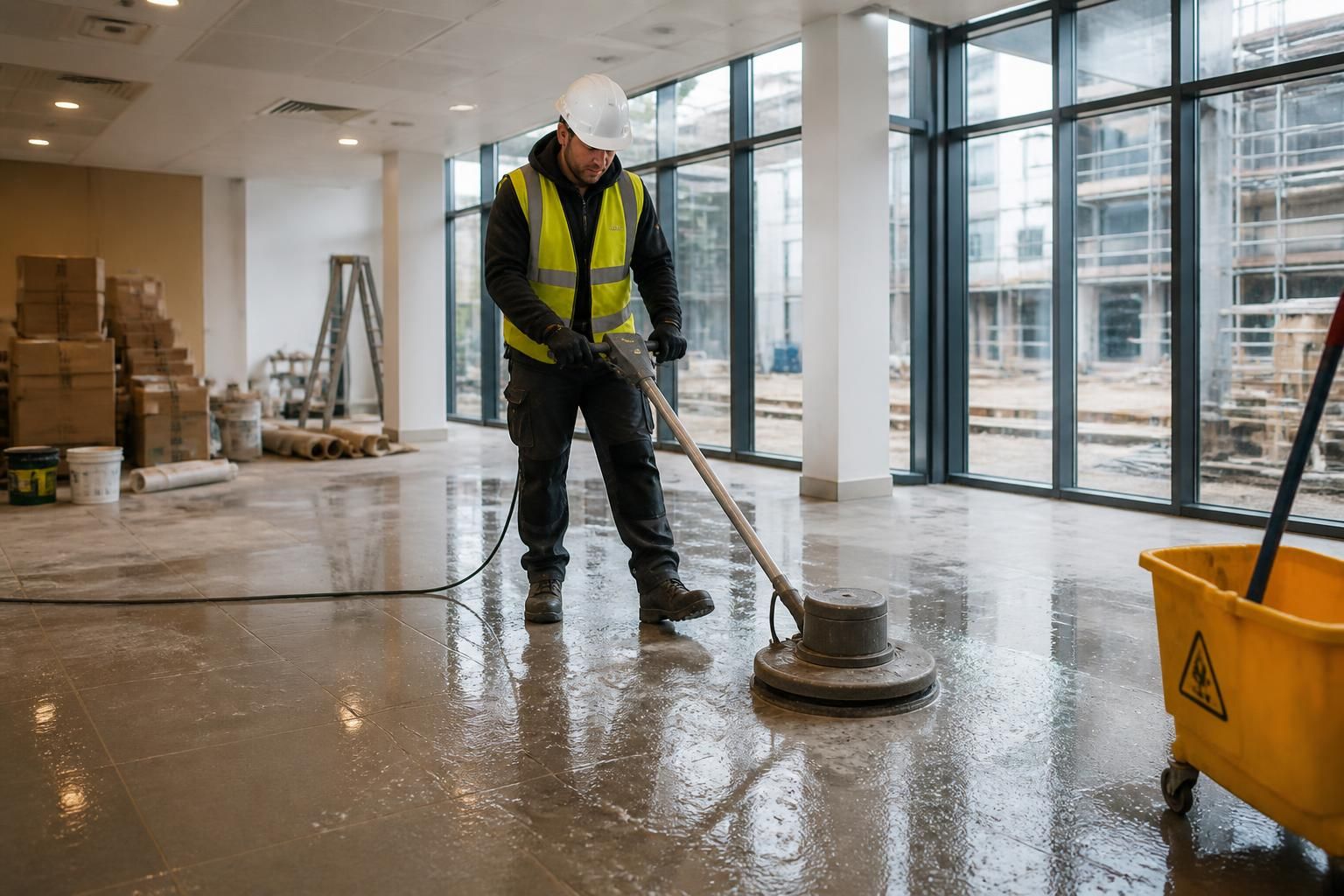
- Floor cleaning: sweeping, vacuuming, mopping or machine cleaning hard floors according to the material and manufacturer’s guidance. This can include concrete, vinyl, safety flooring, ceramic tiles, porcelain, stone and sealed surfaces. Grout haze, construction dust and traffic marks are dealt with as part of the agreed specification, while deep restoration or polishing is normally a separate service.
- Glazing and window details: cleaning internal and accessible external glass, frames, sills and reveals, including the removal of fingerprints, dust, labels and suitable water-soluble or paint-related marks. Glass should be checked for scratches or permanent defects before cleaning so that pre-existing damage is not confused with cleaning residue.
- Doors, frames and ironmongery: wiping doors, architraves, frames, handles, hinges and access-control components, taking care around newly painted, veneered, laminated or powder-coated finishes. Protective films and labels are removed where they are ready to come off without damaging the surface.
- Kitchens and fitted units: cleaning cupboards, drawers, worktops, splashbacks, sinks, taps, appliances and surrounding surfaces. Dust and installation residue are removed from inside units where access is available, with food-contact and manufacturer-specific surfaces treated using appropriate products.
- Bathrooms and sanitaryware: cleaning toilets, basins, baths, showers, taps, mirrors, tiles, cubicles and associated fittings. Grout, sealant and plaster residue are treated carefully, and the area is checked for smears, water marks and remaining installation dust.
- Stairs, handrails and circulation areas: cleaning stair treads, risers, balustrades, handrails, landings, corridors, entrance areas and lifts where included. These routes are often affected by repeated contractor traffic and need both dust removal and detailed wiping of contact points.
- High-level and difficult-to-reach surfaces: cleaning accessible beams, service casings, light fittings, ventilation covers, exposed pipework, ceiling features and high ledges. Access equipment may be used where appropriate, subject to a suitable risk assessment and safe site conditions.
- External areas: removing construction dust and debris from entrances, façades, cladding, paving, loading areas, ramps, steps, balconies, terraces and other agreed external surfaces. Pressure washing, steam cleaning or other controlled methods may be used where the material and surrounding drainage arrangements permit.
- Car parks and access routes: sweeping or cleaning construction residue from designated parking, delivery and pedestrian areas. Oil, cement, tyre and other specialist stains may need separate assessment because they require different treatments and may not be removed by routine builders cleaning alone.
- Final touch-up detailing: carrying out a room-by-room inspection to identify remaining dust, smears, fingerprints, residue and missed edges. This final pass commonly includes corners, skirtings, thresholds, handles, switches, ledges and other areas that are visible during inspection or handover.
A comprehensive clean should also include sensible protection of completed work during the cleaning process. This means selecting non-abrasive methods, controlling moisture around electrical fittings and unfinished materials, protecting vulnerable flooring and coordinating with other contractors where snagging or remedial work is still underway. Cleaning is most effective when major cutting, drilling, plastering and painting have finished; otherwise new dust and residue can quickly undo completed areas.
The scope should distinguish between a rough builders clean and a more detailed final or sparkle clean. A rough clean generally concentrates on removing heavier debris, dust and obvious construction residue so that trades can complete their work safely. The final clean focuses on presentation and handover, including glazing, sanitaryware, fittings, floors, touch points and detailed inspection. Larger projects may require both stages, with interim cleans scheduled between construction phases.
Some items are not automatically included and should be confirmed before work starts. These may include removal of substantial building materials, hazardous waste, specialist stain restoration, paint stripping, carpet cleaning, external high-level work, internal cleaning of sealed plant or machinery, and cleaning areas that remain occupied or inaccessible. The condition of the site, available water and power, working-at-height requirements, access restrictions and the presence of other contractors can all affect the method and programme.
For an accurate specification, provide the floor plans or site details, the areas requiring cleaning, the types of surfaces installed, the condition of the glazing and external areas, and the required handover standard. A site assessment can then identify construction residue, access requirements and any exclusions before the work begins, helping ensure that the completed clean matches the inspection or occupation requirements.
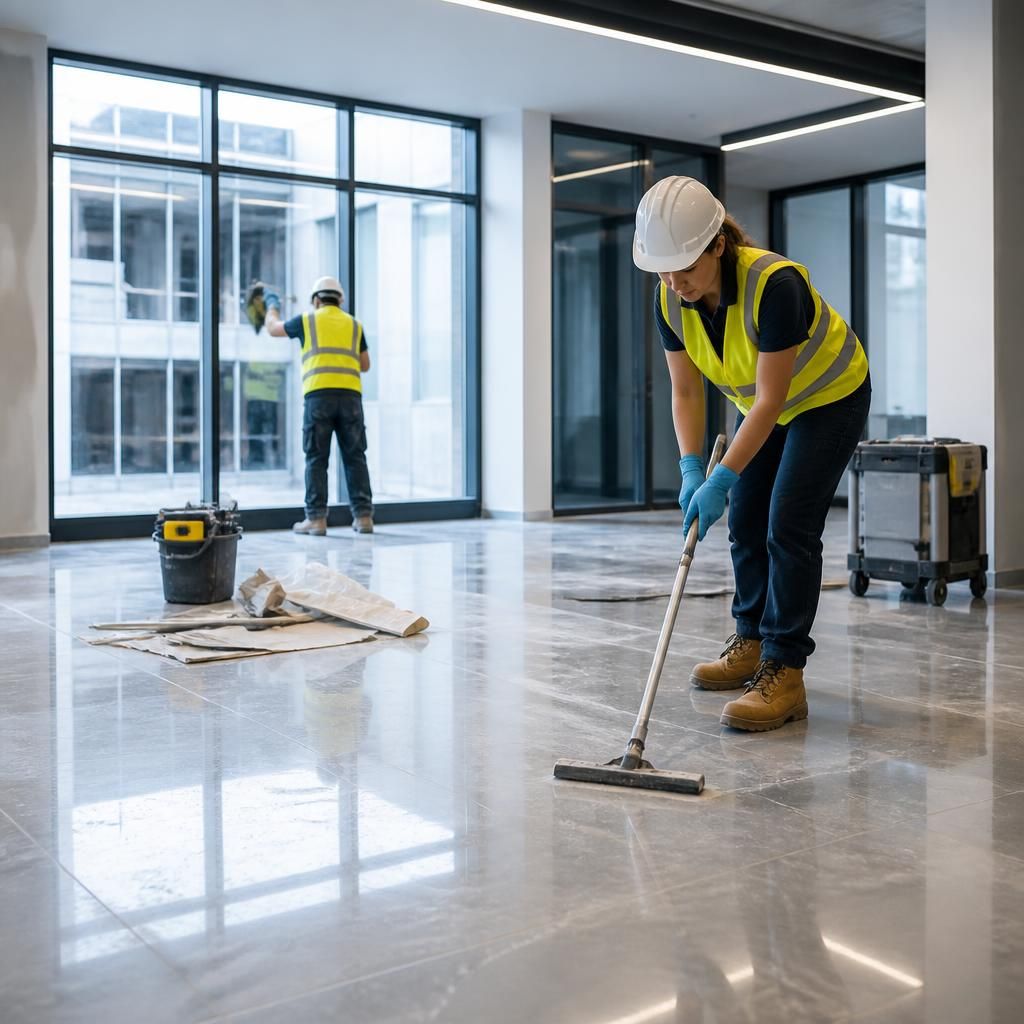
A comprehensive builders clean normally includes both initial removal of construction debris and detailed final preparation for inspection or handover. Loose materials, packaging and protective film are cleared first, followed by the removal of dust, plaster, grout, adhesive, paint marks and other residue from suitable surfaces.
The finishing stage then covers floors, glazing, doors, frames, sanitaryware, kitchens, fixtures, access routes and agreed external areas. Cleaners inspect edges, corners, ledges, thresholds and touch points for remaining dust or smears. Specialist stain restoration, hazardous waste removal and difficult high-level access are not automatically included, so these items should be confirmed in the cleaning specification before work starts.