
What specific cleaning techniques are employed in a builders clean to ensure the removal of construction residue?
A builders clean uses controlled vacuuming, dust extraction, damp wiping, pressure washing, steam cleaning and specialist treatments to remove construction residue such as fine dust, cement, plaster, paint, adhesive and grout. The method is selected according to the surface and residue, with care taken to avoid scratching finishes, spreading contamination or damaging newly installed materials.
A builders clean removes construction residue through a controlled combination of dry dust extraction, damp cleaning, specialist spot treatment, mechanical agitation, pressure washing and steam cleaning. The technique is chosen according to the residue, the surface, the stage of the build and the risk of damaging newly installed finishes. Cement, plaster, grout, paint, adhesive, silicone, sawdust and fine construction dust each require a different approach.
The work normally starts with an inspection and method assessment. The cleaning team identifies the materials present, checks manufacturer guidance where available and separates areas requiring different treatments. Newly installed stone, glass, powder-coated metal, cladding, flooring, sanitaryware and painted surfaces can be vulnerable to abrasion, excess water or aggressive chemicals. A small test area is therefore used where the correct product or technique is uncertain.
Controlled vacuuming and dust extraction
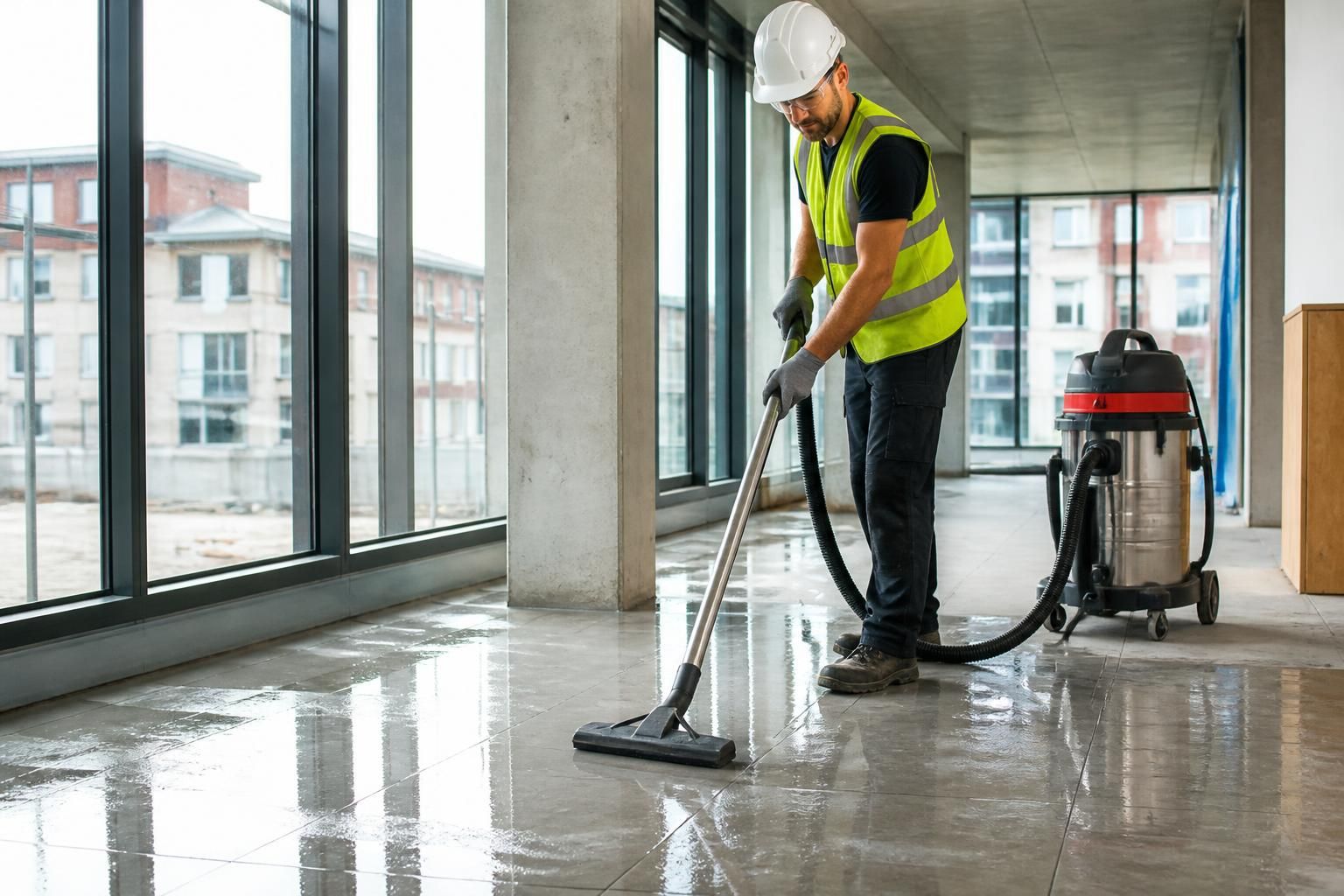
Fine dust is removed before wet cleaning begins. Industrial vacuums with suitable filtration collect plaster dust, cement dust, sawdust and other loose particles from floors, ledges, service areas, window frames and building fixtures. Crevice tools and soft brushes help reach joints, reveals and around installed equipment without forcing dust further into the surface.
Dry extraction is preferable to sweeping in many finished areas because sweeping can redistribute fine particulate matter. It also prevents dust from becoming a slurry when water or detergent is introduced too early. On larger sites, cleaning is managed in sections so that completed areas are not recontaminated by ongoing work.
Damp wiping and controlled washing
After loose dust has been extracted, surfaces are cleaned with damp microfibre systems, cloths, mop heads or low-moisture equipment. This captures the remaining dust film from walls, doors, skirting, ledges, frames and other internal surfaces. Water and detergent are applied in a controlled quantity to avoid saturating plasterboard, timber, insulation or newly laid flooring.
Cloths and mop heads are changed regularly, particularly when moving from dusty construction areas to final-finish areas. This reduces the risk of spreading cement residue, fine grit or adhesive across surfaces that have already been cleaned.
Scraping and mechanical agitation
Hardened spots such as dried plaster, grout, paint splashes and adhesive are softened where necessary and removed using suitable non-damaging tools. Plastic scrapers, specialist pads, soft brushes and controlled agitation can lift residue without gouging glass, scratching metal or marking finished flooring.
Metal blades and abrasive pads are not suitable for every surface. Their use depends on the material, the residue and the condition of the finish. A professional approach matches the tool to the surface and avoids applying excessive pressure, especially around coated frames, polished stone, ceramic finishes and glazing.
Specialist treatment of cement, mortar, grout and plaster
Cementitious residue is treated with a suitable builders-clean or cement-residue remover only when the surface can tolerate it. The product is applied at the correct dilution, allowed the required contact time and agitated before being thoroughly rinsed or neutralised as appropriate. This helps break down alkaline deposits rather than relying on forceful scrubbing.
Acidic products require particular care. They can etch natural stone, damage cement-based surfaces, discolour metals and affect grout or sealants. They must not be used indiscriminately, and sensitive materials may require a neutral cleaner, a different specialist product or manual removal instead.
Paint, adhesive and sealant removal
Paint splashes, expanding foam, tape adhesive, silicone and other bonded residues are assessed individually. Some are softened with a compatible solvent or residue remover, while others are lifted mechanically after careful preparation. The treatment must be compatible with the underlying coating, plastic, glass, flooring or cladding.
Solvents are used in a controlled manner with suitable ventilation and precautions against ignition, staining and damage to adjacent surfaces. Residue is removed in small sections, and the area is wiped clean afterwards so that the treatment itself does not leave a film.
Glass and window-frame cleaning
Construction dust, mortar spots, stickers and silicone marks on glazing require a staged process. Loose grit is removed first, the glass is lubricated where appropriate, and compatible tools are used to remove bonded residue. Frames, seals, sills and reveals are cleaned separately because they may hold abrasive particles that could scratch the glass during detailing.
Care is also taken around coated glass, powder-coated aluminium, uPVC and protective films. Any temporary labels or films are removed according to the manufacturer’s instructions, with adhesive residue treated rather than aggressively scraped.
Pressure washing for external areas
Pressure washing is used on suitable external surfaces such as concrete, paving, loading areas, car parks, robust masonry and some cladding systems. It can remove cement dust, soil, mortar deposits, traffic film and general construction debris efficiently across larger areas.
Pressure is not selected simply for maximum cleaning power. The operator adjusts pressure, flow, nozzle type, distance and cleaning direction to suit the material. Excessive pressure can erode mortar joints, mark concrete, strip coatings, force water behind cladding or damage sealants. Drainage, run-off control and protection of nearby entrances, glazing and planted areas must also be considered.
Steam cleaning and low-pressure methods
Steam cleaning uses heat and controlled moisture to loosen grease, adhesive films, ingrained dirt and some organic or construction-related deposits. It can be useful where chemical use needs to be limited or where a lower-water method is preferable. Steam is not suitable for every surface, particularly materials that are heat-sensitive, porous, poorly sealed or vulnerable to moisture penetration.
Low-pressure washing and soft-washing methods may be selected for delicate façades, coated surfaces and areas where conventional pressure washing could cause damage. These systems rely more on suitable detergents, dwell time and gentle rinsing than on mechanical force.
Floor and hard-surface restoration
New floors can retain grout haze, cement film, plaster dust, adhesive and footprints from other trades. The cleaning method depends on whether the floor is porcelain, ceramic, natural stone, concrete, resin, vinyl, safety flooring or another material. Vacuuming is followed by compatible detergents, pads, brushes or spot treatments, with attention to joints and textured finishes.
Natural stone may need a pH-neutral cleaner and careful rinsing, while resin or coated floors may require non-abrasive products that do not dull the finish. Where a floor has been sealed, the cleaning process must preserve the seal rather than strip it.
Final detailing and residue checks
Once the main cleaning is complete, the team carries out a detailed inspection under suitable lighting. Remaining dust on ledges, marks on doors, residue around fixtures, splashes on skirting and debris in corners are addressed manually. Glass is checked for smears and construction spots, while floors are inspected for grout haze, adhesive and tracked-in grit.
Cleaning is normally carried out from high areas downwards and from cleaner zones towards dirtier zones. This sequence limits recontamination. External and internal work is coordinated with other trades so that completed areas are not exposed unnecessarily to further drilling, cutting, painting or installation activity.
Safe handling of water, chemicals and waste
Construction residue can contain alkaline dust, sharp fragments, solvent-based materials and contaminated wash water. The cleaning method therefore includes appropriate personal protective equipment, ventilation, segregation of waste and protection of drainage systems. Chemical containers are labelled and used in accordance with their instructions, and incompatible products are never mixed.
Where pressure washing or wet treatment produces slurry, it is controlled and collected rather than allowed to enter unsuitable drains or spread across finished areas. This is particularly important on commercial sites, active developments and premises shared with the public.
The finished result depends on matching the technique to the residue and substrate rather than applying one process throughout the building. A careful builders clean removes loose dust first, treats bonded deposits selectively, uses pressure or steam only where appropriate, and finishes with detailed inspection. This approach protects new materials while leaving the premises clean, safe and ready for handover or occupation.
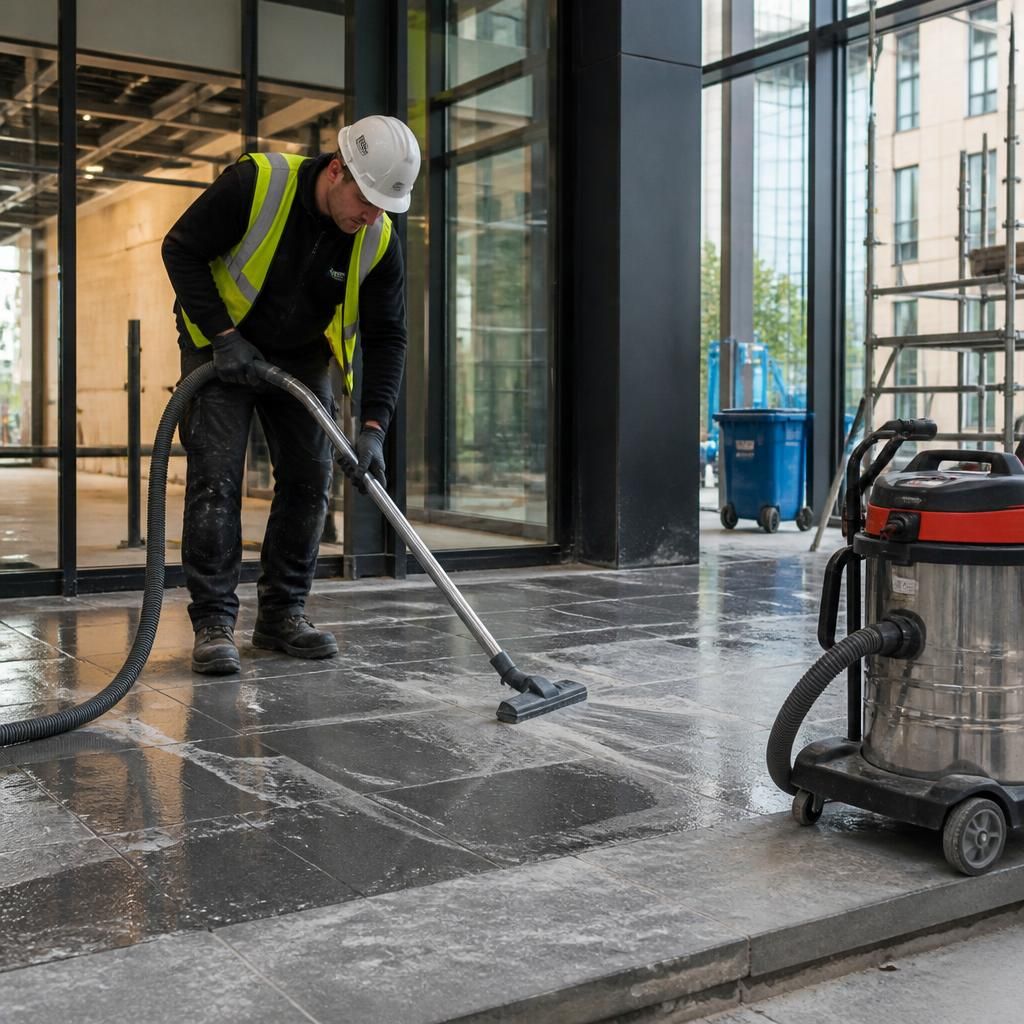
Construction residue is removed by matching the cleaning technique to both the deposit and the surface beneath it. Loose plaster and cement dust are first collected with filtered vacuum equipment, while bonded grout, paint, adhesive and mortar spots may need controlled softening, non-abrasive scraping or a compatible specialist remover.
On external concrete, paving and suitable cladding, carefully adjusted pressure washing can remove widespread dust and debris. Glass, coated metal, natural stone and newly finished flooring require gentler methods, such as damp microfibre cleaning, pH-appropriate products or steam where suitable. A small test area is used before treatment to confirm that the residue can be removed without scratching, etching, staining or lifting the finish.