
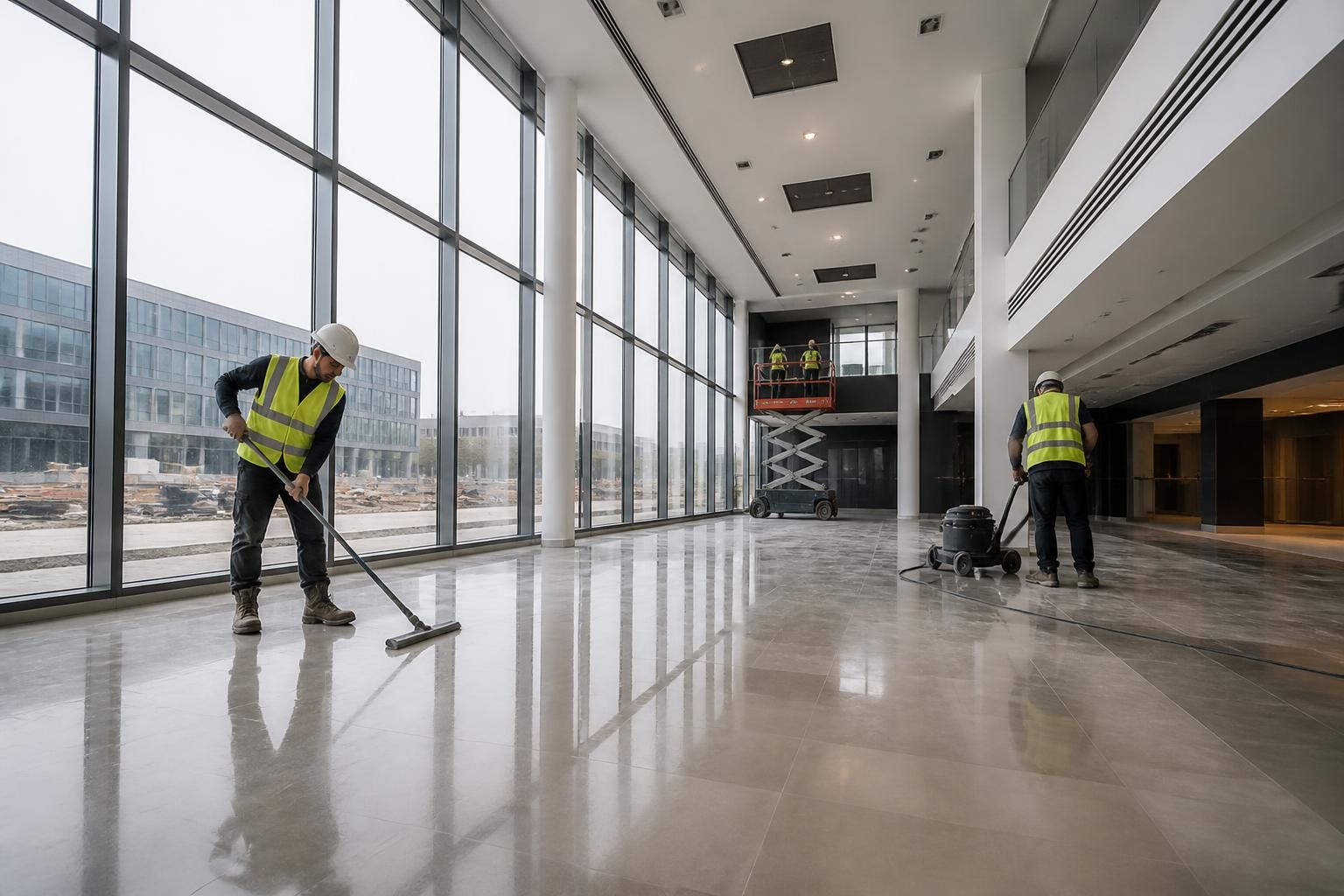
What is the difference between a builders clean and an end of build clean?
A builders clean removes construction dust, debris, adhesive, paint and other site residue during or shortly after the work, while an end of build clean is the more detailed final clean completed once construction is finished. The end of build clean prepares the property for handover, occupation, presentation or final inspection, so it usually includes finer detailing of surfaces, fixtures, glazing and floors.
A builders clean removes construction dust, debris and trade residue during or shortly after building work, whereas an end of build clean is the detailed final clean carried out when the project is substantially complete. The builders clean makes the site safe, accessible and ready for finishing trades; the end of build clean prepares the completed premises for handover, occupation, inspection or presentation.
The two services are closely related and are sometimes described differently by contractors, developers and cleaning companies. In practice, the distinction usually relates to timing, level of detail and the condition of the property. A project may require both stages, particularly where several trades have worked across a large commercial or industrial site.
What is included in a builders clean?
A builders clean is normally undertaken during the construction programme, after major installation and building activities have finished in a particular area. It deals with the heavier contamination left by construction, such as:
- Loose dust, plaster, cement and mortar residue
- Packaging, offcuts and general building debris
- Adhesive, sealant, paint splashes and grout marks
- Dust on floors, walls, ceilings, ledges and service areas
- Protective films, labels and temporary coverings where appropriate
- Residue around newly installed fixtures, fittings, doors and joinery
- External debris around entrances, access routes, loading areas and car parks
The work may include industrial vacuuming, sweeping, pressure washing, steam cleaning, spot treatment and careful scraping or detailing. The appropriate method depends on the surface and the residue. For example, cement or adhesive deposits may require controlled treatment rather than aggressive pressure, while fine construction dust is often best removed with suitable extraction equipment to avoid redistributing it.
A builders clean does not always mean that every surface is ready for immediate occupation. It may be completed before final decoration, commissioning, snagging or the installation of furniture and equipment. Its purpose is to bring the site to a clean, workable condition and remove contamination that could interfere with the remaining project stages.
What is included in an end of build clean?
An end of build clean takes place once construction, installation and most snagging work have been completed. It is a more presentation-focused service and commonly includes:
- Detailed cleaning of floors, walls, ceilings and high-level surfaces
- Cleaning internal and external glazing, frames, sills and window reveals
- Removal of remaining stickers, labels, dust and minor marks
- Cleaning doors, handles, skirting, joinery, fixtures and fittings
- Sanitising kitchens, washrooms and welfare facilities
- Detailed floor cleaning, including hard floors and any agreed floor finishes
- Cleaning entrances, circulation areas and shared spaces
- Final removal of dust from cupboards, shelves, plant areas and accessible ledges
- External cleaning of entrances, pathways, façades or other agreed areas
The final clean is usually assessed against a handover or presentation standard. This means that attention is given to visible marks, fine dust, glazing smears and details that may be noticed by the client, occupier, inspector or property manager. It is generally carried out after other trades have left, because subsequent drilling, cutting, decorating or installation can create fresh contamination.
Key differences between the two services
- Timing: a builders clean can take place in stages during the project, while an end of build clean is normally scheduled at the end.
- Purpose: a builders clean removes construction residue and makes the site workable; an end of build clean delivers a finished, presentable property.
- Level of detail: a builders clean concentrates on heavier debris and contamination, whereas an end of build clean includes finer detailing of fixtures, glazing, floors and touchpoints.
- Coordination: builders cleans may need to work around active trades and changing site conditions; end of build cleans are more effective when the building is secure, furnished as intended and free from ongoing construction.
- Acceptance standard: a builders clean may be signed off by the site or project team, while an end of build clean is more likely to form part of the client handover or pre-occupation process.
Why a project may need both
Using only one clean can be unsuitable on a complex project. If heavy dust and residue are left until the final stage, they can increase the time and effort required for detailed cleaning and may affect newly finished surfaces. A staged builders clean removes the bulk of the contamination as areas become available. The end of build clean can then focus on final presentation rather than substantial debris removal.
This approach is particularly useful for commercial premises, refurbished buildings, housing developments, retail units, offices, schools and industrial sites where different areas are completed at different times. It also helps reduce the risk of newly installed flooring, glazing, cladding or fixtures being damaged by avoidable construction residue.
How the scope should be agreed
The names of the services are less important than the written scope. Before work begins, confirm which areas are included, whether internal and external cleaning are required, the condition of floors and glazing, access arrangements, high-level work, waste removal, protective film removal and any exclusions. It should also be clear whether snagging by other trades will take place after cleaning, as further work may require a return visit.
For a reliable programme, arrange the builders clean around practical completion and trade handovers, then schedule the end of build clean after final works and snagging have been completed. A site assessment allows the cleaning requirements, access equipment, surface treatments and sequencing to be specified accurately rather than treating both stages as a standard domestic-style clean.
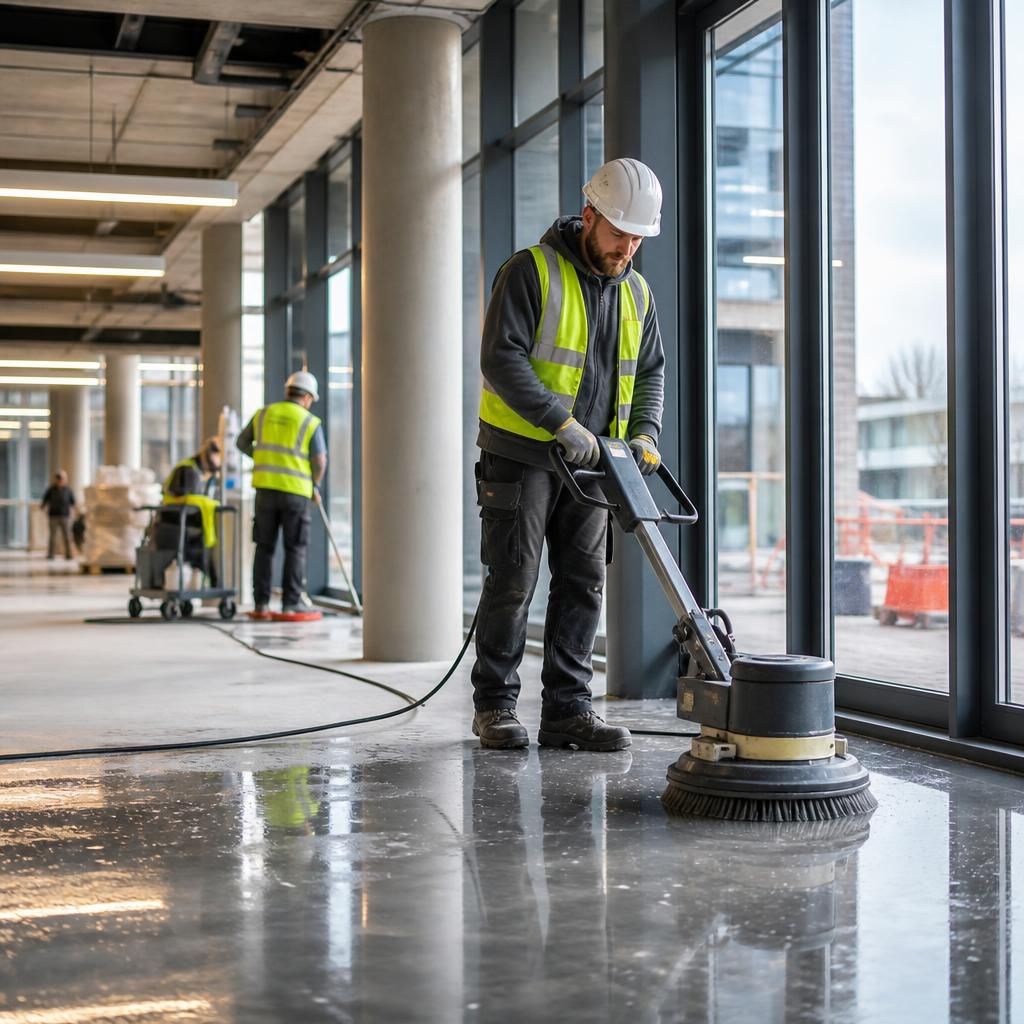
The main difference is when each service is carried out and the condition the property must reach. A builders clean removes heavier construction residue while work is still progressing, helping create a safe, workable area for remaining trades. An end of build clean follows practical completion and final snagging, removing fine dust and visible marks from glazing, floors, fixtures, fittings and other presentation-critical surfaces before handover or occupation.
On larger commercial or industrial projects, using both stages is often the most effective approach. The builders clean deals with bulk debris and trade residue as areas become available, while the final clean can concentrate on detailed presentation. This sequencing also reduces the risk of dust, plaster, adhesive or grout residue being left on newly finished surfaces until the last stage.
Arrange Your Builders Clean and End of Build Clean
Arrange a site assessment with Encanto Exterior Cleaning to define the builders clean and end of build clean scope, sequence and access requirements for your project. Contact our team to plan the cleaning around practical completion, final snagging and handover.