

What are the key benefits of hiring a professional builders clean service for your post-construction project?
Hiring a professional builders clean service removes construction dust, cement residue, adhesive, paint marks and other post-build debris using the appropriate equipment and techniques. It helps deliver a safer, presentable handover while saving your team time, protecting finished surfaces and reducing the risk of missed cleaning issues delaying occupation.
A professional builders clean service prepares a newly constructed or refurbished property for safe, presentable handover by removing construction dust, cement and plaster residue, adhesive, paint marks, protective-film remnants and other building debris. The main benefits are a more reliable finish, safer access and occupation, less pressure on the construction team, better protection for completed surfaces and a reduced risk of defects or cleaning issues being identified at handover.
Post-construction residue is rarely removed effectively by routine cleaning methods alone. Fine dust can settle inside fittings, ventilation grilles and service areas, while hardened mortar, silicone, grout, paint and adhesive may require controlled scraping, specialist chemicals, pressure washing or steam cleaning. A professional contractor assesses the materials and the condition of each surface before selecting a suitable method, helping to achieve a thorough result without damaging the building.
The key benefits include:
- Safer handover and occupation. Removing dust, offcuts, sharp fragments, spillages and slippery residues reduces avoidable hazards for staff, residents, visitors and other occupants. Cleaning can also expose issues such as loose materials, obstructed access routes or incomplete finishing that need to be referred to the project team before handover.
- A more consistent and presentable finish. Construction work can leave visible marks on façades, windows, floors, cladding, doors, sanitaryware, fixtures and external areas. A structured builders clean addresses the property as a complete site rather than concentrating only on obvious rooms or surfaces, creating a cleaner and more consistent presentation for inspection, occupation or client sign-off.
- Time savings for the main contractor and site team. Builders cleaning is labour-intensive and often involves working around other trades, access restrictions and changing site conditions. Using a specialist team allows project managers and construction staff to focus on snagging, testing, documentation and final works instead of allocating their own labour to detailed cleaning.
- Protection for newly completed surfaces. Cement, plaster, grout, paint and adhesive can become more difficult to remove if they are left to harden. Professional cleaners use appropriate tools, dilution levels and techniques for the surface involved. This is particularly important around glass, powder-coated metal, painted finishes, stone, brick, concrete, tiles and external cladding, where aggressive cleaning can cause scratching, staining or surface deterioration.
- Reduced risk of missed construction residue. A methodical clean covers less visible areas as well as prominent surfaces. Depending on the project, this may include ledges, frames, skirtings, stairwells, plant areas, loading zones, car parks, service yards and access routes. Identifying the required scope in advance helps prevent a property appearing clean at first inspection while dust and residue remain in functional or concealed areas.
- More efficient handover and reduced disruption. A clean site is easier to inspect and use for demonstrations, occupation, viewings or client meetings. Completing the work at the appropriate stage can reduce the need for repeated access, protect finished areas from subsequent trades and limit delays caused by avoidable cleaning defects.
- Access to suitable equipment and expertise. Professional contractors can use commercial vacuums, specialist pads, steam systems, pressure washing equipment and access equipment where appropriate. They also understand how to control water, dust, chemicals and run-off in an active or recently completed site, rather than applying the same method to every material.
- Improved control of dust and residues. Fine construction dust can spread through circulation areas and settle again after an initial clean. A professional approach combines removal of loose dust with targeted cleaning of affected surfaces and, where necessary, repeat attention after other works are completed. This is more effective than simply moving dust from one area to another.
- Better support for compliance and site standards. Construction, refurbishment and commercial properties may have specific requirements relating to safe access, waste, water use, chemical handling or protection of building materials. A competent cleaning contractor can work to the agreed site rules, risk assessments and method statements, and coordinate with the principal contractor or facilities team.
- Protection of the client’s reputation. The condition of a property at handover affects how the work of the wider project team is judged. Clean entrances, external elevations, shared areas and operational spaces help present the completed project accurately and reduce the impression that finishing work remains outstanding.
Professional cleaning also helps distinguish cleaning defects from construction defects. During the work, residue can be removed so that scratches, staining, damaged sealant, incomplete paintwork, failed finishes or other workmanship issues are easier to identify. The cleaning contractor should not conceal or repair construction defects without authorisation; instead, these findings should be recorded and passed to the responsible project team for review.
The best time to arrange a builders clean depends on the programme. An initial or rough clean may be carried out once major construction debris has been removed and heavier trades have finished. A detailed clean is normally scheduled when installation work is substantially complete, followed by final touch-ups after snagging and other contractors have left. External areas may need separate planning because weather, access, traffic management, drainage and nearby occupants can affect the work.
Before work begins, confirm the areas included, the required finish, the condition of surfaces, access arrangements, welfare and power or water availability, waste responsibilities, working hours and any restrictions on chemicals or equipment. It is also useful to identify fragile finishes, newly sealed surfaces, occupied areas and locations where pressure washing or access equipment requires additional controls. A clear scope reduces the risk of disagreement about whether the service is an initial builders clean, a detailed handover clean, an external clean or a combination of these.
A professional builders clean is therefore not simply a cosmetic add-on. It is a controlled stage of project completion that supports safe use, protects new materials, saves internal resources and provides a more reliable basis for inspection and handover. The precise benefit depends on the building, the amount of residue, the stage of the programme and the surfaces involved, so the cleaning plan should be tailored to the project rather than based on a standard domestic cleaning checklist.
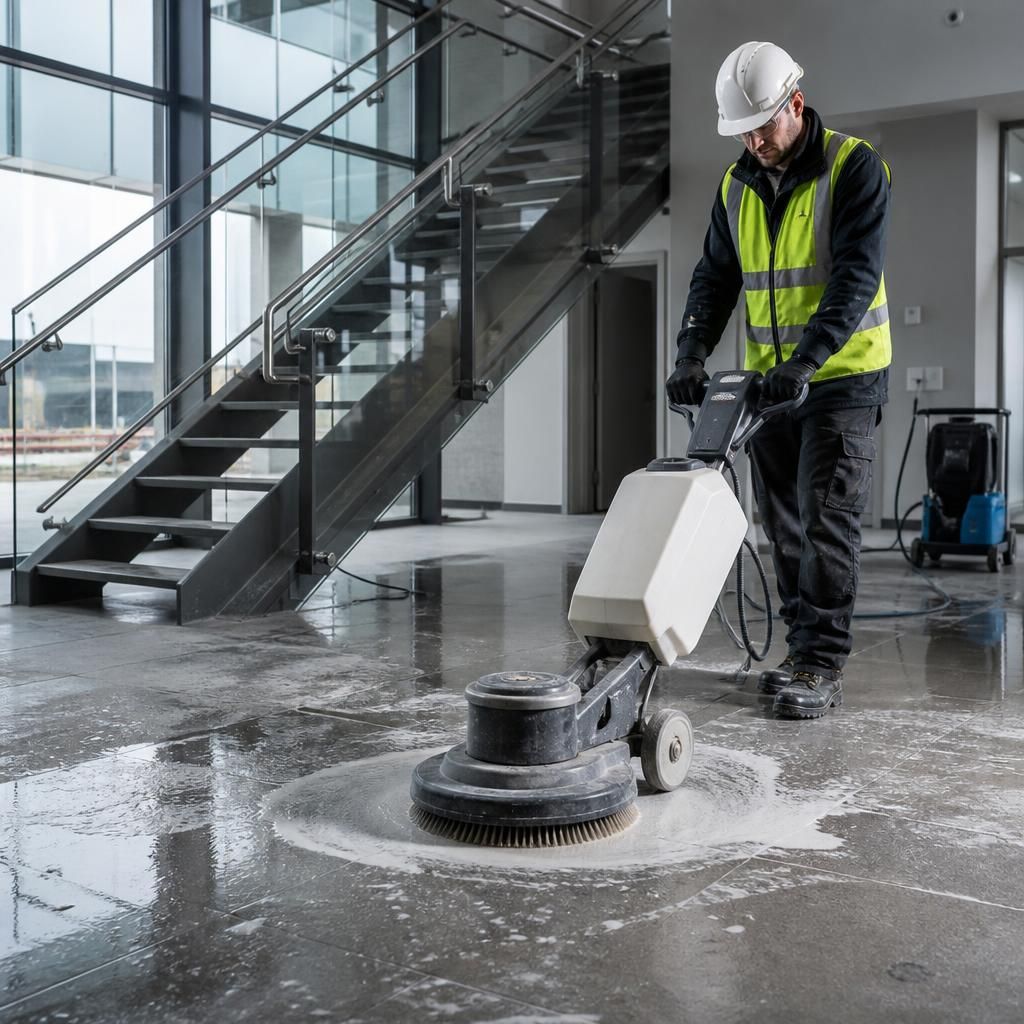
A professional builders clean protects newly completed surfaces by matching the cleaning method to the material and type of residue. Cement, grout, paint, adhesive and plaster can become harder to remove as they cure, but aggressive scraping or unsuitable chemicals may scratch glass, mark powder-coated metal, damage sealants or dull stone and polished finishes.
An experienced cleaning team assesses the surface before work begins, then uses controlled methods such as commercial vacuuming, specialist pads, steam cleaning or pressure washing where appropriate. This removes construction residue without treating every area in the same way, helping preserve the finished appearance and reducing the risk of remedial work before handover.