
What are the benefits of hiring a professional builders clean service after construction?
Hiring a professional builders clean service removes construction dust, debris, residue and safety hazards that routine cleaning may leave behind, preparing the property for a safe, presentable handover. It also gives the project team specialist equipment and experienced labour to complete the clean efficiently while protecting newly installed surfaces and finishes.
A professional builders clean removes construction dust, debris, residues and site-related hazards that routine cleaning may not address, leaving the property safe, presentable and ready for handover or occupation. The main benefits are more reliable removal of difficult materials, better protection for new finishes, faster completion and a cleaner transition from construction to the next stage of the project.
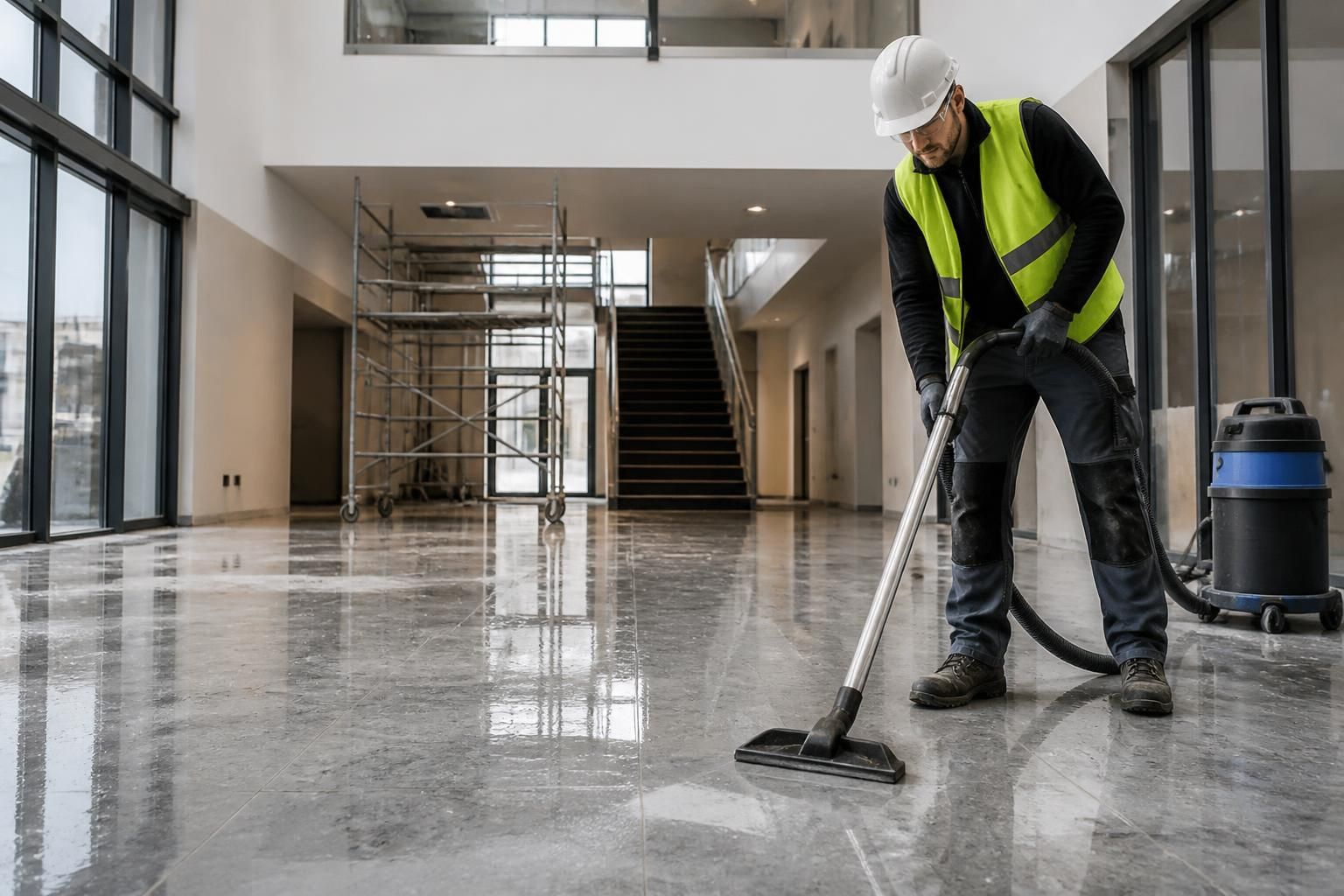
Post-construction cleaning is not simply a larger version of domestic or routine commercial cleaning. Building work can leave behind fine dust, plaster, grout, cement film, adhesive, paint splashes, silicone, protective-film residue, packaging and waste. These materials may be spread across floors, glazing, frames, sanitaryware, cladding, fixtures and ventilation points. A professional service plans the work around the condition of the site and uses appropriate methods for each surface.
Key benefits of hiring a professional builders clean include:
- Safer premises before handover: Removing loose debris, sharp fragments, dust deposits, spillages and other obstructions helps reduce avoidable risks for clients, residents, staff, visitors and contractors. Cleaning can also make defects, unfinished areas and remaining hazards easier to identify before the property is occupied.
- More effective removal of construction residue: Builders cleans are designed to deal with materials that ordinary cleaning may leave behind. Depending on the surface and residue, this can involve controlled vacuuming, dust extraction, scraping, washing, pressure cleaning or suitable chemical treatment. The method must be selected carefully to avoid spreading dust or damaging the substrate.
- Protection of newly installed finishes: New flooring, glazing, painted surfaces, metalwork, tiles, stone, cladding and sanitaryware can be vulnerable to scratching, staining and chemical damage. Experienced operatives assess the material before cleaning and use suitable pads, tools, water pressure, temperature and cleaning products. This is particularly important when removing cement film, adhesive or paint from delicate surfaces.
- A more efficient route to completion: Construction sites often contain multiple types of residue across large or difficult-to-access areas. A specialist team brings the labour, equipment and working methods needed to clean systematically rather than relying on construction staff to carry out a final tidy. This helps the project move towards inspection, occupation, letting or client handover without unnecessary delays.
- Improved presentation at handover: A clean building allows the quality of the completed work to be assessed properly. Clear glazing, clean floors, dust-free ledges, presentable entrances and residue-free fixtures create a finished appearance for the client, occupier or end user. A professional clean is also useful where the property needs to be photographed, marketed, inspected or opened to the public.
- Better identification of snags: Dust and residue can conceal scratches, marks, incomplete sealant, paint defects, damaged fittings or other issues requiring attention. Cleaning exposes these areas so they can be recorded and referred back to the relevant trade before final sign-off. This does not replace a formal defects inspection, but it can support the snagging process.
- Access to specialist equipment: Commercial builders cleans may require industrial vacuum systems, dust extractors, steam equipment, pressure-washing machinery, specialist floor-care equipment or access equipment. Using the right equipment improves productivity and can make it possible to clean façades, high-level glazing, roofs, loading areas, car parks and other locations that are impractical to reach with basic tools.
- Reduced risk of cross-contamination and re-soiling: Construction dust can be carried from unfinished areas into completed rooms, communal spaces and newly cleaned surfaces. A planned clean uses suitable sequencing, zoning and waste removal to limit the movement of dust through the building. High-level and dry tasks are generally completed before detailed floor and touchpoint cleaning so that finished areas are not unnecessarily soiled again.
- Support for health, safety and site controls: A professional contractor can work within the site rules, risk assessments, method statements and access arrangements established for the project. Operatives should be trained to recognise hazards such as unstable materials, live services, work at height, residual chemicals and restricted access. Cleaning can then be carried out in coordination with the principal contractor or site manager.
- Less pressure on the construction team: Trades and site personnel can concentrate on completing, inspecting and rectifying their own work instead of diverting time to detailed cleaning. This creates clearer responsibility during the final stages and helps prevent a general site tidy being mistaken for a completed builders clean.
- More consistent results across large sites: On developments with multiple units, floors or external areas, a professional team can follow an agreed scope and cleaning sequence. Consistent methods make it easier to compare areas, manage progressive handovers and identify sections that still require attention.
- Practical support for phased handover: Projects are not always completed at the same time. A builders clean contractor can work in phases around trades, inspections, deliveries and access restrictions. This is useful for multi-unit developments, commercial premises, refurbishments and sites where part of the building must be brought into use while other areas remain under construction.
Professional cleaning also helps distinguish between different stages of completion. An initial builders clean normally focuses on removing larger debris, construction dust and obvious residue after the main work has finished. A more detailed end-of-build or sparkle clean may then address fine dust, internal glazing, fittings, fixtures, touchpoints and presentation details before occupation. The exact scope should be agreed in writing because the terms are used differently across projects.
The service should be coordinated with the construction programme. Cleaning too early can lead to re-soiling when further drilling, cutting, decorating or installation takes place. Cleaning too late may delay inspections or handover. The most effective approach is usually to remove heavy debris progressively, complete specialist residue removal when the relevant trades have finished, and carry out the final detailed clean once the building is sufficiently protected from further construction activity.
Before work begins, confirm which areas are included, what waste will be removed, whether external surfaces and high-level areas are covered, how access will be provided and whether the clean is a single visit or a phased programme. It is also important to identify delicate or manufacturer-sensitive finishes and provide any available care instructions. Where residue has hardened or a surface is uncertain, a test area can help confirm that the proposed method is safe and effective.
A professional builders clean does not correct poor workmanship, remove every item of construction waste unless this is included in the scope, or replace statutory inspections and snagging. Its value is that it prepares the completed areas for those final checks by removing the contamination and obstruction left by the building process. For a commercial or industrial project, this supports a safer handover, protects the condition of new surfaces and provides a controlled route from active construction to operational use.
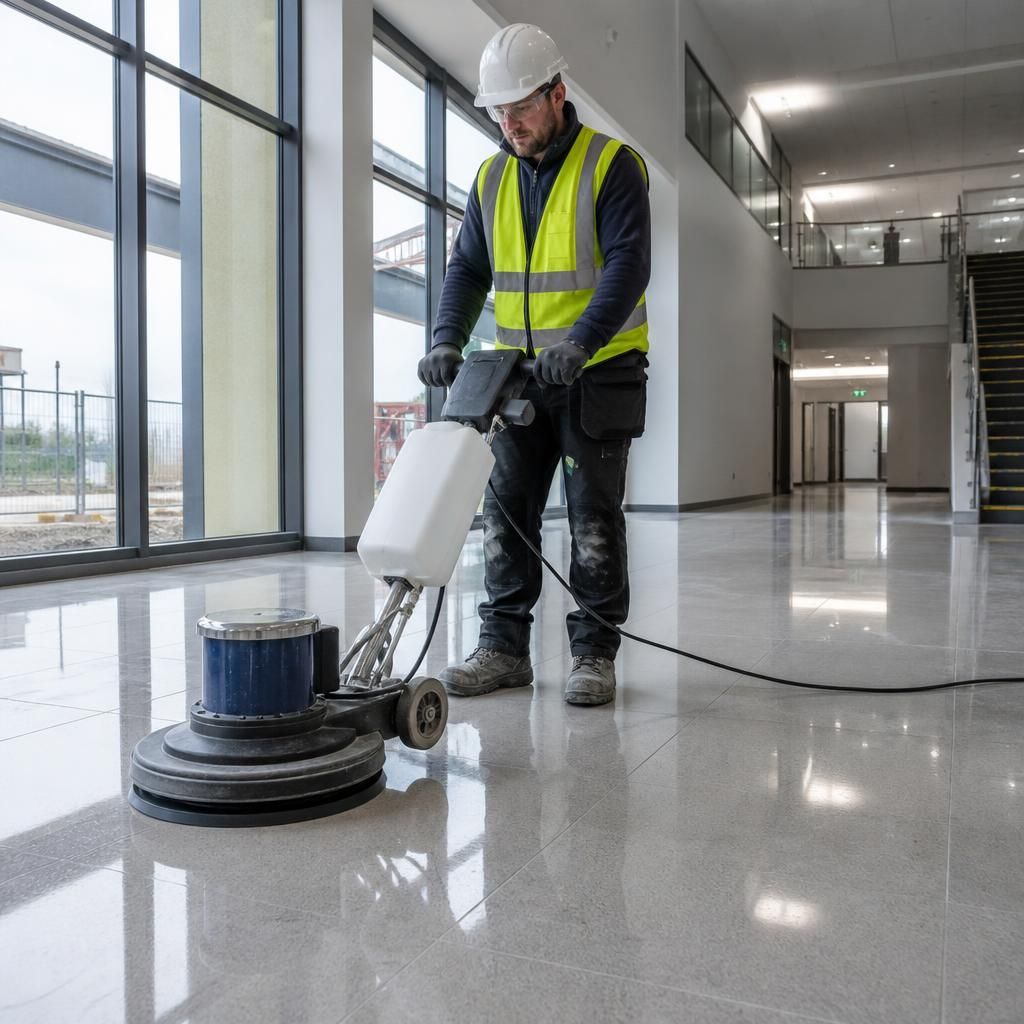
A professional builders clean protects newly installed finishes by matching the cleaning method to the material and the construction residue. Operatives can assess whether flooring, glazing, painted surfaces, tiles, stone, metalwork or sanitaryware requires controlled vacuuming, scraping, washing, steam cleaning or a suitable chemical treatment.
This reduces the risk of scratching, staining, etching or spreading fine dust during the final clean. Specialist equipment can also improve access to high-level glazing, façades, loading areas and other difficult locations. Removing residue carefully leaves the property in a better condition for snagging, inspection and handover without placing unnecessary pressure on the construction team.
Arrange Your Professional Builders Clean
Arrange your professional builders clean with Encanto Exterior Cleaning to remove construction residue and prepare your Birmingham, West Midlands or UK project for inspection and handover. Contact our team to discuss the site, required access and cleaning scope.