
How long does a builders clean typically take to complete?
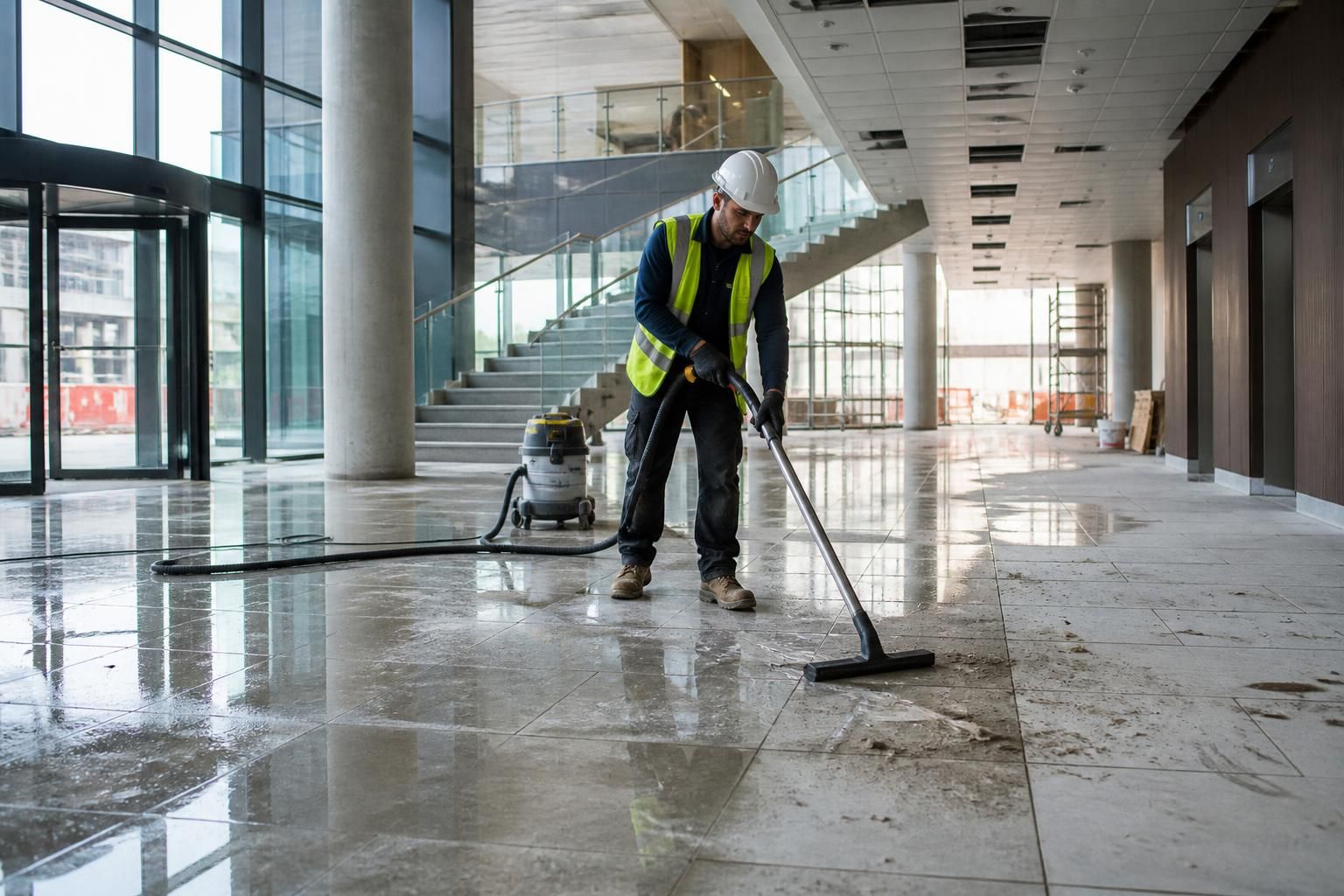
A builders clean typically takes from a single working day for a small, straightforward area to several days or longer for larger commercial developments. The timescale depends on the building’s size, level of construction residue, number of trades involved, access requirements and whether the clean is completed in one stage or phased around remaining work.
A builders clean typically takes from a single working day for a small, straightforward area to several days or longer for a larger commercial or industrial development. The actual duration depends on the size of the site, the amount and type of construction residue, the number of rooms or external areas, access arrangements, the required finish and whether other trades are still working.
Builders cleans are usually completed in stages rather than as one uninterrupted visit. A professional cleaning team may carry out an initial clean to remove bulk debris and construction dust, followed by a detailed clean once snagging and finishing work are complete. If the building is being handed over in sections, each area may be cleaned and inspected separately.
Typical timescales depend on the project type:
- Small refurbishments or limited areas: a straightforward builders clean may be completed within one working day when surfaces are accessible and residue is light.
- Medium-sized commercial premises: cleaning may take several working days, particularly where there are multiple rooms, washrooms, glazing, floors and fixtures to complete.
- Large developments: a full clean can take several days or longer, especially where the work covers multiple floors, blocks, external areas or separate handover zones.
- Heavily soiled or complex sites: additional time may be needed for cement splashes, adhesive, paint, plaster, grout haze, protective film, dust embedded in fittings or contaminated surfaces.
These are planning guides rather than fixed completion times. A site that appears similar in size can require a very different amount of work depending on the condition of the surfaces and the standard required at handover.
The main factors affecting the duration are:
- Size and layout: floor area, room count, corridors, stairwells, plant areas and external sections all add to the work. A complex layout takes longer to clean efficiently than one open area of the same size.
- Level of construction residue: loose dust and packaging can generally be removed quickly, whereas dried mortar, plaster, silicone, paint, adhesive and grout require controlled treatment and detailed spot cleaning.
- Surface types: glass, metal, cladding, natural stone, ceramic tiles, concrete and coated surfaces each require suitable methods. Some materials need testing before chemical or mechanical cleaning is carried out.
- Windows and glazing: internal and external glass, frames, sills and protective labels can add considerable time, particularly where access equipment is required.
- Floor finishes: newly installed flooring may need vacuuming, washing, residue removal, polishing or sealing. The condition and manufacturer’s requirements must be considered before selecting a cleaning method.
- Access and height: restricted access, high-level façades, atriums, roofs, canopies and external structures may require water-fed systems, pressure washing, steam cleaning, towers, lifts or other access equipment.
- Site readiness: a clean cannot progress efficiently if materials, tools, waste or unfinished work are still occupying the area. Cleaning around active trades often creates delays and can result in areas needing to be cleaned again.
- Required handover standard: a basic builders clean, a detailed sparkle clean and a specialist clean for sensitive commercial environments involve different levels of inspection and finishing.
- Working restrictions: restricted hours, occupied premises, security procedures, noise controls, welfare arrangements and coordination with other contractors can affect the available cleaning time.
A first-stage builders clean normally concentrates on removing construction waste, dust and heavier residue so that the building becomes safe and workable. The final or sparkle clean is more detailed. It may include cleaning glass on both sides, wiping fixtures and fittings, removing labels and protective film, detailing edges and corners, cleaning sanitaryware, vacuuming and washing floors, and checking visible surfaces ready for occupation or handover.
For a commercial project, the most reliable programme is based on a site assessment rather than floor area alone. The assessment should identify the areas to be cleaned, the condition of each surface, the required access equipment, water and power availability, waste arrangements, working hours and the intended handover date. It should also establish whether the clean is a single service or part of a phased programme.
Where construction is continuing, it is usually more efficient to schedule an initial clean after the dusty or heavy works have finished, then arrange a final clean after snagging. Cleaning too early can lead to repeated work when further drilling, cutting, decorating or installation takes place. A final inspection should be allowed for so that any missed residue or areas affected by later trades can be addressed before handover.
To avoid delays, the site should be substantially free of building materials and waste, permanent lighting and services should be available where needed, and completed areas should be protected from ongoing works. Clear responsibility for removing trade waste and dealing with hazardous or specialist materials should also be agreed before cleaning starts.
When requesting a programme, provide the cleaning contractor with drawings or floor plans, the approximate area, photographs, the construction stage, details of external elevations or high-level work, the required finish and the target handover date. This allows the team to estimate labour, equipment and the likely number of visits more accurately.
In summary, a small and accessible builders clean may take one working day, while a larger or more detailed commercial project may require several days or a phased programme. The most dependable completion date is established after inspecting the site and confirming that construction activities, access and handover requirements are properly coordinated.
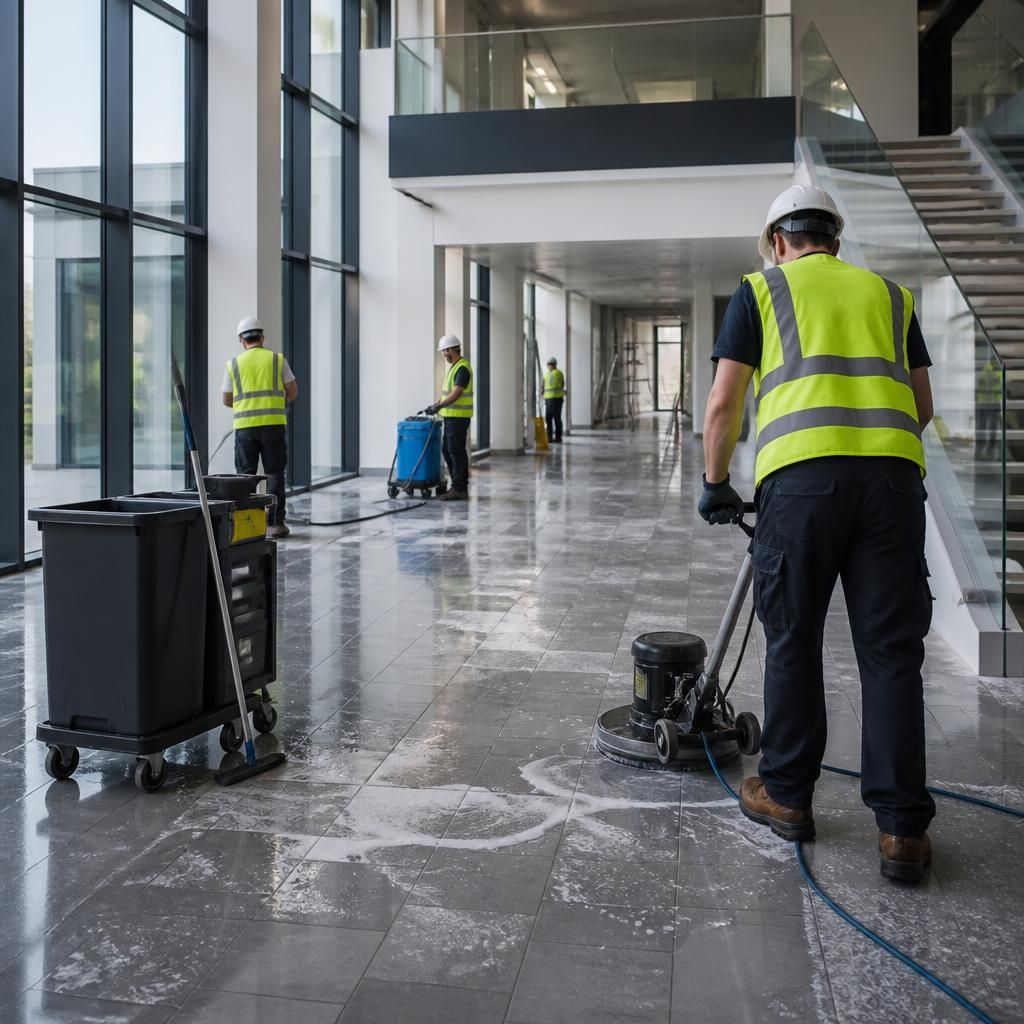
The completion time for a builders clean is often determined by site readiness rather than floor area alone. If materials, waste or active trades remain in the work area, cleaners may need to work around obstructions or return after further drilling, decorating and installation have created additional dust and residue.
For this reason, larger commercial projects are commonly planned in phases: an initial clean removes heavier debris and construction dust, followed by a detailed final clean after snagging is complete. This approach reduces repeated work and allows each section to be inspected before handover.