
How does a builders clean differ from regular cleaning services?
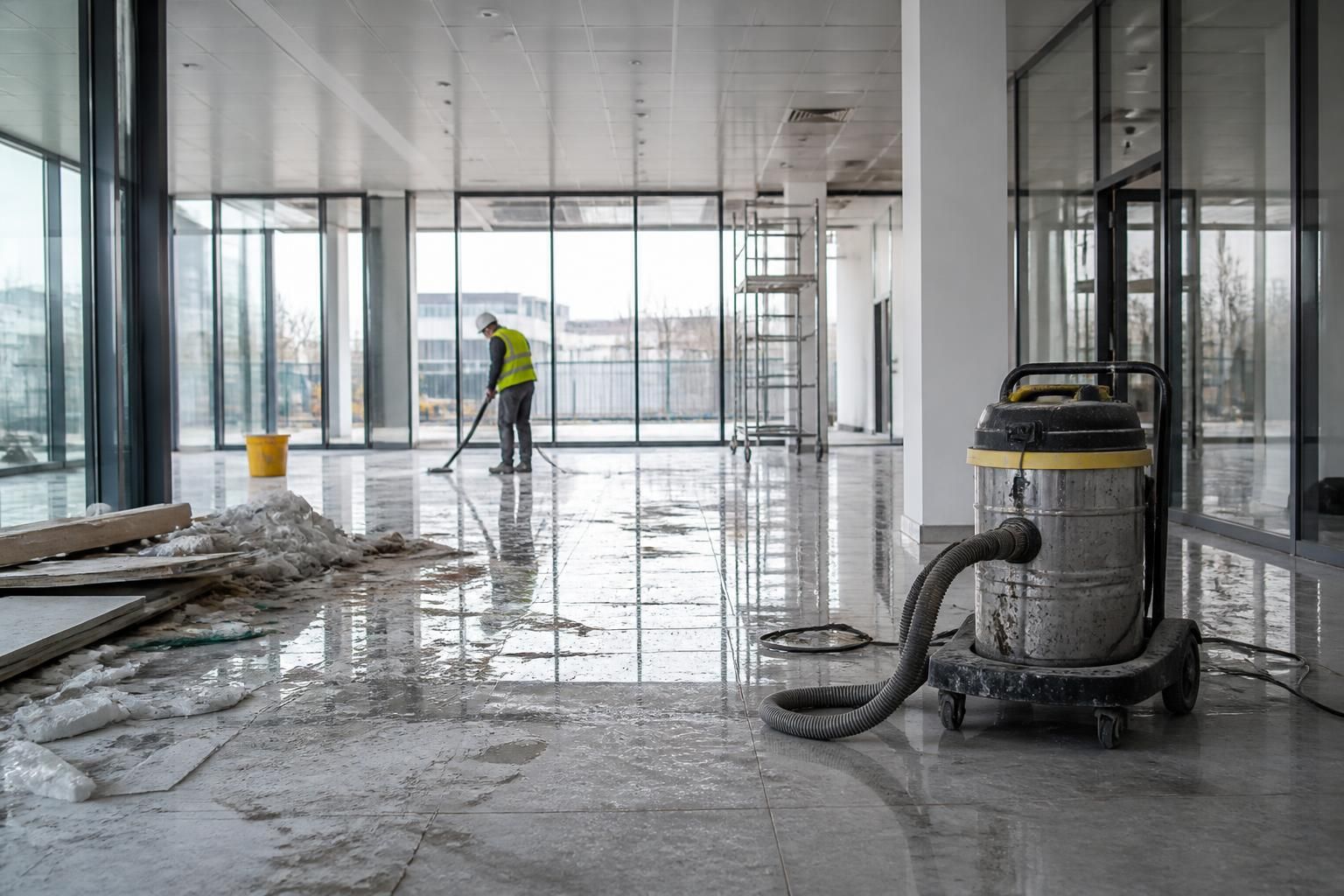
A builders clean is a specialist post-construction service that removes fine dust, cement residue, paint splashes, adhesive, grout and packaging from newly completed premises. Regular cleaning focuses on routine dirt and general upkeep, whereas a builders clean uses more intensive methods to prepare the property for handover, occupation or final presentation.
A builders clean is a specialist post-construction service, whereas regular cleaning is routine maintenance carried out in an occupied or established property. A builders clean removes construction-related dust, debris and residues that normal cleaning methods are not designed to handle, preparing the premises for inspection, handover, occupation or final presentation.
The main difference is the type and condition of the contamination. Regular cleaning deals with everyday soil such as dust from normal use, fingerprints, food marks, light spills, general litter and washroom deposits. A builders clean addresses more difficult materials left by construction and refurbishment work, including fine plaster dust, cement film, grout residue, paint splashes, silicone, adhesive, expanding foam, labels, protective-film remnants and packaging.
These materials can bond to surfaces as they dry. Cement and grout residue, for example, may leave a hard film on tiles, paving or sanitaryware, while fine construction dust can settle inside fittings, on high-level surfaces and within ventilation grilles. Removing them safely requires a planned process rather than the quicker wipe-downs used during regular cleaning.
Builders cleaning is usually carried out in stages. The precise scope depends on the project, but a professional service commonly includes:
- Removal of building materials, packaging, protective coverings and loose debris within the agreed areas.
- High-level and low-level dust removal from floors, ledges, frames, ceilings, fittings and accessible plant or fixtures.
- Cleaning of windows, frames, sills and glazing to remove construction dust, stickers and suitable surface residues.
- Removal of paint marks, adhesive, sealant, grout, plaster and cement deposits using methods appropriate to each surface.
- Detailed cleaning of floors, including hard flooring, steps, entrance areas and other traffic routes.
- Wiping and cleaning of doors, skirting boards, joinery, worktops, sanitaryware, fittings and installed equipment where included in the specification.
- Cleaning of external areas such as entrances, façades, loading areas, paths or hardstanding when these form part of the project.
- Final vacuuming, mopping and presentation cleaning before inspection or occupation.
Regular cleaning normally follows a repeatable schedule. It may involve vacuuming, dusting, mopping, emptying bins, cleaning washrooms, replenishing consumables and wiping frequently touched surfaces. It is intended to control ongoing dirt and maintain acceptable standards, not to remove the full range of residues generated by construction activity.
The equipment and techniques also differ. A builders clean may require industrial vacuums with suitable filtration, specialist scrapers, pressure washing, steam cleaning, controlled chemical treatments and access equipment for high or difficult-to-reach areas. The method must be selected according to the substrate. For example, abrasive action or an unsuitable acidic product could damage polished stone, coated metal, glass, sealants or newly installed finishes.
Pressure washing may be suitable for robust external surfaces, while steam cleaning can help loosen certain residues without saturating the area with water. Interior finishes may instead require careful scraping, spot treatment, microfibre cleaning or low-moisture methods. Testing a small inconspicuous area before wider treatment is an important part of preventing staining, etching or coating damage.
The timing is different as well. Regular cleaning is performed while a building is in use and is often scheduled daily, weekly or at another agreed interval. A builders clean is normally planned around the construction programme. It may take place after major works, between trades, before practical completion and again as a final presentation clean. Where multiple contractors are still working, dust and residues can be reintroduced, so the cleaning sequence should be coordinated with the site manager or principal contractor.
A builders clean also involves greater attention to construction risk. Operatives may need to work around unfinished surfaces, temporary services, sharp materials, ladders, access equipment and areas that have not yet been handed over. Suitable personal protective equipment, site controls, waste arrangements and access planning are therefore important. Cleaning should not begin in an area until it is safe and sufficiently complete for the agreed work to proceed.
The expected result is different. Regular cleaning maintains a usable and presentable property. A builders clean aims to bring a newly completed or refurbished space to a handover-ready standard. This may include removing visible construction marks, improving the clarity of glazing, presenting floors and fittings consistently, and leaving the area ready for the client’s inspection. It does not automatically correct installation defects, poor workmanship, damaged materials or marks that are permanent; those issues should be recorded and referred to the relevant contractor.
The distinction is particularly important when agreeing a scope of work. A request for a “clean” can mean anything from a light sparkle clean to the removal of substantial construction residue. Before work begins, the specification should identify the areas, surfaces, access arrangements, waste responsibilities, expected finish, exclusions and whether cleaning will be carried out once or in several phases. Photographs, a site visit or a marked-up plan can help clarify the condition and prevent misunderstandings.
For commercial and industrial premises, the difference may extend beyond the building interior. Construction projects can leave dust, mud, concrete residue, paint and packaging on façades, cladding, roofs, car parks, service yards and pedestrian routes. These areas may need separate access, water management and environmental controls. A standard janitorial service is unlikely to include this type of specialist external work unless it has been specifically arranged.
In practical terms, regular cleaning maintains cleanliness after a property is operational; a builders clean removes the remnants of the work that created or refurbished the property. Once the builders clean and any snagging are complete, regular cleaning can take over as part of the ongoing maintenance plan.
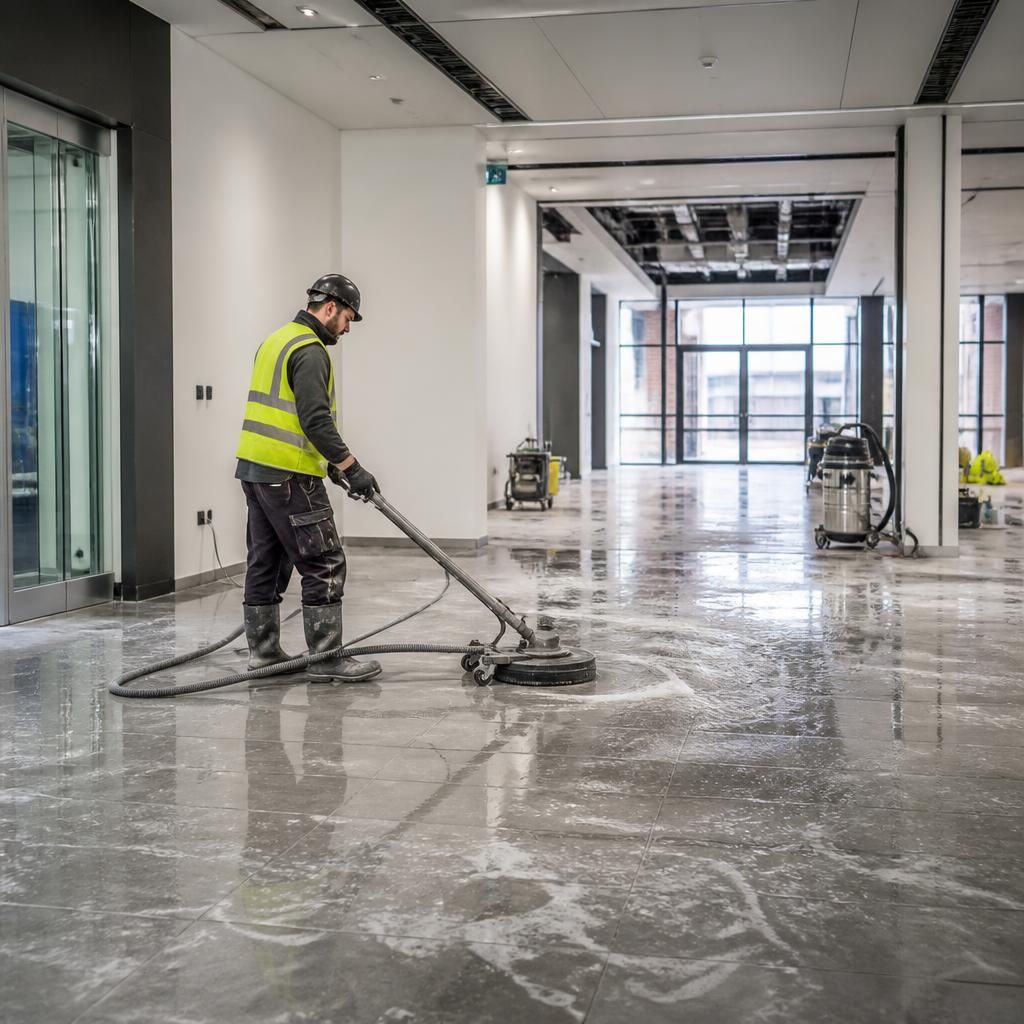
A builders clean requires specialist methods because construction residues can bond to surfaces and cause damage if removed incorrectly. Fine plaster dust, grout, cement film, paint, adhesive and sealant often need different treatments from the routine dusting, vacuuming and mopping used during regular cleaning.
Cleaning methods should be matched to the material and substrate. Industrial vacuums help control fine dust, while careful scraping, steam cleaning, spot treatment or pressure washing may be suitable for particular residues and surfaces. Newly installed finishes must be protected from abrasive tools, unsuitable chemicals and excessive water, so testing and method planning are essential before wider cleaning begins.