
What specialised equipment and techniques are essential for safe and effective cleaning of high-reach areas in commercial properties?
Safe, effective high-reach cleaning relies on suitable access equipment, water-fed poles, controlled pressure or steam systems, and methods matched to the surface and level of soiling. Proper planning, trained operators, exclusion zones and fall-protection measures are essential when cleaning façades, cladding, roofs and other elevated areas on commercial properties.
Safe and effective high-reach cleaning requires the correct combination of access equipment, cleaning systems, surface controls and site safety procedures. Water-fed poles and telescopic tools are often suitable for lower-risk façade and glazing work, while mobile elevating work platforms, scaffold systems or rope-access methods may be required where the height, building design or level of soiling prevents work from ground level. The equipment must be selected through a documented risk assessment and used by trained, competent operators.
Access equipment and when it is used
- Water-fed poles: Telescopic poles can reach elevated windows, cladding and façade areas from a safe position at ground level. Purified water helps reduce spotting and can limit the need for chemical products, although pole length, wind conditions, overhead obstructions and operator control must be considered.
- Telescopic pressure-washing and soft-washing tools: Extended lances and surface-cleaning attachments can be used for suitable elevations where the operator can maintain stable footing and controlled distances. They must not be treated as a substitute for proper access where excessive force, recoil or poor visibility creates a hazard.
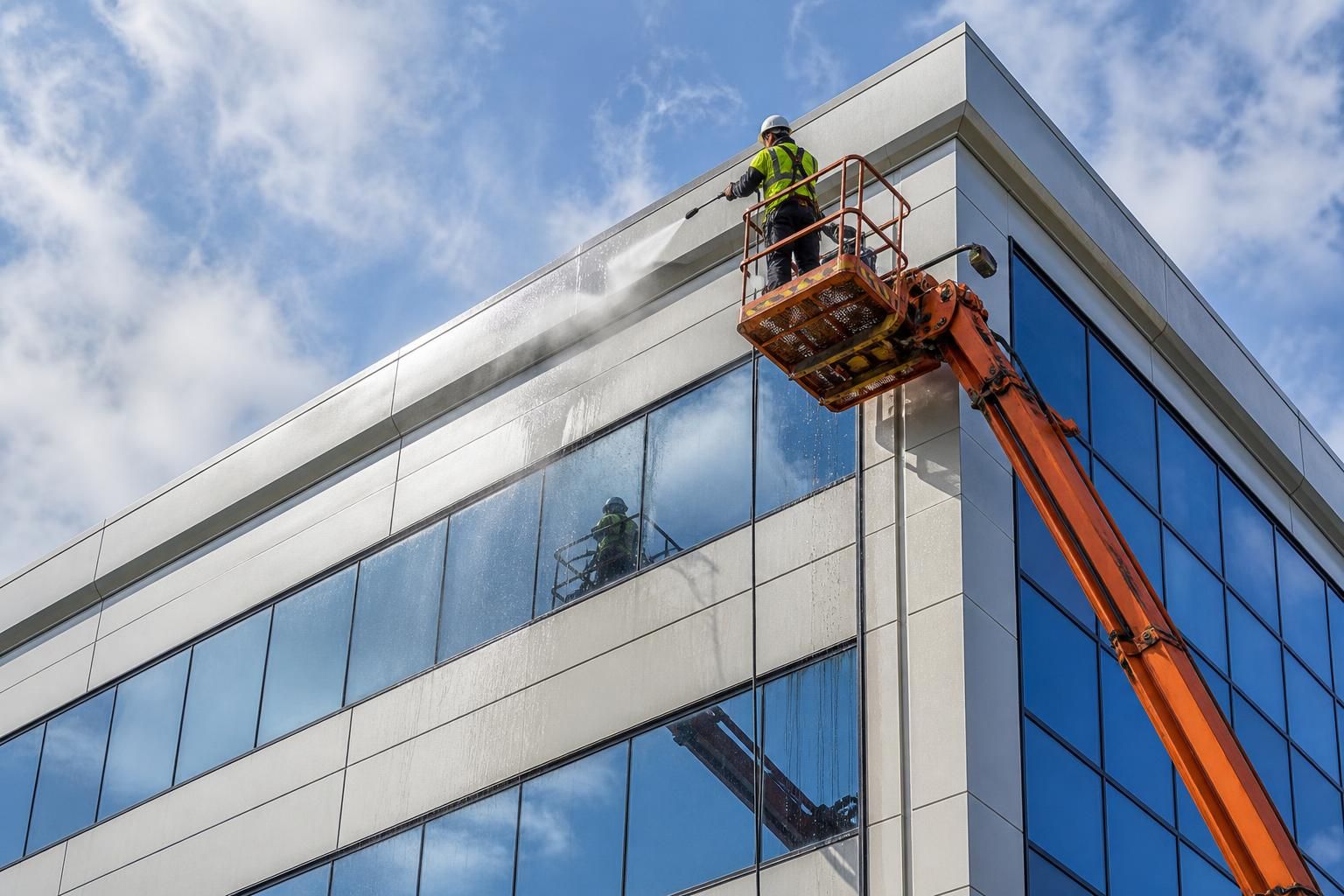
- Mobile elevating work platforms: Scissor lifts, boom lifts and other MEWPs provide a controlled working position for façades, roofs, canopies and industrial structures. The choice depends on required height, horizontal reach, ground conditions, access routes and whether the platform can be positioned without striking the building or surrounding assets.
- Scaffold and temporary platforms: These may be appropriate for extensive restoration, façade cleaning or projects requiring prolonged access. Platforms must be properly erected, inspected and fitted with suitable edge protection and safe access.
- Rope-access systems: Rope access can provide a practical solution for complex elevations or areas that cannot be reached by a MEWP. It requires specialist training, approved equipment, independent safety arrangements and a documented rescue plan. It should only be used where the method has been properly assessed.
All access equipment must be inspected before use and operated in accordance with the relevant manufacturer’s instructions. In the UK, work at height should be planned and controlled in line with the Work at Height Regulations. Lifting equipment may also fall within LOLER requirements, while powered cleaning machinery is subject to suitable inspection and maintenance controls under PUWER. Records of inspections, examinations and operator competence should be available for commercial projects.
Cleaning equipment for elevated surfaces
- Pressure-washing systems: Adjustable pressure, flow and nozzle selection allow operators to remove traffic film, algae, moss, dirt and loose coatings from suitable masonry, concrete and hard-wearing surfaces. High pressure is not automatically more effective; excessive force can damage mortar joints, coatings, sealants, render, stone and fragile cladding.
- Steam-cleaning systems: Low-pressure steam can loosen biological growth, grease, staining and some surface deposits while reducing the amount of chemical agitation required. It is useful where controlled heat is more appropriate than aggressive mechanical force, but the surface’s tolerance to heat and moisture must be checked first.
- Soft-washing and detergent application: Carefully selected detergents can treat organic growth and ingrained soiling at lower mechanical pressure. Application rates, dwell time, dilution, ventilation and rinsing requirements must be controlled, with COSHH information reviewed before use.
- Water-recovery equipment: Wet vacuums, drain protection, collection mats and filtration systems help control contaminated runoff. Recovery is particularly important near storm drains, entrances, public footways, loading areas and watercourses.
- Inspection and monitoring tools: Adequate lighting, moisture checks where relevant, photographic records and close visual inspection help identify failed sealants, cracked panels, unstable render and other defects before cleaning begins.
Surface-specific techniques
Cleaning should begin with a survey of the substrate, existing coating, joints, fixtures and likely contaminants. A small test area should be carried out in an inconspicuous location to confirm the safest combination of pressure, temperature, chemical strength, nozzle, dwell time and rinsing method. The test should be assessed after drying, as some damage, colour change or staining becomes more apparent later.
Brickwork and masonry generally require controlled pressure and appropriate nozzle distance to avoid eroding the face of the material or opening mortar joints. Rendered and painted façades may need a low-pressure soft-wash or steam approach, particularly where the coating is aged or friable. Metal cladding should be cleaned with methods that do not strip protective finishes or force water behind laps, seals and fixings. Roofs require careful control of foot traffic, water flow and moss removal, with particular attention to fragile sheets, rooflights and concealed edges.
Pressure should be directed away from vulnerable joints, vents, electrical fittings, door seals and façade openings. Operators should work methodically from clean areas towards dirty areas where appropriate, prevent dirty water from running over completed sections, and rinse residues without driving water into the building envelope. Chemical products should never be mixed unless the manufacturer specifically permits it.
Planning and exclusion controls
Before mobilisation, the cleaning plan should identify the building’s height and construction, access and egress points, overhead cables, fragile surfaces, nearby roads, pedestrian routes, tenants, vehicles, weather exposure and drainage arrangements. The method statement should explain the access method, equipment, cleaning sequence, substances, water supply, waste controls, emergency arrangements and responsibilities on site.
An exclusion zone is normally required beneath or around elevated work. Barriers, warning signs, a banksman or other traffic-management controls may be needed where pedestrians, vehicles or other contractors could enter the drop zone. Tools and accessories should be secured against falling, hoses should be routed to prevent trips and snagging, and work should be coordinated with building occupants and site management.
Weather conditions can determine whether high-reach cleaning is safe. Strong or gusting wind can affect poles, spray, MEWPs, suspended equipment and chemical drift. Rain, ice, poor visibility and lightning may also make work unsafe or reduce cleaning control. Operators should follow equipment limits and stop work when conditions exceed the safe operating parameters.
Fall protection and personal protective equipment
Where work at height cannot be avoided, collective protection such as guardrails, scaffold platforms and suitable MEWP barriers should be used before relying on personal fall protection. Harnesses, lanyards and attachment points must be compatible with the equipment and used according to the risk assessment. A harness alone does not prevent a fall, and a rescue plan is essential wherever suspension could occur.
Personal protective equipment may include eye and face protection, waterproof or chemical-resistant gloves, protective footwear, hearing protection, respiratory protection and suitable protective clothing. The exact selection depends on the cleaning system, product safety data, spray characteristics and the surrounding environment. PPE should complement, not replace, safe access, guarding, ventilation and runoff controls.
Practical control measures for commercial sites
- Confirm the building owner’s requirements, permits and site rules before starting.
- Check equipment, hoses, couplings, electrical connections, fuel systems and emergency stops before use.
- Use low-pressure or steam settings where they achieve the required result without unnecessary surface impact.
- Protect doors, windows, vents, signage, lighting, sensors, vehicles and sensitive plant from water or chemical exposure.
- Control spray drift and avoid cleaning near occupied areas without suitable isolation and communication.
- Prevent contaminated water from entering surface-water drainage and dispose of recovered waste responsibly.
- Keep a clear communication system between the operator, ground team, banksman and site contact.
- Inspect the completed area for missed deposits, damage, residue, water ingress and safe reinstatement of access routes.
For complex façades, industrial buildings, warehouses, public facilities and multi-occupancy premises, the safest approach is usually a planned combination of ground-based cleaning and specialist access rather than one high-pressure method applied everywhere. The final method should be proportionate to the surface and hazard, supported by competent supervision, appropriate records and a clear emergency procedure.
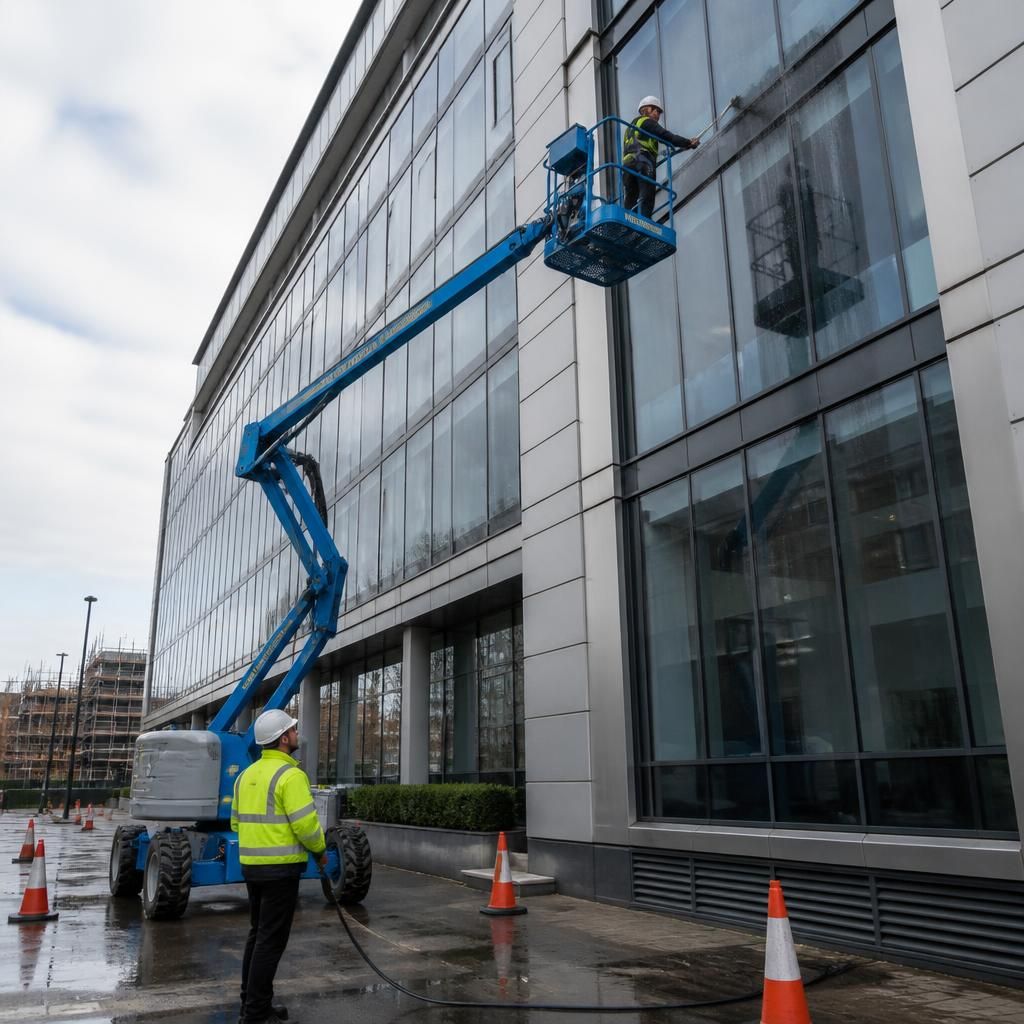
Choosing the right access method is central to safe high-reach cleaning. Water-fed poles may be suitable for many windows and lightly soiled façades from ground level, while a MEWP, scaffold platform or rope-access system may be needed where the elevation, building design or cleaning pressure makes ground-based work unsuitable.
The decision should follow a site-specific risk assessment covering height, reach, ground conditions, overhead obstructions, wind exposure, falling-object risks and the presence of pedestrians or vehicles. Access equipment must be inspected before use, operated by competent personnel and supported by exclusion zones, secure tools, suitable fall protection and a clear rescue plan where a fall could occur.