
What safety measures are essential during commercial exterior cleaning operations?
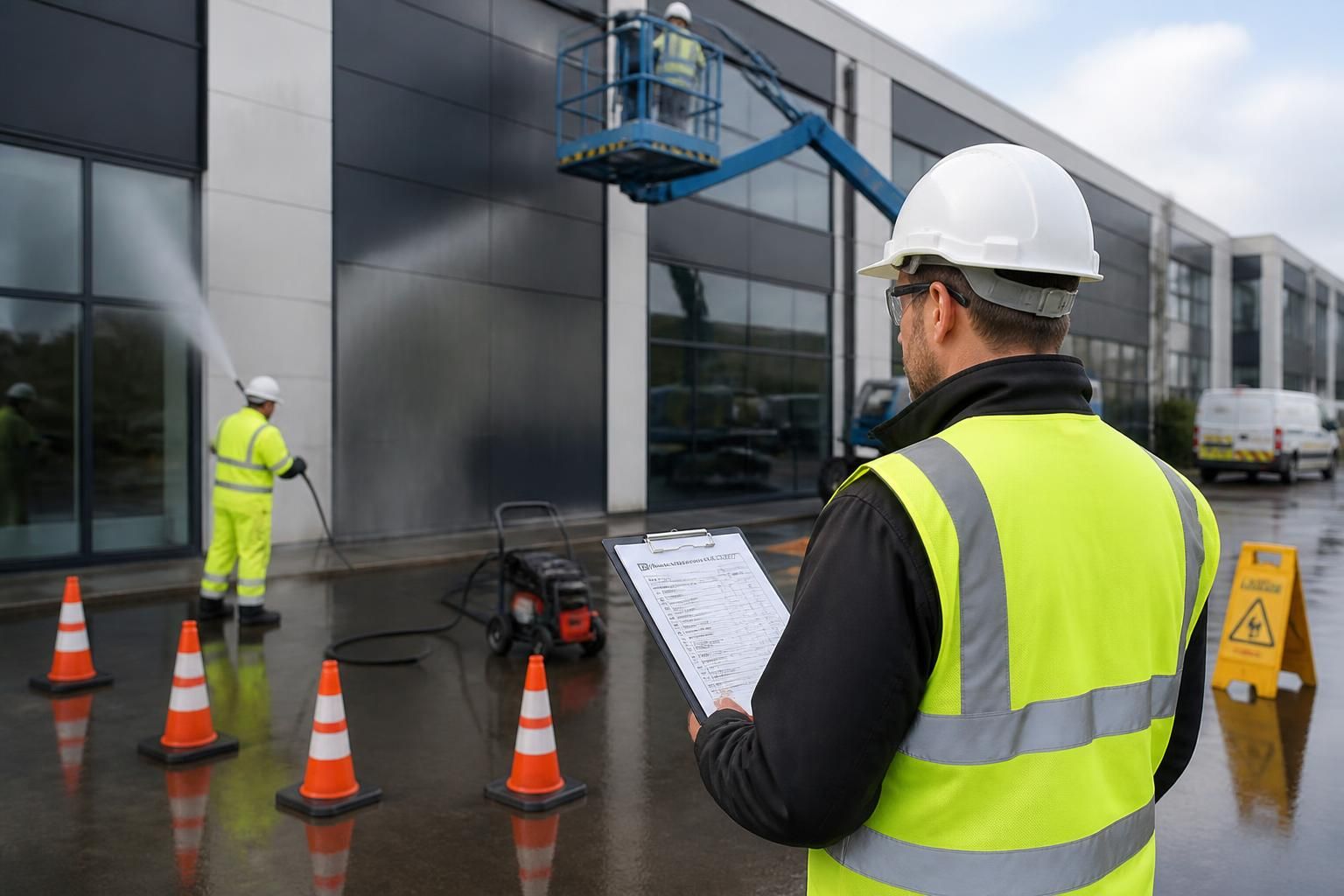
Essential safety measures include a site-specific risk assessment, suitable personal protective equipment, controlled work areas, safe management of water and chemicals, and properly trained operators using inspected access and cleaning equipment. Commercial exterior cleaning should also follow a documented method statement, with precautions for work at height, traffic, electrical hazards, weather conditions and protection of people, vehicles and building surfaces.
Essential safety measures for commercial exterior cleaning include a site-specific risk assessment, a documented method statement, trained operators, suitable personal protective equipment, controlled work areas, and properly inspected access and cleaning equipment. Effective planning must also address work at height, vehicle and pedestrian movement, electrical hazards, water and chemical use, weather conditions, emergency arrangements, and protection of the building and surrounding property.
Site assessment and method statement
Before work starts, the cleaning contractor should inspect the site and identify hazards specific to the building, its occupants and the proposed cleaning method. The assessment should consider the surface condition, access points, roof edges, fragile materials, overhead services, nearby roads, drainage, parked vehicles, public areas and any activities taking place within the premises.
The findings should be recorded in a suitable risk assessment and method statement. This should explain the work sequence, equipment to be used, exclusion zones, control measures, responsibilities, emergency procedures and arrangements for waste or contaminated water. The method statement must be communicated to the operatives and updated if conditions or the scope of work change.
Competent and trained operatives
Commercial exterior cleaning should be carried out by people who are competent for the tasks assigned to them. Training and experience should cover the selected pressure washing, steam cleaning or chemical treatment process, safe equipment operation, manual handling, use of access equipment, and site-specific hazards. Anyone supervising work should understand how to stop the operation if controls become ineffective.
Where the work involves specialist access systems, operators should have appropriate training for the equipment and the planned task. A qualification alone does not replace a site assessment: operators must also understand the limits of the equipment, the surface being cleaned and the risks created by changing weather or site conditions.
Safe working at height
Work at height should be avoided where a ground-level method can achieve the required result. If it cannot be avoided, the safest suitable access method should be selected through the risk assessment. Depending on the building and task, this may include mobile elevated work platforms, scaffold systems, towers, access platforms or water-fed equipment that reduces the need to work directly at the edge.
Access equipment should be suitable for the load, reach, surface and working environment. It must be inspected before use, positioned on stable ground and operated within the manufacturer’s limits. Ground conditions, slopes, overhead obstructions, wind exposure and the risk of falling objects must be checked. Harnesses and other fall-protection systems should only be used with suitable anchor arrangements, training and a practical rescue plan.
Tools, hoses and attachments should be secured or managed so they cannot fall onto people or vehicles below. An exclusion zone should be established beneath and around elevated work, with a banksman or other suitable control where access routes cannot be closed completely. Ladders should not be used as a substitute for more suitable access equipment where the task is prolonged, forceful or requires both hands.
Personal protective equipment
Personal protective equipment should be selected after other controls have been considered, rather than used as the only safety measure. Depending on the cleaning process, it may include:
- Safety footwear with suitable grip and protection from water, chemicals and falling items.
- Eye protection or a full face shield to protect against spray, debris and chemical splashes.
- Waterproof or chemical-resistant gloves selected for the substances in use.
- Protective clothing or waterproofs appropriate to the pressure, temperature and chemicals involved.
- Hearing protection where equipment creates hazardous noise levels.
- Suitable respiratory protection where an assessment identifies airborne dust, mist, vapour or other respiratory hazards.
- Head protection and high-visibility clothing where there is a risk from falling objects or moving vehicles.
PPE must be correctly fitted, maintained and replaced when damaged or contaminated. Operators should also know how to remove contaminated clothing safely and how to deal with skin or eye exposure.
Pressure, steam and chemical controls
Pressure washing can dislodge masonry, coatings, glass fragments, dirt and biological material. The operator should select a pressure, flow rate, nozzle and stand-off distance appropriate to the surface. The lance must be controlled securely, and people must never be directed towards the spray. Particular care is needed around windows, joints, vents, electrical fittings, damaged render and fragile or historic materials.
Steam cleaning presents additional risks from hot water, vapour, heated surfaces and pressure. Operators should prevent contact with exposed skin and control where hot condensate and runoff travel. Warning signs or barriers may be required while surfaces remain hot or slippery.
Cleaning chemicals should be assessed and managed in accordance with the Control of Substances Hazardous to Health requirements. Product instructions and safety data should be followed, including dilution, storage, ventilation, PPE, first aid and spill response. Chemicals must not be mixed unless the manufacturer specifically permits it, as incompatible products can release hazardous gases or create violent reactions. Containers should be labelled, secured and kept away from unauthorised people.
Protecting people, traffic and property
Work areas should be separated from employees, visitors, residents and members of the public using barriers, cones, signs or supervised access controls. The arrangements should account for spray drift, falling debris, trip hazards, noise and temporary changes to entrances or walkways. Building occupants should be informed about relevant restrictions and any actions they need to take.
Where cleaning takes place near roads, loading bays or car parks, a traffic management plan may be needed. Vehicles should be parked safely, reversing should be controlled where possible, and hoses must not create unprotected trip points across pedestrian or vehicle routes. The contractor should coordinate with the site manager so deliveries, construction activities and cleaning operations do not conflict.
Windows, doors, vents, air-conditioning intakes, signage, lighting, security systems and sensitive equipment should be protected before cleaning. Any pre-existing damage should be recorded, particularly cracked glazing, loose pointing, defective render or unstable cladding. This helps prevent an existing defect being mistaken for damage caused by the cleaning operation.
Electrical and utility hazards
Water and electricity create a serious risk of electric shock. Electrical installations, external sockets, lighting, cables, solar equipment and overhead lines should be identified before work begins. Equipment should be suitable for the environment, protected by appropriate residual current protection where required, and kept away from standing water and uncontrolled spray.
Electrical systems that could be affected by water should be isolated or suitably protected by a competent person. Operators should never assume that an outdoor fitting is safe to spray. Any damaged cable, plug, hose or machine should be taken out of service until it has been checked and repaired.
Water, drainage and slip prevention
Runoff should be planned before cleaning starts. Water, silt, chemicals, oil and biological contamination must not be allowed to enter unsuitable drains, watercourses or neighbouring premises. Drain covers, bunds, wet vacuums, collection systems or temporary diversion measures may be necessary, subject to the site and the substance involved.
Wet surfaces can become slippery for workers, occupants and the public. The work area should be controlled until surfaces are safe to use, with runoff removed or directed appropriately. Hoses should be routed to minimise trip risks, and operatives should use footwear with suitable slip resistance.
Weather and environmental conditions
Wind, rain, ice, heat, poor visibility and freezing conditions can make exterior cleaning unsafe or reduce the effectiveness of the process. Wind can carry spray and chemicals, affect elevated access equipment and increase the risk of falling objects. Rain can create unstable ground and slippery surfaces, while low temperatures may cause water to freeze in access routes or equipment.
Work should be paused when conditions exceed the safe operating limits in the risk assessment, equipment instructions or access plan. The site should be reassessed after significant weather changes. Environmental controls should also cover noise, spray drift, waste, wastewater and the protection of plants, wildlife and neighbouring property.
Equipment checks and maintenance
Pressure washers, steam cleaners, hoses, lances, pumps, generators and access equipment should be maintained and inspected at suitable intervals. Operators should complete pre-use checks and look for damaged hoses, leaking connections, worn couplings, faulty guards, exposed wiring, unstable components and signs of overheating.
Equipment should be used only for its intended purpose and within its rated pressure, temperature, height, weight and chemical limits. Hoses and couplings should be secured to prevent separation under pressure. Defective equipment must be isolated, clearly identified and repaired by a suitably competent person before it is returned to service.
Emergency and welfare arrangements
The site should have a clear procedure for dealing with falls, chemical splashes, burns, electric shock, equipment failure, uncontrolled runoff, fire and injury from high-pressure water. First-aid arrangements, emergency contact details, access for emergency services and the location of eyewash or washing facilities should be confirmed before work begins.
Work at height requires a rescue plan that does more than rely on emergency services. It should explain how a suspended or injured person will be reached safely and who is responsible for carrying out the rescue. Operatives should have suitable breaks, drinking water and welfare facilities, particularly when wearing restrictive PPE or working in hot or cold conditions.
Compliance and ongoing supervision
Commercial cleaning operations should be planned and carried out in line with applicable UK health and safety requirements, including the principles of the Health and Safety at Work etc. Act, the Work at Height Regulations, the Provision and Use of Work Equipment Regulations, and COSHH where hazardous substances are involved. The exact requirements depend on the work, equipment and site.
Safety controls should be checked throughout the job, not only at the initial briefing. A supervisor should monitor exclusion zones, weather, runoff, equipment condition and changes to the work area. At completion, the site should be inspected for remaining hazards, displaced materials, blocked drains, wet access routes and unprotected equipment before it is handed back to the client.
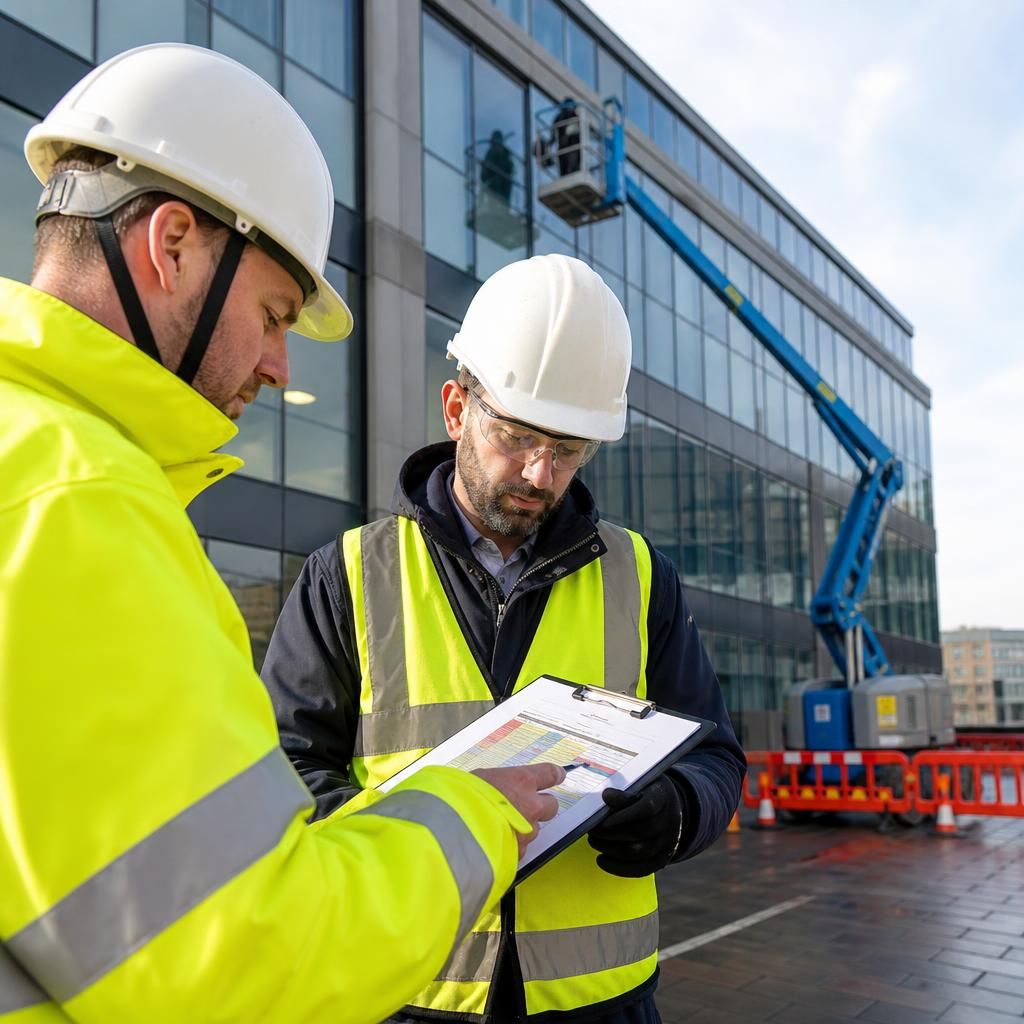
A site-specific risk assessment and method statement is the foundation of safe commercial exterior cleaning. Before work begins, it should identify hazards such as work at height, traffic, electrical installations, fragile surfaces, chemical exposure, spray drift and contaminated runoff, then set out practical controls for each risk.
The document should also confirm the cleaning method, access equipment, personal protective equipment, exclusion zones, emergency arrangements and responsibilities on site. Operatives must understand the controls before starting, while the supervisor should review them if weather, access conditions or the scope of work changes.