
What key considerations should be taken into account when choosing between pressure washing and steam cleaning for different building surfaces?
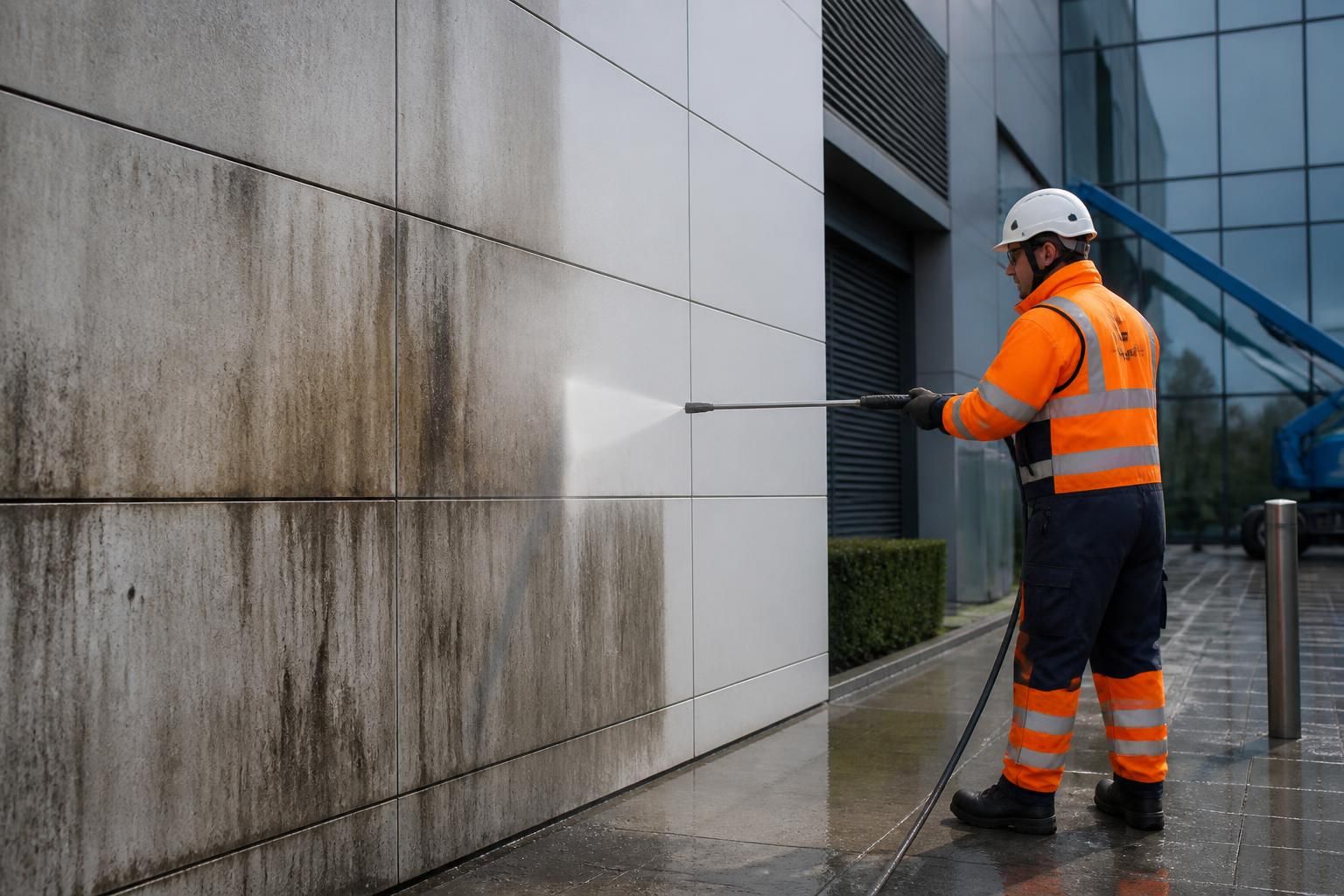
The choice between pressure washing and steam cleaning depends on the surface material, condition, type of soiling, access requirements and risk of damage. Pressure washing is generally effective for robust surfaces such as concrete, paving and some masonry, while steam cleaning uses lower pressure and high-temperature vapour for sensitive façades, cladding, painted surfaces and areas where chemical use or water runoff must be minimised.
Choosing between pressure washing and steam cleaning depends on the building surface, the type and condition of the soiling, the required finish, and the risk of damage or uncontrolled runoff. Pressure washing uses a directed volume of water at comparatively high pressure to remove deposits mechanically, whereas steam cleaning uses heated water or vapour at lower pressure to loosen contamination with less mechanical impact. Neither method is universally suitable, so the cleaning approach should be selected following a site assessment and a small test area.
Pressure washing is generally suited to robust, water-tolerant surfaces where dirt is firmly bonded and rapid mechanical removal is appropriate. Typical applications include:
- Concrete yards, loading areas, steps and hard-standing;
- Block paving and many types of external paving;
- Heavy traffic routes affected by mud, algae, moss or surface grime;
- Industrial floors and service areas, subject to drainage and environmental controls;
- Some sound masonry and unpainted surfaces that have been assessed as suitable.
The pressure, flow rate, nozzle type and cleaning distance must be controlled. Excessive pressure can erode mortar joints, damage the surface of concrete, drive water into cracks, strip protective coatings and dislodge loose material. A broad fan nozzle and an appropriate working distance are usually safer than a concentrated jet. Pressure washing should not be treated as a single fixed setting for every elevation or material.
Steam cleaning is often preferable where lower mechanical force is required. The heat helps soften grease, biological growth, traffic film, chewing gum residue and some atmospheric deposits, allowing them to be removed with reduced pressure. It can be particularly useful for:
- Painted or coated surfaces where aggressive abrasion could cause lifting or marking;
- Façades and architectural features with uneven profiles or delicate detailing;
- Cladding systems whose finish, joints or protective coating could be affected by high pressure;
- Brickwork and masonry requiring careful treatment around mortar joints;
- Areas where reduced water volume or limited chemical use is desirable;
- Localised contamination such as gum, oil-related deposits or ingrained organic matter.
Steam does not make a surface automatically risk-free. Heat can affect some paints, sealants, plastics, membranes, jointing compounds and historic finishes. It may also soften deposits without fully removing them if the surface is heavily porous or the contamination is deeply embedded. The temperature, dwell time and distance therefore need to be adjusted to the material and the condition of the coating.
The surface material is the first practical consideration. Concrete and paving can often tolerate pressure washing, but aged concrete may have a friable surface that becomes more exposed after cleaning. Brick and stone vary considerably in hardness, porosity and resistance to water. Softer stone, weathered masonry and historic façades may require low-pressure steam, a gentler rinse or a specialist conservation method rather than routine power washing.
Cladding requires particular care because the visible panel is only one part of the system. High pressure can force water behind joints, seals, vents or fixings, while unsuitable chemicals can stain, dull or weaken the finish. The cleaning method should account for the cladding material, coating, panel orientation, joint condition and the manufacturer’s maintenance guidance where available.
Roofs should be assessed separately from walls. Pressure washing can disturb tiles, protective granules, flashings, membranes and pointing, as well as spread contaminated water across adjacent areas. Steam or low-pressure cleaning may be more appropriate for some roof surfaces, but access, roof loading, fall protection, drainage and the risk of water entering the building remain essential considerations. The objective should be controlled removal of the contaminant, not simply the highest possible cleaning force.
The type of soiling also influences the decision. Loose dust, mud, algae and general surface dirt may respond efficiently to pressure washing on durable materials. Grease, oil film, chewing gum, bird fouling and aged organic deposits may benefit from heat, although suitable detergents or additional treatment may still be needed. Rust, efflorescence, paint, cement residue and other mineral or construction deposits should not be assumed to respond to either method alone. Using excessive pressure or heat to compensate for an unsuitable cleaning chemistry can damage the substrate.
The condition of the surface is equally important. Cracks, open joints, failed sealant, delaminated coatings, corrosion, spalling concrete and previous repairs can all change the risk profile. Cleaning may reveal defects that were hidden by dirt, but it should not be used to conceal or remedy a maintenance problem. Where water penetration could affect occupied areas, electrical systems, insulation or stored goods, the cleaning plan should include protection and controlled water management.
Runoff and environmental controls must be considered before work starts. Pressure washing can produce a substantial volume of wastewater, potentially carrying silt, oil, detergents, paint particles or biological contamination into surface-water drains. Steam cleaning may reduce water consumption in some applications, but it still produces condensate and contaminated residue that must be collected or directed appropriately. Drainage should be identified during the site survey, and runoff should not be allowed to enter an unsuitable drain or watercourse.
Access and working conditions can also determine the safest method. High-reach cleaning may require mobile elevated work platforms, telescopic equipment, scaffold or rope-access arrangements, depending on the building and the task. The operator must be able to maintain a stable working position and control the lance or steam equipment without directing water towards people, openings, vehicles or sensitive equipment. Wind, temperature, nearby traffic and public access should be considered when planning the operation.
A competent cleaning plan should normally include:
- Identifying the substrate, coating, age, condition and vulnerable features;
- Characterising the soiling and checking whether it may contain hazardous or regulated material;
- Reviewing access, drainage, electrical risks, occupied areas and nearby assets;
- Carrying out a discreet test patch using the proposed pressure, temperature, nozzle, detergent and dwell time;
- Inspecting the test result after drying, including colour, texture, coating adhesion and joint condition;
- Setting out exclusion zones, personal protective equipment, runoff controls and emergency arrangements;
- Agreeing the cleaning sequence and acceptance standard before full-scale work begins.
A test patch is especially important where the surface is painted, coated, historic, porous, previously repaired or not clearly identified. The result should be assessed in dry conditions where possible, because a wet surface can temporarily disguise staining, colour variation or coating damage. If the test shows unacceptable change, the method should be modified or an alternative cleaning process considered.
In many commercial projects, the most effective solution is a combination of methods rather than a choice between them. For example, controlled pressure washing may remove loose dirt from a durable car park, while steam cleaning is used around entrances, façades, signs or sensitive details. A low-pressure rinse may follow steam treatment, and localised spot cleaning may be used instead of applying the same process across the entire elevation.
Pressure washing is the stronger option when speed and mechanical cleaning are needed on a sound, durable surface. Steam cleaning is usually the more controlled option when heat can loosen contamination while minimising impact, water use or chemical dependency. The final decision should be based on the substrate and the consequence of failure, not on pressure or temperature alone.
For commercial and industrial premises, the cleaning specification should record the selected method, operating limits, test area, water and chemical controls, access arrangements and protection measures. This creates a clear basis for safe delivery and makes future maintenance easier to plan. Where the surface or contamination is uncertain, a professional site assessment is preferable to trialling an aggressive method across the whole building.
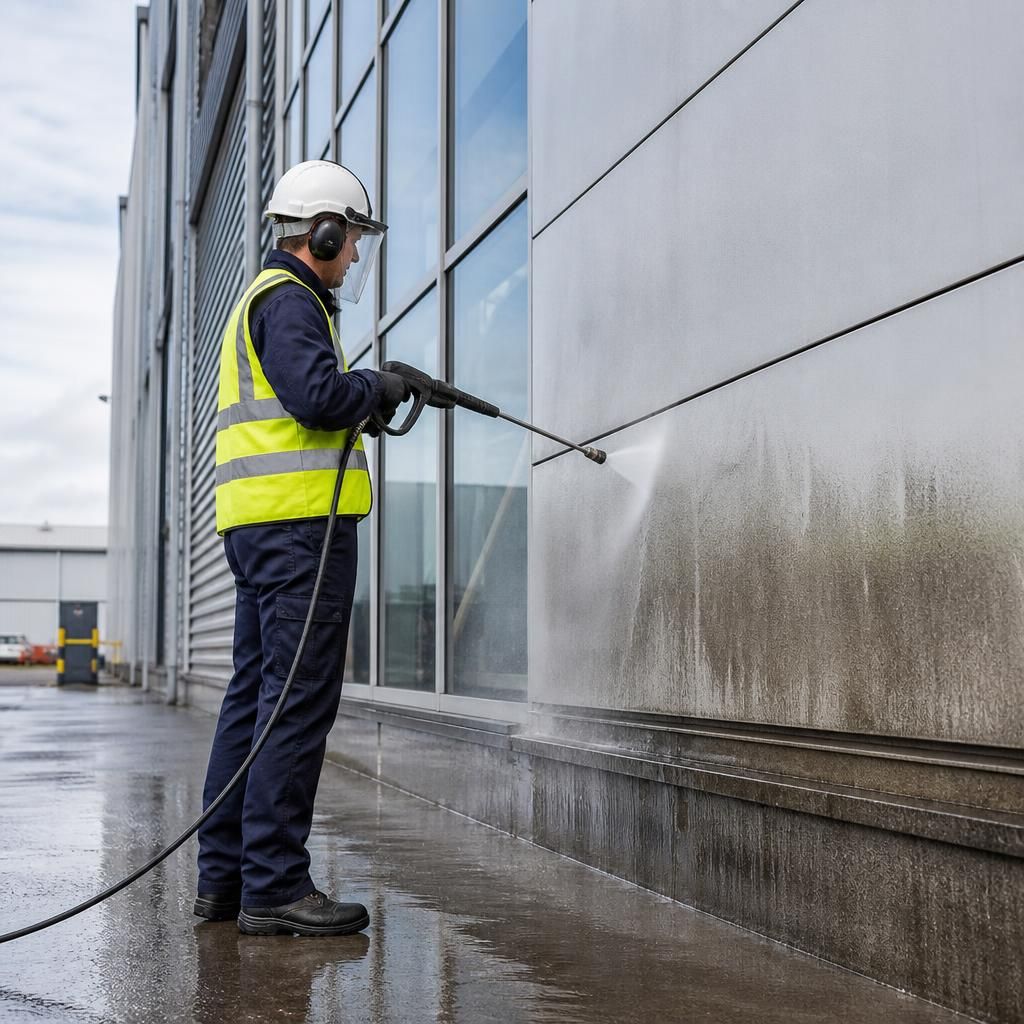
Choosing between pressure washing and steam cleaning should begin with the surface and a controlled test patch, not with the strongest available cleaning setting. Pressure washing can suit sound concrete, paving and other durable surfaces, while steam cleaning is often safer for painted façades, coated cladding, delicate masonry and localised greasy or organic deposits.
A test patch should use the proposed pressure, temperature, nozzle, working distance and cleaning solution. Once dry, the area should be checked for changes to colour, texture, coating adhesion, mortar joints and protective finishes. This is particularly important where the substrate is aged, porous, previously repaired or not clearly identified.
- Use pressure washing only where the substrate can tolerate the water force and volume.
- Use steam cleaning where reduced mechanical impact or lower water use is important.
- Control runoff, protect openings and services, and avoid directing water behind cladding joints or seals.
- Change the method if the test area shows marking, surface erosion, coating damage or water penetration.
On larger commercial sites, a combined approach is often appropriate: pressure washing for robust hard-standing, followed by steam cleaning around entrances, façades, signs and other sensitive details.