
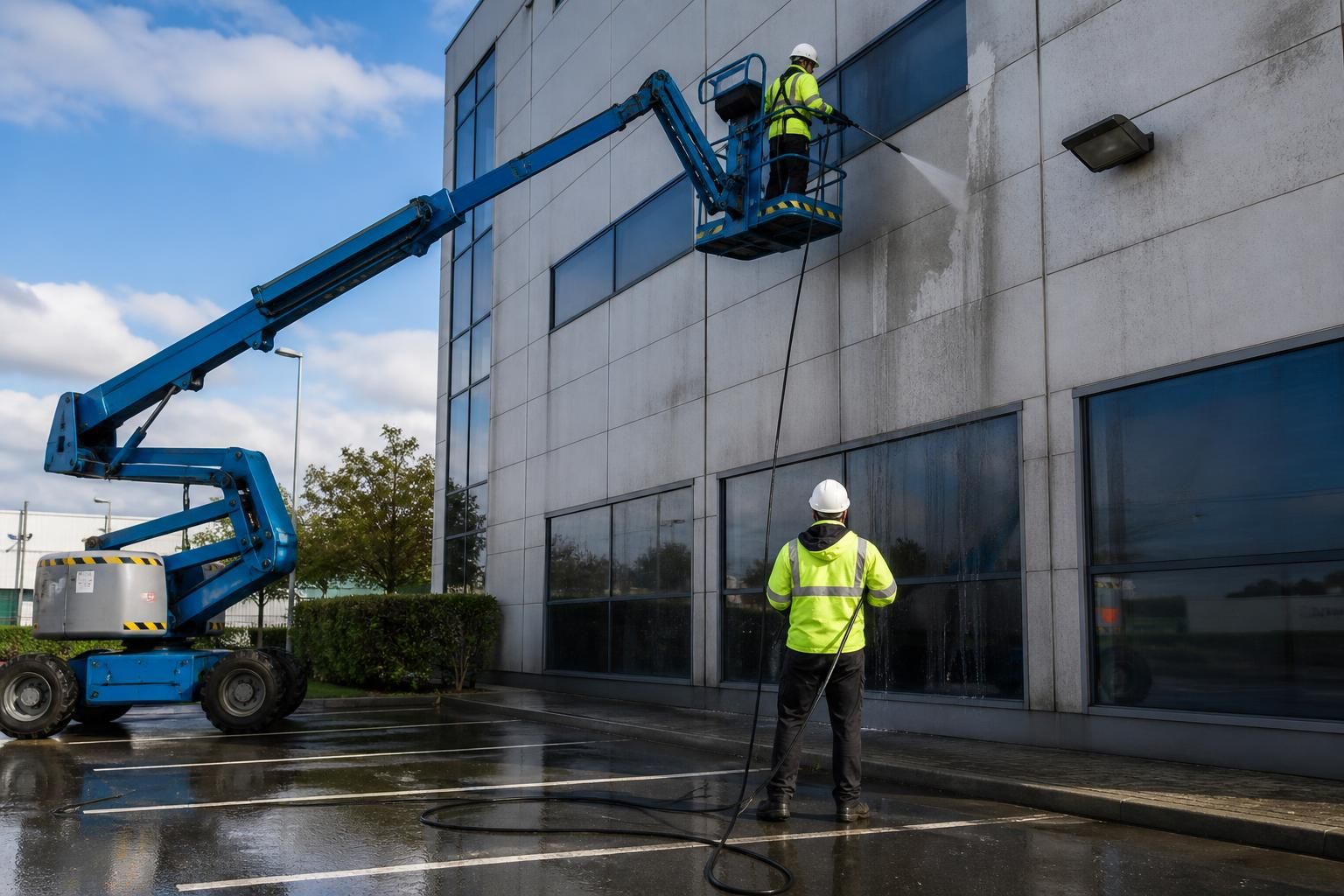
What factors determine the frequency of commercial exterior cleaning for maintaining optimum building condition?
Commercial exterior cleaning frequency depends on the building’s materials and condition, its use, surrounding environment, footfall, weather exposure and the type of soiling present. High-traffic or heavily exposed premises may need scheduled cleaning throughout the year, while lower-risk buildings may only require periodic cleaning alongside inspections and reactive treatment.
Commercial exterior cleaning frequency is determined by how quickly a property accumulates damaging or unsightly contamination. The main factors are the building’s materials and condition, its location, exposure to weather and pollution, level of public use, type of business, surrounding vegetation, and the cleaning standard required. A busy retail, transport, education or industrial site may need planned cleaning several times a year, whereas a less exposed office or managed commercial building may need periodic cleaning supported by regular inspections.
A suitable programme should be based on the condition and risk of each external area rather than applying one interval to the entire property. Façades, roofs, entrances, loading areas, car parks, cladding and external access routes often collect different types of soiling and may require different methods and frequencies.
Building materials and surface condition
Porous materials such as brick, concrete, render and some types of stone can retain moisture and allow algae, moss, carbon deposits and other contaminants to become embedded. These surfaces may require more frequent treatment where staining is recurring or drainage is poor. Metal cladding, coated panels, glazing and other smoother surfaces may shed some contamination more readily, but they can still develop atmospheric soiling, bird fouling, oxidation or streaking.
The age and condition of a surface are also important. Weathered coatings, cracked render, deteriorating pointing and damaged cladding can hold contamination and may be vulnerable to aggressive cleaning. Cleaning should not conceal defects or replace necessary repairs. A professional assessment helps establish whether a surface needs gentle washing, steam cleaning, pressure washing at a controlled level, specialist stain treatment or repair before cleaning.
Location and surrounding environment
Buildings near busy roads, construction activity, industrial operations or areas with high airborne pollution generally collect soiling more quickly. Traffic film, dust and combustion deposits can build up on façades, windows, signage and entrance areas. Sites beside rivers, canals, reservoirs or other damp environments may be more susceptible to algae, moss and organic growth.
Trees, landscaped areas and overhanging vegetation can increase leaf debris, sap, pollen and bird activity. Shaded elevations dry more slowly and may develop biological growth sooner than sun-exposed walls. Properties in exposed locations can also experience wind-driven rain and dirt, while coastal or salt-exposed sites may need closer monitoring for deposits and corrosion risks.
Use of the premises and public footfall
The way a site is used directly affects cleaning requirements. Retail units, hospitality premises, healthcare sites, transport facilities, universities and public buildings often need more frequent attention to entrances, pavements, ramps, handrails, bin areas and other high-contact or highly visible locations. Regular cleaning helps manage ingrained dirt, gum, spills, bird fouling and slip hazards.
Factories, warehouses and distribution premises may accumulate dust, grease, oil, rubber residue, product deposits or material carried by vehicles. Loading bays, service yards and routes used by forklifts or heavy vehicles can require scheduled cleaning even when the main building façade remains presentable. Premises with strict hygiene, presentation or contractual standards may also need documented cleaning routines and inspections.
Weather and seasonal conditions
Rain does not reliably clean commercial exteriors. It can move dirt across surfaces, leave streaks and keep porous materials damp. Extended wet periods encourage organic growth, while dry and windy conditions can deposit dust and construction residue. Frost, heat and repeated wetting and drying may also worsen existing surface defects.
Seasonal planning is therefore useful. Organic growth and leaf debris may need attention after wetter periods, while entrances and vehicle areas can require additional cleaning during periods of heavy use. Cleaning should be scheduled around suitable weather and surface conditions so that solutions work correctly, surfaces dry safely and run-off can be controlled.
Type and severity of soiling
Different contaminants develop at different rates and require different responses. Light atmospheric dirt may be managed through routine washing, while algae, moss, grease, oil, rust, efflorescence, chewing gum, bird fouling and graffiti may need targeted treatment. If contamination is left in place, it can become more difficult to remove and may contribute to staining, blocked drainage, surface deterioration or hygiene concerns.
Reactive cleaning is appropriate for isolated incidents such as graffiti, spills or construction dust, but it should not replace planned maintenance. A recurring stain may indicate a drainage problem, leaking gutter, defective seal, nearby source of pollution or persistent moisture. Identifying and correcting that cause can reduce the frequency of repeat cleaning.
Visual, operational and safety requirements
Some businesses require consistently clean façades and entrances because appearance forms part of their customer, tenant or public-facing standards. Others prioritise safe access, removal of slippery growth, clear signage or the control of industrial residues. Cleaning frequency should reflect the consequences of allowing contamination to build up, including reduced access safety, complaints, reputational impact, damage to finishes and disruption to operations.
High-reach areas may not look heavily soiled from ground level, so façade, roofline and cladding inspections should be included in the maintenance plan. Safe access requirements, traffic management, pedestrian segregation and weather restrictions can affect when work is carried out. Cleaning should be planned by competent contractors using appropriate access equipment and methods for the building and site conditions.
How to establish a practical cleaning schedule
A useful programme normally combines a condition survey, risk assessment and review of previous cleaning results. The process should:
- Identify the materials, finishes and vulnerable features on each elevation and external area.
- Record current contamination, recurring problem areas, drainage issues and areas affected by vegetation or pollution.
- Separate routine cleaning from specialist or reactive work, such as graffiti removal, oil treatment and moss removal.
- Give priority to entrances, pedestrian routes, loading areas, roofs, gutters and locations where contamination could create a safety or operational issue.
- Choose methods that remove the contamination without damaging the substrate, coatings, pointing, seals or surrounding property.
- Set review points so the interval can be shortened or extended according to how quickly contamination returns.
Rather than relying solely on a fixed calendar, many sites benefit from a planned maintenance cycle with inspections between visits. The initial interval can be based on the building’s exposure and condition, then adjusted using evidence from completed work. If a façade remains clean and sound between planned visits, the interval may be extended. If growth, staining or industrial residue returns quickly, more frequent cleaning or remedial work may be necessary.
Typical approach by property area
- Entrances and pedestrian routes: inspect regularly and clean when dirt, gum, bird fouling or organic growth affects appearance, hygiene or slip resistance.
- Façades and cladding: assess according to material, pollution exposure, staining and the required presentation standard.
- Roofs, gutters and roofline features: inspect for moss, leaves, blocked drainage and biological growth, with cleaning linked to the surrounding trees and weather exposure.
- Car parks and service yards: schedule cleaning according to vehicle use, oil or grease deposits, debris and drainage requirements.
- Industrial and warehouse areas: focus on dust, process residues, loading activity, access safety and any site-specific hygiene controls.
- Graffiti-prone surfaces: use rapid reactive removal alongside protective measures or planned inspections where repeat incidents occur.
The correct frequency is ultimately the one that maintains the required condition without unnecessary cleaning, disruption or use of resources. A site-specific assessment can balance appearance, asset protection, safety, environmental controls and operational access. For buildings across Birmingham, the West Midlands and other UK locations, reviewing the programme after seasonal changes, construction work, refurbishment, changes in occupancy or a significant contamination incident helps keep the schedule appropriate over time.

Commercial exterior cleaning frequency should be based on how quickly each area becomes soiled, unsafe or vulnerable to damage, rather than on a fixed interval for the whole property. A condition survey can identify differences between façades, entrances, roofs, car parks and service yards.
Use regular inspections to review recurring contamination, drainage problems, vegetation, weather exposure and changes in site use. The cleaning schedule can then be adjusted: increase the frequency where algae, oil, traffic film or footfall-related soiling returns quickly, and extend it where surfaces remain clean and sound. This planned approach maintains building condition while reducing unnecessary disruption and resource use.