
What are the most common methods used in commercial exterior cleaning and how do they differ?
The most common commercial exterior cleaning methods are pressure washing, steam cleaning, soft washing and specialist chemical or abrasive treatments. They differ mainly in water pressure, temperature and cleaning agents used, so the appropriate method depends on the surface, level of soiling, access requirements and risk of damage.
Commercial exterior cleaning commonly uses pressure washing, hot-water power washing, steam cleaning, soft washing and specialist chemical or abrasive treatments. These methods differ mainly in the pressure and temperature of the water, the cleaning agents used, the level of mechanical agitation and the type of surface being treated. The correct approach depends on the material, the type of soiling, the required finish, access conditions and the risk of damage.
Pressure washing
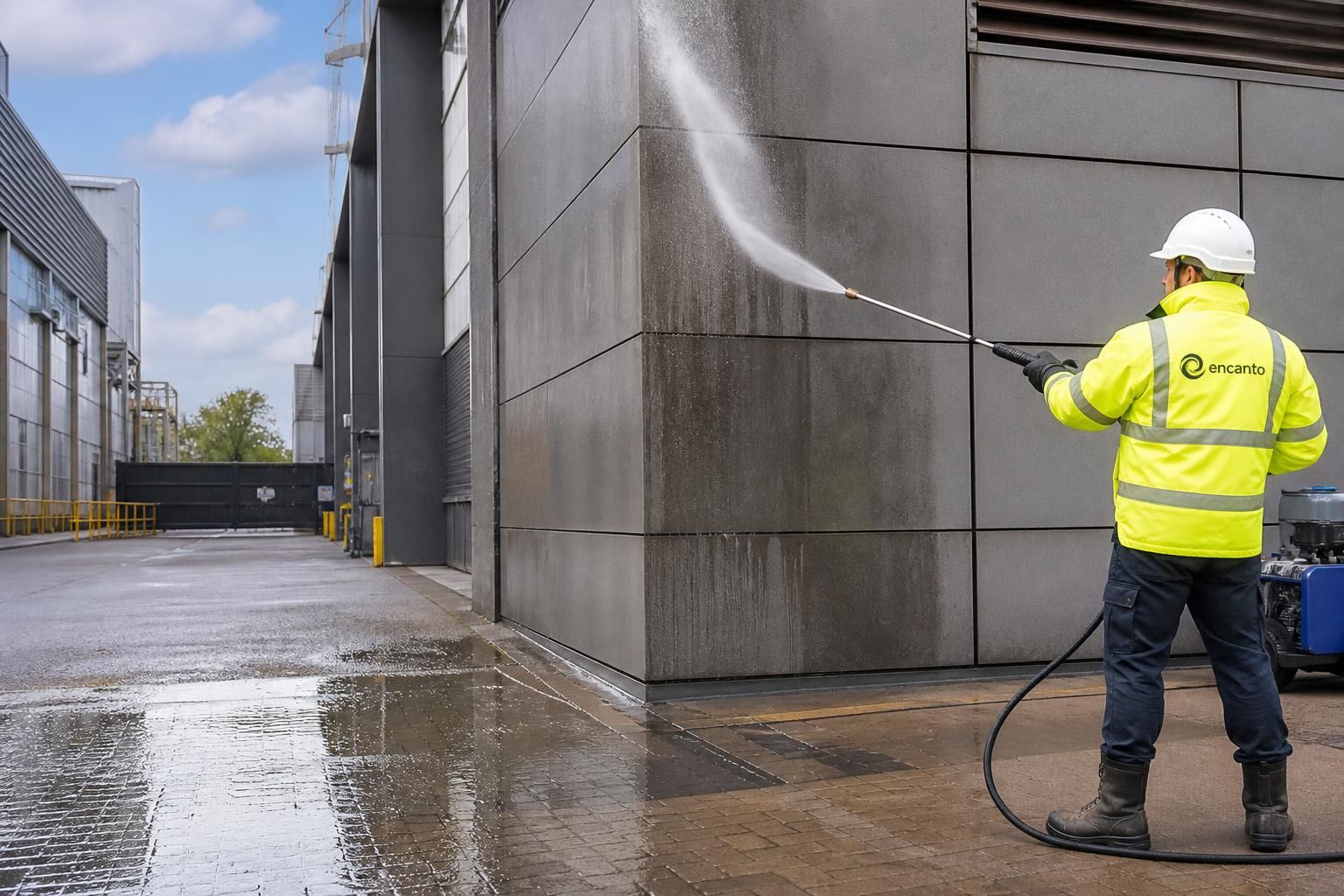
Pressure washing uses a high-pressure water flow to remove dirt and surface deposits through mechanical force. It is effective on robust, water-resistant surfaces such as concrete, block paving, brickwork, some stonework, loading areas, car parks, paths and hard-standing areas.
It can remove accumulated dirt, algae, moss, mud, traffic film and some oil-related contamination, although oil and other chemical residues may require a suitable treatment before or after washing. Operators must select the pressure, nozzle, spray pattern and working distance carefully. Excessive pressure can erode mortar, damage soft brick, strip coatings, mark paving or force water behind cladding and seals.
Hot-water power washing
Power washing is often used to describe pressure washing carried out with heated water. The additional heat helps loosen grease, traffic film, food residues and other oily contamination, reducing the amount of mechanical pressure needed. This makes it particularly useful for service yards, industrial areas, car parks, refuse storage areas, loading bays and commercial premises where hydrocarbons or heavy soiling are present.
Hot water is not automatically suitable for every surface. Heat can affect certain coatings, sealants, plastics and painted finishes, so the cleaning contractor should assess the material before work begins. Run-off also needs to be controlled and disposed of in accordance with site and environmental requirements.
Steam cleaning
Steam cleaning uses very hot water delivered at comparatively low pressure. Its main advantage is that heat does much of the work, helping to soften organic growth, grease, chewing gum, biological residues and ingrained dirt without relying on aggressive water force. It can therefore be appropriate for sensitive masonry, façades, statues, heritage features, signage and areas where reducing water use or splash is important.
Steam cleaning is not a universal replacement for pressure washing. It can take longer on large, heavily compacted areas and may not provide sufficient mechanical action for thick deposits on extensive concrete or paving. It is also essential to consider how heat and moisture may affect painted surfaces, joints, pointing and vulnerable materials.
Soft washing
Soft washing combines low-pressure water with a purpose-selected cleaning solution. The solution breaks down organic contamination such as algae, moss, lichen and mould, while the low-pressure rinse reduces the risk of physical damage. This method is commonly considered for rendered walls, painted façades, roof coverings, cladding and other surfaces that could be marked or eroded by high-pressure water.
Soft washing depends on correct chemical selection, dilution, dwell time and rinsing. Nearby vegetation, drainage systems, occupants, vehicles and sensitive materials must be protected. Chemical application should never be treated as a substitute for competent surface assessment, and contaminated run-off must be managed responsibly.
Specialist chemical cleaning
Some deposits require a chemical treatment because water alone will not dissolve or loosen them effectively. Specialist products may be used for cement staining, rust marks, efflorescence, atmospheric staining, oil residues, paint, chewing gum or biological growth. The treatment is normally selected according to the contaminant and the surface rather than applied as a general-purpose cleaner.
Chemical cleaning requires particular care. A contractor should check compatibility, protect adjacent surfaces, follow the product instructions, carry out a discreet test area and neutralise or rinse the treatment where required. Incorrect products can bleach finishes, alter the colour of masonry, corrode metalwork or damage sealants. Chemical cleaning is therefore best used as a controlled part of a wider cleaning process.
Abrasive and non-abrasive surface treatments
Abrasive cleaning uses a fine media or other controlled abrasive action to remove coatings, corrosion, paint or deeply bonded contamination. It may be suitable for selected industrial surfaces, metalwork or restoration tasks where a coating must be removed before preparation and repainting.
Because abrasive methods can change the texture of a surface and create dust or debris, they are not appropriate for every façade or masonry type. Non-abrasive alternatives, including steam, low-pressure cleaning or specialist media, may be preferable where the underlying material must be preserved. The method should be agreed after assessing the substrate, the required finish and the surrounding environment.
How the methods differ in practice
- Cleaning force: pressure washing relies mainly on water impact, whereas soft washing relies more on chemical action and steam cleaning relies more on heat.
- Temperature: hot-water and steam methods use heat to loosen grease, biological matter and ingrained deposits; cold-water cleaning may be sufficient for loose dirt and general surface washing.
- Surface sensitivity: robust concrete and hard-standing can often tolerate more pressure than rendered walls, aged brickwork, painted surfaces, roof materials or historic masonry.
- Type of contamination: algae and moss may respond well to soft washing, grease may need hot water or a degreaser, while cement, rust or paint may require a specialist treatment.
- Water and run-off: different methods produce different volumes and types of run-off. The site drainage, nearby watercourses and local pollution controls must be considered before cleaning.
- Finish and repeat treatment: some methods remove contamination quickly but do not prevent it returning. Organic growth may need a treatment designed to reduce regrowth, alongside improvements to drainage, shade or maintenance.
Choosing the appropriate method for a commercial property
A competent assessment should begin with identifying the substrate and any existing coating, sealant, pointing or repair. The contractor should then determine whether the soiling is organic, oily, mineral, atmospheric or associated with paint, rust or construction residue. Access, working height, pedestrian movement, nearby vehicles, electrical equipment and the condition of the building envelope also influence the method.
Testing a discreet area is an important part of the process. It allows the operator to confirm the cleaning result, identify any colour change or surface damage and establish suitable pressure, temperature, chemical concentration and dwell time before treating the full area. For larger commercial premises, the work should also include a plan for water supply, access equipment, exclusion zones, signage, run-off control and protection of occupants and neighbouring property.
In many projects, the best result comes from combining methods rather than using one technique throughout. For example, a low-pressure chemical treatment may remove biological growth from a façade, while hot-water pressure washing is used on a greasy service yard and steam cleaning is reserved for sensitive architectural details. The objective is to use the least aggressive method that achieves the required standard, protects the surface and complies with the site’s health, safety and environmental controls.
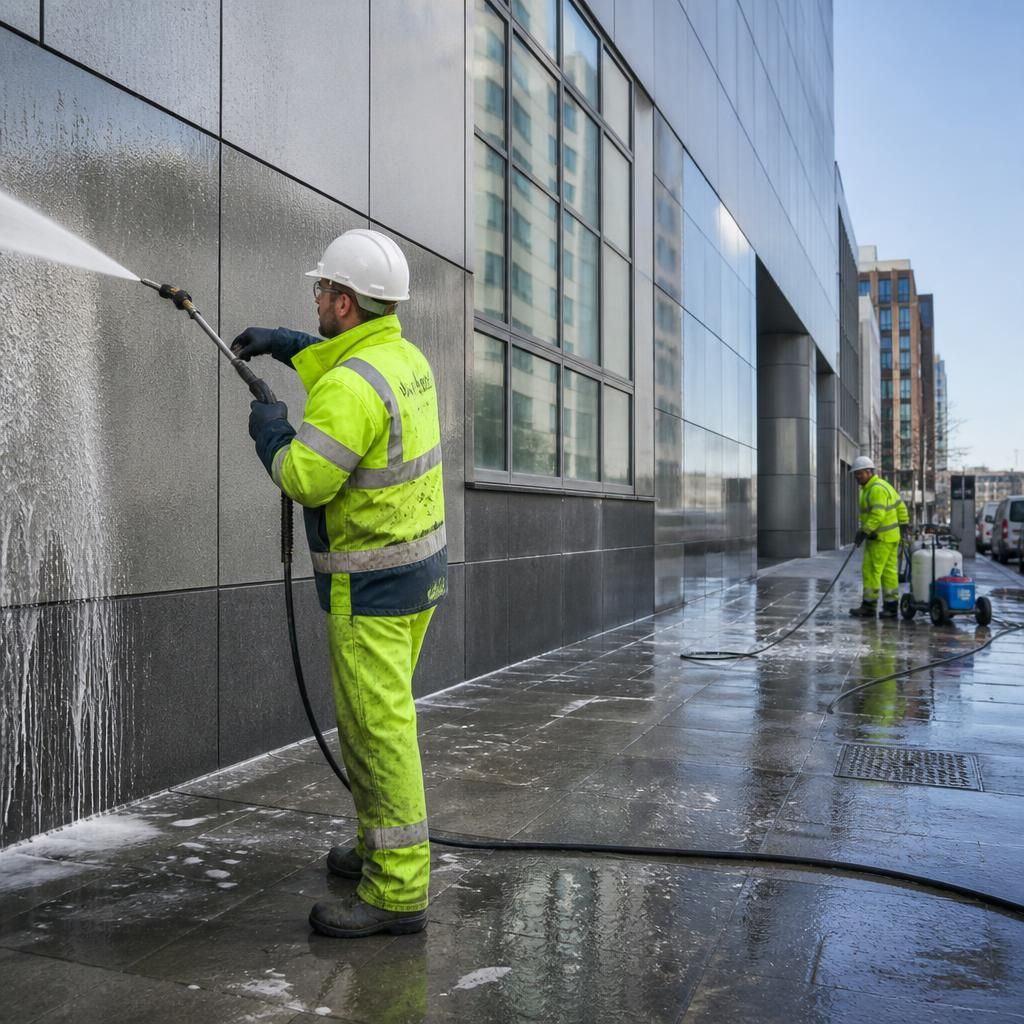
The correct commercial exterior cleaning method is determined by the surface, the type of contamination and the level of cleaning force the material can safely withstand. A competent assessment and discreet test area help confirm the suitable pressure, temperature, chemical concentration and dwell time before larger-scale work begins.
Different areas of the same premises may require different techniques. For example, soft washing may be suitable for organic growth on a rendered façade, hot-water pressure washing for grease in a service yard, and steam cleaning for sensitive architectural details. Using the least aggressive method that achieves the required result helps protect coatings, pointing, seals and surrounding surfaces while supporting safe control of water and chemical run-off.