
What are the key benefits of regular commercial exterior cleaning for businesses?
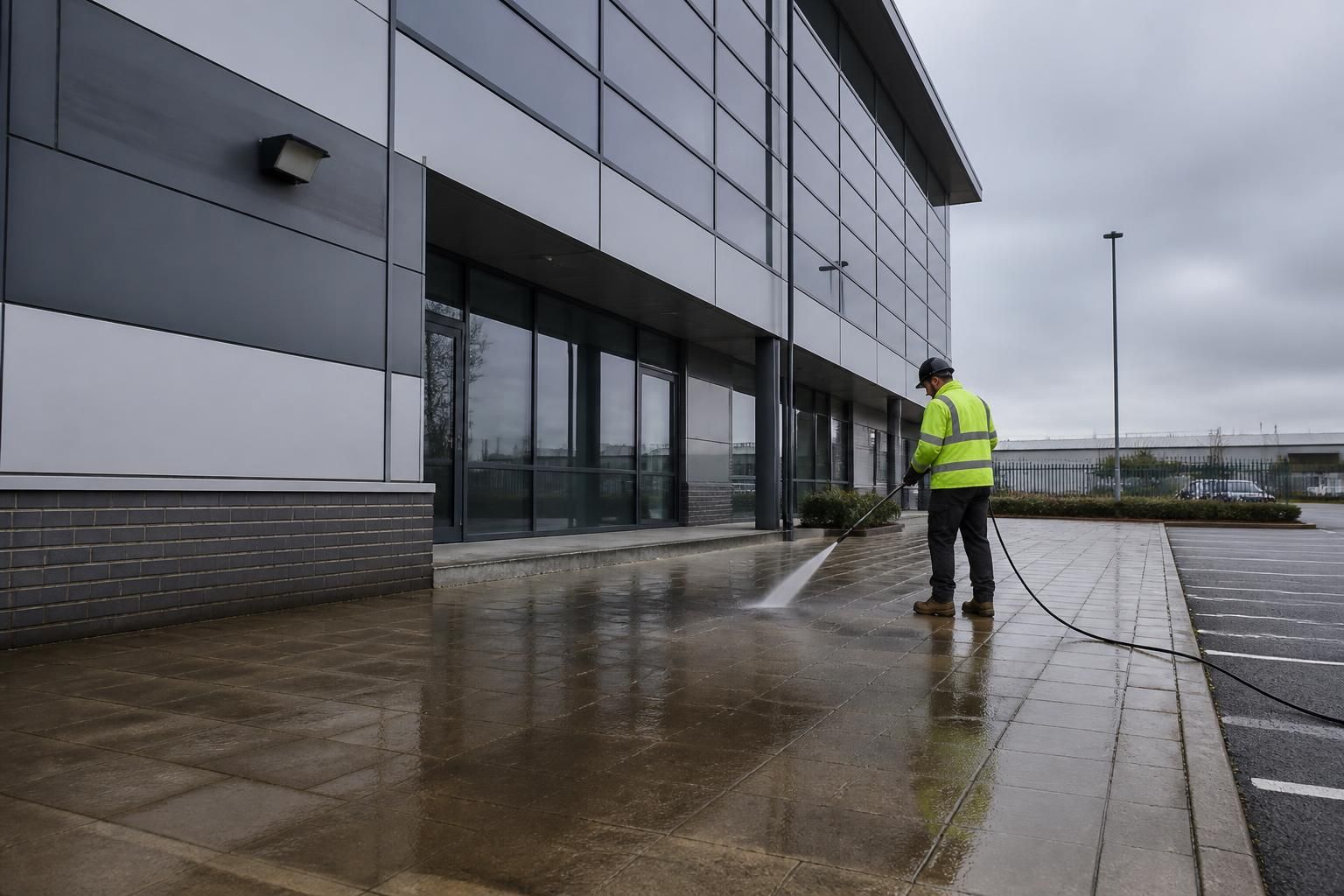
Regular commercial exterior cleaning removes dirt, algae, pollutants, oil and other contaminants before they cause lasting surface damage or create slip hazards. It helps businesses maintain safer premises, protect building materials, present a professional image and reduce the need for more costly reactive repairs.
Regular commercial exterior cleaning removes dirt, algae, moss, oil, traffic film, pollutants, bird fouling and other contaminants before they damage building surfaces or create avoidable hazards. For businesses, the main benefits are safer access areas, better protection of the property, a more professional appearance, easier maintenance planning and fewer costly reactive repairs.
Improved health and safety
Contamination on external surfaces can create practical risks for employees, visitors, contractors and members of the public. Algae, moss, grease and oil may make paving, steps, ramps, loading areas and car parks slippery, particularly when wet. Bird fouling can also present hygiene concerns, while accumulated debris can obstruct drainage channels or conceal defects.
A planned cleaning programme helps control these risks by removing contaminants before they become heavily established. Cleaning should form part of a wider inspection and maintenance process rather than being treated as a substitute for repairs. Cracked paving, damaged surfaces, poor drainage, loose render and defective handrails still require appropriate remedial work.
Protection of building materials and external surfaces
Dirt and organic growth are not merely cosmetic problems. Moss and algae can retain moisture against masonry, paving, roofs and other surfaces. Pollutants and traffic film may also contain substances that gradually discolour or degrade finishes. On façades and cladding, accumulated contamination can make it harder to identify early signs of corrosion, failed sealant, water ingress or surface deterioration.
Routine removal reduces the time contaminants remain in contact with the building. It also makes inspections more effective, allowing maintenance teams to identify defects while they are more manageable. The cleaning method must be matched to the material and condition of the surface. Excessive pressure, unsuitable chemicals or poorly controlled water can cause damage, so professional assessment is important for delicate masonry, coatings, render, roofs and high-reach areas.
A more professional appearance
The exterior of a commercial property influences how customers, tenants, employees, suppliers and visitors assess the organisation operating from it. Stained walls, dirty entrances, neglected car parks and heavily marked service areas can suggest poor maintenance, even when internal operations are well managed.
Regular cleaning helps maintain a consistent standard across façades, entrances, walkways, signage surrounds, loading areas and communal spaces. This is particularly relevant for offices, retail premises, managed property portfolios, industrial sites, educational establishments and public buildings where many people see the exterior every day. Maintaining cleanliness as part of routine property management is generally more effective than waiting until contamination becomes prominent.
Lower long-term maintenance costs
Planned cleaning can reduce the likelihood of minor contamination developing into a more difficult maintenance problem. Established moss, oil deposits, corrosion staining and ingrained pollution may require longer preparation, specialist treatments or additional access equipment. In some cases, neglected surfaces may need repair, resurfacing, repainting or replacement rather than simple cleaning.
Regular cleaning does not eliminate the need for capital maintenance, but it can help preserve the condition of existing finishes and make deterioration easier to monitor. It also supports more predictable budgeting. A planned programme allows cleaning to be scheduled alongside inspections, repairs, landscaping, access arrangements and other site activities instead of requiring an urgent response when the appearance or safety of the premises has already become unacceptable.
Better drainage and reduced contamination build-up
Leaves, silt, moss and general debris can accumulate around gullies, channels, kerbs and roof drainage points. If these areas become restricted, water may pond on hard surfaces or overflow against walls and entrances. Exterior cleaning can remove surface contamination and expose drainage issues that may otherwise remain hidden.
Drainage maintenance may need to be arranged separately, particularly where channels, gutters or below-ground systems require specialist clearance. A responsible cleaning assessment will distinguish between surface cleaning and drainage work and will identify conditions that need attention from another contractor or maintenance team.
More effective property inspections
Clean surfaces provide a clearer view of the condition of the building. Once dirt, biological growth and staining have been removed, property managers can assess pointing, sealants, coatings, cladding joints, roof coverings, concrete, paving and drainage details more accurately. This can help identify emerging issues such as cracks, failed joints, corrosion, water staining or loose materials.
Cleaning records, photographs and site reports can support planned maintenance decisions and provide useful evidence for property owners, facilities teams and managing agents. Where a site has multiple buildings or phases, consistent records also make it easier to compare condition over time.
Support for business continuity
Reactive cleaning often has to be arranged around an immediate problem, such as an access route becoming slippery, a public-facing façade becoming heavily stained or an industrial yard becoming contaminated with oil. This can cause disruption and require short-notice changes to pedestrian routes, vehicle movements or site operations.
A scheduled service can be coordinated with opening hours, delivery periods, tenant requirements and existing site controls. Appropriate planning can limit disruption by defining work areas, access requirements, water management, drying time and any temporary restrictions. For larger or occupied premises, phased cleaning may be more practical than closing a whole area at once.
Practical considerations for an effective programme
- Assess the surface, contamination type, building height, access requirements and surrounding environment before selecting a method.
- Use pressure washing, soft washing, steam cleaning or chemical treatment only where appropriate for the material and condition.
- Control overspray, run-off, wastewater and chemical use so nearby people, vehicles, landscaping and drainage systems are protected.
- Plan work around site activities and provide suitable exclusion zones, signage and pedestrian controls.
- Record areas cleaned, methods used, defects observed and any recommendations for follow-up maintenance.
- Set the cleaning frequency according to exposure, surface type, contamination levels, footfall, vehicle movements, weather and the consequences of deterioration.
In practice, regular commercial exterior cleaning is most valuable when it is integrated with inspections and planned maintenance. It helps keep premises safer and presentable, protects external materials, supports earlier defect detection and reduces the risk that manageable contamination develops into expensive or disruptive remedial work. The right schedule and method will depend on the site, so cleaning should be reviewed when the building use, surrounding conditions or surface condition changes.
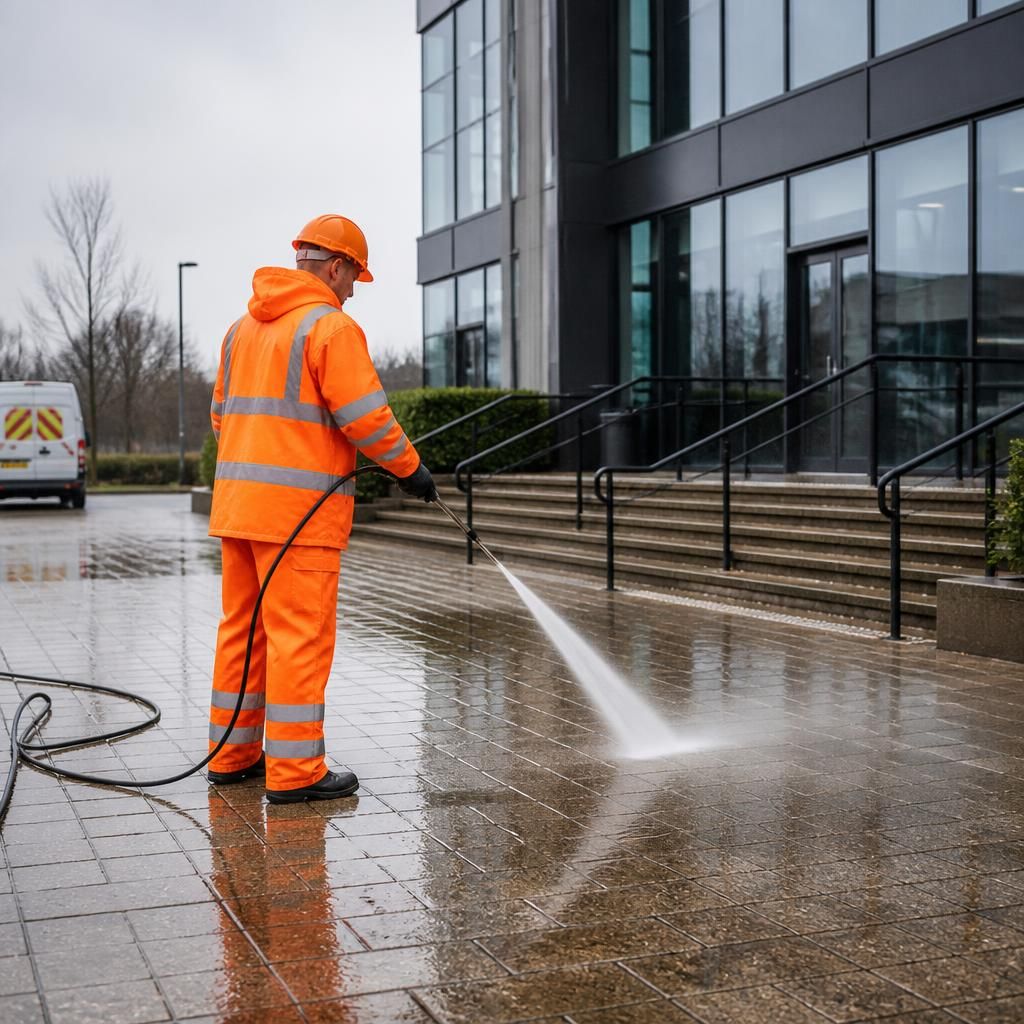
Regular commercial exterior cleaning helps reduce avoidable hazards by removing algae, moss, oil, grease, bird fouling and debris from walkways, steps, ramps, loading areas and car parks. These contaminants can make surfaces slippery, obstruct drainage or create hygiene concerns for employees, visitors, contractors and the public.
Cleaning should form part of a wider inspection and maintenance programme. Once contamination is removed, defects such as cracked paving, damaged coatings, failed joints and drainage problems are easier to identify and address before they cause greater disruption.
Arrange regular commercial exterior cleaning for your business
Arrange a regular commercial exterior cleaning programme with Encanto Exterior Cleaning to help protect your surfaces, manage safety risks and maintain a professional site appearance. Contact us to discuss your premises, cleaning requirements and suitable maintenance schedule.