
What environmental considerations are there for university exterior cleaning?
University exterior cleaning should minimise water consumption, prevent detergents, dirt and contaminants entering surface-water drains, and protect plants, soil, wildlife and nearby watercourses. Sustainable planning includes using low-water or steam-cleaning methods where suitable, selecting biodegradable products, controlling runoff, and disposing of wastewater in line with local environmental requirements.
University exterior cleaning should be planned around water efficiency, pollution prevention, chemical selection, protection of habitats and responsible waste management. A suitable method must remove dirt, algae, biological growth, staining or graffiti without allowing contaminated wash water to enter surface-water drains, soil, planting areas or nearby watercourses.
Assess the site before work begins
University campuses often contain a mixture of teaching buildings, laboratories, residences, sports facilities, landscaped areas, drainage channels and water features. Before selecting equipment or detergents, the contractor should assess the surfaces, the type of soiling, drainage routes, sensitive receptors and the proximity of people, vehicles and wildlife. This assessment should identify whether runoff could reach ponds, streams, groundwater, planted borders or neighbouring properties.
Cleaning plans should also consider building materials and existing coatings. Using excessive pressure or unsuitable chemicals can damage masonry, façade finishes, jointing, paint, sealants and protective treatments. Avoiding unnecessary repeat cleaning is an environmental benefit because it reduces water, energy, chemical use and waste over the life of the building.
Control water consumption
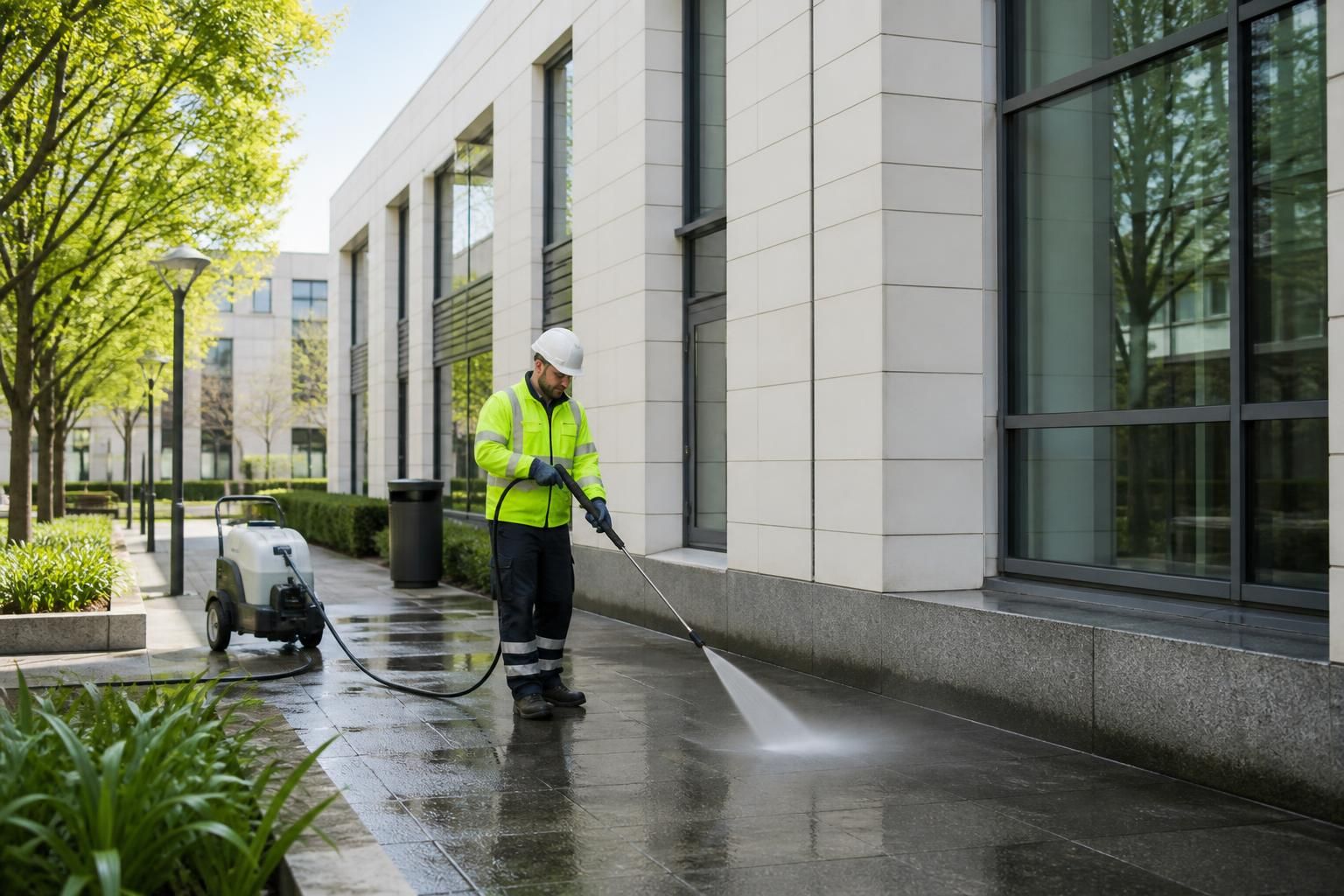
Water use should be proportionate to the cleaning requirement. Low-pressure washing, controlled jetting, brush systems and targeted rinsing can reduce consumption compared with indiscriminate high-volume washing. Steam cleaning may be appropriate for some hard surfaces and sensitive areas because it can use less water and may reduce the need for detergents, although the correct method depends on the material and the type of contamination.
Operators should avoid leaving equipment running when it is not being used and should use adjustable nozzles, trigger controls and suitable flow rates. Where water is drawn from a mains supply, the connection should be properly managed to prevent wastage and contamination. Recovered or recycled water may be suitable for certain preparatory or non-sensitive tasks, provided its quality is controlled and it will not transfer contamination to the surface.
Prevent contaminated runoff
Runoff from exterior cleaning can contain detergents, oils, fine sediment, paint particles, biological material, heavy metals or graffiti residues. It should never be allowed to flow into a surface-water drain unless the discharge is confirmed to be acceptable by the relevant authority or drainage operator. Surface-water systems commonly discharge to the environment without the treatment provided by a foul-water system.
Before cleaning, drainage points should be identified and protected using suitable drain covers, bunding, temporary barriers or absorbent materials. The work area may need to be divided into manageable sections so that water can be collected rather than allowed to spread across a large paved area. Wet vacuums, pumps, collection tanks and filtration equipment can help recover wash water, but the equipment must be appropriate for the contaminants present.
Collected wastewater should be assessed and disposed of through an authorised route. It must not be poured onto ground, into landscaping or into a drain simply because it appears clear. Requirements can vary according to the substance, location and receiving drainage system, so the cleaning contractor should confirm the disposal arrangement before work starts and retain relevant records.
Choose chemicals carefully
Detergents, biocides, degreasers and graffiti-removal products should only be used where they provide a clear cleaning benefit. The preferred product is one that is effective at the required dilution, suitable for the surface and supported by clear safety and environmental information. Biodegradability alone does not make a product suitable for discharge, particularly where it could harm aquatic life or enter a sensitive drainage system.
Product selection should take account of pH, aquatic toxicity, volatility, persistence, corrosiveness and the risk of affecting plants or nearby materials. Safety data sheets and product instructions should be reviewed, and chemicals should be stored, mixed and transported to prevent spills. Operators should use the lowest effective concentration and prevent overspray onto planting, soil, air-intake systems and building entrances.
Graffiti removal requires particular care because paint, solvents and dissolved residues can create contaminated wastewater. Dry removal, controlled low-pressure methods or capture systems may be preferable in some locations. Any residue collected from graffiti work should be treated as a waste stream requiring appropriate containment and disposal.
Protect planting, wildlife and watercourses
Cleaning should be scheduled and controlled to avoid harm to trees, planted borders, nesting areas and other habitats. Plants should be shielded from spray and chemical contact, and overspray should be prevented around ponds, streams and drainage ditches. If birds, bats or other protected species may be present in building voids, roof spaces or façades, the university should arrange any necessary ecological checks before work begins.
Algae, moss and other biological growth should be removed using a method that limits dispersal into surrounding areas. A contractor should not assume that a visible growth is harmless or that a treatment can be applied near water without controls. Where cleaning involves roofs, gutters or bird fouling, the waste may also require careful handling because it can contain pathogens or concentrated organic material.
Reduce energy use, noise and disruption
Environmental performance includes more than water and chemical use. Equipment should be selected for the scale of the work so that oversized plant is not operated unnecessarily. Efficient pumps, well-maintained machinery and sensible routing of equipment can reduce fuel use and emissions. Where practicable, electric equipment can reduce local exhaust emissions, but charging arrangements, cable safety and the availability of suitable power must be considered.
Noise, spray drift and vehicle movements should be managed around lecture rooms, laboratories, residences and wildlife-sensitive areas. Cleaning during agreed low-occupancy periods can reduce disruption and may allow barriers, extraction equipment and wastewater controls to remain in place without interfering with campus operations. This should be balanced against restrictions on early-morning or evening noise and the needs of nearby residents.
Manage waste responsibly
Filters, absorbent pads, protective sheeting, empty containers, removed coatings and contaminated solids should be segregated and stored securely. Waste must be transferred using an appropriate disposal route, with documentation retained where required. Reusable drain covers, washable protection and durable equipment can reduce single-use materials over repeated maintenance visits.
Include environmental controls in the cleaning plan
A university should expect the method statement to explain the proposed cleaning technique, estimated water requirements, chemical controls, drainage protection, wastewater collection, spill response and waste-disposal arrangements. The plan should name who is responsible for checking weather conditions, inspecting barriers, monitoring runoff and stopping work if controls fail. Cleaning should be postponed during heavy rain or high winds where these conditions could spread pollutants or make containment ineffective.
After completion, the work area should be inspected for residue, blocked drains, chemical containers and damage to planting or surfaces. Recording the method, products used, incidents, wastewater route and lessons learned helps improve future maintenance. These controls allow university exterior cleaning to achieve the required standard while protecting the campus environment and meeting the responsibilities associated with commercial cleaning work in the UK.
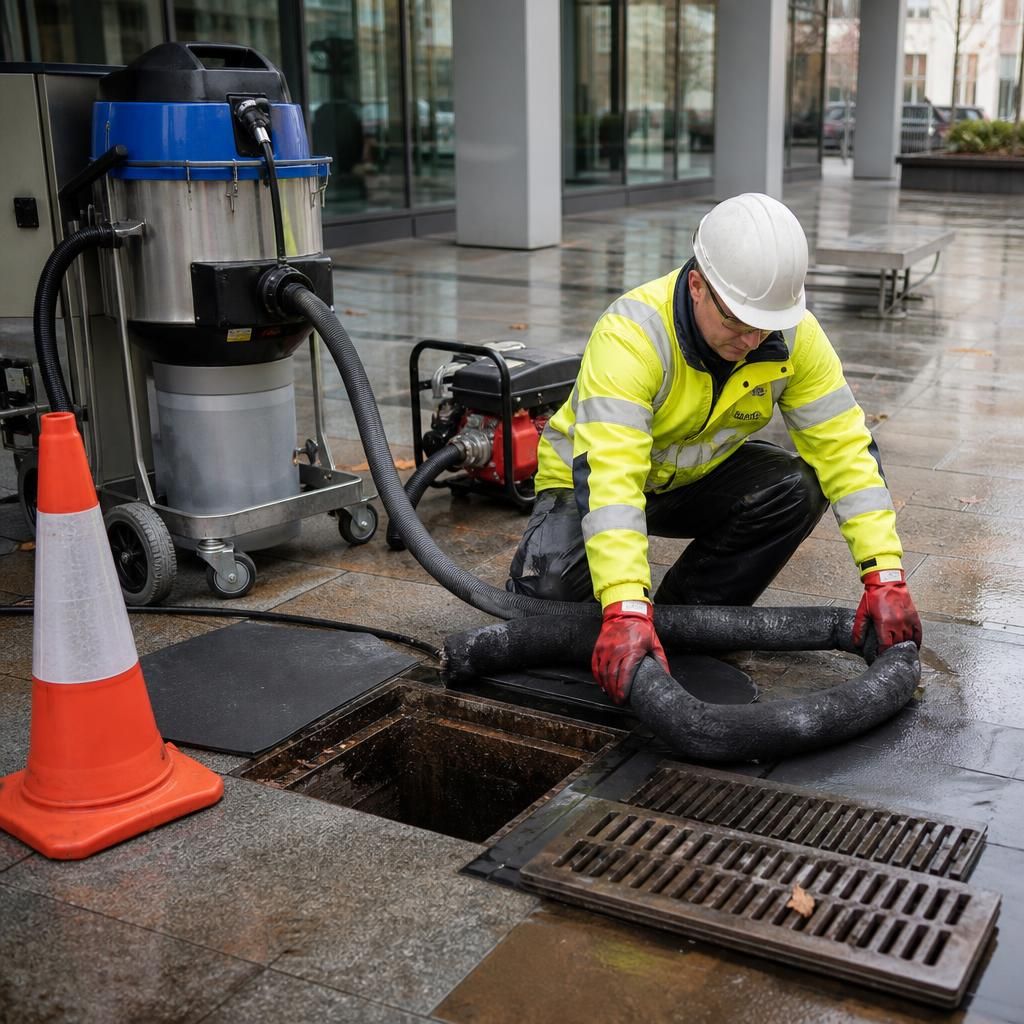
Controlling contaminated runoff is one of the most important environmental considerations in university exterior cleaning. Wash water may contain detergents, oils, sediment, biological material or graffiti residues, so it must be prevented from entering surface-water drains, planted areas, ponds or nearby watercourses.
Before work begins, drainage points should be identified and protected with suitable covers, barriers or bunding. Where collection is required, wet vacuums, pumps or filtration equipment can recover the wastewater for disposal through an authorised route. Cleaning should be paused if heavy rain or high winds could make containment ineffective, and the completed area should be checked for residue, blocked drains and damage to planting.