
What cleaning techniques are most effective for maintaining university building façades?
The most effective university façade cleaning combines low-pressure washing, steam cleaning and carefully controlled soft-washing, selected according to the façade material, soiling and condition. Professional assessment and safe access methods help remove dirt, algae, staining and graffiti without damaging masonry, cladding, glazing, joints or surrounding campus areas.
The most effective technique for maintaining a university building façade is a material-led cleaning programme that combines controlled low-pressure washing, steam cleaning and, where appropriate, soft-washing. The method should be selected after assessing the façade material, type of soiling, surface condition, access requirements and the risk to students, staff, visitors and adjacent buildings. This avoids using excessive pressure or unsuitable chemicals that could damage masonry, cladding, glazing, sealants or pointing.
University façades commonly contain several materials within the same elevation, including brick, stone, concrete, render, metal cladding, glass, painted surfaces and architectural details. A single cleaning method is therefore rarely suitable for the whole building. A professional survey should identify the substrate, previous coatings, failed joints, biological growth, staining, cracks and vulnerable features before work begins.
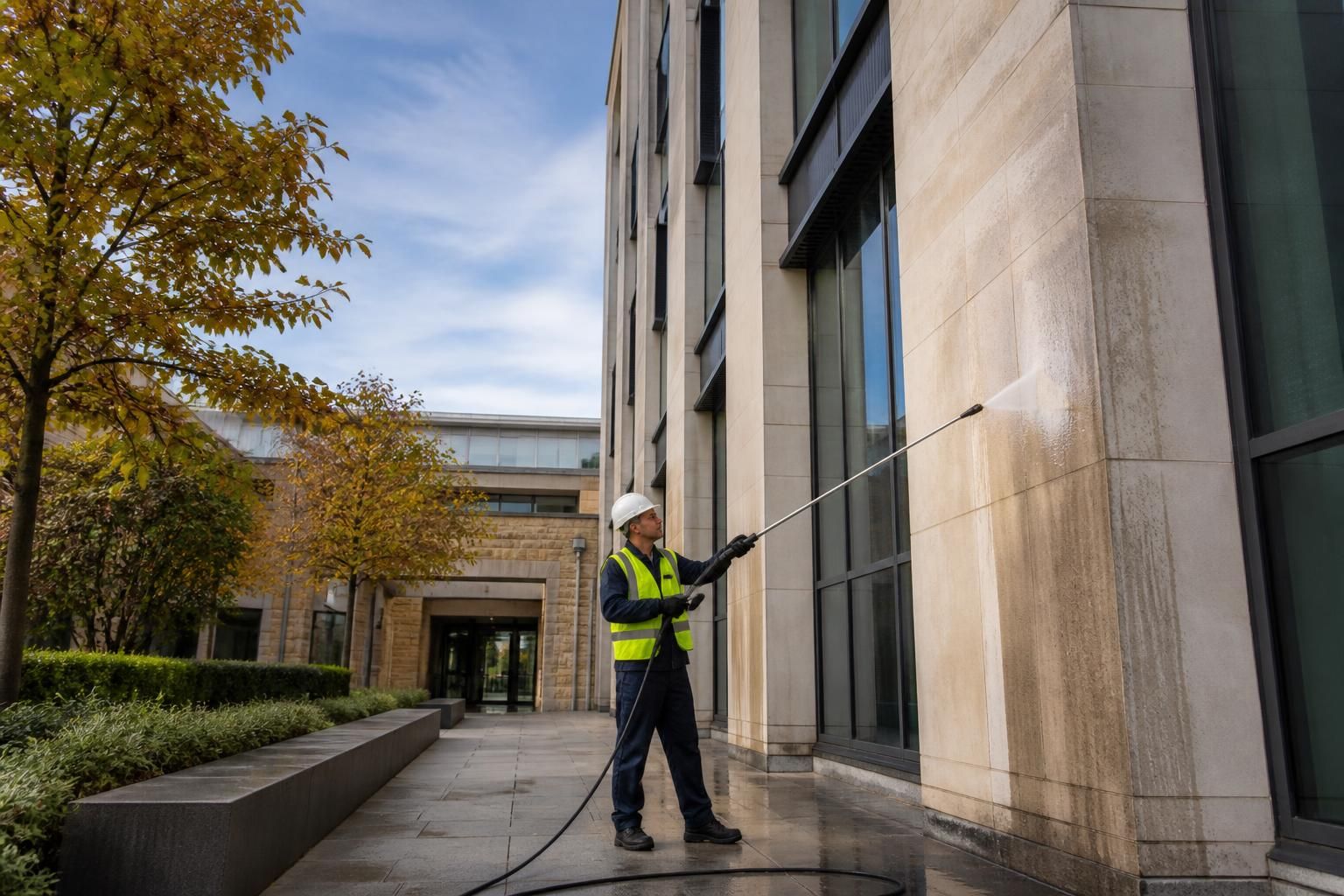
Low-pressure washing is often the most suitable general-purpose method for removing loose dirt, dust, traffic film and some organic deposits from robust masonry and cladding. Water pressure should be controlled rather than maximised, with the nozzle, distance and flow adjusted to the surface. Excessive pressure can erode soft stone, remove mortar from joints, drive water behind cladding or damage paint and protective coatings. Cleaning should normally begin at the gentlest practical setting and only be increased when testing confirms that the surface can tolerate it.
Low-pressure washing is particularly effective when combined with gentle brushing or an approved cleaning solution. The surface is wetted, treated where necessary, agitated carefully and rinsed without allowing dirty water or chemical residue to dry on the façade. Run-off must be managed so that it does not enter drains, affect planted areas or create slip hazards around entrances and pedestrian routes.
Steam cleaning is useful where heat can loosen ingrained dirt, atmospheric staining, grease, chewing gum residue or biological contamination without relying on aggressive mechanical action. The relatively low water volume can also be advantageous on complex façades and around detailed architectural features. Steam cleaning must still be controlled: heat may affect certain paints, sealants, plastics, laminated materials and historic surfaces, while sudden temperature changes can stress fragile stone or glazing.
Steam is not automatically appropriate for every façade. It should be tested on an inconspicuous area, particularly where the building has old coatings, repaired masonry or mixed materials. Operators should also prevent concentrated heat or moisture from entering open joints, vents, electrical fittings and damaged areas.
Soft-washing uses a low-pressure application of a carefully selected cleaning solution to break down algae, moss, lichen and other organic growth. It is valuable on façades where high-pressure water would be unsuitable, including painted render, delicate masonry and some cladding systems. The treatment needs sufficient dwell time to work, followed by controlled rinsing where required by the product and surface. Chemical choice and dilution should be based on the material, the contamination and the surrounding environment rather than on a standard formula.
Soft-washing requires particular care on university campuses. Adjacent vegetation, ponds, drainage systems, air intakes, food-service areas and pedestrian routes should be protected. The work plan should specify containment, run-off control, rinsing and safe storage of products. Biological growth may return if moisture problems, blocked gutters, defective sealants or shaded damp areas are not addressed, so cleaning should be combined with recommendations for correcting the underlying cause.
Dry or low-moisture cleaning methods can be appropriate for localised marks and sensitive features. Soft brushes, non-abrasive pads and specialist gum-removal techniques may remove isolated deposits while limiting water use. Abrasive blasting should be treated with caution because it can strip coatings, roughen stone, expose aggregate and accelerate future soiling. It should only be considered after a detailed assessment and controlled trial, and is generally unsuitable for many historic, glazed or delicate façades.
Graffiti removal should be dealt with promptly using a technique matched to the paint, marker or substrate. Steam, specialist graffiti-removal products and gentle agitation may be used, but strong solvents can soften coatings, discolour masonry or spread the marking into porous surfaces. A small test area should confirm that the treatment removes the graffiti without creating a visible patch or damaging the surrounding finish. Where repeated incidents occur, a suitable sacrificial or permanent anti-graffiti coating can make future cleaning more controlled, provided it is compatible with the façade and approved by the building owner.
Glazing and metal cladding need separate consideration. Glass should be cleaned with equipment and water that will not scratch or leave mineral deposits, while frames, gaskets and sealants should not be subjected to excessive pressure. Aluminium, coated steel and composite panels may be affected by alkaline or acidic products, so the manufacturer’s guidance and existing coating condition should be checked. Cleaning should not conceal corrosion, failed sealant or loose panels that require repair.
Brick, stone, concrete and render should be assessed for porosity, friability, cracking, staining and previous repairs. Acidic products can damage calcareous stone and mortar, while harsh alkaline products may affect coatings and some manufactured materials. Efflorescence, rust marks and biological staining each require different treatment; attempting to remove every mark with greater pressure can cause more damage than the original stain. Where a façade is historic or architecturally significant, conservation requirements may also restrict the available methods.
A reliable façade-cleaning process includes the following stages:
- Review the façade materials, drawings, previous cleaning records, maintenance issues and any manufacturer or conservation requirements.
- Inspect for loose masonry, cracked render, defective joints, damaged coatings, unstable cladding, blocked drainage and areas where water could enter the building.
- Identify the type and severity of soiling, such as general atmospheric dirt, algae, lichen, bird fouling, rust, grease, efflorescence or graffiti.
- Carry out representative test patches using the least aggressive practical method, allowing the result to dry before assessing colour, texture and any change to the finish.
- Agree the cleaning sequence, access arrangements, exclusion zones, water supply, run-off controls and protection for windows, doors, ventilation openings, landscaping and nearby activities.
- Clean in manageable sections, usually from higher areas downwards, while preventing dirty water from drying on already-cleaned surfaces.
- Inspect the completed work for remaining staining, chemical residue, blocked joints, water ingress and accidental damage, then record any repairs or follow-up treatment required.
Access equipment is part of the cleaning method because poor positioning can lead to uneven results or unsafe operating practices. Depending on the building, teams may use mobile elevated work platforms, access towers, cradles, rope access or scaffold-based systems. The choice should account for ground conditions, overhead obstructions, public access, emergency routes and the need to keep entrances, teaching areas and service roads operational.
Cleaning should be scheduled around lectures, examinations, events, deliveries and peak pedestrian movements. Clearly defined work zones, controlled hose routing, signage and suitable barriers reduce disruption and protect people below the work area. A phased programme can allow high-use buildings to remain accessible while elevations are cleaned in sequence.
Effective maintenance does not end when the façade looks clean. Inspection after cleaning can reveal damaged pointing, failed sealants, leaking gutters, staining caused by metal fixings and areas where water is entering behind the external finish. Recording these findings helps the university prioritise remedial work and plan future cleaning according to the building’s materials and exposure rather than relying solely on visual appearance.
In practice, the best results come from using the least aggressive technique that achieves the required standard, supported by testing, competent access planning and appropriate environmental controls. This protects the façade, reduces unnecessary water and chemical use, limits disruption to academic activity and provides a more dependable basis for ongoing campus maintenance.
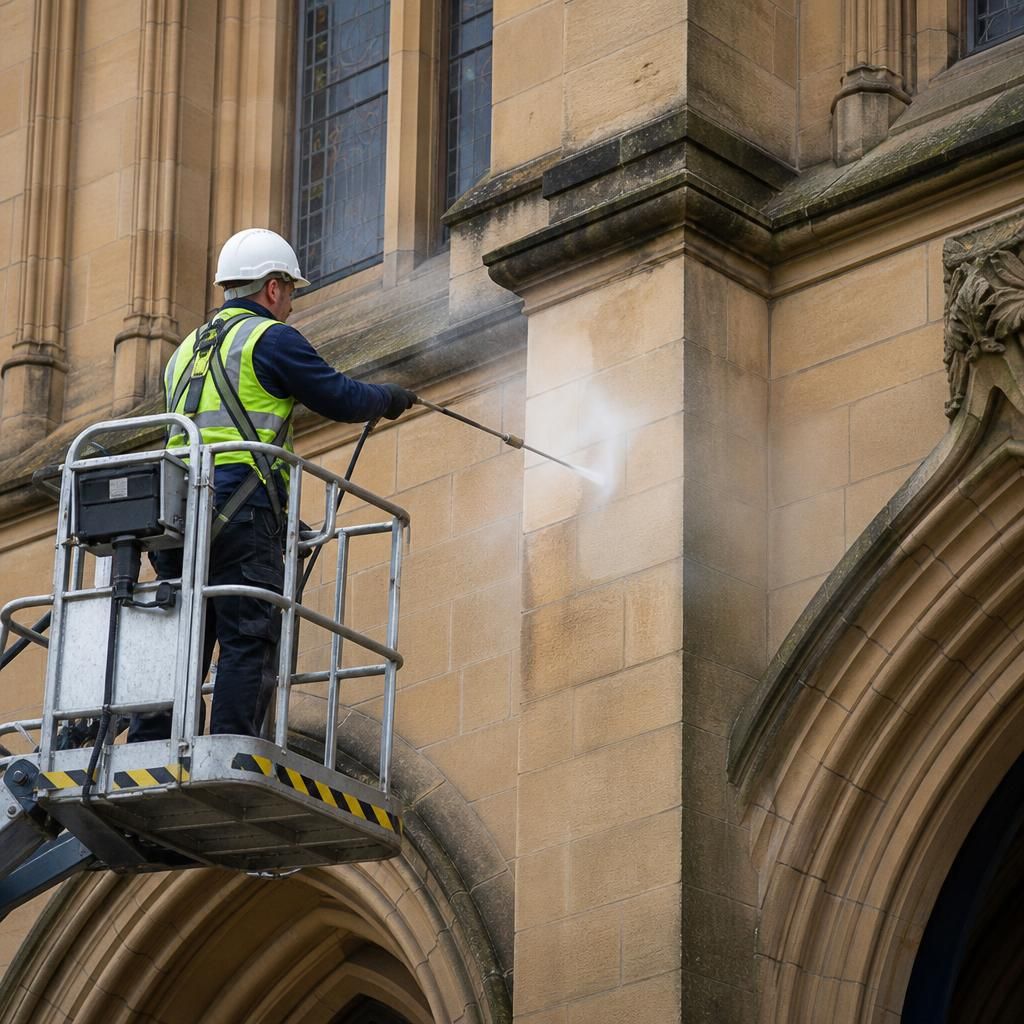
The most effective university façade cleaning technique is the least aggressive method that safely removes the specific type of soiling from the particular surface. A professional test patch should be carried out on representative areas before full cleaning, comparing low-pressure washing, steam cleaning or soft-washing as appropriate.
Testing helps identify risks to brick, stone, render, cladding, glazing, coatings and pointing before work begins. The chosen method should remove staining without excessive water, heat, pressure or chemicals, while run-off, access equipment and pedestrian protection are planned around the university’s daily activities.
Arrange a university façade cleaning assessment
Arrange a university façade cleaning assessment with Encanto Exterior Cleaning to identify the safest, most effective technique for each surface and type of soiling. We can also advise on access, run-off control and scheduling to help maintain the façade with minimal disruption to campus activities.