

What are the best practices for preventing graffiti on university buildings?
The best practice for preventing graffiti on university buildings is to combine anti-graffiti protective coatings with good lighting, access control, routine inspections and rapid removal of any new markings. Coatings should suit the façade material and be professionally applied, while prompt cleaning helps deter repeat vandalism and prevents paint from bonding permanently.
The most effective way to prevent graffiti on university buildings is to combine a suitable anti-graffiti coating with good site security, regular inspections and rapid removal of new markings. No single measure prevents every incident, but a planned approach makes surfaces harder to deface, reduces the time graffiti remains visible and limits the risk of repeat vandalism.
Apply the right protective coating
Anti-graffiti coatings create a barrier between the substrate and paint, ink or adhesive materials. They can make graffiti easier to remove and help prevent solvents, pigments and cleaning processes from damaging the underlying façade. The coating must be selected for the material and finish involved, as a product suitable for brick may not be appropriate for natural stone, render, painted cladding or historic masonry.
Universities should establish whether a permanent, sacrificial or semi-permanent system is most appropriate. Permanent coatings are designed to remain in place through repeated cleaning, whereas sacrificial coatings are removed and reapplied as part of the graffiti-cleaning process. The chosen system should be tested on an inconspicuous area before full application to check colour, sheen, texture, breathability and compatibility with the substrate.
Professional preparation and application are important. Dirt, biological growth, loose coatings and previous graffiti residues can affect adhesion and appearance. Coating work should follow the manufacturer’s preparation requirements and account for weather conditions, curing time, pedestrian movement and nearby teaching or residential areas.
Design out opportunities for vandalism
Building design and the surrounding landscape can influence where graffiti occurs. Recessed doorways, blank walls, service compounds, plant enclosures and poorly overlooked passages can provide secluded surfaces. Where refurbishment or construction work is planned, universities should consider finishes and layouts that reduce hidden areas and make walls easier to inspect and clean.
Dense planting, temporary hoardings and stored materials can obstruct views and create concealed access routes. Keeping vegetation trimmed, removing abandoned items and maintaining clear sightlines around vulnerable façades can reduce opportunities for unauthorised activity. Textured or patterned finishes may also make markings less prominent, although they should not replace a protective coating where graffiti risk is high.
Improve lighting, surveillance and access control
Consistent lighting around entrances, service yards, pedestrian routes, car parks and other exposed areas can discourage activity and make fresh markings easier to identify. Lighting should avoid creating glare or deep shadows and should be maintained as part of the university’s estates programme.
Access control should cover external doors, gates, roofs, plant areas and maintenance compounds. Secure gates, functioning locks and controlled access to ladders or other climbing aids can prevent unauthorised access to prominent elevations. CCTV may support prevention and investigation when it is positioned carefully, maintained properly and operated in line with applicable privacy and data-protection requirements. Signage should explain restricted access and provide a clear reporting route without creating an unnecessarily hostile environment for students, staff or visitors.
Inspect vulnerable areas routinely
A documented inspection programme helps estates teams identify new graffiti, failed lighting, damaged fencing, open gates and other conditions that may increase risk. Inspections should cover façades, boundary walls, signs, street furniture, undercrofts, stairwells, loading areas and temporary construction barriers, not only the main academic buildings.
Inspection frequency should reflect the site’s history, location, accessibility and level of public use. After an incident, the surrounding area should be checked for related markings or attempted access. Photographs and location records can help identify patterns, assess whether protective measures are performing properly and inform future maintenance planning.
Remove graffiti promptly and consistently
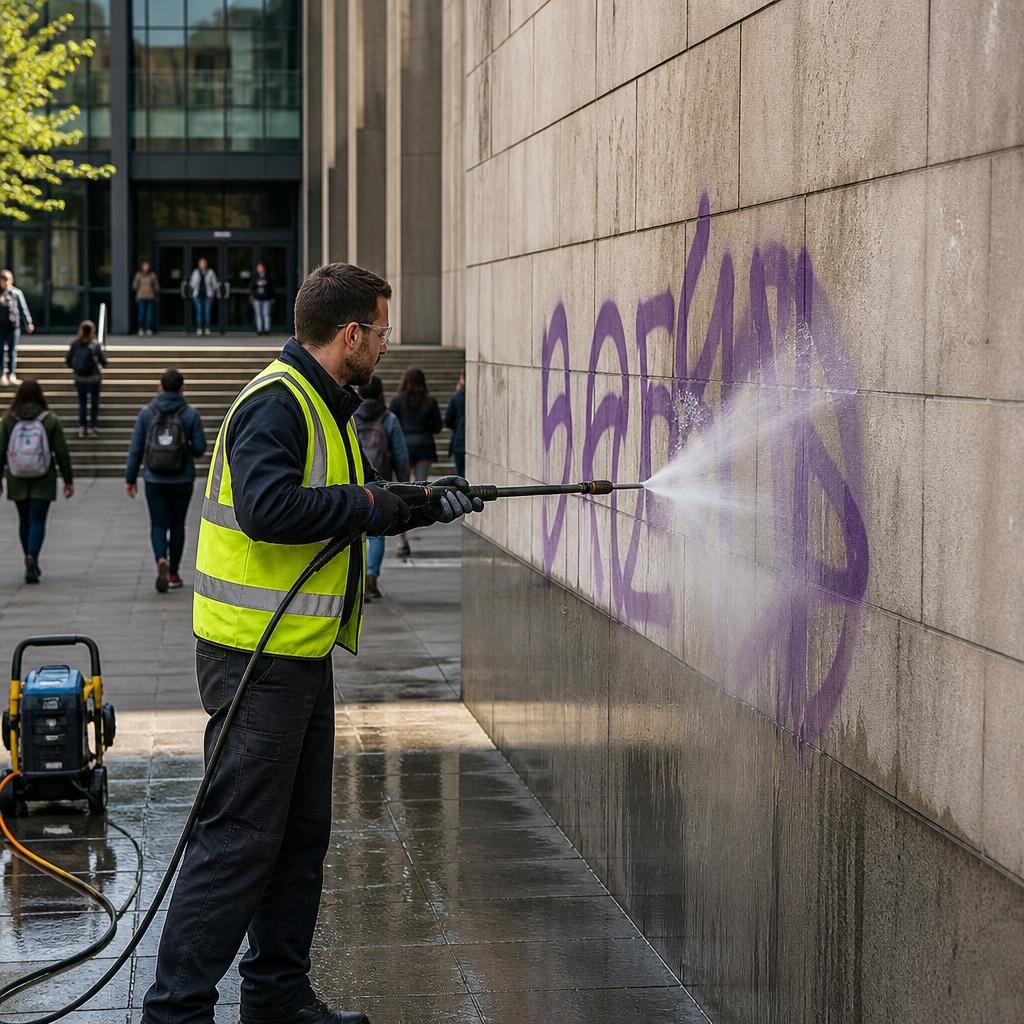
Rapid removal is a key deterrent because visible graffiti can attract further markings and may become more difficult to remove as it weathers or bonds with the substrate. The response process should define who reports an incident, who assesses the surface, which contractor is authorised to clean it and how the work is recorded.
Cleaning should be matched to the affected material, coating and marking. Depending on the surface, a trained contractor may use controlled pressure washing, steam cleaning, specialist chemical products or gentle mechanical methods. Excessive pressure, aggressive chemicals and unsuitable abrasives can etch masonry, strip coatings, spread pigment or drive contaminants further into porous materials. Test cleaning should be carried out where the substrate or coating is sensitive.
Graffiti should not simply be painted over without considering colour matching, coating compatibility, moisture movement and the appearance of the surrounding façade. On listed or architecturally significant buildings, cleaning and coating decisions may also require specialist conservation advice and approval.
Use a clear campus-wide response policy
A written policy should distinguish between graffiti, political or community notices, accidental markings and legitimate artwork, while setting out how each type is assessed. It should include reporting contacts, response priorities, access arrangements, safeguarding requirements, photographic records, waste handling and communication with affected departments.
Students, staff, security teams, cleaning personnel and contractors should know how to report suspected graffiti without touching or attempting to remove it. Markings that may be discriminatory, threatening or linked to a hate incident should be preserved and escalated through the university’s relevant reporting and safeguarding procedures before cleaning, unless immediate safety considerations require urgent action.
Coordinate cleaning with campus operations
Graffiti prevention works best when external cleaning is integrated with planned façade maintenance rather than treated as an isolated reactive task. Estates teams should share information about vulnerable buildings, access restrictions, examination periods, events, residential areas and sensitive research or teaching spaces before work begins.
Contractors should use appropriate access equipment, segregate work areas and control run-off, noise and pedestrian movement. A method statement and risk assessment should address work at height, electrical equipment, chemical handling, traffic routes and public protection. These controls help ensure that prevention and removal measures do not introduce avoidable risks to the university community.
Review performance and adjust the plan
Records should capture the location, type and extent of each incident, the surface affected, the removal method used and any damage left behind. Reviewing this information can show whether incidents are concentrated around particular routes, structures or times of use. The university can then adjust lighting, access control, inspections, coatings or cleaning arrangements rather than repeatedly treating the same symptoms.
Protective coatings should also be checked after cleaning and during routine façade inspections. Peeling, staining, loss of water repellency, changes in sheen or increasing cleaning difficulty may indicate that the system needs maintenance or renewal. A planned review reduces the likelihood of emergency work and helps preserve the appearance and serviceability of university buildings.
Anti-graffiti coatings help prevent permanent staining by creating a protective barrier between the façade and paint, ink or adhesive materials. They do not replace security or inspections, but they make authorised removal safer, quicker and less likely to damage the underlying surface.
The coating must be compatible with the building material and its existing finish. Universities should arrange a small test area before full application, checking colour, sheen, texture, breathability and cleaning performance. Professional preparation is also essential: dirt, biological growth, loose paint and old graffiti residues can affect adhesion.
Once applied, new markings should be reported and removed promptly using a method suited to the coating and substrate. Controlled pressure washing, steam cleaning or specialist cleaning products may be appropriate, while excessive pressure, harsh chemicals and abrasive methods can strip the coating or mark masonry. Records of each treatment help estates teams identify repeat locations and plan coating maintenance.
Arrange Professional Anti-Graffiti Protection for Your University Buildings
Arrange a professional assessment of your university buildings to identify vulnerable surfaces and select compatible anti-graffiti protection. Contact Encanto Exterior Cleaning to plan coating application, access requirements and ongoing graffiti removal around campus operations.