
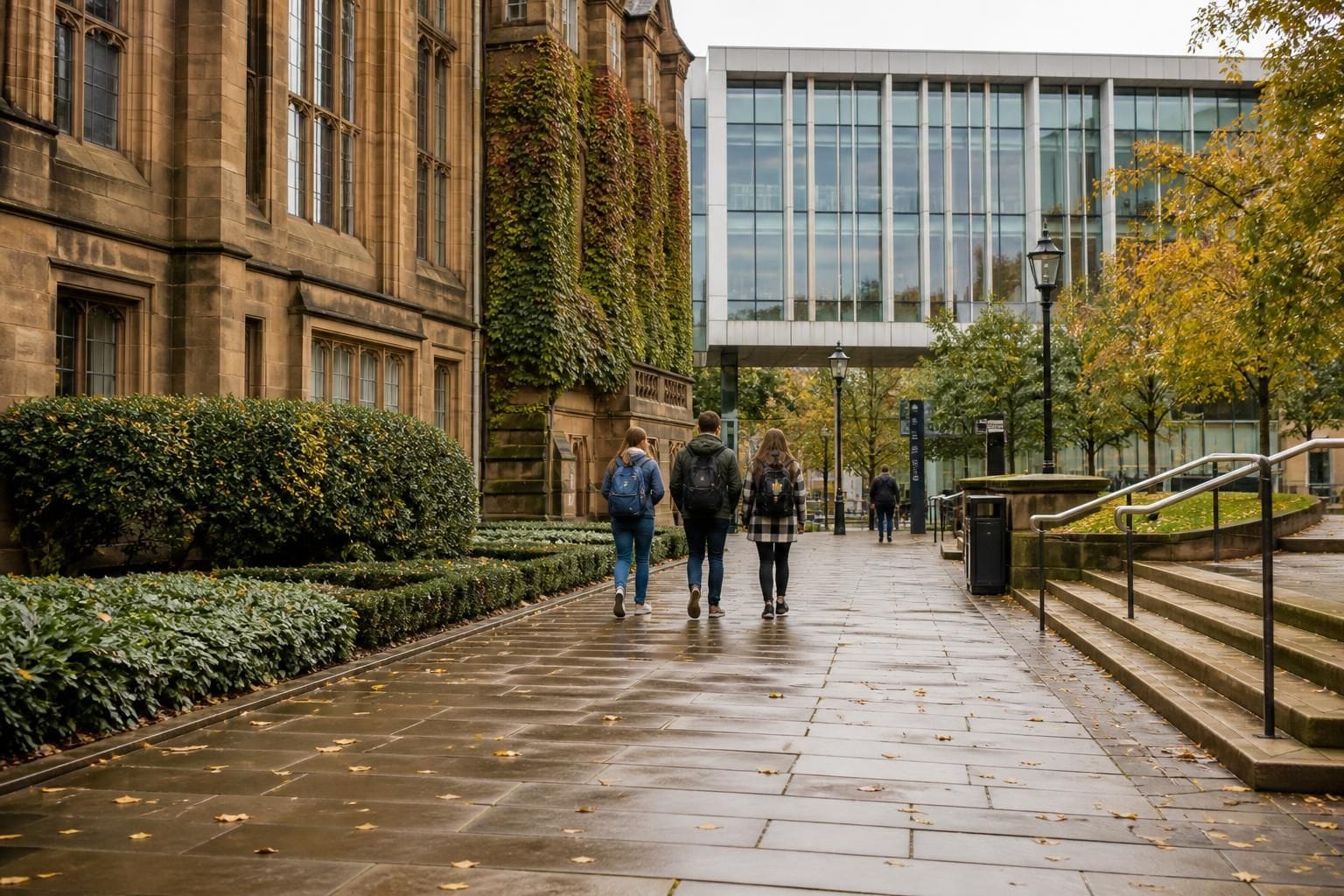
How often should exterior cleaning be scheduled for university campuses to maintain safety and appearance?
University campus exterior cleaning should be planned seasonally, with high-traffic areas, entrances, paths and car parks inspected and cleaned more frequently where safety risks or heavy soiling occur. A site assessment should set the routine schedule, while graffiti, spillages, algae and other hazards should be removed promptly rather than waiting for the next planned visit.
University campus exterior cleaning should be scheduled through a planned, risk-based maintenance programme rather than as a single annual service. A practical approach is to inspect the site throughout the year, clean high-traffic and safety-critical areas more frequently, and arrange broader façade, roof, cladding and hard-surface cleaning around seasonal soiling and the academic calendar. Graffiti, spillages, slippery growth and other hazards should be dealt with promptly rather than left until the next routine visit.
Use a site assessment to set the frequency. The correct interval depends on the campus environment, building materials, surrounding vegetation, footfall and exposure to traffic pollution. A site assessment should identify areas where dirt, algae, moss, bird fouling, chewing gum, oil or litter can affect safety, drainage or the appearance of the estate. It should also record sensitive surfaces, access restrictions, pedestrian routes, delivery areas and any locations where cleaning could disturb teaching or research activities.
High-risk and high-traffic areas need more frequent attention. Entrances, ramps, steps, covered walkways, courtyards, pedestrian routes, car parks and loading areas commonly require more regular inspection and cleaning than less-used elevations. Algae and moss can create slip risks in shaded or damp locations, while oil, food residue and other spillages can make hard surfaces hazardous. These areas should be checked routinely, with responsive cleaning arranged when contamination or deterioration is identified.
A seasonal programme is suitable for wider exterior maintenance. Spring cleaning can remove winter grime, organic growth and residue from façades, paving, access routes and communal areas. Summer may provide suitable conditions for larger external projects, subject to water management, surface temperatures and campus activity. Autumn cleaning should take account of falling leaves, blocked drainage points and increased organic matter. Winter planning should focus on slip hazards, run-off, frost-sensitive surfaces and safe access for operatives and campus users.
Seasonal cleaning should not replace condition-based inspections. Weather, building use and local conditions can change the amount of soiling between planned visits. Trees, nearby construction, busy roads, food outlets and exposed car parks may increase the need for targeted cleaning. Conversely, lightly used elevations may only require periodic maintenance when inspections show that cleaning is necessary.
Separate routine cleaning from specialist projects. A campus maintenance plan commonly includes:
- Regular inspection and responsive cleaning of entrances, paths, steps, ramps, car parks and other high-use areas.
- Planned removal of graffiti, chewing gum, spillages, bird fouling and other localised contamination as soon as it is reported.
- Periodic pressure washing or steam cleaning of suitable paving, yards, service areas and other hard surfaces.
- Planned façade and cladding cleaning based on material type, exposure and visible soiling.
- Roof, gutter and drainage inspections scheduled in line with the condition of the buildings and the amount of surrounding vegetation.
- Additional cleaning after construction, refurbishment, events or exceptional weather.
Façades and cladding should not be cleaned solely because a fixed date has arrived. Over-cleaning can place unnecessary stress on some finishes, while leaving deposits too long can make them more difficult to remove and may contribute to staining or surface deterioration. The method and interval should reflect the substrate, coating, age and condition of the building. Test patches and an agreed specification help confirm that the selected process is appropriate.
Plan cleaning around the academic timetable. Larger projects should generally be arranged during holidays, reading weeks, weekends or other periods of reduced occupancy where practical. This is particularly important for work requiring pressure washing, steam cleaning, mobile access equipment, cordons or vehicle movements. When work must take place during term, divide the project into manageable zones and coordinate each phase with the university’s estates, security and facilities teams. Clear pedestrian diversions, controlled access and suitable working hours can reduce disruption without delaying necessary maintenance.
Cleaning frequency should also reflect the time needed for surfaces to dry and for run-off to be controlled. Work near entrances, laboratories, healthcare facilities, catering areas and accessible routes may require additional planning. The cleaning contractor should confirm how water, detergents, waste and contaminated run-off will be managed before work begins.
Use inspection results to review the programme. After each visit, records should note the areas cleaned, observed defects, recurring contamination, access issues and any recommendations for follow-up work. If a location repeatedly becomes slippery or heavily soiled before the next planned visit, the interval or cleaning method may need to change. If surfaces remain clean and safe, resources may be redirected to areas with greater need. This creates a more efficient programme than applying the same frequency across every building and external space.
Universities should also include clear response arrangements for unplanned incidents. Graffiti, hazardous spillages, storm debris and animal fouling can affect safety and campus reputation immediately. A responsive service can remove these problems before they become harder to treat or attract further damage. Graffiti removal should use a method compatible with the affected surface, followed by consideration of protective treatments where repeated incidents occur.
The most effective schedule is therefore a documented programme combining regular inspections, frequent attention to high-risk areas, seasonal deep cleaning, planned specialist work and rapid responses to new hazards. Reviewing the programme after changes in campus use, building works, landscaping or weather patterns will help maintain safe, presentable premises while avoiding unnecessary cleaning and disruption to university activities.
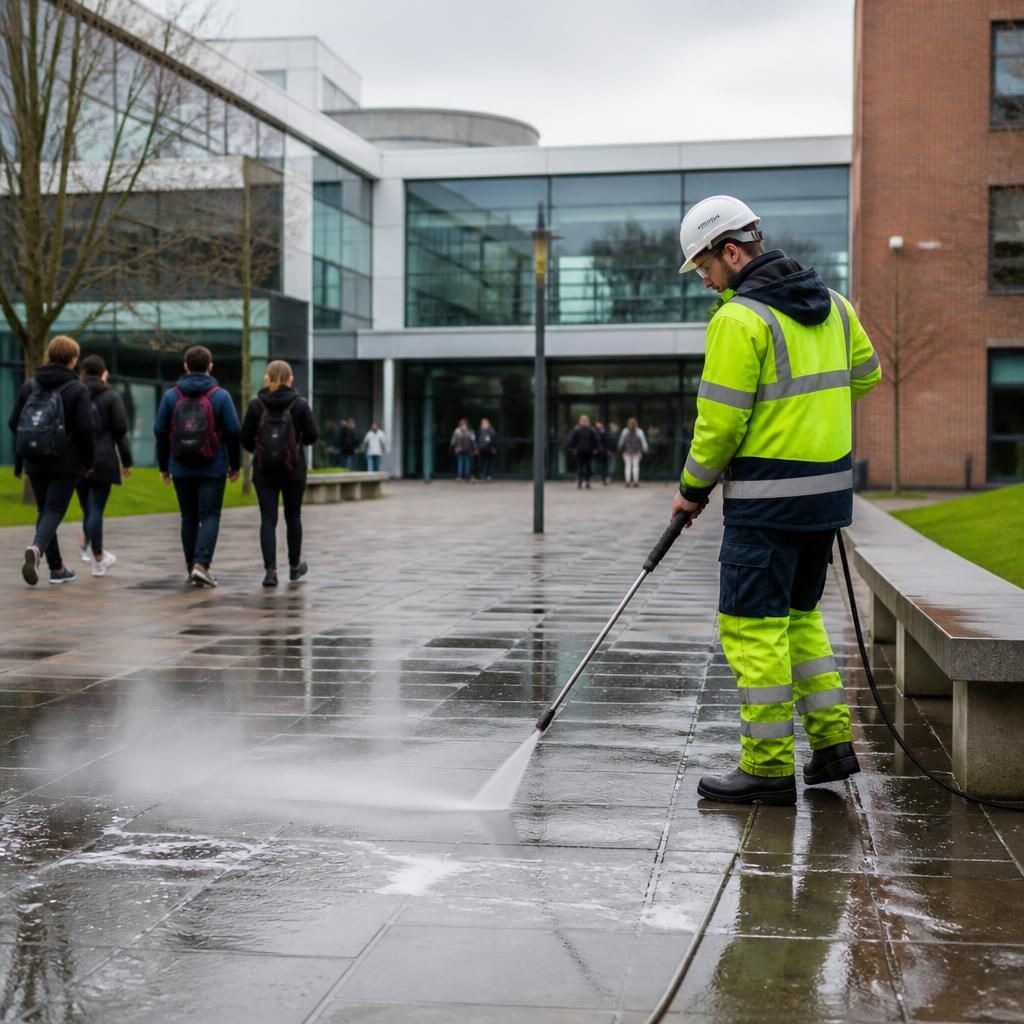
A risk-based schedule is the most reliable way to maintain a university campus safely and presentably. High-use areas such as entrances, steps, ramps, pedestrian routes, courtyards, car parks and loading areas should be inspected regularly and cleaned whenever algae, moss, oil, food residue, chewing gum, bird fouling or other contamination creates a hazard.
Wider façade, cladding, paving, roof and drainage cleaning can then be planned around seasonal soiling, building condition and the academic calendar. The programme should allow prompt responses to graffiti, spillages, storm debris and other unexpected problems, while larger works are arranged during quieter periods to limit disruption. Inspection records should be reviewed after each visit so cleaning intervals can be adjusted when particular areas become soiled or slippery sooner than expected.