
How can university campuses schedule exterior cleaning without disrupting academic activities?
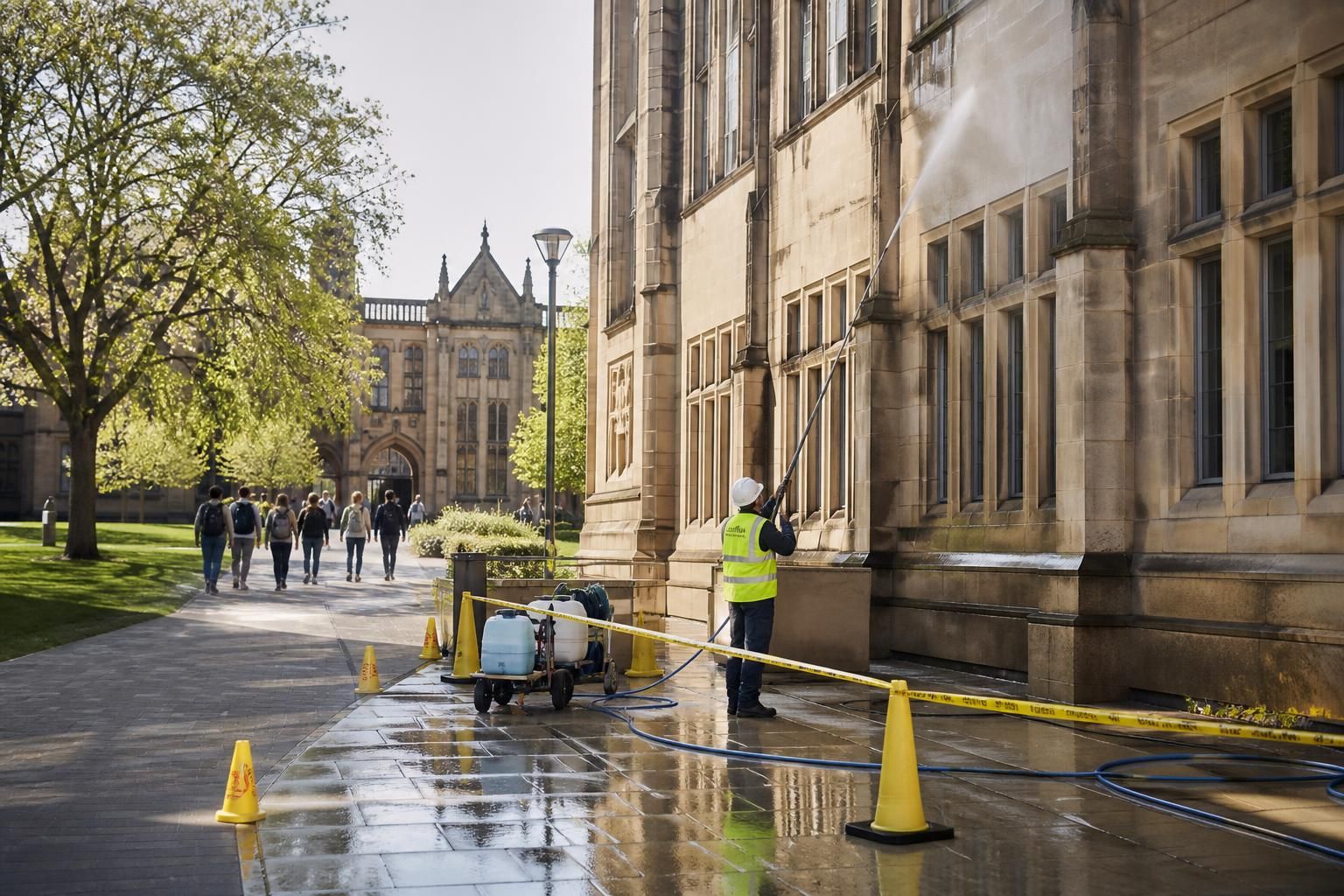
University campuses can schedule exterior cleaning around lectures, examinations and major events by using a site-specific plan that identifies low-occupancy periods, separates work areas from pedestrian routes and coordinates access with campus facilities teams. Phased cleaning, out-of-hours work and clear communication help maintain safe, presentable buildings without interrupting academic activities.
University campuses can schedule exterior cleaning without disrupting academic activities by combining the academic calendar with a site-specific cleaning plan. The plan should identify low-occupancy periods, divide the campus into manageable work zones, protect pedestrian and vehicle routes, and coordinate every activity with the university’s estates, facilities and health and safety teams.
Start with the academic and operational calendar
Cleaning should be planned around more than standard teaching hours. Estates teams and contractors should review:
- Teaching timetables, lectures, seminars and laboratory sessions
- Examination periods, open days, enrolment and graduation ceremonies
- Residential move-in and move-out dates
- Student events, conferences and public functions
- Deliveries, refuse collections and planned maintenance
- Building access requirements for staff, students, visitors and contractors
Work that creates noise, spray, restricted access or visible equipment is usually best completed during evenings, weekends, university holidays or other agreed low-occupancy periods. However, out-of-hours work still requires suitable lighting, security arrangements, welfare facilities and a responsible campus contact.
Survey the campus before setting dates
A pre-cleaning survey helps establish which areas can be cleaned concurrently and which need additional controls. The survey should record façade materials, roof access, drainage points, electrical supplies, water availability, fragile surfaces, vehicle routes and areas used by vulnerable people. It should also identify hazards such as overhead services, uneven ground, restricted courtyards, nesting birds and public rights of way.
The survey findings can then be used to prepare a method statement, risk assessment and access plan. These documents should set out the proposed equipment, cleaning methods, working hours, exclusion zones, water management and emergency arrangements before work begins.
Use phased and zoned cleaning
Large campuses are rarely best treated as a single work area. Dividing the site into zones allows the contractor to complete one elevation, courtyard, car park or building at a time while the rest of the campus remains operational. Suitable zoning may be based on:
- Individual buildings or connected blocks
- Teaching, residential, administrative and public areas
- Separate façades or elevations
- Courtyards, pedestrian routes and service yards
- Different access or security requirements
Phasing also makes it easier to provide alternative entrances, relocate deliveries temporarily and release completed areas back to the university. A named contact should confirm when each zone is safe to reopen, rather than relying solely on the planned completion time.
Separate work areas from campus activity
Cleaning equipment, hoses, access platforms and temporary barriers must be kept away from students, staff and visitors. The site plan should show pedestrian diversions, accessible routes, emergency exits, fire appliance access and delivery movements. Where a route cannot remain open, the university should approve a clearly signed alternative before the cleaning team arrives.
Exclusion zones need to be suitable for the equipment and task. Pressure washing and steam cleaning can create overspray, wet surfaces and noise, while façade work from mobile elevated work platforms may require a larger controlled area. Barriers, warning signs and trained banksmen should be used where vehicles, lifting operations or access equipment could interact with pedestrians.
Select methods that suit the operating timetable
The cleaning method affects the level of disruption and the time required for an area to become usable again. Lower-pressure or steam-based cleaning may be appropriate where surface sensitivity, water control or noise is a concern. Pressure washing can be effective for robust hard surfaces, but requires careful control of overspray, runoff and wet-footway risks. Dry or low-moisture techniques may be preferable near entrances, electrical installations or areas that cannot be taken out of service for long.
Cleaning specifications should consider the surface rather than applying one method across the whole campus. Brick, stone, render, metal cladding, glazing, roofing materials and painted surfaces can respond differently to pressure, heat and detergents. A small test area should be agreed where the material, coating or existing condition is uncertain.
Schedule noisy and high-impact tasks carefully
Noise-generating activities, mechanical cleaning, surface preparation and the movement of access equipment should be allocated to periods when nearby rooms are unoccupied. If work must take place during teaching hours, it should be limited to locations that are sufficiently separated from occupied buildings and coordinated with room bookings.
Dust, odour and vibration should also be considered. Adjacent windows, air intakes and ventilation systems may need to be closed or temporarily protected. Sensitive activities, including examinations, recordings, clinical teaching or laboratory work, may require greater separation than a normal lecture or office function.
Coordinate access equipment and deliveries
Scaffolding, cherry pickers, powered access equipment and water tanks can affect roads, parking areas and emergency routes. Delivery and set-up times should be booked with campus security or logistics teams, with confirmation of vehicle dimensions, ground conditions and any required permits. Equipment should not be left where it blocks accessible routes, fire exits or essential services between shifts.
Where roof or high-level access is needed, the plan should account for weather, wind limits, edge protection, rescue arrangements and the time required to inspect and secure equipment. A competent person should confirm that the proposed access system is suitable for the building and the cleaning task.
Use clear communication before and during the work
Advance communication helps prevent avoidable clashes with teaching and campus operations. The agreed information should include the work zones, dates and hours, expected noise, access restrictions, alternative routes, contact details and arrangements for reporting problems. Relevant information may need to be shared with security, reception teams, building managers, accommodation staff, disability services, event organisers and cleaning or maintenance contractors.
Daily briefings can confirm the condition of the site, weather suitability, planned activities and any changes to the campus timetable. If work overruns or conditions change, the contractor should notify the university contact promptly rather than continuing into an unapproved period.
Manage water, runoff and surface drying
Water from exterior cleaning must be controlled so that it does not enter buildings, create slippery paths or discharge pollutants into surface-water drains. Drain protection, collection, squeegeeing or wet vacuum recovery may be needed, particularly in courtyards, near laboratories and around vehicle routes. Cleaning should be timed to allow surfaces to dry before they are returned to normal use, with additional precautions during cold or wet weather.
Detergents and other cleaning agents should be selected for the surface and used in accordance with the product information and the site’s environmental controls. The plan should identify how wastewater, containers and contaminated materials will be handled and removed.
Build in contingency arrangements
Rain, frost, high winds, poor visibility, equipment faults and unexpected access restrictions can affect exterior cleaning. A practical programme includes alternative dates and clear criteria for stopping or postponing work. This is particularly important for high-level access, roof cleaning, façade treatments and any task involving electrical equipment or public routes.
Contingency planning should also cover examinations, emergency incidents, building closures and changes to event schedules. Keeping the work programme flexible is usually less disruptive than attempting to recover lost time by extending into occupied periods.
Inspect and hand areas back safely
At the end of each work phase, the contractor and university representative should check that barriers, hoses, equipment and waste have been removed; surfaces are safe to walk or drive on; drains are clear; windows and doors are secure; and no cleaning residue or overspray remains. Any defects, staining, damage or areas requiring further treatment should be recorded and agreed before the zone is reopened.
This planned approach allows campus cleaning to continue alongside teaching and other university activities. The most effective programmes are based on accurate site information, phased work, suitable cleaning methods and regular communication, rather than relying on a single large operation during normal campus hours.
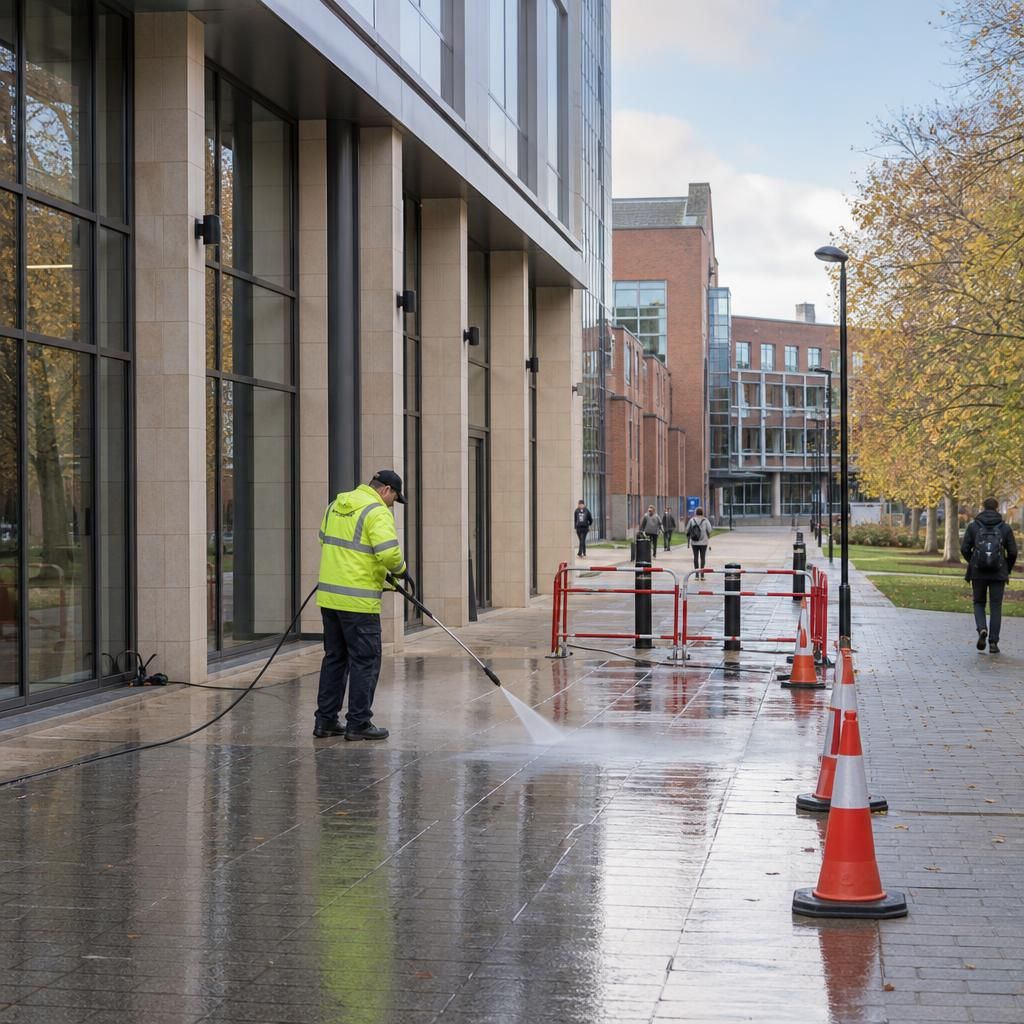
Phased exterior cleaning divides a university campus into controlled work zones so each area can be isolated, cleaned and safely returned to use without affecting the rest of the site. This approach is particularly suitable for campuses with busy teaching buildings, residences, courtyards and shared pedestrian routes.
Before work starts, the contractor and university representative should agree the boundaries, access restrictions, alternative routes and planned completion checks for each zone. Cleaning can then progress around lectures, examinations, events and deliveries, with noisy or high-level activities allocated to quieter periods where possible.
At the end of every phase, the area should be inspected for wet surfaces, cleaning residue, hoses, barriers, equipment and blocked drains. Only once the route or facility is safe should it be reopened. A phased programme gives the university better control over daily operations and makes any weather or access delays easier to manage without extending disruption across the whole campus.
Plan Your University Campus Cleaning Programme
Speak to Encanto Exterior Cleaning to plan a phased university campus cleaning programme around lectures, examinations, events and access requirements. We can review the site, agree suitable methods and prepare a practical schedule that keeps academic activities running safely.