
What surfaces can be cleaned using mobile pressure washing?
Mobile pressure washing can clean hard, resilient surfaces including concrete, block paving, tarmac, brickwork, façades, cladding, roofs, loading areas, car parks, steps and industrial flooring. Pressure, temperature, water flow and cleaning method must be adjusted to suit each material, particularly painted, coated, aged or weathered surfaces.
Mobile pressure washing can clean most hard, resilient external surfaces, including concrete, block paving, tarmac, brickwork, façades, cladding, roofs, loading areas, car parks, steps and industrial flooring. The cleaning approach must be matched to the material and its condition: water pressure, temperature, flow rate, nozzle selection, distance and detergent use all affect the result and the risk of damage.
Concrete and concrete paving
Concrete is commonly cleaned using mobile pressure washing to remove traffic film, oil residue, algae, moss, mud, tyre marks and general staining. It may include service yards, walkways, loading bays, plant areas, car parks and warehouse floors. Heavily soiled concrete may require pre-treatment and controlled hot-water cleaning, followed by recovery or suitable management of the wash water.
Older or damaged concrete needs particular care. High pressure can worsen surface scaling, expose aggregate, enlarge existing cracks or remove weak areas. A professional assessment helps determine whether pressure washing, rotary cleaning, steam cleaning or a lower-impact method is more appropriate.
Block paving and concrete paving slabs
Block paving, slabs and other modular paving can be cleaned to remove moss, weeds, algae, dirt and staining from pedestrian and vehicle areas. Cleaning can also improve the appearance of joints and reveal loose or damaged blocks that require attention.
Pressure must be controlled around jointing material. Excessive pressure can remove sand, disturb pointing or drive water beneath adjacent surfaces. Where necessary, the surface can be allowed to dry before joints are re-filled with a suitable material. Any sealing requirement should be considered separately, as the paving must be clean and sufficiently dry before a sealer is applied.
Tarmac and asphalt
Tarmac and asphalt car parks, access roads, forecourts and service areas can generally be cleaned using carefully controlled pressure washing. The process can remove surface dirt, organic growth, tyre marks and some oil-related contamination.
These surfaces are more vulnerable to damage from excessive pressure, concentrated jets, heat or aggressive chemicals than sound concrete. Cleaning should therefore be carried out with suitable equipment and settings, keeping the nozzle moving and avoiding unnecessary dwell time. Loose aggregate, potholes, failed repairs and severely degraded asphalt may need maintenance rather than cleaning alone.
Brickwork, masonry and façades
Brick façades, rendered walls, stonework and other masonry can be cleaned to remove atmospheric soiling, algae, moss, bird fouling and some surface staining. Mobile equipment is useful for commercial buildings, boundary walls, retail units, public buildings and larger developments where fixed access to water or power may be limited.
Masonry is not treated as a single material. Soft or porous bricks, lime mortar, aged pointing and weathered stone can be damaged by high pressure or unsuitable chemicals. A lower-pressure wash, steam cleaning or a controlled soft-washing process may be used instead. Small test areas should be assessed before full cleaning, particularly where the surface is painted, historic, friable or previously repaired.
Cladding and coated panels
Metal cladding, powder-coated panels, composite panels and other external envelope materials can often be cleaned with mobile pressure washing. The process removes dust, traffic film, bird fouling, algae and general environmental soiling from industrial units, warehouses, offices and commercial premises.
Cladding requires controlled pressure and suitable detergents because damaged coatings, seals, joints and insulation systems can be affected by water ingress or abrasion. The cleaning method should account for the panel finish, the direction of laps and joints, drainage paths and any manufacturer requirements. Painted or coated surfaces should be checked for flaking, chalking and corrosion before work begins.
Roofs and roof-level surfaces
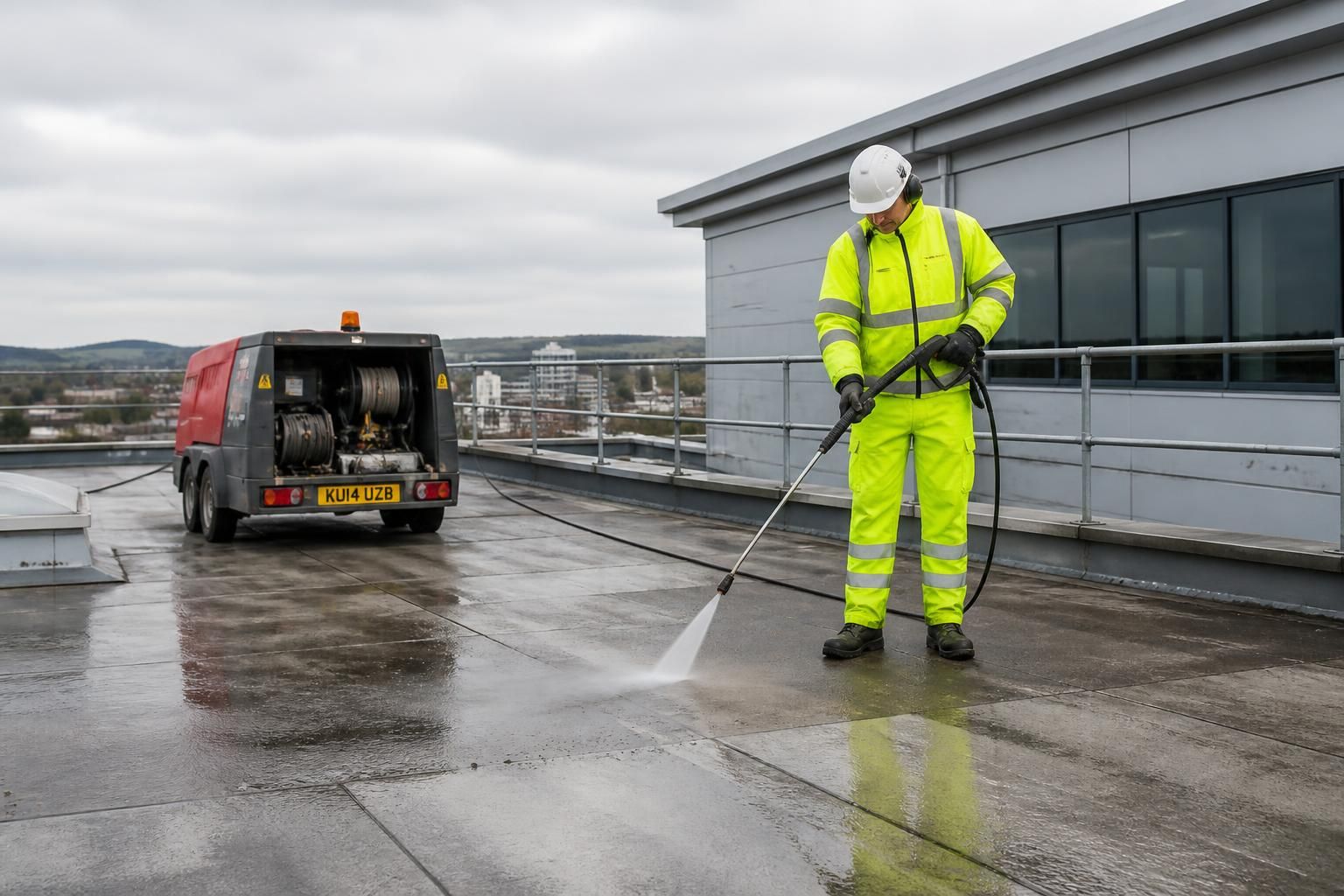
Some roofs can be cleaned using mobile pressure washing, including suitable metal roofing, certain tiled roofs, industrial roof areas and associated plant or access zones. Cleaning can remove moss, algae, bird fouling and accumulated dirt, but the correct method depends on the roof covering and its condition.
Pressure washing is not suitable for every roof. It can dislodge tiles, force water beneath laps, damage protective coatings or affect fragile membranes. Roof cleaning also involves work-at-height and falling-debris risks, so access arrangements, edge protection, exclusion zones and water containment must be planned. Low-pressure or steam-based cleaning may be safer for delicate coverings.
Car parks, loading areas and industrial flooring
Mobile pressure washing is well suited to large hardstanding areas such as car parks, loading docks, delivery yards, ramps, plant rooms and warehouse floors. It can remove mud, dust, food residue, grease, tyre marks and general operational contamination.
Where oil, fuel or chemicals are present, cleaning should be planned around the type of contamination and the site drainage system. Detergents may help break down deposits, while hot water can improve the removal of grease. Run-off must be controlled and managed in accordance with the site’s drainage arrangements and applicable environmental requirements; contaminated water should not be allowed to enter surface-water drains without appropriate controls.
Steps, ramps and walkways
External steps, ramps, pedestrian routes and access platforms made from concrete, stone, brick or other hard materials can be pressure washed to remove slippery organic growth and accumulated dirt. These areas often require particular attention because contamination can affect slip resistance and safe access.
Cleaning does not correct damaged nosings, loose paving, failed pointing or inadequate drainage. Those defects should be recorded and referred for repair. After washing, the area may remain slippery until it has drained and dried, so barriers, warning signs and a suitable reopening process are important.
Surfaces requiring a tailored method
Some materials can be cleaned but should not be treated with standard high-pressure settings. These include painted surfaces, aged render, soft brick, natural stone, timber, resin-bound paving, rubber safety flooring, waterproof membranes and surfaces with loose coatings. Cleaning may still be possible using reduced pressure, steam, soft washing, manual methods or a combination of techniques.
Pressure washing is generally inappropriate for unstable surfaces, severely deteriorated coatings, loose render, damaged roof coverings or materials where water penetration could affect the building. The condition of the substrate matters as much as its name: a sound concrete slab and a cracked, spalled slab should not receive the same treatment.
How the correct method is selected
- Inspect the material, finish, age, condition and any previous repairs.
- Identify the type of contamination, such as organic growth, traffic film, oil, rust, paint or construction residue.
- Check nearby glazing, doors, electrical equipment, vents, seals, landscaping and drainage points.
- Test the proposed pressure, temperature, detergent and nozzle configuration in a discreet area.
- Use controlled passes rather than holding the jet in one place, and adjust the method if the surface reacts adversely.
- Manage run-off, protect surrounding areas and leave the site safe for vehicles, pedestrians and building users.
For large commercial or industrial sites, the cleaning specification should identify each surface separately rather than applying one pressure setting throughout the premises. A pre-clean inspection and agreed test area provide a practical way to confirm the method before full-scale work starts, particularly where surfaces are coated, weathered, historic or operationally important.
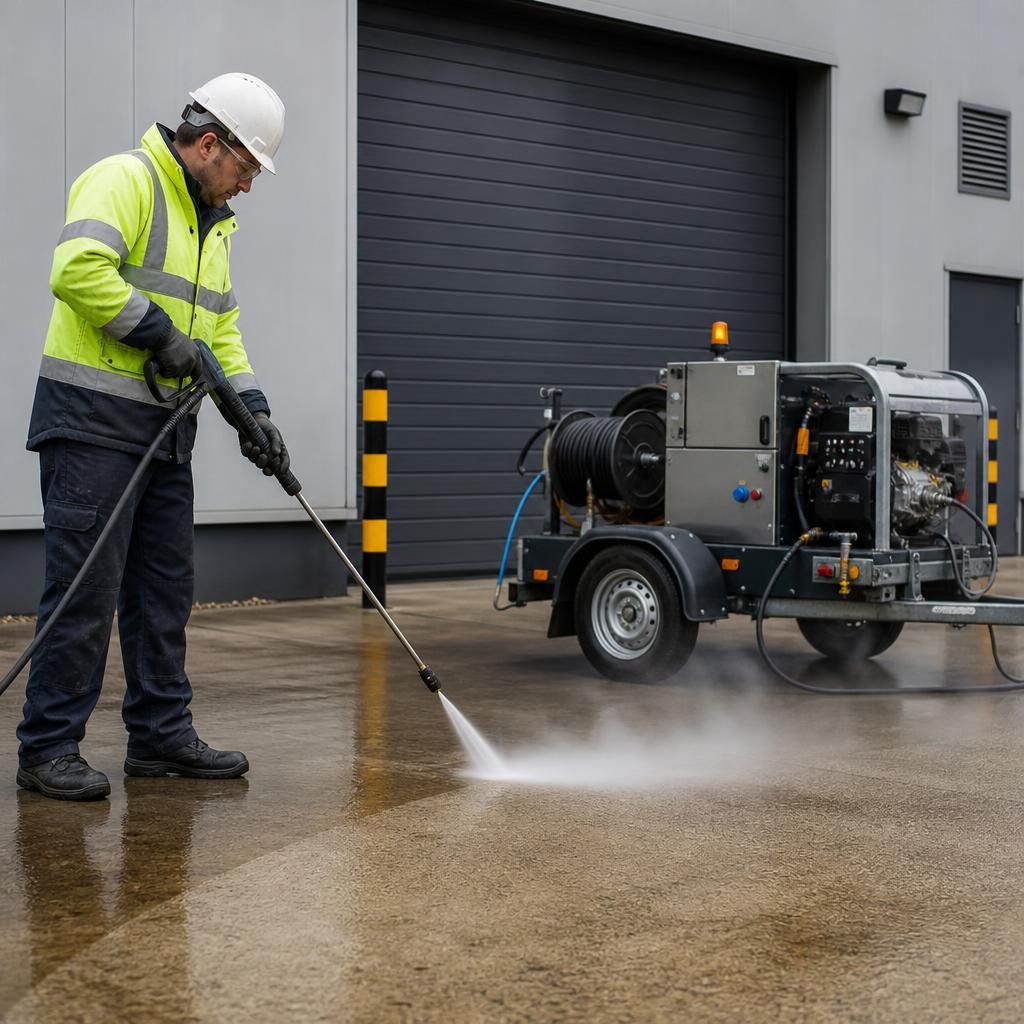
Mobile pressure washing is suitable for many hard external surfaces, but the cleaning method must be matched to the material and its condition. Concrete, paving and sound industrial flooring can usually tolerate more pressure than soft brick, aged render, coated cladding, roofing materials or weathered stone.
Before full cleaning, the surface should be inspected and a discreet test area assessed. This confirms the appropriate combination of:
- water pressure, temperature and flow rate;
- nozzle type and working distance;
- detergent or pre-treatment requirements; and
- run-off controls and protection for nearby glazing, seals, vents and drainage points.
A controlled test helps identify loose coatings, weak pointing, damaged joints or water-sensitive areas before they become a wider issue. For large commercial premises, specifying each surface separately is safer and more effective than applying one pressure setting across the entire site.